OTTAWA — Even among the $1.4 billion in grants for 11 major university research projects the federal government pledged at the end of April, the $199.5 million for the University of Toronto’s work on “self-driving labs” stood out. It’s the biggest grant yet in three rounds of funding from the Canada First Research Excellence Fund, supporting work spearheaded by Prof. Alán Aspuru-Guzik and the Acceleration Consortium he directs.
Skip to content

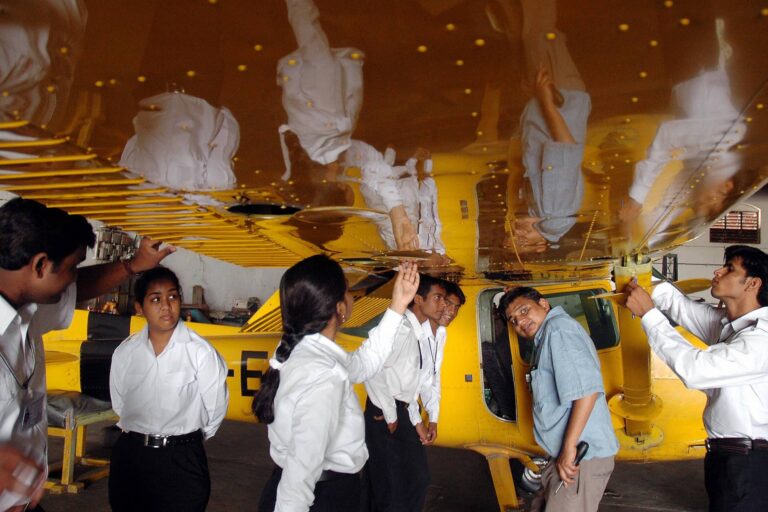
 A scientist works with a high-throughput optical characterization setup, part of a "self-driving lab" under development at the University of Toronto. Photo: Johnny Guatto/The Matter Lab/Acceleration Consortium, University of Toronto/Handout
The Interview
U of T’s Alán Aspuru-Guzik on robot labs, his massive research grant—and how he’s like a vampire
A top scientist lured from Harvard during the Trump years wants to build a chemistry-based innovation ecosystem in Toronto
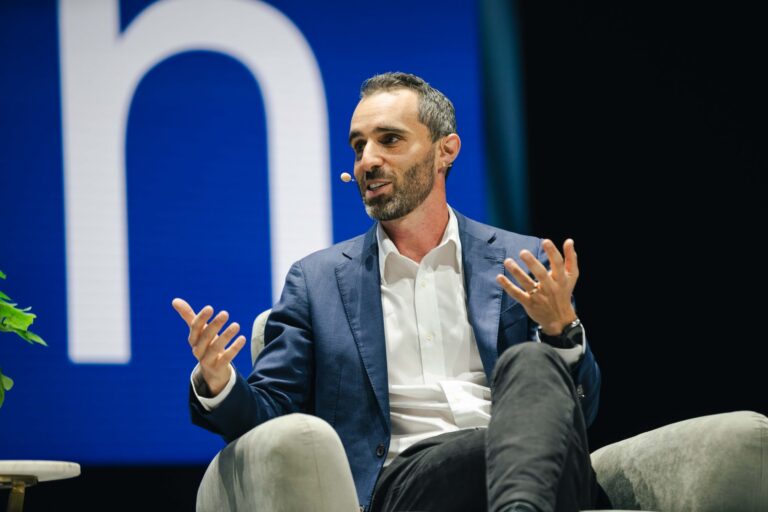
Alán Aspuru-Guzik, director of the Acceleration Consortium, next to a robotic arm in the Matter Lab at the University of Toronto. Photo: Liz Beddall, courtesy of CIFAR/Handout
OTTAWA — Even among the $1.4 billion in grants for 11 major university research projects the federal government pledged at the end of April, the $199.5 million for the University of Toronto’s work on “self-driving labs” stood out. It’s the biggest grant yet in three rounds of funding from the Canada First Research Excellence Fund, supporting work spearheaded by Prof. Alán Aspuru-Guzik and the Acceleration Consortium he directs.
Slashing the time and money it takes to devise new chemical products—from circuit metals to drugs—is the goal, using artificial intelligence to set and evaluate experiments, and robotics to carry them out.
Talking Points
- Alán Aspuru-Guzik left Harvard for Canada in 2018, worried about the U.S.’s political and cultural direction
- Armed with a grant of nearly $200 million for his Acceleration Consortium, he wants to spawn a materials-science ecosystem in Toronto, solve global energy-storage problems and maybe cure cancer
The U.S.-born, Mexico-raised Aspuru-Guzik left a tenured professorship at Harvard University for U of T in 2018, concerned about where the United States was headed under Donald Trump. He’s racked up posts at the Vector Institute and the Canadian Institute for Advanced Research, a Canada 150 Research Chair in theoretical chemistry and a Google Industrial Research Chair in quantum computing. He’s had a hand in founding two startups, AI-oriented Zapata Computing and materials-science research company Kebotix.
This interview with The Logic has been condensed and edited for clarity.
I think I understand the science this grant is going to fund. But could you explain it to someone who is brand new to it? What’s the elevator pitch?
Sometimes we forget that we exist in a physical, three-dimensional world made of stuff. Stuff is trillions of dollars in the world economy. The problem is that making stuff consumes energy, damages the environment, damages ecosystems in many other ways, contributes to climate change.
Related Articles


There are many, many materials that we wish had certain characteristics, like a molecule that cures all cancers or something like that, that don’t exist. So what are the challenges? Say I come up with a new material. It will take about 25 years from the idea of the material all the way to commercialization, given the slow path and all the steps that are taken in a serial way to get your material to market.
So after being for many years a professor and dealing with this situation—we discovered things that took forever to go through the pipeline—I started thinking about, well, how can we accelerate science itself? The real mission behind our centre is to accelerate scientific discovery in general.
Now let me give you a business case for it. I was a professor at Harvard for about 14 years. What really inspired me was a collaboration between Harvard and MIT called the Broad Institute. A great, incredible biotech institute that kind of created the biotech industry in Boston.
What we want to build economically around the Acceleration Consortium is an ecosystem of startups and big conglomerates participating with us. That’s why it’s called a consortium, not an institute. If we use this properly, we will be able, hopefully, to make a snowball like they did in Boston and create an economic powerhouse in Toronto around this new idea of taking all the materials that we have around us and reinventing them, remaking them to make a more sustainable world.
Looking seven or 10 years down the road, what will be different physically at the University of Toronto? What will there be that I could not go and see today?
We’re already breaking ground in June on a new building, an extension of the chemistry building. It will house six very large robotic facilities. There’s going to be, like, a gallery, going from materials science to chemistry, to polymer science to biology, all of them together in a series of rooms.
Most of the money that we’re getting will pay for 30 or 35 staff scientists. Universities usually have grad students, postdocs and professors, but not very well-paid researchers that are just focused on a project, a little bit more like a startup. We created this job class and we’re hiring for these positions that are very independent, but at the same time they’re incorporated into a larger mission.
So you will see these guys, and gals, using these platforms together with industry and government and academia. Hopefully you will also see a cadre of startup companies floating around this ecosystem, literally built out of the discoveries made in this engine. Hopefully some transnational companies move research labs to Toronto to make things happen here.
What are the most promising fields for this kind of work?
Let me tell you about one of mine that I’m very excited about. It’s been in the back corner of my lab, because I don’t have enough space: a project I’ve been running on organic flow batteries. You might say, “What the heck is that?” First of all, the word “organic” means it’s not made of metals, it’s made of organic molecules. You could take a fraction of oil from Alberta and convert it with some petrochemical into the molecules that go into a battery. These molecules are also dissolved in water. These batteries look very interesting—they’re like the huge oil tanks you see near airports, filled with water, and then the water with these chemicals is pumped into a place where the electrochemistry happens.
‘We will be able, hopefully, to make a snowball like they did in Boston and create an economic powerhouse in Toronto around this new idea of taking all the materials that we have around us and reinventing them.’
We have a new class of molecules we’re patenting, a very exciting class of molecules, but I think 10 years from now, hopefully we’ll have solved the problem of the flow battery. Very stable, very cheap molecules to store the entirety of the world’s energy. That’s one of my passions.
My colleague Milica Radisic is working on artificial organs. Humans test medicines first in cells, and the problem is that a cell doesn’t exist by itself. The cell exists in combination with all sorts of other cells, with a bunch of fluids and stuff. If you want to test things rapidly, nowadays the state of the art is something called organoids, which are, basically, lumps of cells. I was just in the lab of my colleagues the other day and organoids are disgusting. Like, balls of flesh.
What Milica Radisic does is she builds 3D-printed types of containers, where she prints different types of cells in different regions to mimic, say, a liver. When everything’s done in 10 years, we want to be printing all these livers and things like that and running through them tons of combinations of our molecules to see which ones are good drugs.
My colleague Jason Hattrick-Simpers works on corrosion-resistant alloys—corrosion is a four-per-cent-of-the-world-economy problem.
I hope that me and my colleagues and the Acceleration Consortium tackle problems like those, that affect health, or rust or energy storage. We’re a very ambitious team of principal investigators. Each one of us was selected for some sort of rock-star quality. I like to call it the Avengers—they came together with their superpowers. And they’re all very excited, which is important. I think we’re going to have a great team, doing these kinds of crazy things.
Some people devote their lives to artificial intelligence. Some devote their lives to chemistry. Some devote their lives to quantum computing. And here you are, a man who has not just an interest or a facility but actual funded positions and awards in all of them. Is there a way that they all fit together in your mind?
Many people ask me, “Are you crazy?” Like, no, I have a family, my kids and I play video games and I run and I am a normal human being.
What video games do you play?
I’m playing a game called Brawlhalla, which is like a two-dimensional fighting game, with my little kids. It’s pretty simple, just jumping around, but my kid is 10 and he loves to play it, so I started playing with him.
But I think the secret is—this is a sociological secret. I have a lab that is very democratic and very flat, flatly organized. I call it an anarchist collective. I really support the creation of ideas from the bottom up. Of course, some of them come top-down from me, but it’s really, like, many- to-many. I surround myself with extremely smart people and I’m swimming amongst the geniuses and working with them and infusing them with enthusiasm.
How do I pick topics that we all want to work on? I didn’t know how to articulate it before, but now I know. We look at the drivers of the world that could change science that people have not looked at. I started my career in quantum computing for chemistry—my group was pretty much the first one that was doing quantum computing for chemistry and materials. At the time, those two topics didn’t even mix. So I got tenure doing that. And then around 2012, 2014, AI started becoming very important. I saw that AI was going to be huge and so we moved into AI. And now robotics about five years ago—I jumped on that trend and started doing robotics for chemistry, and now it’s a very popular field. I’m always on the lookout for the next crazy thing.
I think people are underestimating what’s going to happen with augmented reality and virtual reality. What are we going to do with chemistry and augmented reality? I don’t have such a great idea right now.
So it’s a combination of having a team of young, energetic—I like to say, “Professors are like vampires.” Some people tell me to never tell this to a reporter because it sounds terrible. But what I mean by it is, I get my energy from these amazing people. You have these guys or gals around and then you just give them interesting directions.
I’m very obsessed with the war in Ukraine. The other day, I told them, “What do you think drones could do with chemistry? I’ll give you guys a bottle of tequila to think about that together.” We didn’t get a great answer, they haven’t published a paper, but that’s an example of how we’re thinking.
I’ve read about your departure from Harvard. How have you found the experience working in Canada to be different from working in the United States?
When I got here, I was in a Mexican restaurant with my new department chair, my new boss, and I’m like, “OK, I’ve signed the letter. You’ve got me. Now tell me what’s the department politics here, who has the knives and who’s going to cut each other’s throat and stuff?” That was my experience back there.
[At U of T] we don’t have any of those issues. I mean, of course, there’s some arguments between people, but it’s such tiny things. It’s actually all very amazing. I’m a member or affiliate of four different departments—all chill. The culture here is very cross-supportive.
We sometimes do a little more bureaucracy than we should here in Canada. If you have a lot of consensus, you pay for it with bureaucracy. So I probably would do a little bit less bureaucracy, a little bit less consensus. That would be my only tweak to the system.
In my world, we’ve paid a lot of attention very suddenly to large language models and generative AI. People worry about polluting political discourse with deepfakes, AI-assisted scams and so on. There was a story about an AI tool for developing new chemicals—they flipped the switch and it started creating nerve gas. What are your concerns when it comes to the applications of artificial intelligence in your field?
That story has been important to me. With ChatGPT, there’s been this discourse about how dangerous will these large language models become? A former postdoc of mine just published a paper about how dangerous LLMs will be for chemistry. He does similar work to what I do, and he had a big purple box in his paper saying, “Warning. This thing could be dangerous.”
If you think about the automation of this all, you can imagine hacking a system and asking it to do nerve gas and killing an entire lab or something like that.
Maybe it’s because of my political and personal leanings, but I actually am less worried than many people about both LLMs and the chemistry stuff. Let me tell you why. You could 3D-print a gun. But there are 3D printers everywhere—my kid and I have a 3D printer at home. I believe that most of the humans that have access to these powerful tools have a good nature. We have been at the brink of nuclear war for so many years. I think, in the bottom of my heart, there’s somebody behind the button that is never going to press it.
Yes, there will be crazy stuff that could happen. But I think the benefits are going to be crazy.
Is there anything I should have asked you about that I didn’t?
Let’s talk about venture capital. I’m starting a new company with my colleague, Christine Allen, in the biotech space. I invite the venture capitalists to think about the role of AI and automation in physical stuff, to start investing in the real world and not the virtual world, and to also be thinking about the patience that business capital needs.
Maybe there can be funds that say, “We want to devote 20 per cent of our funds to high-impact, high-risk projects that could save the planet.” If ever I am rich enough to be a VC, I will make a pledge like that to my limited partners. I will be like, “Hey guys, let’s just make sure we together build something that we’re proud of.”
I have companies that I co-founded and I have found investors like that, but I have also found investors that don’t have that kind of nice thinking about the planet. The investor class is part of the tech world, and they have created some monsters. If we’re going to do that, let’s create Cookie Monsters, not Godzillas.



Loading...
Thanks for sharing!
You have shared 5 articles this month and reached the maximum amount of shares available.
CloseThis account has reached its share limit.
If you would like to purchase a sharing license please contact The Logic support at [email protected].
CloseGift the full article!
You have gifted 0 article(s) this month and have 5 remaining.
Recipients will be able to read the full text of the article after submitting their email address. They will not have access to other articles or subscriber benefits.
Photo: Liz Beddall, courtesy of CIFAR/Handout
A scientist works with a high-throughput optical characterization setup, part of a "self-driving lab" under development at the University of Toronto.
Most Popular This Week


In-depth, agenda-setting reporting
Great journalism delivered straight to your inbox.
News
Coinbase wants to put bots on the blockchain
Briefing
Canadian businesses want Ottawa to hold out for a better U.S. trade deal: KPMG survey
Online banks are attracting younger Canadians, report shows
Lightspeed cuts 250 jobs through layoffs and attrition
Best business newsletter in Canada
Get up to speed in minutes with insights and analysis on the most important stories of the day, every weekday.
Exclusive events
See the bigger picture with reporters and industry experts in subscriber-exclusive events.
Membership in The Logic Council
Membership provides access to our popular Slack channel, participation in subscriber surveys and invitations to exclusive events with our journalists and special guests.