Listen Now
0:00
Bank of Canada governor Tiff Macklem will retire when his seven-year term ends in June, giving Prime Minister Mark Carney a chance to put his mark on an institution he used to run.
“It has been the highlight of my career to serve as the 10th governor of the Bank of Canada,” Macklem said in a statement the central bank issued on Monday. “My time as governor has seen Canada navigate a more fragmented, shock-prone world. The bank has faced these challenges by acting decisively, by using sound judgment in the face of uncertainty, and by serving Canadians with humility and a steadfast commitment to its mandate.”
Though Macklem is now officially in the twilight of his time at the bank, it’s too soon for a full appraisal of his time as governor. The final months of his term could be consequential. This announcement is an opportunity not just to speculate about his successor, but to reflect on an extraordinary commitment to public service at a time when world-class economists could instead earn life-changing sums of money advising banks and hedge funds.
Related Articles
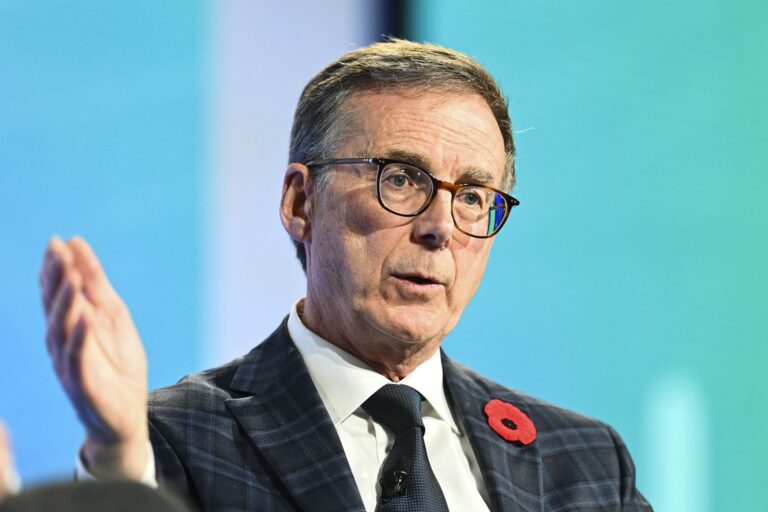
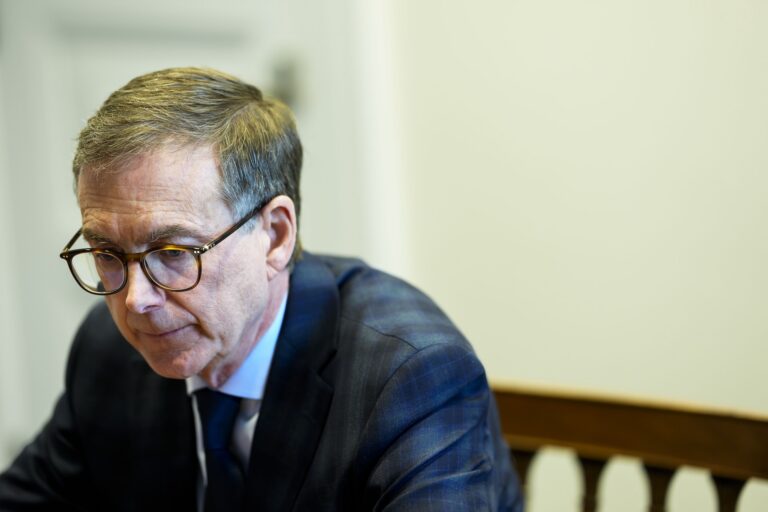

Inflation fighter: Macklem earned a bachelor’s degree in economics at Queen’s in 1983, and a master’s degree at Western in 1984, which is also when he got his first job at the Bank of Canada as a researcher.
Central banks had been humbled by the runaway inflation of the 1970s and were desperately seeking a new way to manage prices. Macklem had a hand in the research that would eventually lead to Canada becoming the second country in the world to set interest rates by targeting inflation.
The pivot corresponded with a decades-long period of price stability that came to be called the Great Moderation. There were other disinflationary forces at play, including China’s inclusion in the World Trade Organization, which depressed the cost of consumer goods as North American and European manufacturers moved production to Asia. But the central banking establishment remained convinced that their inflation targets were key to containing price pressures. In 2021, with Macklem now in charge, the Bank of Canada conducted a “horse race” review that pitted inflation targeting against a number of other options favoured by various academics. It found that none were appreciably better than the bank’s approach of keeping the consumer price index advancing at a pace of about two per cent a year.
That conclusion was immediately tested by the most severe bout of inflation since Macklem was an economics student. He distinguished himself by betting that a sharp increase in interest rates would douse price pressures without causing a recession. In July 2022 he raised the benchmark rate by a full percentage point, a shocking move considering the central bank typically moves rates a quarter point at a time. Macklem reasoned that an outsized number of job vacancies would act as a cushion; companies would take down their job postings instead of actually firing people. He was right. Keeping the economy upright during the chaos that followed the COVID-19 pandemic will stand as one of Macklem’s great achievements.
Still, Macklem, who was marked by the Great Recession and financial meltdown that caused it, probably waited too long to start raising interest rates after the COVID-19 crisis, although he was hardly alone in that regard. The post-pandemic inflation surge made the Bank of Canada a political target, especially for an ascendant Pierre Poilievre, who made attacks on Macklem a feature of his successful campaign to lead the Conservatives.
It was a taxing episode for a central bank that makes great effort to stay out of the political fray. But Macklem appears to have come out on top. Poilievre lost the election to a former central banker and polls suggest he is at risk of becoming an afterthought. Meanwhile, Finance Minister François-Philippe Champagne just reupped the Bank of Canada’s marching orders for another five years on Macklem’s advice that a two-per-cent inflation target remains the best way to set interest rates.
Succession planning: By announcing his intentions now, Macklem is giving the federal government ample time to choose a successor. The European Council is haggling over who will replace European Central Bank president Christine Lagarde, and U.S. Federal Reserve chair Kevin Warsh has been on the job for only six months, making this a moment of significant change in the central banking fraternity.
The septennial parlour game of who will lead the Bank of Canada began last week when Bloomberg published a speculative list of candidates based on “dozens” of interviews with experts. Rather than handicap the outcome, such efforts have a tendency to expose how little access Bank of Canada watchers have to decision makers. Technically, the central bank’s board of directors makes the call. However, everyone knows that the board is doing little more than providing the finance minister and the prime minister with a short list of candidates. In this case, the prime minister almost certainly has a short list of his own already, since it’s been only six years since Carney stepped away from the Bank of England and his various roles as a global leader among central bankers.
Carney invited Jean Boivin, head of Blackrock Investment Institute, and Frances Donald, chief economist at RBC, to present at a Liberal cabinet retreat in Quebec City in January. Each could be a compelling candidate. Boivin has a perfect resume. He earned a PhD in economics from Princeton, where he studied under future Fed chair Ben Bernanke. Carney hired him as a deputy governor at the Bank of Canada in 2010. He left in 2012 to become an associate deputy minister at Finance, a path that both Carney and Macklem followed on their way to becoming governors.
Donald lacks a PhD. Nevertheless, she has been making a name for herself since 2019, when Manulife made her Bay Street’s youngest chief economist at the age of 33. Both Boivin and Donald are global in orientation, but Donald has been doing it from a base in Canada, while Boivin has been abroad since 2014.
If Carney decides he wants someone with a deep understanding of what makes Canada’s economy tick, there might be no better candidate than Scotiabank chief economist Jean-François Perrault, who has worked at Finance, the Bank of Canada, the International Monetary Fund and the World Bank. Perrault’s shop has demonstrated a deft feel for the economy under his leadership, most recently by anticipating that the Bank of Canada would be forced to raise interest rates this year months before most everyone else.
Like Donald, Perrault opted to get a job rather than stay on campus long enough to get a PhD. That needn’t be a barrier, but it’s worth noting that every governor has had one since Gordon Thiessen was appointed in 1994. That’s why deputy governor Nicolas Vincent has a chance. He joined the central bank from HEC Montréal in 2023 as the first outside deputy on the Governing Council. The appointment was supposed to last a year, but Vincent never left. He’s an up-and-comer who has emerged as one of the central bank’s best communicators. Given the Bank of Canada’s recent experience as a political punching bag, an ability to teach economics to the masses might be a valuable asset in a future governor.
Tiff’s time: The fun of trying to predict the next governor will distract from assessing the legacy of the current one. After Stephen Poloz beat him out for governor in 2013, Macklem left Ottawa to run the University of Toronto’s Rotman School of Business from 2014 to 2020. Otherwise, he’s been a lifelong public servant, despite enduring a string of crises that exhausted many of his peers.
Epic battles with inflation bookended his four-decade career. He also helped Canada avoid the worst of the Great Recession and helped ensure the deep recession caused by the pandemic was also a short one. He has used his position as Canada’s unofficial chief economist to focus attention on the productivity crisis. He has overseen the expansion of the central bank’s responsibilities, from an institution hyperfocused on inflation to one that also is charged with regulating payments and open banking. He debuted a new forecasting model souped-up on artificial intelligence and modern computing power that might transform the central bank’s ability to predict the future, reducing the risk of future policy mistakes. He kept a lonely candle lit for globalization and international co-operation.
Tiff Macklem won’t be remembered as Canada’s most famous central bank governor. Carney has set the bar too high. But few public servants have run a gauntlet as difficult as the one that Macklem faced. Not only did he survive, he thrived.
Kevin Carmichael is The Logic’s economics columnist and editor-at-large. He has spent more than two decades covering economics, business and finance for outlets including Bloomberg News, The Globe and Mail and the Financial Post, where he also served as editor-in-chief.