Listen Now
0:00
Can you do tax reform on the fly? It’s unadvisable. Stephen Harper’s GST cut seemed like a good idea two decades ago when our all-in bet on trade with the U.S. was making us rich.
Justin Trudeau’s retail carbon tax showed what happens when you give economists the hammer in the design of public policy. His bid to pay for a multibillion-dollar housing subsidy by raising capital gains taxes showed what happens when you fail to update your economic strategy to match the moment. With productivity stagnant, it was the wrong time for eat-the-rich policymaking.
“A comprehensive review of the corporate tax system is overdue,” the C.D. Howe Institute, a think tank, insists in a new report on how to solve the productivity crisis.
Related Articles

Mark Carney, an economist by training, must know this. But he appears to be in too great a hurry to rework Canada’s tax policy. Like his immediate predecessors, he is making significant tax changes without the help of a well-considered playbook. It feels risky, but here we are.
Among Carney’s first acts as prime minister were killing the retail carbon tax and ordering a halt to Trudeau’s capital gains changes. His response to angst over the cost of living was an enhanced tax credit for poorer households. He sought to get ahead of the inflationary surge from the Iran war by temporarily suspending federal excise taxes on gasoline, a tax break that he’s since extended.
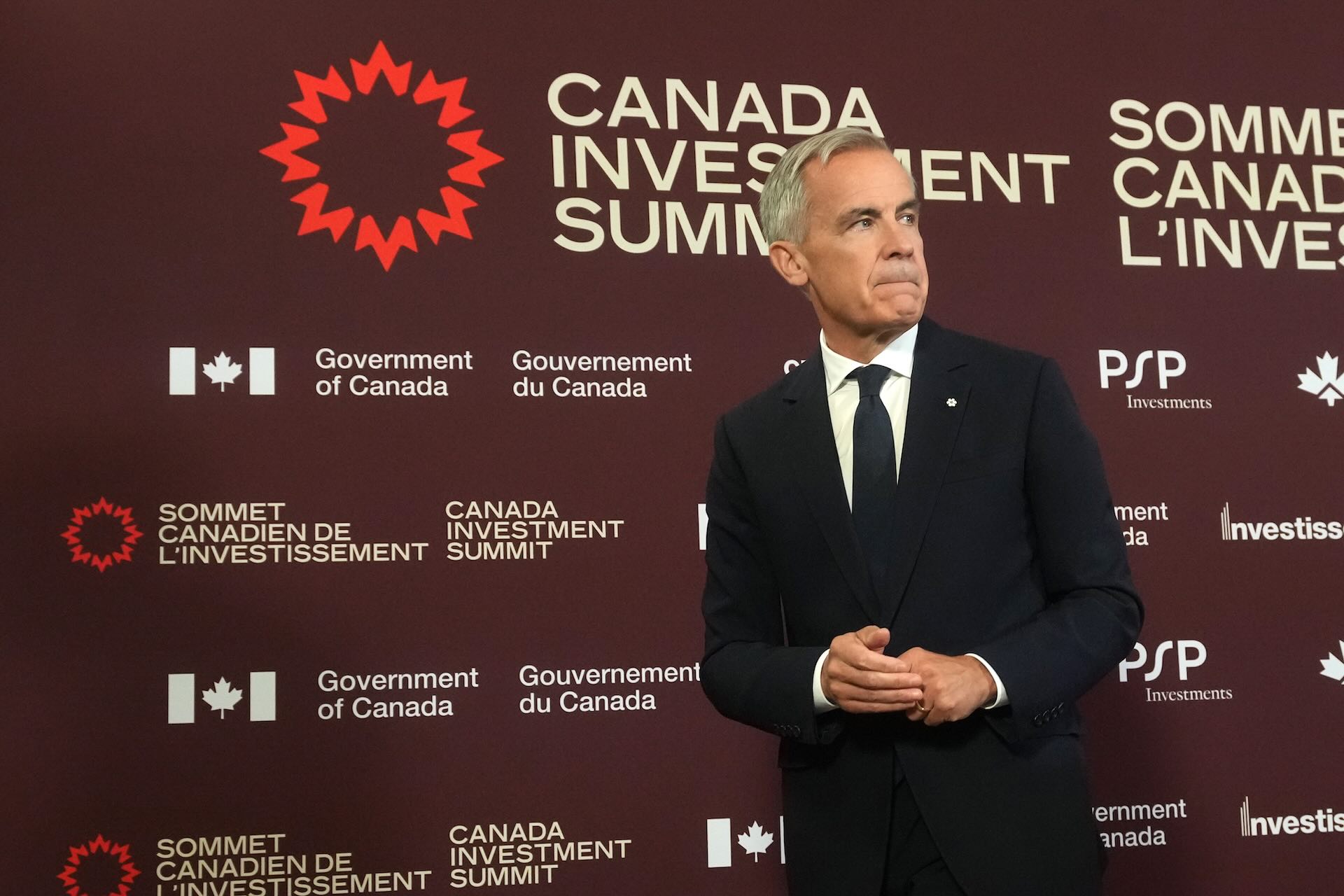
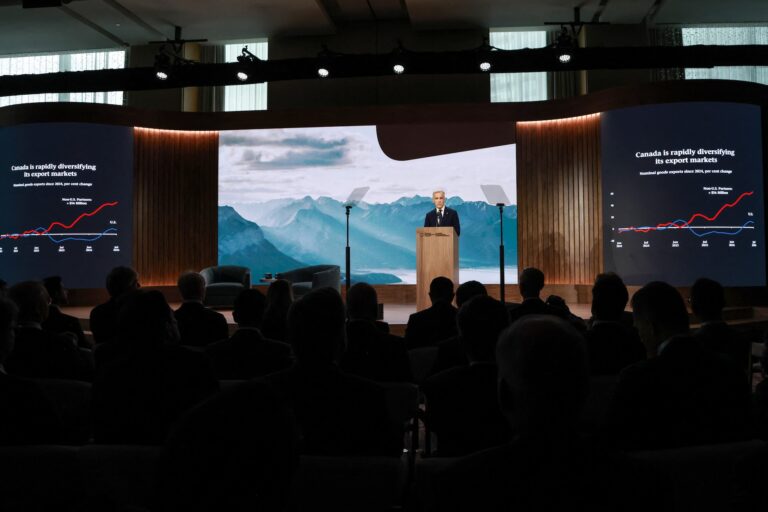
The highlight from the Canada Investment Summit was the announcement that the federal government intended to expand a targeted investment tax credit to cover most capital expenditures, turning the Productivity Super-Deduction into the Productivity Mega Deduction. Few saw that one coming. RBC chief executive Dave McKay said there was a “wow” in the room when the announcement was made.
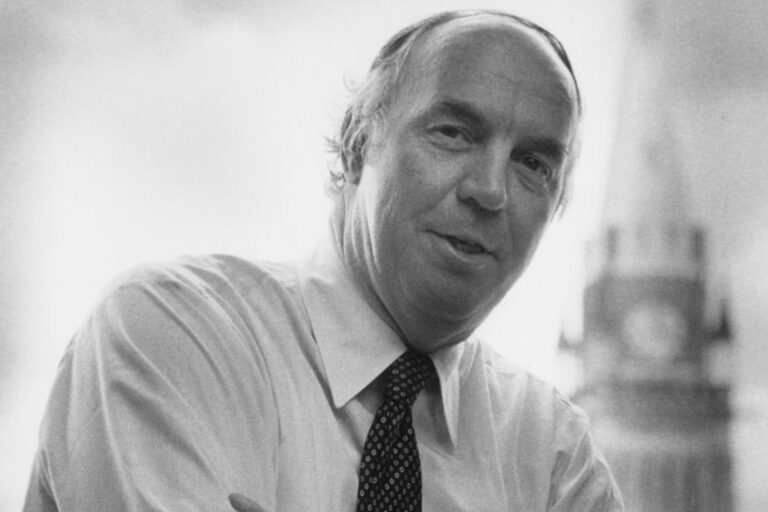
The federal government hasn’t conducted a thorough review of the tax system since John Diefenbaker was prime minister. Kenneth Carter’s Royal Commission on Taxation published a six-volume report in early 1967 after four years of study. Five years later, former prime minister Pierre Trudeau implemented a watered-down version of Carter’s plan that included the first capital gains tax. There were two lessons for future generations.
One is that comprehensive tax reform is hard. “After going through the political ringer, there were only threads left of the vision of the original 1967 report,” University of British Columbia economist Kevin Milligan observed in 2018 amid one of the periodic outcries for comprehensive tax reform. “For those who care about elections, you’ll note the Liberals were reduced to a minority in 1972.”
The other lesson is that ideas can take root even if they never fully flower. The Carter Commission’s proposals were selectively ignored, but its core principle—that when it comes to taxation, a dollar is a dollar is a dollar—became the philosophy that has guided policymakers since the 1970s. That partially explains why a government would consider raising capital gains taxes despite chronically weak business investment. “The Carter Commission was not done with the lens of enhancing Canada’s competitiveness to attract foreign investment, facilitate firms to scale up to compete globally, or to attract and retain in-demand talent,” TD economists Beata Caranci and Francis Fong wrote last year. “It was done through a narrow lens of ‘tax fairness’ and the philosophy that underpins that view.”
Despite Carter’s famous conclusion, a dollar isn’t a dollar when investment has become a national imperative. Caranci and Fong aren’t against tax fairness; they just want to make sure tax rates are set “with one eye also on global competitiveness.”
Maybe that’s what Carney is doing. On balance, his changes are positive. The Mega Deduction appears to have had an immediate impact: Cenovus chief executive Jon McKenzie said the expanded ability to immediately deduct capital expenses contributed to his company’s decision to buy Athabasca Oil. That makes sense. New research by the International Monetary Fund found that such measures could increase short-term investment by companies by some 18 per cent in advanced economies, such as Canada, because they change the math on where companies can expect to generate the highest return on their excess cash. Cenovus is looking at the trajectory of the price of oil, among other things, and betting it can make a return by increasing production.
Some will balk at cutting business taxes when profits are high. Others will prefer lower rates on corporate income. But granting the immediate deduction of investment spending is an elegant response to that debate. Higher interest rates will make it harder to convince companies and investors to get behind risky long-term projects because they can now earn five per cent returns on risk-free U.S. debt. The risk premium has risen, and if we want a generational investment boom, we will have to pay it.
Of course, de-risking investment will require revenue. The reason to avoid corporate income tax cuts is that much of those savings would leak into accounts earning that risk-free rate of return. Canada’s biggest companies are mature, which means the days of making big bets on growth are behind them. Take Suncor Energy. Earlier this month, the oilsands giant sold its stakes in Newfoundland and Labrador’s offshore oil fields and increased share buybacks. Think about that. One of the country’s most important companies met this moment by reducing risk—the opposite of the “step change” that RBC Thought Leadership argues will be necessary to maximize Canada’s potential.
The Productivity Mega Deduction was a “wow” moment because it showed that Canada is finally getting serious about economic growth. But as Fong said in a separate note, it mostly mirrors an existing U.S. deduction, so it alone won’t be a game-changer. Carney will need to produce more cards, while constrained by rising interest rates. “Financial markets expect greater discipline from governments in ensuring that every new dollar spent carries a higher rate of return than in the past,” Fong wrote.
There’s lots of good advice out there about what Carney could do to keep up the momentum without further straining the deficit. Those ideas include lowering personal income taxes to keep talented entrepreneurs in Canada and offering a break on capital gains that are invested in Canadian startups.
I like both of those ideas. The best thinking on how to offset the cost to the federal treasury involves ending preferential treatment for smaller companies and raising the GST. I don’t need to tell you what kind of opposition Carney would face if he proposed either of those things. He might start preparing the ground by setting up a commission to review the tax system. It’s time.
Kevin Carmichael is The Logic’s economics columnist and editor-at-large. He has spent more than two decades covering economics, business and finance for outlets including Bloomberg News, The Globe and Mail and the Financial Post, where he also served as editor-in-chief.