The banking oligopoly has erected thick walls around all but a sliver of the Canadian financial system. Equitable Bank continues to chip away at those walls.
Skip to content

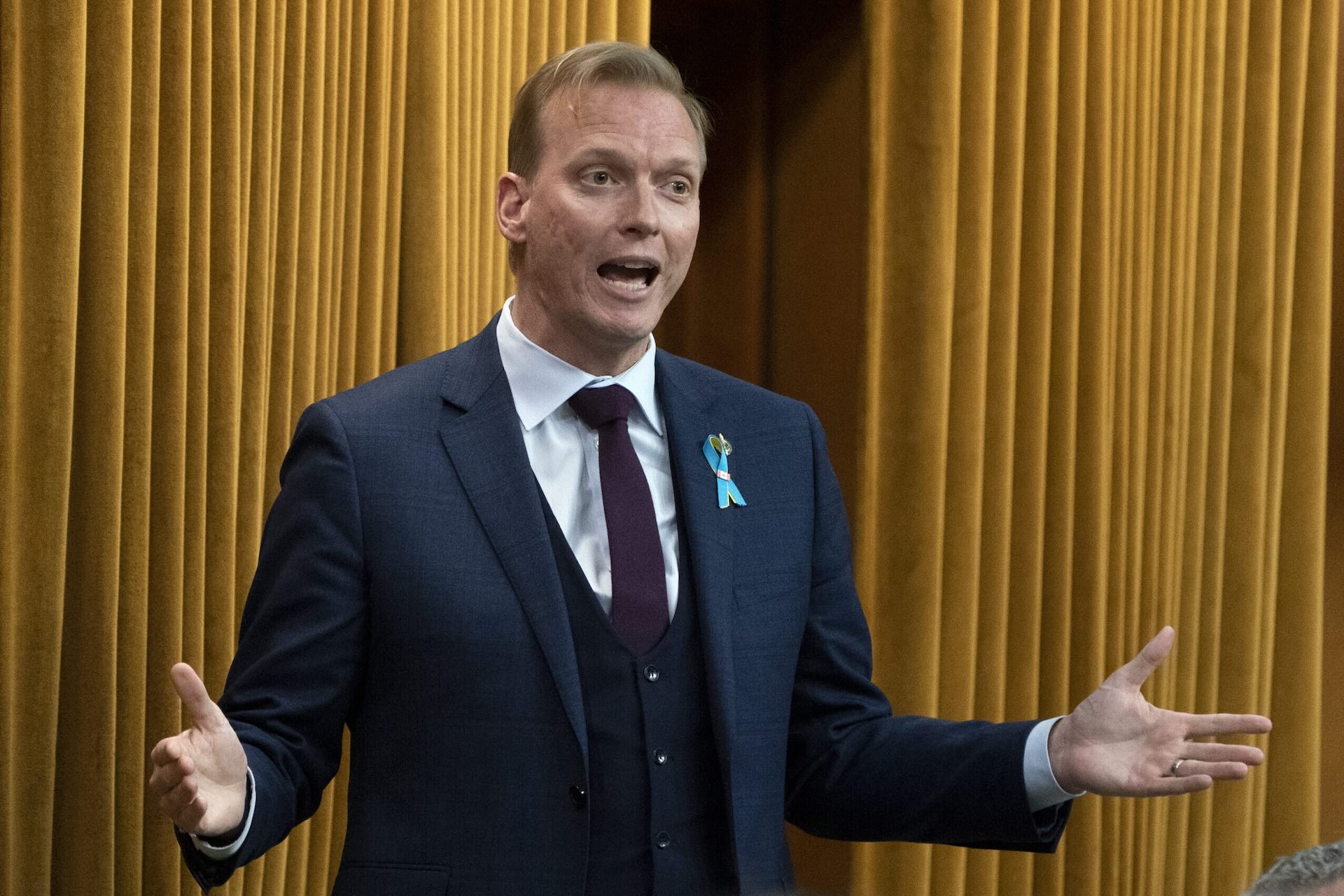 Conservative MP Ryan Williams is worried about missed opportunities in open banking. His party could help expedite a bill before Parliament Photo: The Canadian Press / Adrian Wyld

Commentary
Carmichael: Banks draw battle lines over data as open banking looms
If we want fair competition, the rules will need to change
RBC CEO Dave McKay, like the heads of all the big five Canadian banks, is integrating AI into customer service. Newer competitors want open-banking legislation to help level the playing field. Photo: LinkedIn
The banking oligopoly has erected thick walls around all but a sliver of the Canadian financial system. Equitable Bank continues to chip away at those walls.
Earlier this month, the Toronto-based firm debuted a no-fee, no-hassle digital account for smaller businesses that pays a decent interest rate of 2.5 per cent. Equitable’s new offering won’t change the world, but it’s the kind of thing that might lighten the mental load of entrepreneurship. That’s no small thing at a time when Canadians appear to be losing interest in starting companies.
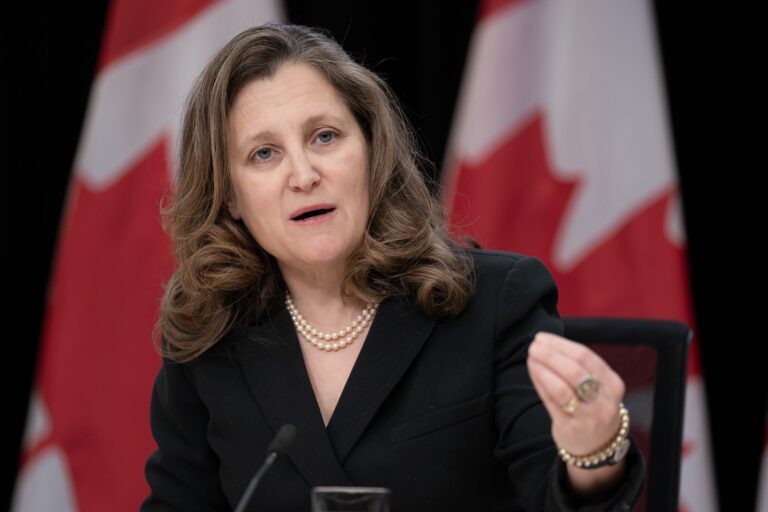
Andrew Moor, Equitable’s chief executive, said there’s more where that idea came from—provided Finance Minister Chrystia Freeland makes good on her pledge to implement open-banking legislation that would oblige banks to let customers share their financial data with other institutions.
Equitable and other banking upstarts need that data if they are to compete on a level playing field with the bigger banks, which had the great good luck to find themselves sitting on massive troves of data at the dawn of the information technology revolution.
Related Articles

The legacy banks intend to aggressively exploit that data. They recognize their defenses are vulnerable both to more agile financial technology startups and to companies such as Apple, Meta and X. Big Tech’s potential to become one-stop platforms for all facets of daily life would reduce the banking industry’s ability to harvest fees from simple financial transactions.
Canada’s five biggest banks are world leaders in the adoption of artificial intelligence. Among their objectives is to use AI to enrich the experience of their customers, making life so comfortable inside their walls that none of us will want to leave. Exploiting AI requires two things: money and data, both of which Canada’s banks have in abundance—which is why fair competition in banking demands regulatory change.
“Data scale drives large-language models, small-language models. It’s going to create enormous value,” RBC chief executive Dave McKay said on stage in Toronto earlier this month. “We’re really focused on how we use data—not in our business, but where we need to move in the value chain.”
He cited the mortgage business, where RBC has launched a search engine to help people find homes. If the bank waits passively for clients and prospective clients, he said, “There’s going to be so many people in that value chain that are going to try to pull that customer off our path and try to offer them financing.”
So RBC is pushing to integrate its business model into search and discovery. The goal, said McKay: to make sure people think of his bank when they are “starting a business, investing, starting a family, buying a home, buying a car. You need to move up the value chain.”
For about as long as Justin Trudeau has been prime minister, upstarts and challengers such as Equitable, Wealthsimple and Koho have been pushing for a regime change that would give consumers and smaller businesses control of their banking data.
From a certain distance, it looks like they’re finally getting what they wanted. In June, Parliament approved the Consumer-Driven Banking Act, which, among other things, defines the types of data that will be covered by legislation and establishes fines for non-compliance. At around the same time, the most recent budget appointed the Financial Consumer Agency of Canada (FCAC) as the regulator.
But you don’t get a medal for completing 41 kilometres of a marathon. There’s still work to do. Some of the champions of what the government now calls consumer-driven banking—what everyone else still calls open banking—remain skeptical that Ottawa will go the distance.
“There are meetings going on behind the scenes about various pieces of technical—but important—things to get done right,” said Moor. Still, some participants in those talks appear more concerned about the risks than the benefits, he said. “We’ve been talking about this since 2018,” Moor said. “It’s not as though I’m asking for a rush. Let’s just do it.”
FCAC, which has been operating without a permanent head since the end of February, isn’t a heavy hitter like the Bank of Canada or the Office of the Superintendent of Financial Institutions, and keeps a low profile. The agency’s interim commissioner, Werner Liedtke, said in May that “as a leader and innovator in financial consumer protection, FCAC is well-placed to take on this new responsibility.” Maybe, but the agency will have to prove it by showing it won’t be swayed by lobbyists, and that it has the wherewithal to meet its deadlines.
Politics are another reason to be wary. Trudeau’s government now talks like a convert to open banking, but it took a long time to come around. Questions linger about its commitment. The Consumer-Driven Banking Act is only framework legislation; Freeland said a second bill with the meat of a new regulatory regime will come this fall.
That promise came when the Liberals had a power-sharing agreement with the New Democratic Party. NDP Leader Jagmeet Singh’s decision to end that pact means there is now significant risk that Trudeau’s minority government falls before the second bill becomes law—or is even introduced, as opposition parties appear primed to exploit Trudeau’s vulnerability at every opportunity.
Conservative MP Ryan Williams said at a fintech conference in June that “without regulatory clarity and support, you will find it difficult to innovate and scale effectively, potentially missing out on crucial partnerships and market opportunities.”
That’s correct. “We’ve got a list of things that we want to release into our banking app as soon as open banking arrives,” said Moor. “It’s really hard for me to say, ‘OK, we’re going to put a few million dollars into this experimental stuff this year,’ because we know it’s going to come in three years’ time.”
But Williams and his party are part of the problem. The Conservatives this week attempted to topple the government by tabling a non-confidence motion, and are set to try again next week.
All the political maneuvering is making open banking’s future less certain. It needn’t be the case. The Liberals and the Conservatives could agree to back swift passage of the second bill, and commit to a deadline for implementation. “It’s a really important nation-building thing,” said Moor.
Maybe the country’s political parties will come to see it that way this fall. It would require setting aside partisan self-interest for a few votes. Then they can go back to hating each other.
Kevin Carmichael is The Logic’s economics columnist and editor-at-large. He has spent more than two decades covering economics, business and finance for outlets including Bloomberg News, The Globe and Mail and the Financial Post, where he also served as editor-in-chief.



Loading...
Thanks for sharing!
You have shared 5 articles this month and reached the maximum amount of shares available.
CloseThis account has reached its share limit.
If you would like to purchase a sharing license please contact The Logic support at [email protected].
CloseGift the full article!
You have gifted 0 article(s) this month and have 5 remaining.
Recipients will be able to read the full text of the article after submitting their email address. They will not have access to other articles or subscriber benefits.
Photo: LinkedIn
Conservative MP Ryan Williams is worried about missed opportunities in open banking. His party could help expedite a bill before Parliament
Most Popular This Week




In-depth, agenda-setting reporting
Great journalism delivered straight to your inbox.
News
Canada faces a satellite-launch crunch as SpaceX retires its workhorse rocket
Briefing
North Vector Dynamics raises over US$20M for anti-drone missile development
Rio Tinto gets nearly $165M in additional federal funds for Quebec aluminum
U.S. to lift tariffs on some Canadian products crucial to Maine: Collins
Best business newsletter in Canada
Get up to speed in minutes with insights and analysis on the most important stories of the day, every weekday.
Exclusive events
See the bigger picture with reporters and industry experts in subscriber-exclusive events.
Membership in The Logic Council
Membership provides access to our popular Slack channel, participation in subscriber surveys and invitations to exclusive events with our journalists and special guests.