Listen Now
0:00
It’s a good week to talk about trade. As ever, we could let Donald Trump hijack that conversation. But let’s keep it positive. The real development is that Canada is making real headway in securing a proper free trade deal with the one G7 economy with which it lacks a good agreement: Itself.
There was much excitement a year ago when Prime Minister Mark Carney made good on his promise to erase the federal rules that were impeding interprovincial trade. But that excitement faded quickly. The federal law was an important gesture, but Ottawa wasn’t the reason British Columbia wineries were effectively barred from shipping their bottles to the rest of Canada.
Related Articles
By early 2026, the prevailing view in my filter bubble was that the push for freer interprovincial trade was dead or dying. The political class had stopped talking about it. “Discussions on a framework governing direct-to-consumer alcohol sales have stalled, and the Committee on Internal Trade is meeting less frequently at a time when we most need sustained momentum,” the Ontario Chamber said in a report on a confab it co-hosted in May.
We were too cynical.
The Ontario Chamber published its report on July 15. One of its recommendations was that the Ontario Securities Commission should join the other provincial and territorial regulators in the Canadian Securities Administrators’ passport system, a mutual-recognition pact that prevents companies from having to fill out paperwork for every jurisdiction in which they’d like to sell securities. That same day, Ontario Finance Minister Peter Bethlenfalvy said the OSC would join the passport system, ending a standoff that had lasted for more than two decades. It was an act of humility. As the home of Canada’s undisputed financial centre, Ontario had a legitimate argument that the rest of the country should be taking its cue from the OSC-led national regulator, not the other way around. Bethlenfalvy relented to advance something bigger. That’s how you’d like to see the federation work.
“Ontario’s expectations are that at the same time details of [the] passport are being negotiated, other provinces will agree to continue eliminating all provincial barriers to unleash an estimated additional $200 billion to Canada’s GDP,” Bethlenfalvy said in a statement. “This is not something that any province can do alone.”
Bethlenfalvy’s fellow finance ministers noticed, and maybe they’ll realize that they owe him one. “You had a lot of camps that did not want to see that happen,” Ryan Manucha, a research fellow at the C.D. Howe Institute, said of Bethlenfalvy’s decision to join the passport system. “He had to stand up and say, ‘I’m going to go against the status quo.’ The inertia was strong.”
I asked to speak to Bethlenfalvy but his office said he was unavailable for an interview this week. So we’ll find out later what it took to overcome that inertia—and what he expects of other provinces and territories in return for his concession. I also want to ask him if he sees himself as the champion that the internal trade push has been lacking. A finance minister whose job includes oversight of roughly 40 per cent of Canada’s gross domestic product might be a good candidate.
There’s more. Lawyers for Ontario-based bridge builder Julmac Contracting were in a New Brunswick court earlier this month suing that province under the Canadian Free Trade Agreement for allegedly favouring local contractors. The facts and the outcome aren’t really what matters. Manucha said Julmac is the first company to sue for fairness under internal trade rules in a decade, and its decision to do so could reinvigorate the dispute settlement process. “This was big,” said Manucha, the author of an award-winning book on internal trade. “That’s so important for the system, healthy for the system, so hats off to Julmac.”
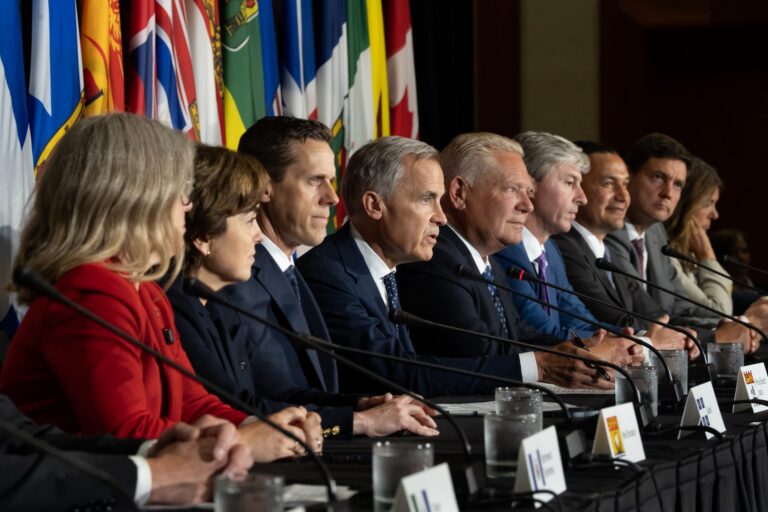
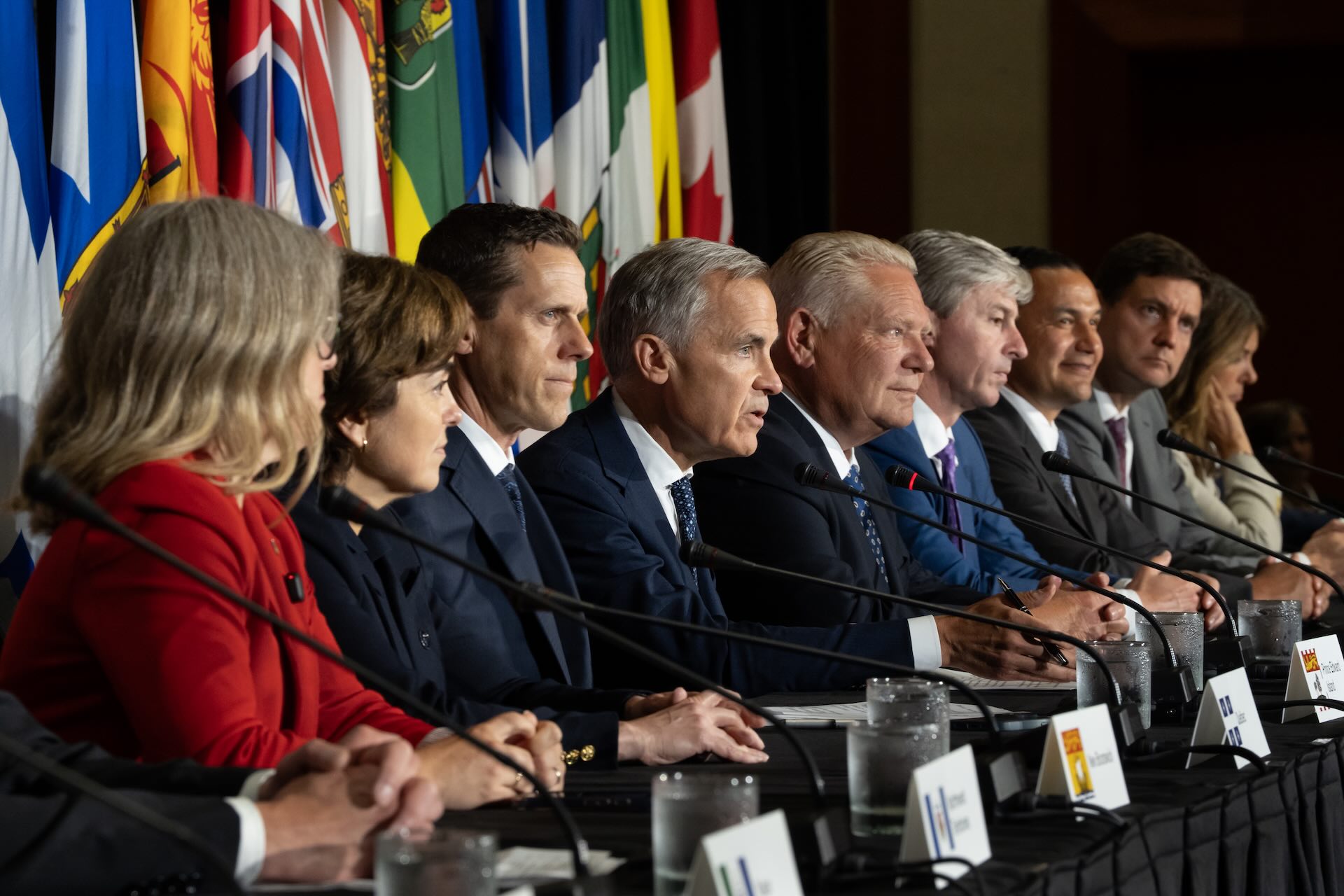
A third development: on Tuesday, the premiers of Alberta, Saskatchewan, Manitoba, Ontario, New Brunswick, Nova Scotia, Prince Edward Island, and Newfoundland and Labrador said their residents were free to order alcohol from anywhere in Canada. British Columbia, which allows direct-to-consumer wine sales, said it will have a broader system in place by February. Quebec said it needs more time to get the “necessary infrastructure” in place, but intends to join the agreement “in the near future.”
If Quebec hurries, it could join a neat natural experiment. The alcohol agreement came the day after Trump threatened to place 50 per cent tariffs on imports of Canadian beer, wine and spirits, retaliation for the various provincial bans on the sale of American booze. Craft breweries, artisanal distillers and smaller wineries now have access to a bigger domestic market. Their order books will be a source of real-time data on the extent to which internal trade can offset lost U.S. sales—or supplement them, if the tariffs are negotiated away.
What to make of this sudden frenzy? It’s a reminder that trade negotiations, both foreign and domestic, are laborious. Long periods of silence don’t necessarily mean that nothing is happening. We should be aware that our collective addiction to instant dopamine rushes could be affecting our expectations. The internal trade push was never dead. It just wasn’t moving at the pace of TikTok.
At the same time, we’ve been reminded this week of why we can’t waste any more time creating offsets to U.S. exports. The Ontario Chamber rightly told governments that sustained momentum requires “continued political leadership” and “implementation with time-bound objectives.” Alcohol has become the symbol of interprovincial trade, but its economic impact is small beer. The free movement of labour is what will move the needle. The premiers pledged at their meeting in Charlottetown this week to get to work on that.
Their promise is missing a deadline, but at least we know they’re on it. Trump’s latest volley should be enough to inspire haste.
Kevin Carmichael is The Logic’s economics columnist and editor-at-large. He has spent more than two decades covering economics, business and finance for outlets including Bloomberg News, The Globe and Mail and the Financial Post, where he also served as editor-in-chief.