Sun Tzu thought the best way to win a war was to avoid fighting one. Still, the author of The Art of War probably would have approved of Canada’s response to Donald Trump’s offensive. “On desperate ground, fight,” he instructed.
Skip to content


Commentary
Carmichael: Canada still faces a crisis. We can’t afford to waste it
Our prospects depend on our leaders abandoning business as usual
Canada’s leaders should assume they face something like the oil shock of the 1970s, which pushed prices higher and ultimately forced everyone to adjust to a new reality. Photo: The Canadian Press/Sean Kilpatrick
Sun Tzu thought the best way to win a war was to avoid fighting one. Still, the author of The Art of War probably would have approved of Canada’s response to Donald Trump’s offensive. “On desperate ground, fight,” he instructed.
Canada is on desperate ground. The country’s prospects are limited because of chronically weak productivity and elevated household debt, both of which constrain the economy’s ability to grow. The Bank of Canada last week dropped its estimate of how fast the economy can grow without stoking inflation to 1.5 per cent from 2.5 per cent. The jobless rate is hovering around the highest levels since 2017, excluding the COVID-19 pandemic.
One advantage Canada retained was unique access to the world’s largest economy. That advantage comes with a price, however; one that most of us had forgotten about. Signing up for North American free trade came with the implicit understanding that the U.S. would be a constant partner. Psychologically, that dulled the need to develop industrial capacity that would have been good for Canada, but redundant in the North American context.
Things like east-west pipelines, a national electricity grid and a common domestic market became “nice-to-haves,” which was rarely enough to push through parochial resistance and regional jealousies. The thing we decided we needed was frictionless access to the world’s largest economy, amplifying economic gravity and making our “small open economy” even less able to stand on its own.
Related Articles


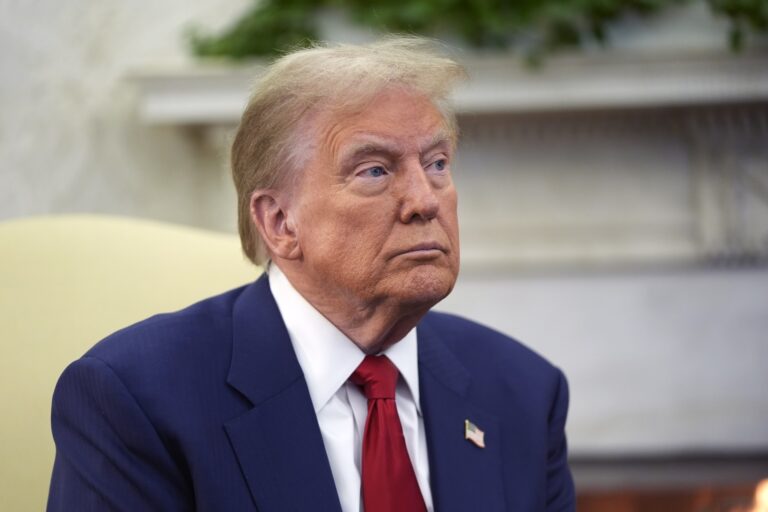
The late Michael Wilson, one of the architects of the original bilateral trade agreement with the U.S., wrote in his memoir that he thought Canadian companies would use the American market as a launchpad to becoming world-beaters. It was a nice idea, but it never really happened. The country’s biggest companies grew more dominant at home, while limiting their overseas expansion to the market next door. Others simply sold themselves to multinational players looking for a toehold in North America. The free-trade era made Canada richer, but also more vulnerable.
When the White House said Saturday that it was making good on Trump’s threats to apply tariffs of 25 per cent on most imports from Canada and Mexico, Trudeau and the premiers had to fight back. It wasn’t a matter of popularity, as some, including Shopify chief executive Tobi Lütke, implied. It was a matter of preservation.
“Hitting back will not lead to anything good,” Lütke wrote on X. “America will shrug it off. Canada will decline.”
Hitting back caused financial markets to go haywire in advance of a 30-day reprieve that came after Trudeau told Trump that Canada would take a series of measures to help the U.S. crack down on illegal migration and fentanyl trafficking at a cost of $1 billion or so.
America is a closed economy that doesn’t need to trade with the rest of the world to support itself. It could have shrugged off Canada’s and Mexico’s retaliation threats, but it didn’t. That’s useful information.
Sun Tzu described nine “situations” of conflict. The situation that precedes “desperate ground” is “hemmed-in ground,” also an unenviable spot for an army to find itself, but one that nonetheless leaves room for strategy.
Canada’s near-term prospects depend on how quickly its political and business leaders can introduce optionality.
The Emergency Tariff Act in 1921 and the Fordney-McCumber Tariff Act in 1922 raised U.S. border taxes and caused the value of Canadian exports to plunge by 40 per cent over two years, triggering a serious recession. A grim start to the decade was followed by an economic boom between 1924 and the eve of the Great Depression in 1929, amid surging demand for much of what Canada had to offer. The pulp and paper industry led the way, as universal public education had created a new class of readers and need for newspapers.
A similar scenario could play out over the next few years. A tariff shock of the magnitude that Trump threatened over the weekend would cause a significant recession. But like the 1920s, there are larger forces at work that will eventually topple man-made barriers. Climate change, technological disruption, demographics and geopolitics will shape the future. There are lots of threats lurking in all those trends, but there are just as many opportunities.
Some more history. When speculating about where things could go before Christmas, former Bank of Canada governor David Dodge invoked the oil shock of the 1970s, a geopolitical event that pushed prices higher and ultimately forced everyone to adjust to a new reality.
That’s the kind of scenario for which Canada should now be preparing. If we’re lucky, Trump will be satisfied with a big increase in security spending, including at NATO. But as my colleague Joanna Smith reported last week, it’s also possible that Trump sees himself as the gatekeeper of the world’s greatest bazaar and has decided the U.S. government should get a percentage of the proceeds. That would be a change that fundamentally alters Canada’s competitiveness. We would have to adjust.
Dodge said the mistake that Canada’s leaders made in the 1970s was that they tried to delay the inevitable by cushioning Canadians from the shock rather than retooling to cope with structurally higher energy prices. If Canada’s leaders have absorbed that lesson, the economy could emerge stronger.
Treasuries are stretched and public debt is elevated, but not so much so that Ottawa and the provinces are out of fiscal room. RBC chief economist Frances Donald said in a report over the weekend that politicians should leave their COVID-19 playbooks on the shelf because spraying money at everyone could reignite inflation. But Canada is a rich country that would have little trouble borrowing to finance infrastructure projects and other measures that would boost economic capacity.
Another positive: the sudden interest in reducing interprovincial trade barriers. Creating a common market within Canada could generate enough economic growth to offset a tariff shock. Canada can’t win a trade war with the United States, but we could achieve something that has eluded us for a long time: resilience.
Kevin Carmichael is The Logic’s economics columnist and editor-at-large. He has spent more than two decades covering economics, business and finance for outlets including Bloomberg News, The Globe and Mail and the Financial Post, where he also served as editor-in-chief.



Loading...
Thanks for sharing!
You have shared 5 articles this month and reached the maximum amount of shares available.
CloseThis account has reached its share limit.
If you would like to purchase a sharing license please contact The Logic support at [email protected].
CloseGift the full article!
You have gifted 0 article(s) this month and have 5 remaining.
Recipients will be able to read the full text of the article after submitting their email address. They will not have access to other articles or subscriber benefits.
Photo: The Canadian Press/Sean Kilpatrick
Most Popular This Week




In-depth, agenda-setting reporting
Great journalism delivered straight to your inbox.
News
National Bank CEO warns AI alone won’t give banks a lasting edge
Briefing
Canada and Ontario commit over $5B to support tariff-hit steel sector
Hackers will see cars as major targets in next 3 years, 83% of car-tech workers say
EA shutting down Edmonton studio BioWare
Best business newsletter in Canada
Get up to speed in minutes with insights and analysis on the most important stories of the day, every weekday.
Exclusive events
See the bigger picture with reporters and industry experts in subscriber-exclusive events.
Membership in The Logic Council
Membership provides access to our popular Slack channel, participation in subscriber surveys and invitations to exclusive events with our journalists and special guests.





