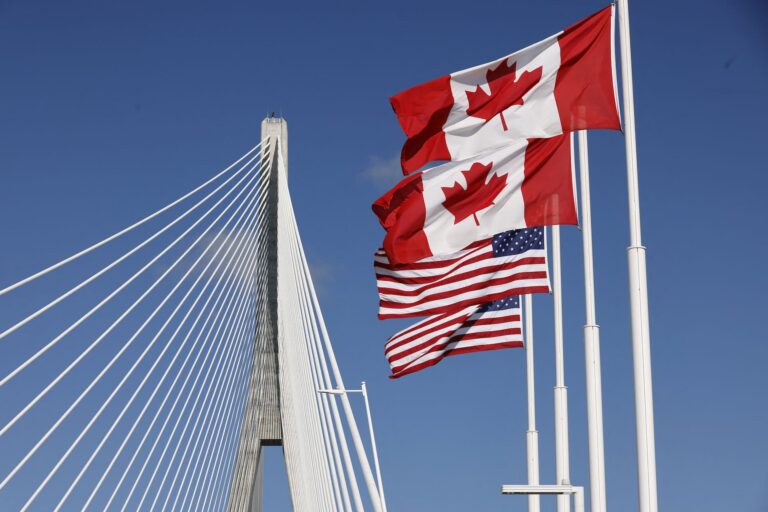
When Donald Trump was elected president of the United States in 2016, the Canadian economy was rebounding from a 2014 crash in oil prices that plunged Alberta into a recession.
Skip to content
 The leftist coalition that won France’s parliamentary elections can’t agree on a prime minister, hobbling President Emmanuel Macron’s ability to govern. Photo: AP Photo/Louise Delmotte
Commentary
Carmichael: Uncertainty is the new normal. Businesses and policymakers need to adjust
Those who wait for a clearer view of the horizon will miss the boat
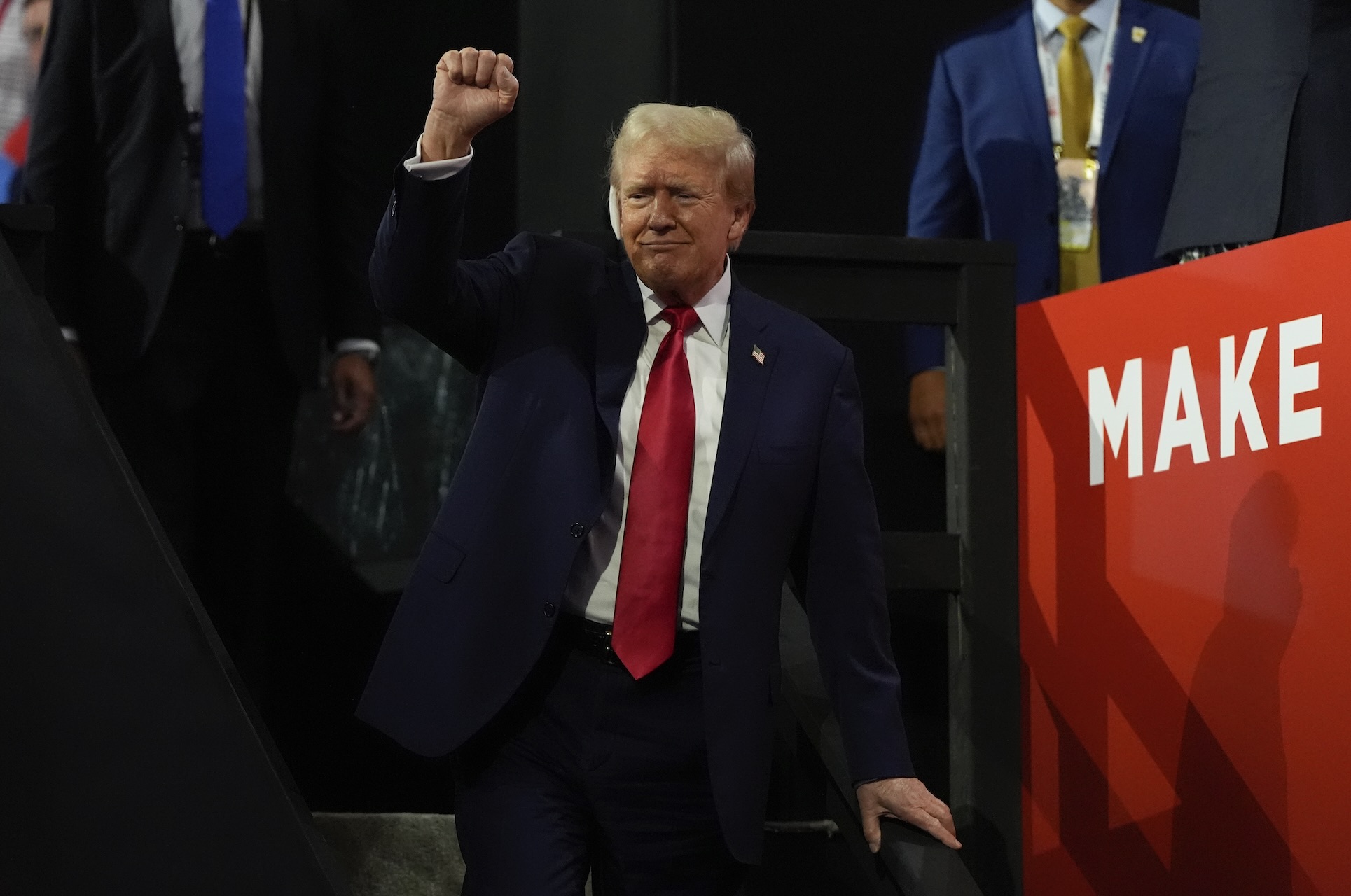
Republican presidential candidate former President Donald Trump appears during the Republican National Convention, July 15, 2024, in Milwaukee. Photo: AP Photo/Julia Nikhinson
When Donald Trump was elected president of the United States in 2016, the Canadian economy was rebounding from a 2014 crash in oil prices that plunged Alberta into a recession.
To prevent a broader economic collapse, the Bank of Canada unexpectedly cut interest rates in January 2015 and followed up with a second one that July. Then-governor Stephen Poloz’s gambit worked, but just barely.
Business investment in non-residential structures was a drag on growth in every quarter in 2015 and three of four in 2016. Investment turned positive in 2017, by which point Trump was inaugurated, but never really gained traction. Companies that had bet just about everything on free trade with the U.S. weren’t prepared for Tariff Man.
Canada’s economy was left partially paralyzed by policy uncertainty. It never really recovered, as the COVID crisis and Russia’s invasion of Ukraine destroyed whatever certainty came with a resolution of Trump’s assault on the rules and norms of North American trade. Business investment in non-residential structures and machinery and equipment contributed an average of 0.02 percentage points to quarterly GDP growth between 2017 and the first quarter of 2024, compared with an average of 0.13 from the start of 2004 to the end of 2014, according to Statistics Canada data.
Related Articles
The most recent figures will have been influenced by higher-for-longer interest rates, since investors and companies have been able to earn a decent return on relatively risk-free assets tied to short-term interest rates. Those rates are starting to fall. The Bank of Canada will probably drop its benchmark rate again next week, and Federal Reserve chair Jerome Powell is talking like he’s ready to reduce U.S. borrowing costs.
But just as the interest rate path becomes clear, whatever fears we had about the future of the North American Free Trade Agreement seven years ago look quaint in today’s political chaos.
The cost of a bet on Trump winning this year’s presidential election at PredictIt has surged to 69 U.S. cents since he survived an assassination attempt on the weekend, compared with about 60 cents before the shooting. The leftist coalition that won France’s parliamentary elections can’t agree on a prime minister, hobbling President Emmanuel Macron’s ability to govern effectively.
Britain’s new prime minister, Keir Starmer, oversees a majority government, but his Labour Party won only 34 per cent of the popular vote. As observers of Canadian politics will know, that’s a shaky foundation on which to attempt to get things done, no matter how impressive the majority on Day One.
The relative calm that prevailed for three decades now looks like an interlude in history’s preference for chaos, not a triumph. It was a mistake to overreact to Trump’s ascent—the North American trading system survived—but an understandable one. Hunkering down again in the face of political uncertainty would have serious long-term consequences, given climate change, technological disruption and the productivity problem.
Canada is in a weak position. Output per hour worked declined every quarter but two between the start of 2021 and the end of the first quarter of this year, the latest period for which Statistics Canada has published data. There is no comparable period on record, explaining why Bank of Canada senior deputy governor Carolyn Rogers labelled the situation an emergency.
There are many reasons why the country’s ability to generate wealth has declined, but the one that shows up on every list is weak business investment. Executives remain unable or unwilling to do anything about that.
The Bank of Canada’s latest quarterly business outlook survey showed that 20 per cent of firms were preparing for a recession, compared with more than 40 per cent at the start of 2023. Whatever relief came with that improved outlook wasn’t enough to prompt businesses to bet on the future: investment intentions were well below the survey’s historical average, and respondents said much of their spending on machinery and equipment would be repair and maintenance, not upgrades that would move the needle on productivity.
“Given their expectations for modest sales growth, firms characterize the return on their investment as uncertain,” the report said. “In some cases, businesses are waiting to see improvements in their sales before investing. Some firms reported that investments related to digitalization (including artificial intelligence) and green initiatives are contributing to their investment spending. But spending on these projects tends to be small.”
Respondents to the Bank of Canada’s survey lamented a lack of certainty about the economy and business conditions. Those respondents might want to get over it. One lesson of the Trump presidency is that it’s important to check our tendency to focus on the negative: the pivot to protectionism was unwelcome, but anyone who found a way to play the Trump tax cuts to their advantage would have done well.
Energy transition and artificial intelligence represent forces that no president will be able to halt, and the winners are investing accordingly. Those who wait for a clearer view of the horizon will miss the boat.
But this puts greater onus on policymakers, not less. The Bank of Canada also reported that investment is impeded by taxes, regulations, and the cost of capital and financing. These aren’t new complaints, to be sure. But it’s been a long time since business has faced so many headwinds.
We’ll all be better off if policy isn’t one of them.
Kevin Carmichael is The Logic’s economics columnist and editor-at-large. He has spent more than two decades covering economics, business and finance for outlets including Bloomberg News, The Globe and Mail and the Financial Post, where he also served as editor-in-chief.


Loading...
Thanks for sharing!
You have shared 5 articles this month and reached the maximum amount of shares available.
CloseThis account has reached its share limit.
If you would like to purchase a sharing license please contact The Logic support at [email protected].
CloseGift the full article!
You have gifted 0 article(s) this month and have 5 remaining.
Recipients will be able to read the full text of the article after submitting their email address. They will not have access to other articles or subscriber benefits.
Photo: AP Photo/Julia Nikhinson
The leftist coalition that won France’s parliamentary elections can’t agree on a prime minister, hobbling President Emmanuel Macron’s ability to govern.
Most Popular This Week


In-depth, agenda-setting reporting
Great journalism delivered straight to your inbox.
Special Report
Carney courts trillions in capital with airport privatization, tax breaks and faster approvals
Briefing
Coinbase lets Canadians lend stablecoins out through DeFi protocol
Cohere’s Gomez says Silicon Valley giants shouldn’t get to set the rules for AI
TD pledges $150B in new financing and support in key Canadian sectors
Best business newsletter in Canada
Get up to speed in minutes with insights and analysis on the most important stories of the day, every weekday.
Exclusive events
See the bigger picture with reporters and industry experts in subscriber-exclusive events.
Membership in The Logic Council
Membership provides access to our popular Slack channel, participation in subscriber surveys and invitations to exclusive events with our journalists and special guests.