For a “trading nation,” Canada spends little time talking about trade. Did you know that our trade minister, Mary Ng, spent most of last week in Abu Dhabi for the World Trade Organization’s Ministerial Conference—an important gathering that takes place only once every two years? No? Exactly.
Skip to content

 Former Prime Minister of Canada Jean Chretien and members of Team Canada Trade Mission stand in front of the Terracotta Warriors at the Terracotta Museum in the city of Xi'an, China, Monday, Feb. 12, 2001. Photo: The Canadian Press/Fred Chartrand

Commentary
Carmichael: Membership in ‘Stronghold North America’ comes with a trade-off
The real action is in Asia, but Canada can’t escape the U.S.’s gravitational pull
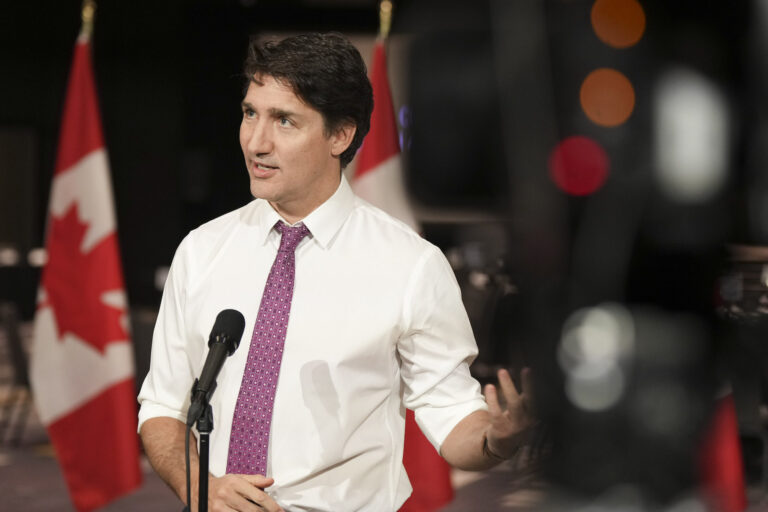
Trade Minister Mary Ng speaks to reporters in Ottawa in January 2024. Photo: The Canadian Press/Justin Tang
For a “trading nation,” Canada spends little time talking about trade. Did you know that our trade minister, Mary Ng, spent most of last week in Abu Dhabi for the World Trade Organization’s Ministerial Conference—an important gathering that takes place only once every two years? No? Exactly.
But you probably did hear that “Team Canada” has re-assembled to fight the specter of Donald Trump and the MAGA protectionist army. Trump has talked about implementing a tariff of 10 per cent on all imports, which would hurt Canada more than most. Europeans could turn to their own massive internal market—and threaten retaliation that might get Washington’s attention. Same for Asia’s big economies. The Canadian economy is too small to absorb our surplus production, and a tit-for-tat trade war would hurt us more than it would hurt them.
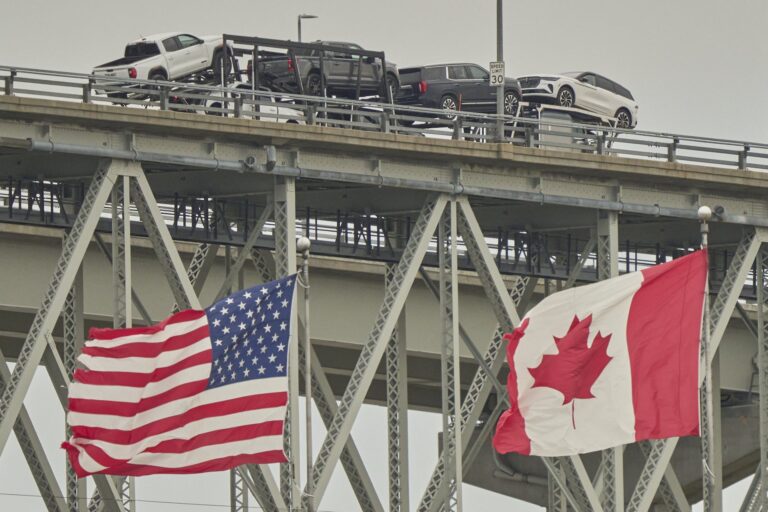
Exports of goods and services are the equivalent of about 34 per cent of Canada’s gross domestic product, compared with about 12 per cent in the U.S., a unique nation state blessed with near-perfect geography and a large population of rich consumers. We’re lucky to live nearby, but the decision in the 1980s to reinforce America’s economic gravity with a free trade agreement was a Faustian bargain—it made us richer, but at the price of dependency.
Related Articles

We have a long history of fighting that dependency. John A. Macdonald rushed the building of the railway to offset U.S. influence. Pierre Trudeau tried to fight its gravity with a “third option” trade policy. The original Team Canada trade missions led by Jean Chrétien were more about expanding frontiers: China in 1994; Brazil, Argentina, Chile in 1995; India, Pakistan, Indonesia, Malaysia in 1996; South Korea, the Philippines, Thailand in 1997; Mexico, Brazil, Argentina, Chile in 1998; Japan in 1999; back to China in 2001.
It’s hard to read that sketch of more recent Canadian trade history without feeling a little embarrassed. Trade patterns are shifting. In 2004, the U.S. accounted for about 84 per cent of the value of merchandise exports. That number dropped to 74 per cent in 2011, as China grew as a source of demand for commodities. But that’s as low as it got, excluding 2020, the year COVID-19 lockdowns disrupted commerce everywhere. Last year, the U.S. represented 78 per cent of exports.
Overall, the value of merchandise exports fell in 2023, a rare occurrence outside a global recession. That could be a glimpse of what “friendshoring” will look like. Let’s be honest about what this means. The world will be friendlier, but it also will be smaller. Canadian executives and investors are naturally drawn to the U.S. because the risk-adjusted returns are almost always better than anywhere else. Policies that enhance those natural advantages can only further dull the incentive to seek fortune off the continent.
As more and more international commerce takes place in regional silos, Boston Consulting Group predicts global trade will grow at an annual rate of 2.8 per cent through 2032, less than the consultancy’s forecast for annual increases in global economic growth over the same period.
Why does that matter? Trade grew faster than GDP during much of the 1990s and 2000s, a time when Canada ended a generation of budget deficits and used fat surpluses to ramp up spending and cut taxes. Inflation and interest rates were low. Globalization gave a small, open economy like Canada an opportunity to scale, while introducing import competition that helped lower prices.
The peace didn’t hold. America’s allies have been given a choice: with us or against us. The WTO was good for Canada because it offered an opportunity to avoid such binary choices. The more countries at the table, the less ability the U.S. had to dictate outcomes. It might take care of its “friends” in this new world trade order, but on its terms.
“The path we’re on now is not a good one,” Steve Verhuel, the former Canadian trade negotiator who now is principal at advisory firm GT & Co., said this week at the Canadian Crops Convention in Winnipeg, according to a report by The Western Producer. “We don’t want a world where the largest players set the rules.”
It might be too late. Boston Consulting sees the world dividing into five poles: “Stronghold North America;” China, which will continue to dominate trade in Asia; the fast-growing countries that make up the Association of Southeast Asian Nations (ASEAN) trading bloc; India, now the most populous country in the world; and Russia, which will continue to wield influence in countries that feel less compelled to kowtow to Washington’s demands.
Canada could come out OK in this new world. Peter Zeihan, the author of the bestselling book The End of the World Is Just the Beginning, argues that thanks to its geography and wealth, the U.S. will be among the last ones standing once climate change, aging demographics, and geopolitical rivalry reverse the tailwinds that have propelled globalization since the end of the Second World War. Boston Consulting predicts U.S. trade with its neighbours will grow by some $US466 billion over the next decade.
That’s a lot of growth. But it’s less impressive than the “remarkable” increase of US$616 billion that Boston Consulting predicts for trade between China and ASEAN, and it pales next to the US$1.2-trillion surge in trade that the firm says will occur between the 10 countries that make up ASEAN itself.
So, the real action is still in Asia. Ng has been working on a trade agreement with ASEAN, but there’s little reason to get excited, even if she manages to pull it off. We’re in Stronghold North America now. Why leave?
Kevin Carmichael is The Logic’s economics columnist and editor-at-large. He has spent more than two decades covering economics, business and finance for outlets including Bloomberg News, The Globe and Mail and the Financial Post, where he also served as editor-in-chief.



Loading...
Thanks for sharing!
You have shared 5 articles this month and reached the maximum amount of shares available.
CloseThis account has reached its share limit.
If you would like to purchase a sharing license please contact The Logic support at [email protected].
CloseGift the full article!
You have gifted 0 article(s) this month and have 5 remaining.
Recipients will be able to read the full text of the article after submitting their email address. They will not have access to other articles or subscriber benefits.
Photo: The Canadian Press/Justin Tang
Former Prime Minister of Canada Jean Chretien and members of Team Canada Trade Mission stand in front of the Terracotta Warriors at the Terracotta Museum in the city of Xi'an, China, Monday, Feb. 12, 2001.
Most Popular This Week



In-depth, agenda-setting reporting
Great journalism delivered straight to your inbox.
The Big Read
Beacon is building an AI empire by fixing Main Street’s software
Briefing
Inovia raises US$200M for new VC fund as it eyes AI’s impact
43% of eligible Albertans voted ahead of Monday’s referendum
AI chip company Tenstorrent raises US$1.5B, valuing it at US$6.2B
Best business newsletter in Canada
Get up to speed in minutes with insights and analysis on the most important stories of the day, every weekday.
Exclusive events
See the bigger picture with reporters and industry experts in subscriber-exclusive events.
Membership in The Logic Council
Membership provides access to our popular Slack channel, participation in subscriber surveys and invitations to exclusive events with our journalists and special guests.







