Skip to content

Canada's Business and Tech Newsroom

  • Professional Subscription
  • Partnerships & Advertising
  • Licensing & Syndication
Log In Subscribe
Welcome,
  • My Account
  • Log Out
  • Business
  • Tech
  • National
  • The Big Read
  • Briefings
  • Commentary
Search
Log In Subscribe
Welcome,
  • My Account
  • Log Out
Commentary

Carmichael: The art of trade war

There’s a tendency to think about a trade war with Donald Trump’s America in one of two ways.  

One warns that David-and-Goliath stories are best left to Bible study. 

Commentary

Carmichael: The art of trade war

Canada will need both fighters and philosophers to survive the next four years
By Kevin Carmichael
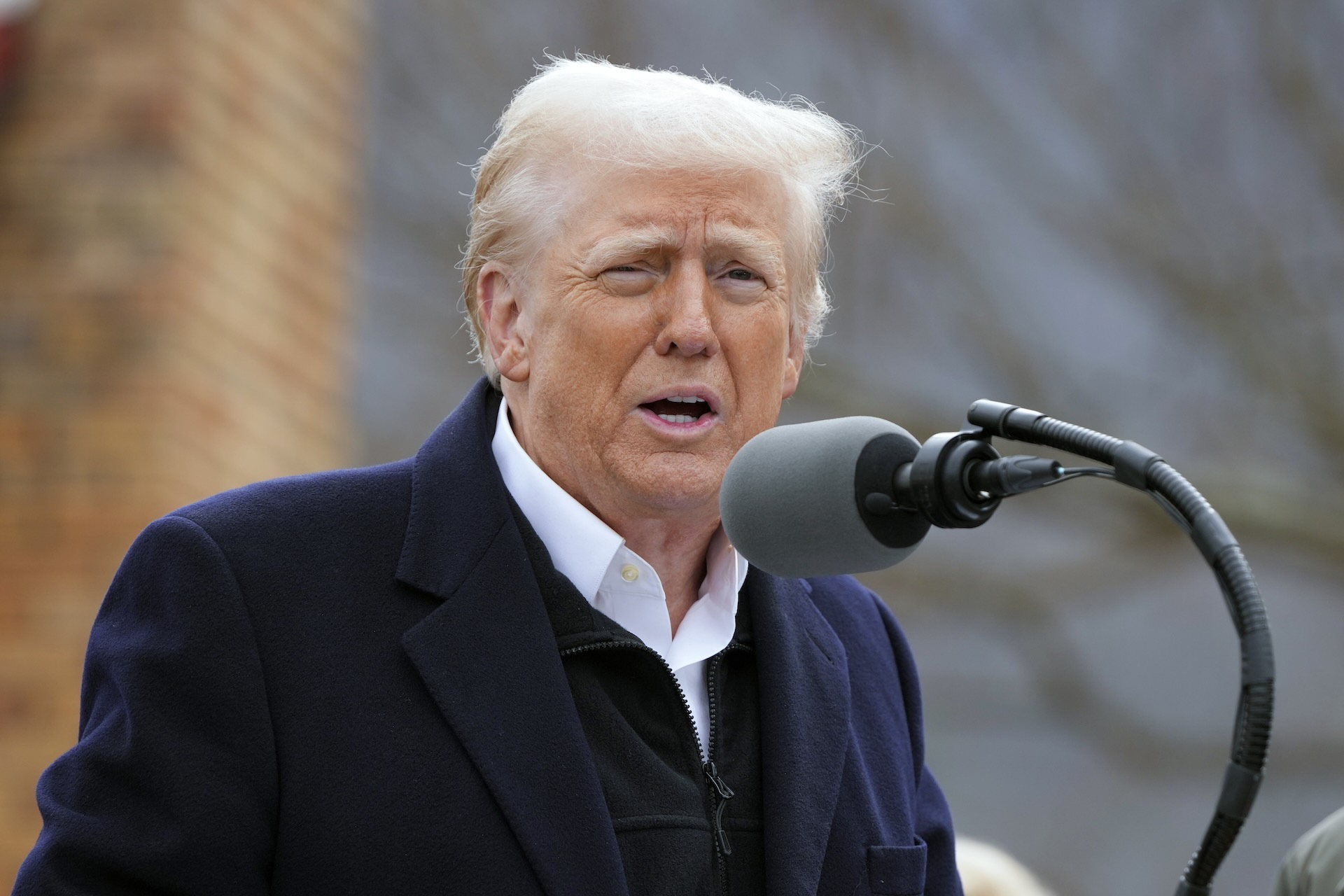
U.S. President Donald Trump speaking into a microphone.
U.S. President Donald Trump speaks in Swannanoa, N.C., on Jan. 24, 2025. Photo: AP Photo/Mark Schiefelbein
Jan 25, 2025
A A
A Small A Medium A Large
Share

Gift

Share

There’s a tendency to think about a trade war with Donald Trump’s America in one of two ways.  

One warns that David-and-Goliath stories are best left to Bible study. 

“When we retaliated during the steel and aluminum dispute with the United States, the evidence is crystal clear that import prices rose, rather than export prices falling,” University of Calgary economist Trevor Tombe said during a virtual event hosted by the Global Risk Institute this week. “To retaliate broadly is nearly to tax Canadians and to disrupt our own ability to produce.” 

The other also comes with a warning: ignore the economists and their notions of efficiency. In the real world, if you show weakness, the bully will keep coming back for more. 

“Clearly we have to retaliate,” Steve Verheul, Canada’s lead negotiator during the overhaul of the North American Free Trade Agreement during Trump’s first presidency, said at an event hosted by the Empire Club of Canada in Toronto on Jan. 21. “If we don’t retaliate, we’ll just keep paying and paying concessions and we’ll never know where the end point is.”

Related Articles

Trump tariffs could bring prolonged recession to Canada: RBC chief economist

By Aimée Look
Scott Moe and Doug Ford stand behind side-by-side lectern with signs on them reading "Open for Business." Both are wearing suits and poppies. The backdrop is a row of alternating Ontario and Saskatchewan flags.

Trump’s trade war threat pushes Ottawa to bust up interprovincial trade barriers

By Laura Osman and Joanna Smith
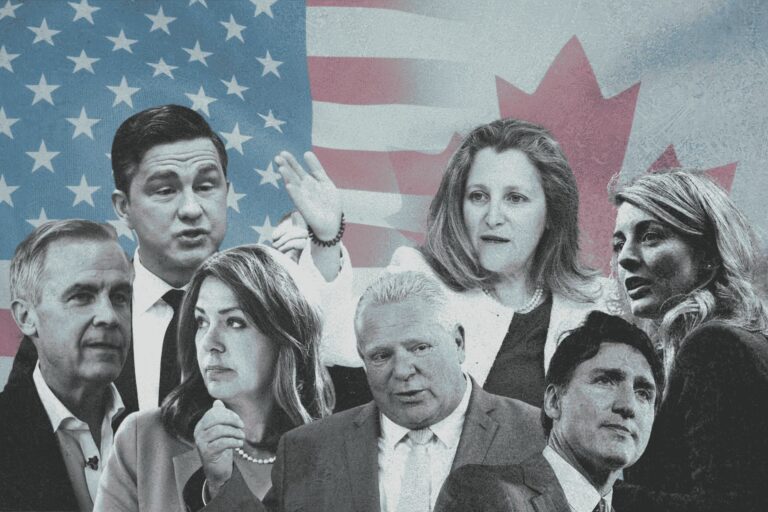
A collage of Mark Carney, Pierre Poilievre, Doug Ford, Melanie Joly, Danielle Smith, and Justin Trudeau in front of blended American and Canadian flags.

As Trump tariffs loom, who speaks for Canada?

By Joanna Smith

There’s something philosophical about the contrasting views. I reread David Adams Richards’s Mercy Among the Children over the holidays. It’s a meditation on how to cope with unprovoked violence. For Richards, the answer is to endure, but it’s hard not to notice that the book’s most virtuous characters die before they’re rewarded for their constancy. 

When it comes to a trade war, the choice of tactic needn’t be binary. Indeed, Tombe acknowledges that some retaliation could be helpful for “non-economic” reasons, and Verheul agrees with Tombe that Canada should put considerable effort into making the domestic economy stronger. Ensuring the marriage of their ideas could be the key to surviving what’s to come. 

When Trump last threatened to end the North American Free Trade Agreement, Prime Minister Justin Trudeau and the premiers threw everything they had at preserving their privileged access to the U.S. market. 

Kevin Carmichael, Frances Donald, and Steve Verheul sit on a stage in front of a red backdrop with the text "Empire Club of Canada." A podium is visible on stage with them, as well as screen projecting their image.
The Logic’s Kevin Carmichael, RBC chief economist Frances Donald and Steve Verheul, Canada’s former chief trade negotiator, at a Jan. 21 Empire Club event in Toronto. Photo: Empire Club/Handout

None of that political energy was used to make the Canadian economy more resilient to such threats. They preserved a version of NAFTA, but dispersed without doing anything about Canada’s domestic vulnerabilities. The housing, immigration and productivity crises are testaments to the complacency that took hold with the country’s belief that the new trade agreement with the U.S. and Mexico would ensure our prosperity.   

The debate about whether Canada will retaliate when Trump next applies tariffs appears to be over. Trudeau supports the principle of dollar-for-dollar retaliation, and Ontario Premier Doug Ford has mused publicly about restricting electricity exports and removing American liquor and wine from the shelves of the provincially owned liquor monopoly. 

But there are also signs that Canada’s leaders are working on a broader strategy to bolster the home front. Whatever the reason, there appears to be a newfound understanding that Canada’s vulnerability is rooted in economic weakness. The most vivid example is productivity—while U.S. output per hour worked has soared over the past couple of years, Canada’s has declined almost every quarter for three years running. The power imbalance between Washington and Ottawa has probably never been greater. 

The biggest surprise of recent weeks might be that Ottawa and the provinces and territories have stopped taking economic growth for granted. They appear poised to accelerate talks on erasing interprovincial trade barriers that cost the country billions in lost gross domestic product. “There is no question in my mind that reducing internal barriers to trade is beneficial for the Canadian economy, and it’s also beneficial in terms of our negotiations on tariffs,” Anita Anand, the internal trade minister, told The Logic this week. 

To be sure, there is consternation in Alberta about reports that Ottawa might be willing to curtail oil exports in any retaliatory strike. That could jeopardize the unity necessary to expand Canada’s internal trade agreement and other domestic initiatives. Writing for The Hub, Tombe said restricting oil and gas exports would be “unwise,” as U.S. sales of those commodities represent a disproportionate amount of national wealth and jobs. 

Tombe, one of the country’s most prolific and respected thinkers about economic policy, noted at the Global Risk Institute event that there’s precedent for Canada turning the other cheek when met with U.S. aggression. 

“In 1971, for example, we did not retaliate,” when then-president Richard Nixon abruptly introduced a tariff of 10 per cent on imports, Tombe said. “We engaged to the extent that we [could].”

The Nixon presidency is a good point of comparison for Trump. But the U.S. and Canada didn’t have a comprehensive trade agreement in place in 1971. A formal trade agreement with the U.S. was supposed to protect Canada and Mexico from such arbitrary swipes. The Canadian desire to retaliate might seem emotional, but in the current context, it’s really about trying to preserve the sanctity of trade law.

Gift the full article

Making it harder for American companies to pad their profit margins by shipping excess production north is probably the only way to get Trump’s attention. The U.S. is self-sufficient in oil and doesn’t really need us to make cars and trucks. Still, imports of pharmaceuticals, various metal ores and concentrates, and miscellaneous consumer goods all spiked in November amid the tariff threats. That’s evidence of stockpiling, and shows that at least some Americans recognize what they have in Canada. 

Kevin Carmichael is The Logic’s economics columnist and editor-at-large. He has spent more than two decades covering economics, business and finance for outlets including Bloomberg News, The Globe and Mail and the Financial Post, where he also served as editor-in-chief. 

#commentary #CUSMA #Donald Trump #economy #interprovincial trade #productivity #Stever Verheul #tariffs #trade #Trevor Tombe #U.S.-Canada relations #USMCA

Sponsored Content

What organizations get wrong when operationalizing AI

By Jessica Aftimus Rosa

How do we invest in tomorrow, today?

By Jessica Aftimus Rosa

The road to risk-smart regulation

By Deborah Aarts
Paid promotional content

Loading...

Thanks for sharing!

You have shared 5 articles this month and reached the maximum amount of shares available.

Close
This account has reached its share limit.

If you would like to purchase a sharing license please contact The Logic support at [email protected].

Close
Want to share this article?

Upgrade to all-access now

Close
Gift the full article!

You have gifted 0 article(s) this month and have 5 remaining.

Copy link and gift
Copy Link
Email to a friend
Send Email
Gift on Social Media

Recipients will be able to read the full text of the article after submitting their email address. They will not have access to other articles or subscriber benefits.

U.S. President Donald Trump speaking into a microphone.

Photo: AP Photo/Mark Schiefelbein

Kevin Carmichael, Frances Donald, and Steve Verheul sit on a stage in front of a red backdrop with the text "Empire Club of Canada." A podium is visible on stage with them, as well as screen projecting their image.

The Logic’s Kevin Carmichael, RBC chief economist Frances Donald and Steve Verheul, Canada’s former chief trade negotiator, at a Jan. 21 Empire Club event in Toronto.

Most Popular This Week

A shot taken through a tangle of wires, circuits and computer modules of a man working at a desk. He's looking downward through black-rimmed glasses.
The Big Read

Quantum startups are shrinking the gap between theories and things that actually work

By David Reevely
Person holding a smartphone in one hand and a credit card in the other, indicating online payment or shopping activity.
News

Ottawa chooses the U.S.-based Financial Data Exchange to set open banking data standards

By Claire Brownell
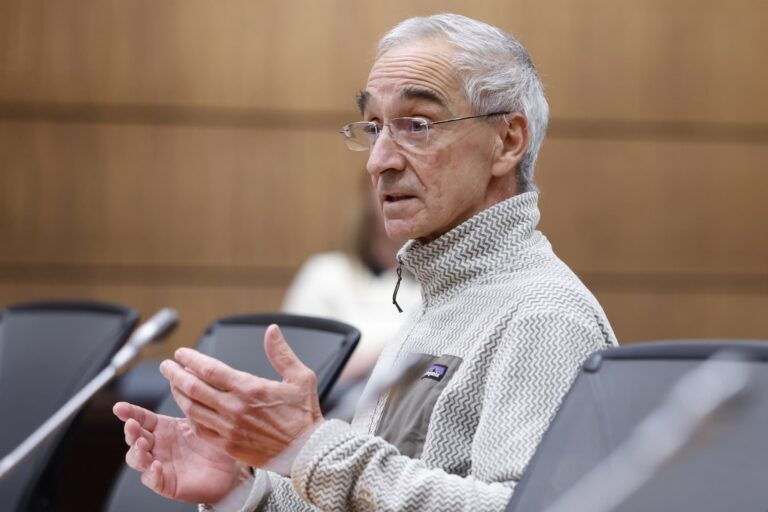
An image of an older man sitting in a desk chair in a room with brown walls. He is speaking into a microphone and gesturing, with a neutral facial expression. He is wearing glasses and a grey zip-up sweater.
News

MPs grill Patrick Pichette over his ties to Cohere

By Catherine McIntyre
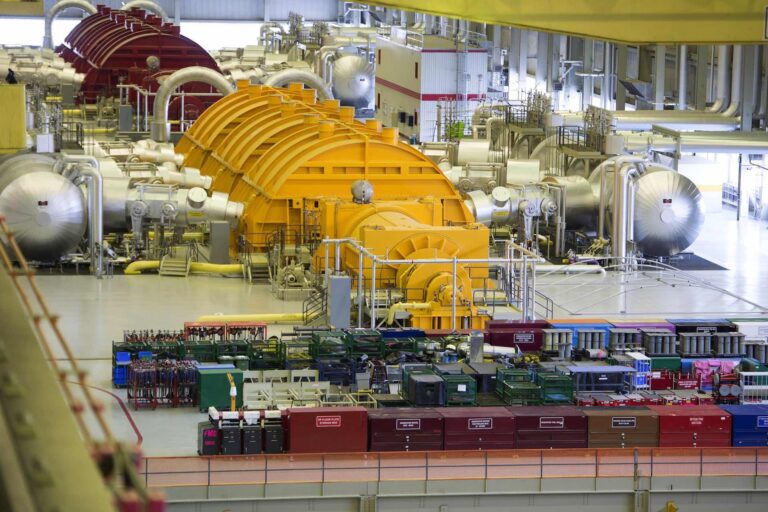
A wide, high-angle shot of steel-clad turbines in cavernous but well-lit industrial space. There are tanks and pipe networks all around the turbine housings, one of which is painted red; the other yellow.
News

Canada’s plan for new Candu reactors depends on heavy water it no longer makes

By David Reevely

In-depth, agenda-setting reporting

Great journalism delivered straight to your inbox.

A man wearing glasses and a blue suit and tie sits at a wooden table with a glass of water in front of him. He is gesturing and speaking. There is a blue and yellow abstract painting on the wall behind him.
Commentary

Carmichael: Macklem steels the Bank of Canada for a more shock-prone world

By Kevin Carmichael

Briefing

Mackenzie Valley Highway project gets national-interest designation

By David Reevely   |   Nov 27, 2026

Ottawa pumps $6.5B into Canada’s tariff-battered forest industry

By Charlie Gillis   |   Nov 27, 2026

Wealthsimple users slam cuts to perks and interest rates

By Claire Brownell   |   Nov 27, 2026

Best business newsletter in Canada

Get up to speed in minutes with insights and analysis on the most important stories of the day, every weekday.

Exclusive events

See the bigger picture with reporters and industry experts in subscriber-exclusive events.

Membership in The Logic Council

Membership provides access to our popular Slack channel, participation in subscriber surveys and invitations to exclusive events with our journalists and special guests.

Recent Popular Stories

Commentary

Carmichael: Mark Carney’s leadership style is creating key-man risk

By Kevin Carmichael   |   Nov 21, 2026
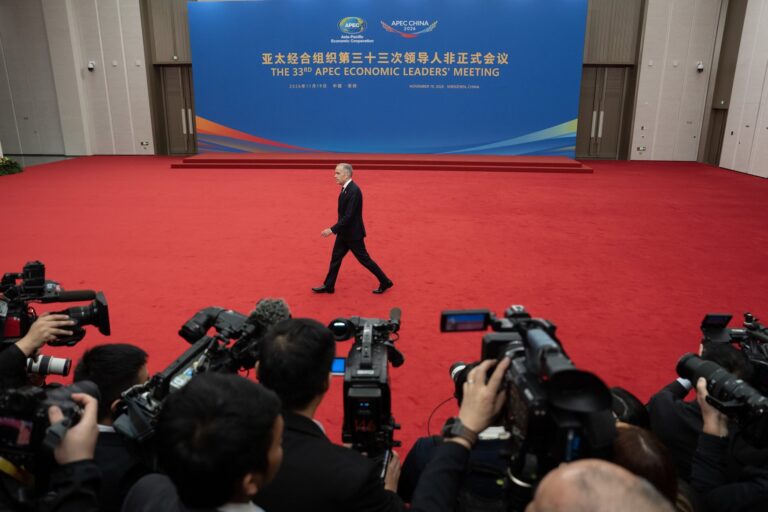
An image of Prime Minister Mark Carney walking across a red carpet. He is wearing a dark suit and tie. Behind him is a large blue banner. In front of him are many cameras and people behind them.
News

Canada’s plan for new Candu reactors depends on heavy water it no longer makes

By David Reevely   |   Nov 20, 2026
A wide, high-angle shot of steel-clad turbines in cavernous but well-lit industrial space. There are tanks and pipe networks all around the turbine housings, one of which is painted red; the other yellow.
News

MPs grill Patrick Pichette over his ties to Cohere

By Catherine McIntyre   |   Nov 20, 2026
An image of an older man sitting in a desk chair in a room with brown walls. He is speaking into a microphone and gesturing, with a neutral facial expression. He is wearing glasses and a grey zip-up sweater.
Exclusive

Dominion Dynamics lands $17M contract to build a drone minehunter for the navy

By David Reevely   |   Nov 20, 2026
A shot of Eliot Pence seated onstage with a headset mic. He is speaking, and gesturing with both hands.
News

Conservatives push Carney to seal EU trade deal before Canada becomes an associate member

By Joanna Smith   |   Nov 23, 2026
A photo of Stephanie Kusie standing and speaking in the House of Commons while MPs seated around her look on.
News

Koho says it’s going after fraudsters who used a tech glitch to falsely credit accounts

By Claire Brownell   |   Nov 17, 2026
An image of a man with dark hair and a beard, wearing a blue-grey suit jacket and a white shirt. He is standing with his hands in his pockets while leaning against a glass railing.

Canada's most influential executives and policymakers are reading The Logic

  • CPP Investments
  • Sun Life Financial
  • C100
  • Amazon
  • Telus
  • Mastercard
  • bdc
  • Shopify
  • Rogers
  • RBC
  • General Motors
  • MaRS
  • Government of Canada
  • Uber
  • Loblaw Companies Limited
logic-logo

Canada's Business and Tech Newsroom

100% human-crafted journalism

Newsroom

  • News Tips
  • AI Policy
  • Editorial Disclosures
  • Story Pitches

Company

  • About Us
  • Terms of Service
  • Privacy Statement
  • Corporate Information

Contact

  • Contact Us
  • Advertise
  • FAQs
  • Work at The Logic

© 2026 The Logic Inc. All Rights Reserved.

Trusted by leaders

Error

Account creation failed.

Please email us at [email protected].

Create Account

[wppb-register form_name=”cozmo-registration-form-for-modal”]

I do have an account
Login
or

[wppb-login]

I don’t have an account