Listen Now
0:00
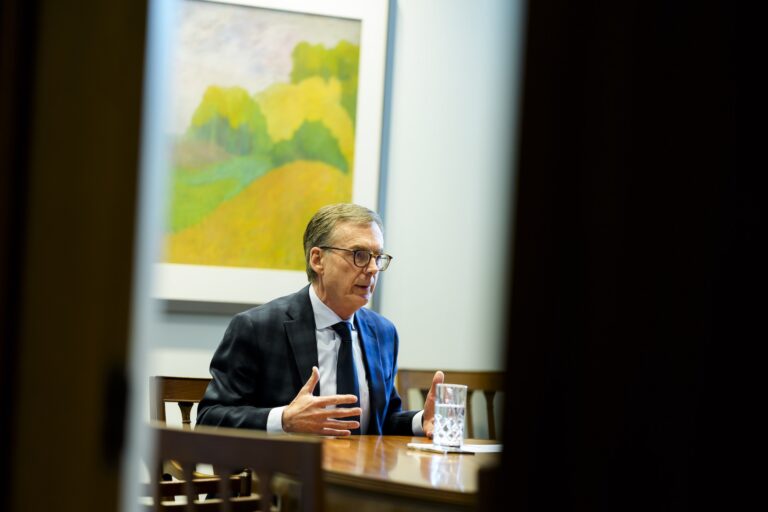
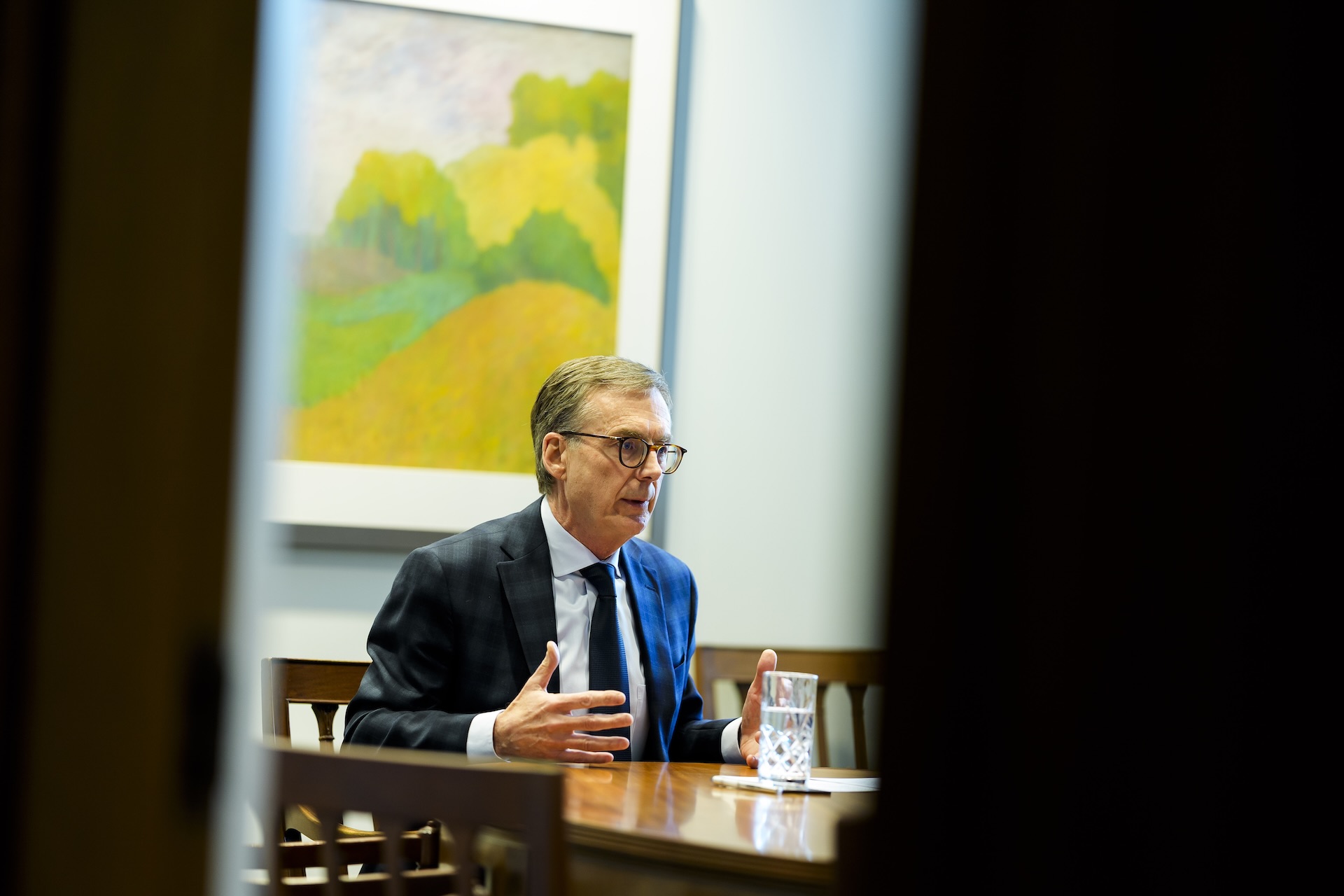
Tiff Macklem gave no thought to extending his tenure as Bank of Canada governor. “I’m going to miss so many things,” Macklem said Tuesday in an interview, his first since announcing that he will retire when his seven-year term ends in June. “But I’m going to be 66. It’s a lot. It’s full on. You’ve got to be on all the time. It’s going to be time for the next person.”
Macklem can forget about riding into the sunset. He will spend his final months attempting to calibrate interest rates for contradictory conditions: weak economic growth and uncomfortably high, hot inflation. That, while keeping a wary eye on whatever it is that’s happening with the AI trade in global stock markets. “You’re seeing a lot of volatility because it’s hard to value something we’ve never had before,” Macklem said. “That’s part of disruptive technology. It’s hard to value.”
Related Articles


The last Bank of Canada governor who re-upped for a second term was Gerald Bouey in 1980, a few years before Macklem joined the central bank as a young economist with degrees from Queen’s and Western universities. None of those one-and-done governors who preceded Macklem were forced to confront crises from the start to the finish of their term, like he has. And no governor has had to face down one calamity after another while at the same time rewiring the institution off the side of his desk.
It’s easy to forget that the Bank of Canada is also now a regulator. It supervises payments firms and the new Real-Time Rail fast payments system. Last year, Prime Minister Mark Carney entrusted the Bank of Canada with regulating stablecoins and making open banking a reality—a job no one in Ottawa has been able to finish since the idea first surfaced almost a decade ago.
“There are so many different dates for so many different things,” Macklem said when I asked if he had a target for completing the work on open banking. “We’re working as quickly as we can. You know, there are a number of things. Real-Time Rail is just starting to go live. Supervision of retail payments is well on its way. We’ve got a large number of registered participants. We’ve started supervising them. The stablecoin legislation has been passed, the draft regulations are out for comment. And then, yeah, open banking. We’re working on that. That’s not as far along as the others. I’d have to check all the dates.”
I let that answer run because I think it shows what a day in the life of Tiff Macklem must be like. As we spoke, his chief of staff passed him an iPad with a diagram of all those moving parts. Macklem relayed that a draft of the open banking regime is scheduled for release in early 2027, and if all goes well, Canada will finally have a more competitive financial system in place by this time next year. “I won’t be around,” Macklem said. “The new governor will have to deal with this.”
Macklem will have done the heavy lifting, though. The new governor also will inherit a revised battle plan for what Macklem reckons will be a constant barrage of shocks of the type that he’s had to manage over and over again. “I’ve become increasingly convinced that this more shock-prone world, particularly more supply shocks, isn’t going to go away anytime soon,” Macklem said. “This seems to be, unfortunately, the new normal. Much of what we’ve done has been trying to adapt to that world.”
If Macklem is right, anticipating what economists call the Bank of Canada’s “reaction function” will be more difficult from now on. You see it already in the angst around Macklem’s decision to raise interest rates last month and what he might do at the next policy announcement in December. In a speech Tuesday, Macklem made a point of observing that lower oil prices mean the Bank of Canada’s most recent inflation forecast probably is too high. All things equal, that lowers the odds of a rate increase next month. Yet the dollar rose. “It seems clear that officials are overwhelmingly convinced of an imminent inflation threat and see the balance of risks favouring pre-emptive action,” wrote Karl Schamotta, chief market strategist at payments firm Corpay.
Taking the bullets from angry traders as they adjust to a world ruled by supply instead of demand will be something else Macklem does for the next governor. There’s an argument that central banks are ill equipped to fend off supply shocks; an interest rate increase in Canada will do nothing to shield oil tankers from Iranian mines in the Strait of Hormuz.
Yet the interest rate is the tool central banks have available. The Bank of Canada recently unveiled a souped-up forecasting model called Prima that follows price shocks through the economy; in theory, it should be able to isolate inflation pressures at the source and anticipate the magnitude of the threat.
The central bank now gathers more data and talks to more people. Its leaders give more speeches and interviews, a recognition that maintaining trust requires them to get out of Ottawa. The most significant outcome from the research that went into the mandate renewal was to simplify how it talks about inflation. Policymakers determined that their various measures of “core” price pressures were confusing people. The emphasis now will be the target—the year-over-year change in the consumer price index—supplemented by a new dashboard of gauges that control for volatility and track the breadth of price pressures.
It might not be a perfect defence, but Macklem, who has been fighting inflation for the better part of four decades, remains convinced it will work. “We are adapting,” he said.
I couldn’t fit everything Macklem had to say in one column. Here are some other highlights from our conversation:
- There’s debate over whether the Bank of Canada raised interest rates because it’s worried about higher oil prices spreading to other prices, or because growth is stronger than many anticipated. The short answer is both, but it’s primarily the former. “There’s slack in the economy,” Macklem said. “Keep in mind, our interest rate, even at 2.5 per cent, is not restrictive. We’re not restraining the economy. We put in some extra stimulus at the beginning of Trump’s tariffs.” But the situation has changed, he said. “The main development has been higher energy prices, and in particular, the fact that has now gone on for eight or nine months. It’s not something that companies can just absorb.”
- The background report on the Bank of Canada’s mandate renewal talks of making “fuller use” of the flexibility offered by the comfort zone around the two per cent inflation target. “When inflation is too high you’ve got to get it back [to target], but you want to do that in a way that doesn’t have too many short-run negative consequences for the economy,” Macklem said. “The band gives you some flexibility to take a bit of time. If you’re way outside the band, you better get yourself back in the band. But once you’re back in the band, you have a bit more flexibility. You’re back into a more normal zone.
- Finally, there’s talk of linking the Real-Time Rail to the European Union’s payment system. Macklem is a fan of the idea. “It’s got potential,” he said. “There is reason to be optimistic about it. There will always be some issues around technology, but I’m pretty confident that the tech experts will be able to work those through. Then you’ve got to work through the governance. If something goes wrong, who’s in charge? Who’s accountable? What happens?”
Kevin Carmichael is The Logic’s economics columnist and editor-at-large. He has spent more than two decades covering economics, business and finance for outlets including Bloomberg News, The Globe and Mail and the Financial Post, where he also served as editor-in-chief.