Justice Minister Arif Virani has said the government has no plans to remove the hate crimes provision from the government’s Online Harms Act, despite pressure to do so. “We treat this as a package. We consulted on it as a package. We presented it as a package,” Virani said in an interview with The Logic. “People are literally dying in this country from hatred that commences online,” he added, referencing the 2017 attack on a Quebec City mosque, which left six dead, as well as a 2021 premeditated hit-and-run in London, Ont., that killed four members of a Muslim family.
Skip to content
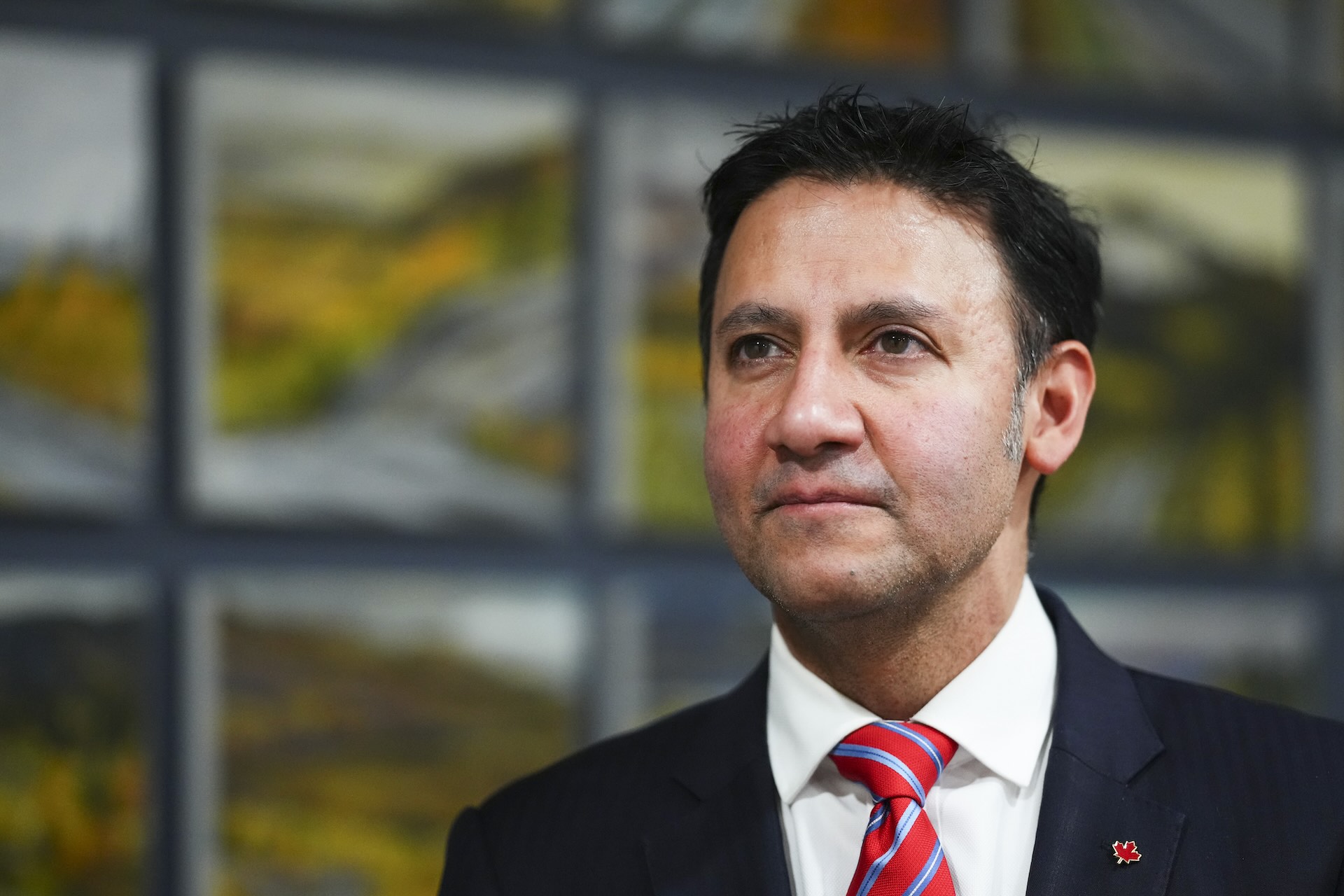 Justice Minister Arif Virani in Ottawa in December 2023. Photo: The Canadian Press/Sean Kilpatrick

News
Hate crimes provision will stay in Online Harms Act, says Virani
The Online Harms Act is a ‘package’ and the hate crimes provision should not be removed, Justice Minister Arif Virani told The Logic
Justice Minister Arif Virani in Ottawa in December 2023. Photo: The Canadian Press/Sean Kilpatrick
Justice Minister Arif Virani has said the government has no plans to remove the hate crimes provision from the government’s Online Harms Act, despite pressure to do so. “We treat this as a package. We consulted on it as a package. We presented it as a package,” Virani said in an interview with The Logic. “People are literally dying in this country from hatred that commences online,” he added, referencing the 2017 attack on a Quebec City mosque, which left six dead, as well as a 2021 premeditated hit-and-run in London, Ont., that killed four members of a Muslim family.
Make or break: Virani’s comments come as the Liberal government tries to push forward the legislation ahead of a looming federal election. But some worry the scope of the law is too broad. Carol Todd, whose daughter Amanda died by suicide in 2012 after instances of blackmail and cyberbullying, is an advocate for the act, but worries that the government’s insistence to include changes to the country’s hate crimes laws in the legislation will ultimately stymie its passage into law.
“It could be the make-or-break deal of the act, and if this act doesn’t pass, then what happens?” Todd told The Logic. The hate speech provision, she added, “belongs in a law, but it doesn’t belong in this one.”
Related Articles
Partisan divide: Todd’s worry underscores the political divide over the proposed changes to the law, which would make hate-based acts separate indictable offences punishable by up to life imprisonment under the Criminal Code.
Conservative Party MP Larry Brock recently accused the government of wanting to ban “opinions that challenge the Prime Minister’s ideology,” and the party has vowed to repeal the law should it form the next government. Last week, the Conservatives used a parliamentary procedure in an attempt to delay the second reading of the bill—while Conservative MP Michelle Rempel Garner introduced her own online-harms legislation.
But Virani questioned the seriousness of the Conservative’s proposed legislation. “We consulted on this bill for four-and-a-half years. They may have consulted over some summer barbecues,” he said—and hinted the government’s bill could pass as it stands with the help of either the Bloc Québécois or the NDP.
A long road: The Liberal government first proposed online-harms legislation in 2019, following mass shootings at two New Zealand mosques. Yet progress has been slow, with a government advisory panel struggling to even define what exactly constitutes online harms. The first version of the government’s legislation was almost universally panned. The file was transferred to Justice from Heritage Canada last fall, and Virani tabled a new version of the bill in February. Meta, notably, came out in favour of it.



Loading...
Thanks for sharing!
You have shared 5 articles this month and reached the maximum amount of shares available.
CloseThis account has reached its share limit.
If you would like to purchase a sharing license please contact The Logic support at [email protected].
CloseGift the full article!
You have gifted 0 article(s) this month and have 5 remaining.
Recipients will be able to read the full text of the article after submitting their email address. They will not have access to other articles or subscriber benefits.
Photo: The Canadian Press/Sean Kilpatrick
Most Popular This Week



In-depth, agenda-setting reporting
Great journalism delivered straight to your inbox.
News
What Canada will pitch to the world’s investors at next week’s high-stakes summit
Briefing
A major carbon capture and storage project broke ground in central Alberta Wednesday
Banks say trade war remains manageable, but some see pockets of risk
RBC launches $1.4B fund to back Canadian tech companies
Best business newsletter in Canada
Get up to speed in minutes with insights and analysis on the most important stories of the day, every weekday.
Exclusive events
See the bigger picture with reporters and industry experts in subscriber-exclusive events.
Membership in The Logic Council
Membership provides access to our popular Slack channel, participation in subscriber surveys and invitations to exclusive events with our journalists and special guests.