
Listen Now
0:00
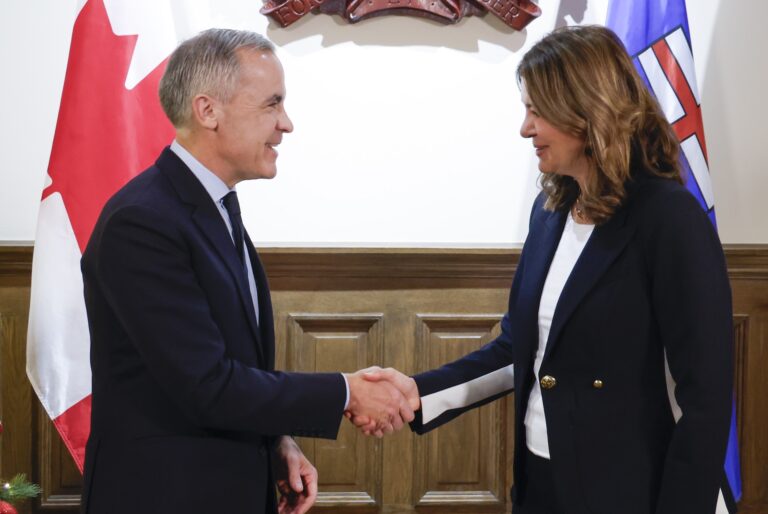
Prime Minister Mark Carney appeared to have brokered a compromise Thursday between Alberta and British Columbia that will allow a new oil pipeline to be built to the Pacific Coast, with the help of federal guarantees for B.C.’s interests and billions of dollars backing major projects in the province.
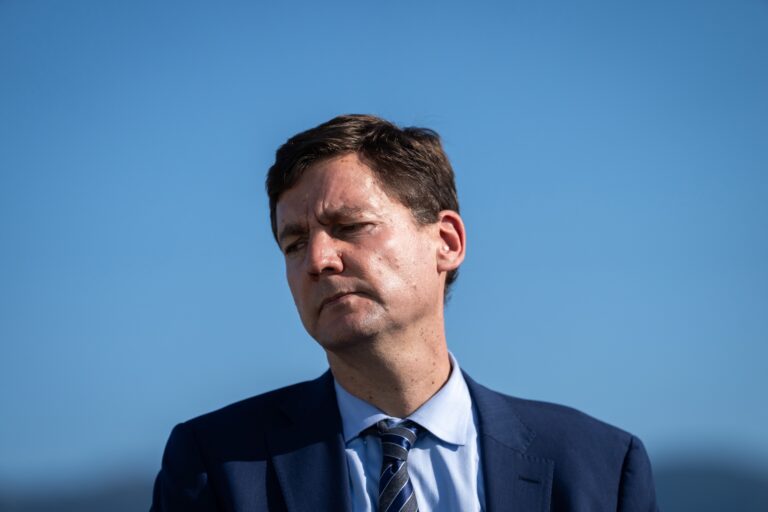
Carney began his day with a news conference in Vancouver alongside Premier David Eby, at which they revealed the terms for Eby’s acquiescence. The prime minister was to finish the day in Calgary, making another announcement on “proposed new energy infrastructure to diversify Canadian exports” with Alberta Premier Danielle Smith.
Related Articles
B.C.’s end of the pipeline deal
The new Ottawa-Victoria agreement locks in an existing federal ban on tankers loading up at ports on B.C.’s northern coast, meaning a new pipeline would have to take a somewhat less controversial southern route than Alberta had previously been considering.
“The fact that that tanker ban is uplifted, respected and committed to again by the federal government in this agreement is a significant win for British Columbia,” Eby said, particularly since an interprovincial pipeline is in Ottawa’s bailiwick and Carney had no formal obligation to talk about terms with the B.C. government.
The deal promises that B.C. will “share meaningfully in the economic upside of the project,” likely through an annual royalty payment to the province and a fund to pay for environmental damage from future leaks.
In exchange for those and other procedural conditions (such as a federal pledge to uphold First Nations treaty rights) British Columbia “commits to acting in good faith to engage in the necessary routing and permitting discussions, within its jurisdiction.”
The province also promised to co-operate on adding capacity to the existing Trans Mountain pipeline—in exchange for a share of the benefits.
Waiting game
Over in Alberta, Smith had initially planned to unveil new details about the province’s proposed pipeline route on Tuesday, ahead of the original target date for submission laid out in her own memorandum of understanding with the federal government.
It became clear earlier this week, though, that the unveiling would be delayed until after Canada Day. The announcement was rescheduled twice before a likely reason for the confusion emerged: Carney’s surprise appearance alongside Smith at Thursday evening’s announcement in Calgary.
Strange bedfellows
With a B.C. New Democratic Party premier acceding to a new pipeline in the morning and an arch-conservative Alberta premier allowing him at her main announcement in the evening, Carney managed an unusual doubleheader in Canadian politics.
Last fall, Smith called the outline agreement on a pipeline the start of a new “grand bargain” between Alberta and Ottawa. Eby, at the time, called it a “vampire” proposal.
On Thursday, Eby said the concessions he’d secured are “a sign of leadership and a commitment to collaborative federalism, to a Canada that works.” He stopped short of saying he’d come to support a new pipeline, though.
More broadly, B.C.’s ideals of economic growth, environmental protection and reconciliation with Indigenous Peoples are reflected in the agreement, he said, because “Prime Minister Carney understands British Columbia.”
Other B.C. projects
When Carney and Smith agreed on the outline of a pipeline plan last fall, Eby complained that it was a distraction from more realistic projects that would be good for the economy sooner. At the Vancouver announcement, Carney pledged billions in federal support for several of them.
The biggest-dollar commitment is $3.5 billion for B.C.’s North Coast Transmission Line, a major electricity corridor meant to power mines and natural gas facilities, in addition to communities from Prince George to Terrace.
The federal government will also pay up to $3 billion to cover a third of the cost of replacing the George Massey Tunnel under the Fraser River, a bottleneck in Lower Mainland transportation south of Vancouver.
An expansion of the Red Chris copper mine will get a $500-million federal investment, and B.C.’s child-care system will get $630 million, Carney promised.
He also made less concrete promises to back liquefied natural gas projects; expansions to the ports of Vancouver, Prince Rupert and Stewart; and growth in B.C.’s wind turbine manufacturing sector. Carney also pledged to buttress the province’s tariff-damaged steel and softwood lumber sectors.














