Skip to content

Canada's Business and Tech Newsroom

  • Professional Subscription
  • Partnerships & Advertising
  • Licensing & Syndication
Log In Subscribe
Welcome,
  • My Account
  • Log Out
  • Business
  • Tech
  • National
  • The Big Read
  • Briefings
  • Commentary
Search
Log In Subscribe
Welcome,
  • My Account
  • Log Out
News

Canadian firms are ready to help with digital sovereignty. Their challenge is getting approved

Listen Now
0:00
News

Canadian firms are ready to help with digital sovereignty. Their challenge is getting approved

Montreal software company Nakisa spent 18 months documenting its security practices to qualify for contracts—a journey others will find long and costly, its CEO warns

By Laura Osman
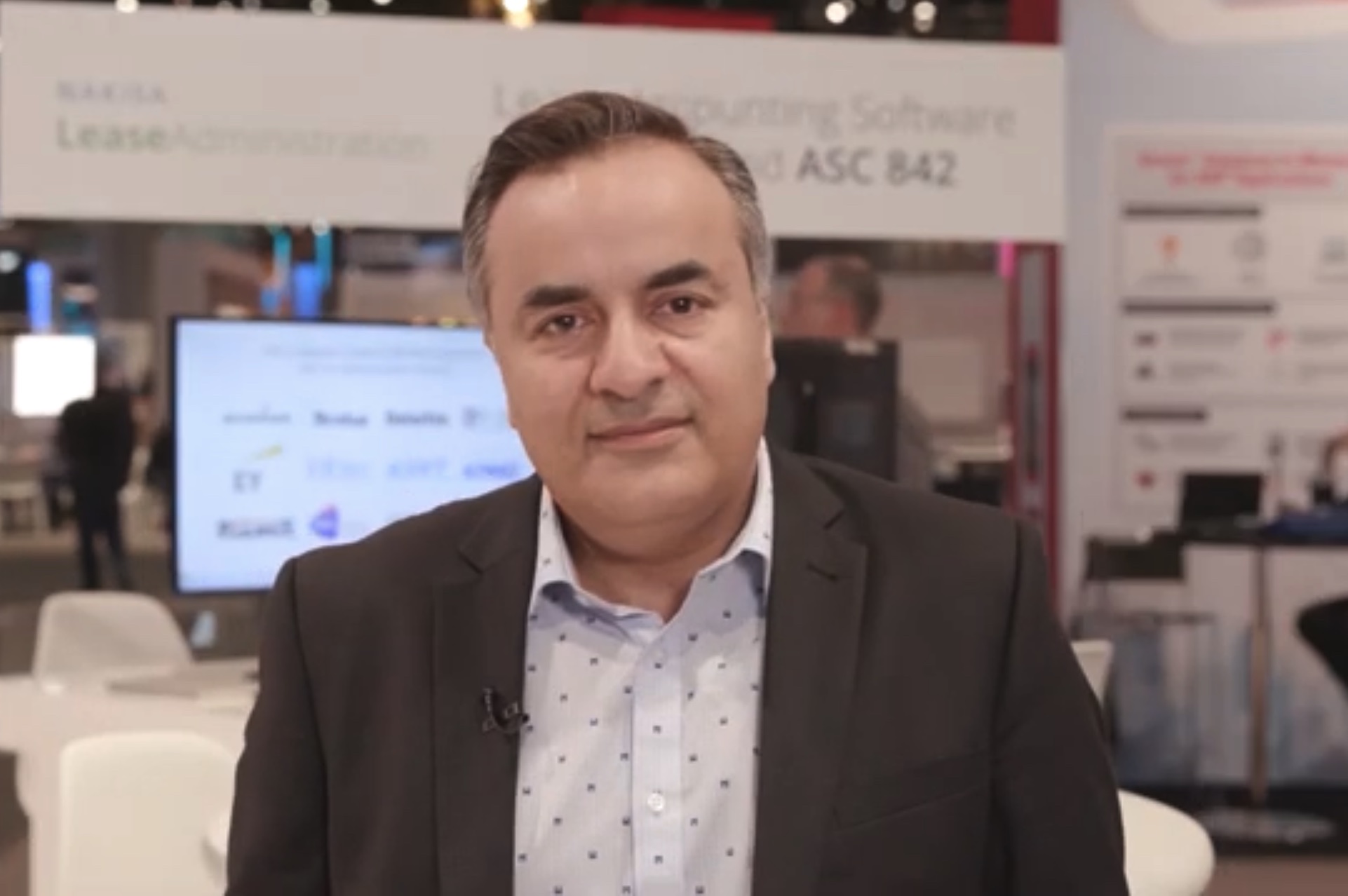
Nakisa CEO Babak Varjavandi in a screencapture from the floor of a tech show. He's wearing a suit jacket and open-collared shirt.
Nakisa CEO Babak Varjavandi said proving his company met the government’s security standards took about 18 months. Photo: YouTube/Nakisa
Jul 9, 2026
A A
A Small A Medium A Large
Share

Gift

Share

Listen Now
0:00

OTTAWA — A Quebec software company now has the security credentials to compete for sensitive Canadian government contracts alongside U.S. giants like Microsoft and IBM, but the firm says it took more than a year of government audits to qualify. 

The experience of Nakisa, a Montreal-based enterprise software firm, has highlighted the challenges for Ottawa as it tries to procure more Canadian technology—part of a wider push for greater sovereignty over the country’s data.

Talking Points

  • Nakisa, a Montreal-based enterprise software firm, spent a year and a half clearing government safety standards in a bid to compete for sensitive federal contracts
  • The credentials will open up opportunities in Ottawa that are reserved for U.S. giants like IBM and Microsoft, but other Canadian firms may find the time and cost too much, said CEO Babak Varjavandi
  • The government may have to streamline its processes if it wants Canadian companies to have access to government procurement 

This spring, Nakisa cleared one of Ottawa’s toughest security hurdles in achieving “Protected B” cloud service standards. The designation from the Canadian Centre for Cyber Security lets the government grant the company access to sensitive data that could cause serious harm if compromised. 

Founded in 2004, the company develops AI-powered business operations platforms for large enterprises, and is well established in its space. Nakisa’s client list includes household names like Pfizer, Walmart and Delta Air Lines. 

Even so, CEO Babak Varjavandi said the process to prove the company met the government’s standards was arduous. “It took us about a year and a half to do,” he told The Logic. 

Related Articles

A shot of a grey naval patrol ship passing beneath a celebratory arch of water being sprayed from an adjacent tugboat.

What big boats can teach Canada about creating a tech industry boom

By Laura Osman
A worker in cherry picker removes signage on a large building formerly used by Amazon.

Documents reveal why Ottawa can’t stop using Amazon Web Services

By Laura Osman

The process involved roughly 300 criteria, such as meeting encryption standards, each with multiple requirements. Nakisa already met most of the demands as part of other independent security certifications, so the time was mainly spent validating. “For every one of them, you need to properly document it in a format that they want, you need to give it to them, they need to certify,” Varjavandi explained. 

That process comes at a cost that not all small businesses can afford, he said.  

The government launched its Buy Canadian policy last year to open more of its multibillion-dollar procurement budget to domestic firms. The government’s buying power is also a useful tool to protect Canadian data, said Vass Bednar, managing director of the Canadian Shield Institute, a think tank focused on economic sovereignty.

Canadian firms are governed by Canadian rules, are subject to Canadian privacy laws and many store their data in the country, she said. “Everything on your digital sovereignty dream list,” she said. 

Still, positioning Canadian companies to compete with large international firms may take concerted effort, Bednar said, especially in making sure administrative burdens don’t box them out of opportunities. 

The Canadian Centre for Cyber Security assesses whether companies meet the standards, which firms must demonstrate before they can enter into agreements with the government to provide secure, cloud-based services, including software, to federal institutions. 

The government doesn’t track how many companies have achieved Protected B status, Jeremy César, a spokesperson for Shared Services Canada, said in a statement. But so far, Ottawa has agreements with eight firms to provide those sensitive services. ThinkOn, an Etobicoke, Ont.-based cloud infrastructure company, is the only Canadian firm on the list.

“It’s going to be really hard for Canadian counterparts that tend to be smaller in scope to go through those hoops,” Bednar said.

Earlier this week, the government announced changes meant to prevent small Canadian firms from being buried under complicated paperwork when they bid for routine government contracts. But Ottawa also wants to encourage firms to apply for sensitive work, including as part of its defence industrial and AI adoption strategies, which will require more stringent security standards. 

Though the process could be shorter, Varjavandi said, the government must not sacrifice data safety. “I do believe that you need to have these kinds of security validation and these kinds of processes, because you don’t want this information to get out,” he said. 

Nakisa has done approximately $2.9 million of work for the federal government over the last 20 years, according to a government database of contracts over $10,000. Now that it has cleared the security hurdles, it is pursuing more federal contracts. 

Gift the full article

The government is already eyeing Nakisa’s software to help manage federal human resources, finance and real property operations, according to a briefing note prepared for the associate deputy minister of Innovation, Science and Economic Development, and obtained by The Logic through access-to-information laws. 

“It opens up a lot of doors,” Varjavandi said. 

#cloud computing #digital sovereignty #economy #procurement #Tech

Sponsored Content

How to shift your workforce from AI experimentation to adoption

By Jessica Aftimus Rosa

The real-world economic offshoots of sovereign AI

By Deborah Aarts
Illustration of a plane flying above a mailbox

Increasing healthcare access across Canada

By Deborah Aarts
Paid promotional content

Loading...

Thanks for sharing!

You have shared 5 articles this month and reached the maximum amount of shares available.

Close
This account has reached its share limit.

If you would like to purchase a sharing license please contact The Logic support at [email protected].

Close
Want to share this article?

Upgrade to all-access now

Close
Gift the full article!

You have gifted 0 article(s) this month and have 5 remaining.

Copy link and gift
Copy Link
Email to a friend
Send Email
Gift on Social Media

Recipients will be able to read the full text of the article after submitting their email address. They will not have access to other articles or subscriber benefits.

Nakisa CEO Babak Varjavandi in a screencapture from the floor of a tech show. He's wearing a suit jacket and open-collared shirt.

Photo: YouTube/Nakisa

Most Popular This Week

Special Report

Canada pitched itself to the world’s biggest investors. Now comes the hard part

By David Reevely, Anita Balakrishnan, Murad Hemmadi, Chaimae Chouiekh, Claire Brownell and Kevin Carmichael
News

The Canada Investment Summit’s US$430B deal book, in charts

By Chaimae Chouiekh
An aerial image of a Syncrude oilsands field in Fort McKay, Alberta.
Exclusive

Inside the provinces’ pitches to the world’s biggest investors

By Anita Balakrishnan
Donald Trump holding up a board bearing the names of countries and tariff rates. He's standing behind a lectern bearing the U.S. presidential seal.
Analysis

The ‘red line’ in U.S. trade talks that sets Canada apart from other countries

By Joanna Smith

In-depth, agenda-setting reporting

Great journalism delivered straight to your inbox.

Canadian and U.S. flags wave beside Gordie Howe International Bridge under a clear blue sky.
Commentary

Carmichael: How free trade with the U.S. made Canadian businesses lazy

By Kevin Carmichael

Briefing

Brookfield says it’s not becoming the ‘WeWork of AI,’ despite data-centre slowdown

By Anita Balakrishnan   |   Sep 18, 2026

Ottawa earmarks $880M for skilled trades training

By Catherine McIntyre   |   Sep 18, 2026

Global airline association opposes Ottawa’s airport privatization plan

By Catherine McIntyre   |   Sep 18, 2026

Best business newsletter in Canada

Get up to speed in minutes with insights and analysis on the most important stories of the day, every weekday.

Exclusive events

See the bigger picture with reporters and industry experts in subscriber-exclusive events.

Membership in The Logic Council

Membership provides access to our popular Slack channel, participation in subscriber surveys and invitations to exclusive events with our journalists and special guests.

Recent Popular Stories

Analysis

The ‘red line’ in U.S. trade talks that sets Canada apart from other countries

By Joanna Smith   |   Sep 14, 2026
Donald Trump holding up a board bearing the names of countries and tariff rates. He's standing behind a lectern bearing the U.S. presidential seal.
News

Trump steps up effort to block Canadian goods from U.S. procurement—but his order leaves a lot untouched

By Joanna Smith   |   Sep 17, 2026
A nighttime shot of Donald Trump holding his hand while speaking. He's wearing a red hat with "USA" emblazoned on the front.
News

Arlene Dickinson launches $500M fund to back Canadian agriculture firms in Southeast Asia

By Catherine McIntyre   |   Sep 14, 2026
An aerial photo of a combine harvester swathing its way through a field of barley.
News

The Canada Investment Summit’s US$430B deal book, in charts

By Chaimae Chouiekh   |   Sep 15, 2026
Special Report

Canada pitched itself to the world’s biggest investors. Now comes the hard part

By David Reevely, Anita Balakrishnan, Murad Hemmadi, Chaimae Chouiekh, Claire Brownell and Kevin Carmichael   |   Sep 15, 2026
News

Canada’s investment problem isn’t a lack of money, investors say at Milken Institute event

By Chaimae Chouiekh, Anita Balakrishnan and Murad Hemmadi   |   Sep 14, 2026

Canada's most influential executives and policymakers are reading The Logic

  • CPP Investments
  • Sun Life Financial
  • C100
  • Amazon
  • Telus
  • Mastercard
  • bdc
  • Shopify
  • Rogers
  • RBC
  • General Motors
  • MaRS
  • Government of Canada
  • Uber
  • Loblaw Companies Limited
logic-logo

Canada's Business and Tech Newsroom

100% human-crafted journalism

Newsroom

  • News Tips
  • AI Policy
  • Editorial Disclosures
  • Story Pitches

Company

  • About Us
  • Terms of Service
  • Privacy Statement
  • Corporate Information

Contact

  • Contact Us
  • Advertise
  • FAQs
  • Work at The Logic

© 2026 The Logic Inc. All Rights Reserved.

Trusted by leaders

Error

Account creation failed.

Please email us at [email protected].

Create Account

[wppb-register form_name=”cozmo-registration-form-for-modal”]

I do have an account
Login
or

[wppb-login]

I don’t have an account









