As automakers flash warning signs of weak electric vehicle demand, a survey by The Logic has found that readers’ interest in buying EVs has also declined. Respondents who said they’re considering buying an EV dropped to 74 per cent, according to the August poll, down from 78 per cent when The Logic asked readers to weigh in two years ago.
Skip to content
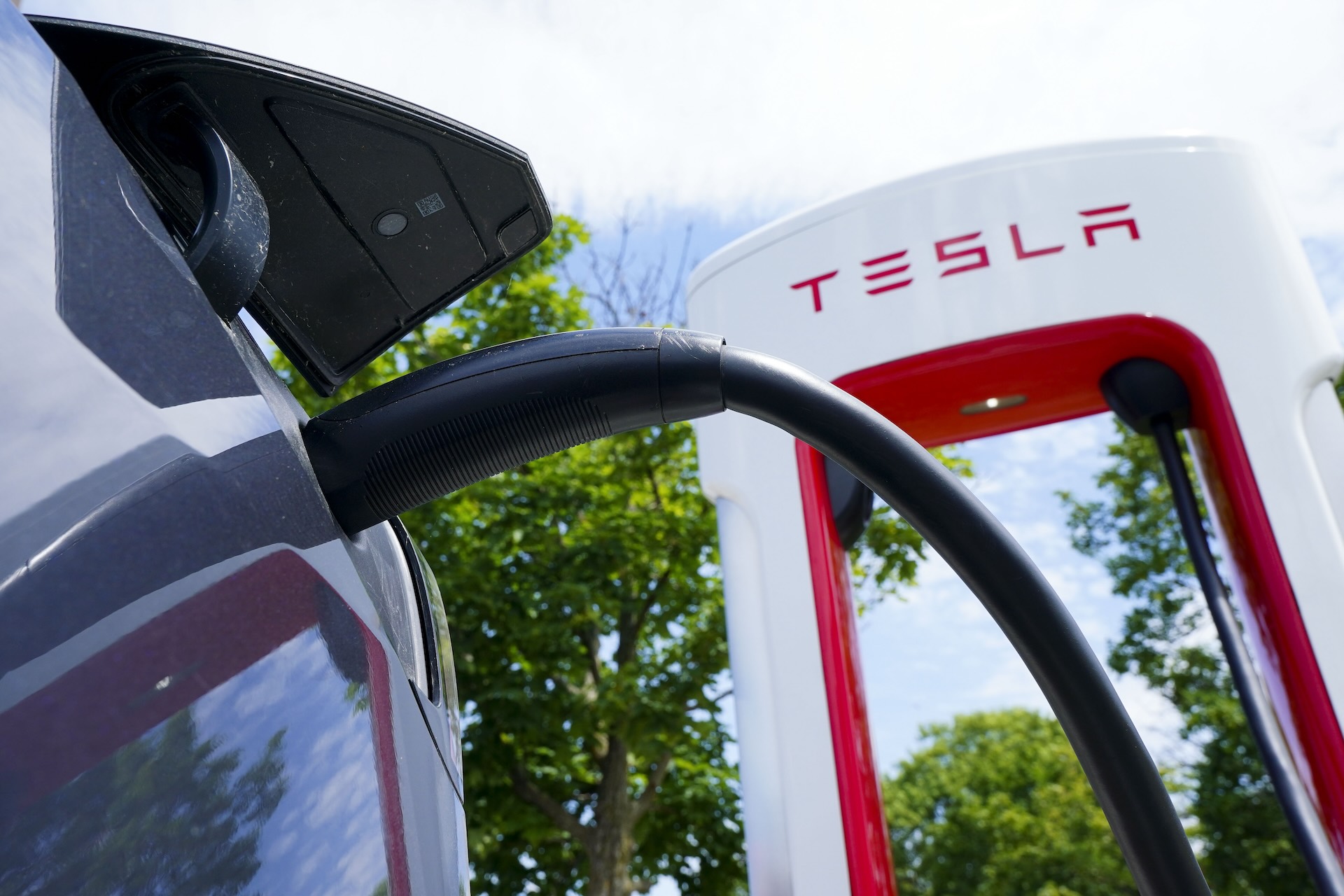 An electric vehicle at a Tesla supercharger station in Ottawa. The Logic’s latest subscriber survey found that EV demand is dipping. Photo: The Canadian Press//Sean Kilpatrick

Subscriber Survey
EV demand is falling—and charging concerns are a top worry, survey finds
74% of respondents would consider buying an electric vehicle, but cited concerns about range, prices
An electric vehicle at a Tesla supercharger station in Ottawa. The Logic’s latest subscriber survey found that EV demand is dipping. Photo: The Canadian Press//Sean Kilpatrick
As automakers flash warning signs of weak electric vehicle demand, a survey by The Logic has found that readers’ interest in buying EVs has also declined. Respondents who said they’re considering buying an EV dropped to 74 per cent, according to the August poll, down from 78 per cent when The Logic asked readers to weigh in two years ago.
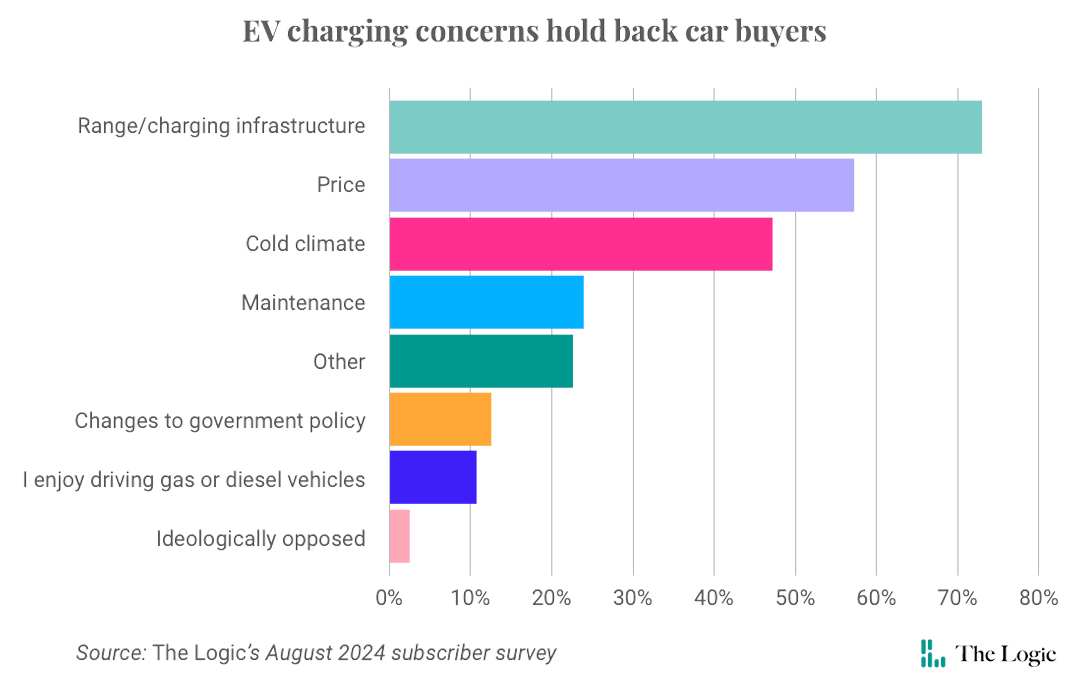
Nearly three out of four people said concerns about EVs’ battery range was a main reason for holding out, while affordability and Canada’s cold climate were other major factors, the survey found.
The drop in enthusiasm matches a slowdown in the sector, as major companies delay or cancel EV projects to adapt to lower-than-expected demand. Ford delayed and then cancelled plans for three-row electric SUVs—originally to be made in Oakville, Ont.—and will focus instead on gas-powered and “multi-energy” Super Duty trucks. Tesla’s second-quarter profit plummeted compared to last year, and GM lowered its 2024 outlook for EV production.
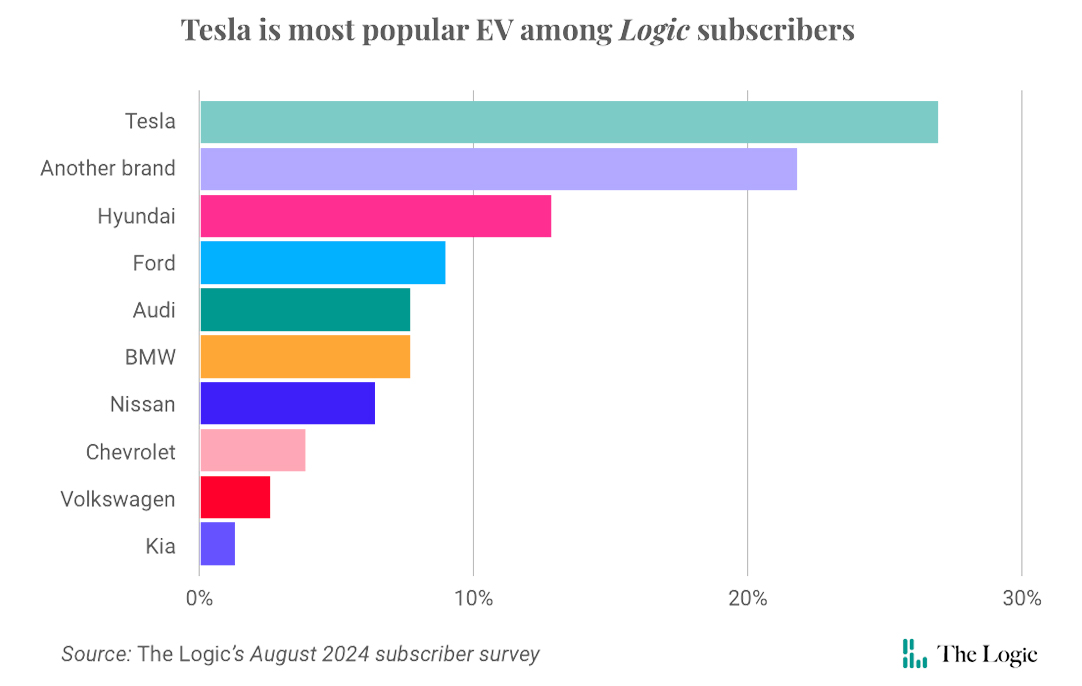
About a third of Logic survey respondents said they already owned or leased an EV. Tesla was the most popular EV brand by far, with more than a quarter of votes, followed by Hyundai, Ford, Audi and BMW. A few readers wrote in to say they drive a Polestar, made by a Swedish electric car upstart owned by Volvo.
Most of the respondents who had an EV said they were satisfied with their car, citing quiet engines, low maintenance, smooth driving, environmental benefits and cheap refuelling compared to gas. However, some said they were disappointed with Canada’s charging infrastructure and short ranges on some models.
Related Articles
“I’ve been thinking about it for four years, and just got it delivered a week ago,” said one reader about buying a Hyundai EV, adding that they liked the “functionality, the ride, the cost of charging and not buying gas.”
“Higher upfront cost (partially offset by federal rebates) but very happy to not have to refill on gas as frequently while still having the flexibility to use gas for longer trips,” said a reader who has a Ford Escape PHEV, a plug-in hybrid.
Another reader, who leased a Volvo C40 electric vehicle, said its range was fine for their purposes: “It is meant to be a daily around-town car, or good for short regional trips. We also own a gas-powered SUV for long trips.” (The 2024 model of the Volvo C40 has a range of up to 480 kilometres on a single charge, according to the company.)
The two-thirds of readers who didn’t own or lease an EV also identified high prices as reasons they’re holding off on a purchase, as well as concerns about maintenance and changes to government policy. One subscriber said they are waiting for Chinese competitors to arrive and lower prices—although Ottawa has since announced a 100 per cent tariff on Chinese-made EVs, which will drastically raise prices.
A lack of charging infrastructure loomed large, especially for readers who live in apartments or condominiums. One subscriber said they live in a condo building where management won’t install chargers unless “at least 10 [people] put up $3,500 upfront for a group of Level 2 chargers.”
Others expressed environmental concerns. “I’m not sure strip mining the Earth for metals is a sustainable alternative to oil and gas,” a reader wrote, a reference to the mining of critical minerals like lithium, graphite and nickel for EV batteries.
Another subscriber said they worry that the current costs and benefits don’t match up: “My biggest concern is that the front-end environmental cost of building the EV is not made up for quickly enough by the environmental benefits of operating it with electricity, particularly in Canada where the expected lifespan of a car is far shorter than in warm climates.”
They added that the increasing consumption of electricity in other areas as well, such as AI and Bitcoin mining, “makes one wonder how we will produce [enough] electricity.”
Methodology
The Logic emailed subscribers a private link to an online survey on Aug. 19 and the survey closed Aug. 21. Respondents’ identities were kept anonymous.
Subscribers were first asked, “Do you own or lease an electric vehicle?” and could answer “Yes” or “No.” If they answered “Yes” to the first question, they were then asked, “If you have an EV, which brand is it?” They could answer “Audi,” “BMW, “Chevrolet,” “Ford,” “Hyundai,” “Kia,” “Nissan,” “Tesla,” “Volkswagen” or “Another brand.” Next, they were then asked an open-ended question and invited to provide written answers: “If you own or lease an EV, are you satisfied with your decision? Why or why not?”
If they answered “No” to the first question, they were asked, “If you don’t already own an EV, are you considering purchasing one?” with the options to answer “Yes” or “No.” They were then asked, “If you don’t own an EV, what are the main reasons? (You can select multiple options.)” They could answer: “Price,” “Concern about range/charging infrastructure,” “Concern about maintenance,” “Concern about cold climate,” “Concern about about changes to government policy,” “I enjoy driving gas or diesel vehicles,” “Ideologically opposed” and “Other (please elaborate below).”
The methodology for our 2022 survey on EV ownership can be found here.



Loading...
Thanks for sharing!
You have shared 5 articles this month and reached the maximum amount of shares available.
CloseThis account has reached its share limit.
If you would like to purchase a sharing license please contact The Logic support at [email protected].
CloseGift the full article!
You have gifted 0 article(s) this month and have 5 remaining.
Recipients will be able to read the full text of the article after submitting their email address. They will not have access to other articles or subscriber benefits.
Photo: The Canadian Press//Sean Kilpatrick
Most Popular This Week




In-depth, agenda-setting reporting
Great journalism delivered straight to your inbox.
News
Brookfield’s new CEO flexes the firm’s soft power with its $50B Canadian bet
Briefing
BMO CEO urges Ottawa to do more to help Canadian defence companies scale up
AI is pushing insurers to become asset managers, Canadian CEOs say
Trump administration faces lawsuit over 50% tariffs on Canadian goods
Best business newsletter in Canada
Get up to speed in minutes with insights and analysis on the most important stories of the day, every weekday.
Exclusive events
See the bigger picture with reporters and industry experts in subscriber-exclusive events.
Membership in The Logic Council
Membership provides access to our popular Slack channel, participation in subscriber surveys and invitations to exclusive events with our journalists and special guests.





