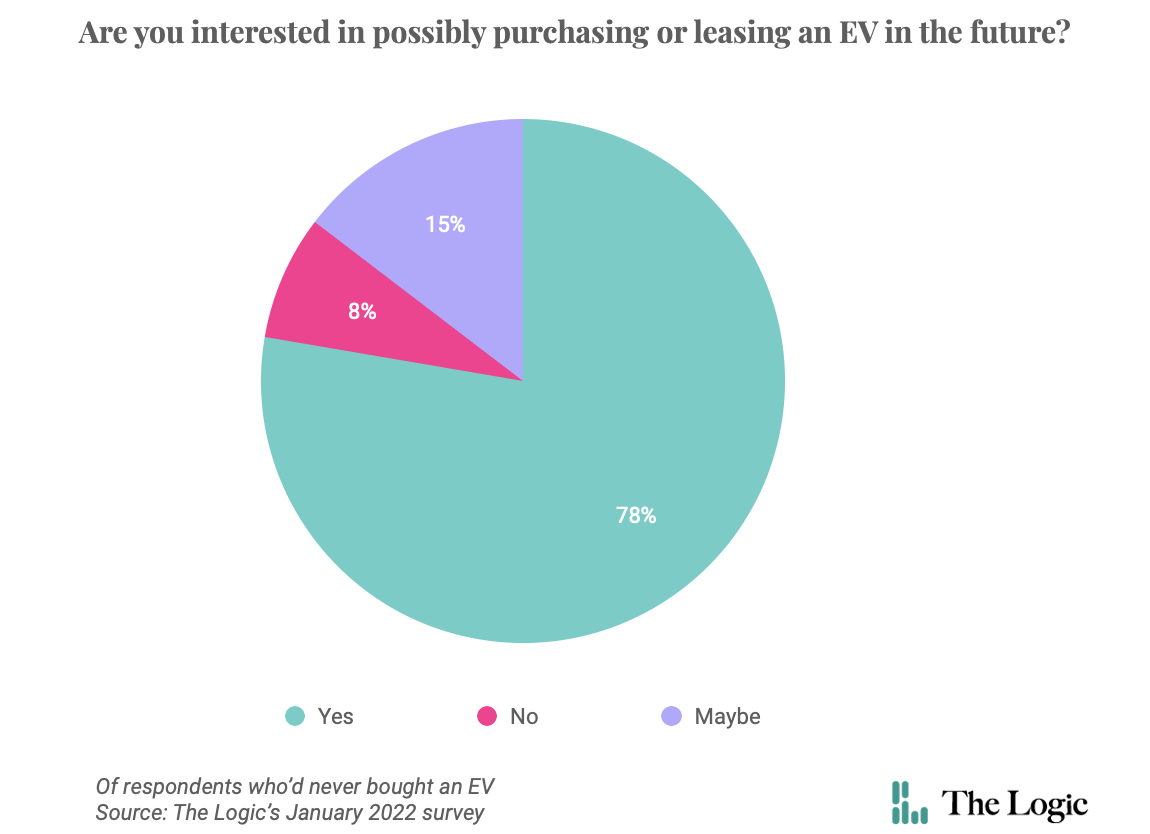
More than three-quarters of The Logic’s subscribers who have never bought an electric vehicle are interested in purchasing or leasing one in the near future, according to a recent survey, as Canada grapples with how to accelerate their adoption to help the country reach its net-zero goals.
Skip to content

Subscriber Survey
78% of subscribers say they would consider EV in near future: Survey
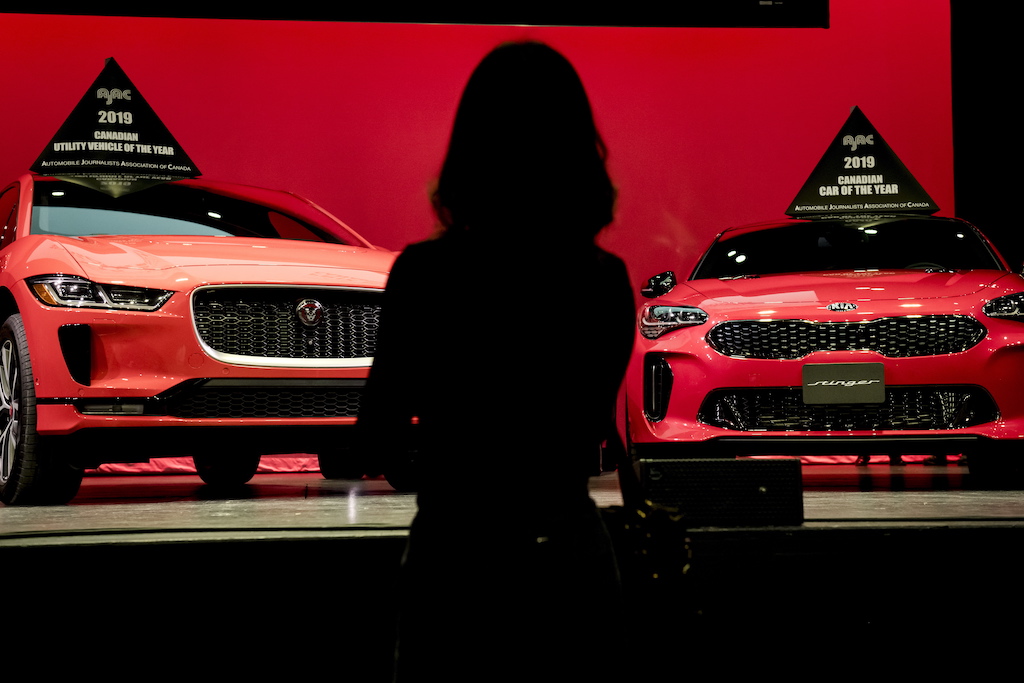
The electric powered Jaguar I-Pace (left) and Kia Stinger at the Canadian International Auto Show in Toronto in February 2019. Photo: Christopher Katsarov/The Canadian Press
More than three-quarters of The Logic’s subscribers who have never bought an electric vehicle are interested in purchasing or leasing one in the near future, according to a recent survey, as Canada grapples with how to accelerate their adoption to help the country reach its net-zero goals.
The survey, conducted from Jan. 20 to 24, found that about 7.7 per cent didn’t intend to purchase or lease an EV, while about 14.6 per cent said “maybe.” The question was asked of respondents who indicated they’d never purchased one.
The current adoption of EVs among subscribers is moderately low. Only about 21.4 per cent said they had purchased an EV.
Last June, the Liberals updated their target for zero-emissions-vehicle (ZEV) sales, requiring all cars and light-duty trucks sold in Canada to be zero-emission by 2035. It represented a significant leap from the government’s previous goals, and it wasn’t on track to meet those targets, either—ZEVs made up just 3.4 per cent of new-vehicle sales in the first half of 2020.
Meanwhile, with electric vehicles becoming a popular alternative as the globe shifts to a greener economy, Ontario Premier Doug Ford recently said his government plans to build at least 400,000 electric and hybrid vehicles in the province by 2030.
One subscriber said they’d be interested in buying or leasing an EV “as soon as the [electric-vehicle] supply issues settle down.”
Methodology
The Logic emailed subscribers a private link to an online survey on Jan. 20 and the survey closed Jan. 24. Respondents’ identities were kept anonymous and duplicates were removed as needed. Subscribers were asked, “How would you describe your knowledge of EVs?” and could select: “I’ve never heard of an EV before,” “I’ve heard of EVs but don’t know much about them,” “I’ve heard of EVs and know about them somewhat,” or “I know a lot about EVs.” They were asked, “Have you ever purchased an electric vehicle?”, and their choices for responses were: “Yes,” “No,” Maybe,” or “I don’t know.” Those who said “No” were also asked, “Are you interested in possibly purchasing or leasing one in the future?” to which they could select: “Yes,” “No,” “Maybe,” or “I don’t know.” Lastly, subscribers were asked, “What is the most important factor in deciding whether to purchase an electric vehicle?” Their choices were: “Costs and savings,” “Government incentives,” “Environmental impact,” “Accessibility of charging stations,” “Vehicle performance and look,” or “Vehicle safety and reliability,” or “Other.”
The auto industry has been hit by supply-chain snarls, a shortage in semiconductor chips and COVID-related plant shutdowns. Tesla, for example, warned this week that supply-chain issues were “the main limiting factor” to its growth this year, hindering the electric-car maker’s manufacturing capacity.
As demand for EVs appears to be on the rise, half of the survey’s respondents said they knew a lot about the vehicles, 45.2 per cent said they knew about them somewhat, and only 4.8 per cent said they’d heard of EVs, but didn’t know much about them.
“Mainstream media is my primary source of knowledge,” one subscriber said.
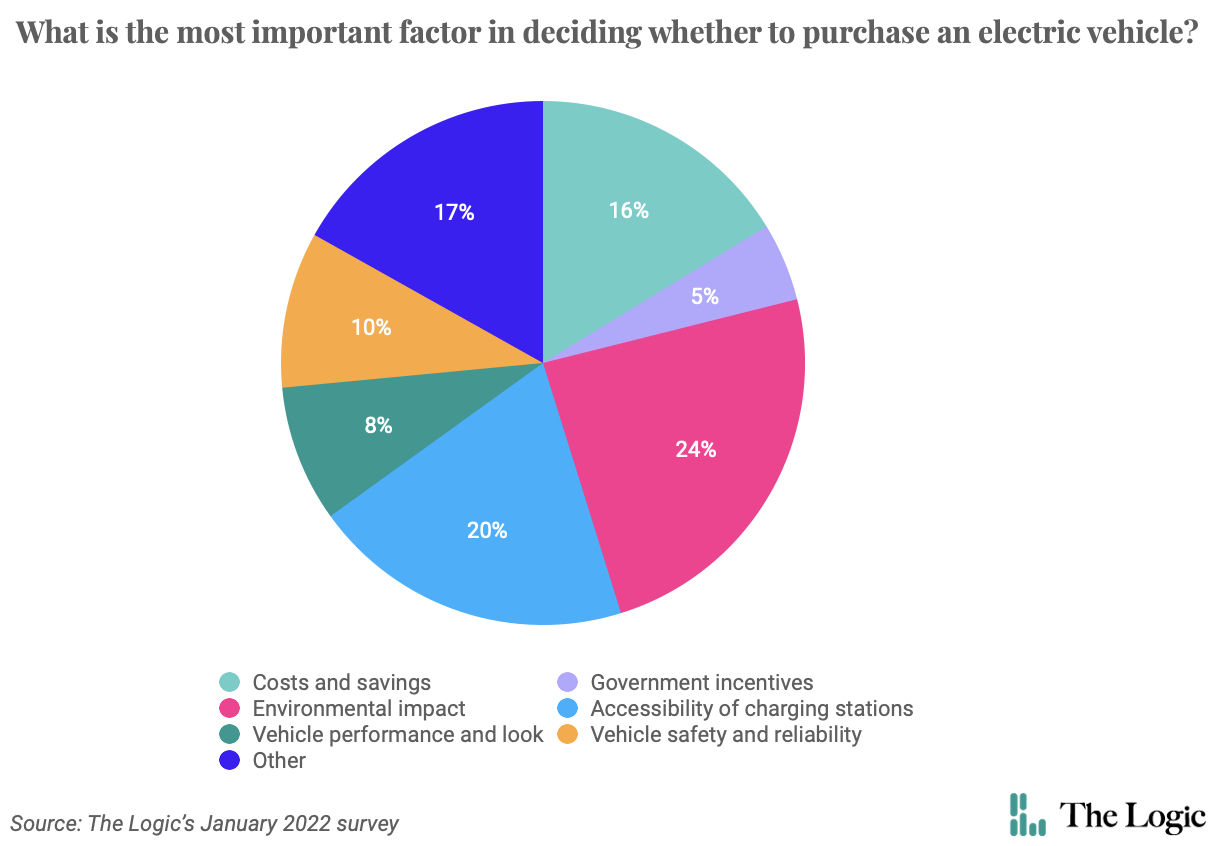
When it came to deciding whether to purchase an electric vehicle, the most important factor for respondents was the environmental impact, at 24.1 per cent. Nearly 20 per cent of subscribers said the accessibility of charging stations would be the most important factor in their decision, while 16.3 per cent said costs and savings were most important.
“Until recharging convenience and time are improved, [electric vehicles are] not an option,” wrote one subscriber, who added that they might purchase an EV in the future.
Another subscriber expressed concern “about [the] technology and reliability in our winter climate.”
Among those who chose other factors as their most important consideration, one respondent specified, “Battery range and ability to retain charge while sitting at -25 C for a week.” Another subscriber wrote, “Cost of installing a fast charger is also important and the genuine range when it is very cold or very hot.”



Loading...
Thanks for sharing!
You have shared 5 articles this month and reached the maximum amount of shares available.
CloseThis account has reached its share limit.
If you would like to purchase a sharing license please contact The Logic support at [email protected].
CloseGift the full article!
You have gifted 0 article(s) this month and have 5 remaining.
Recipients will be able to read the full text of the article after submitting their email address. They will not have access to other articles or subscriber benefits.
Photo: Christopher Katsarov/The Canadian Press
Most Popular This Week




In-depth, agenda-setting reporting
Great journalism delivered straight to your inbox.
News
Adam Waterous proposes massive crude exports to Asia by rail through northern B.C.
Briefing
Canada and Ontario commit over $5B to support tariff-hit steel sector
Hackers will see cars as major targets in next 3 years, 83% of car-tech workers say
EA shutting down Edmonton studio BioWare
Best business newsletter in Canada
Get up to speed in minutes with insights and analysis on the most important stories of the day, every weekday.
Exclusive events
See the bigger picture with reporters and industry experts in subscriber-exclusive events.
Membership in The Logic Council
Membership provides access to our popular Slack channel, participation in subscriber surveys and invitations to exclusive events with our journalists and special guests.