Listen Now
0:00
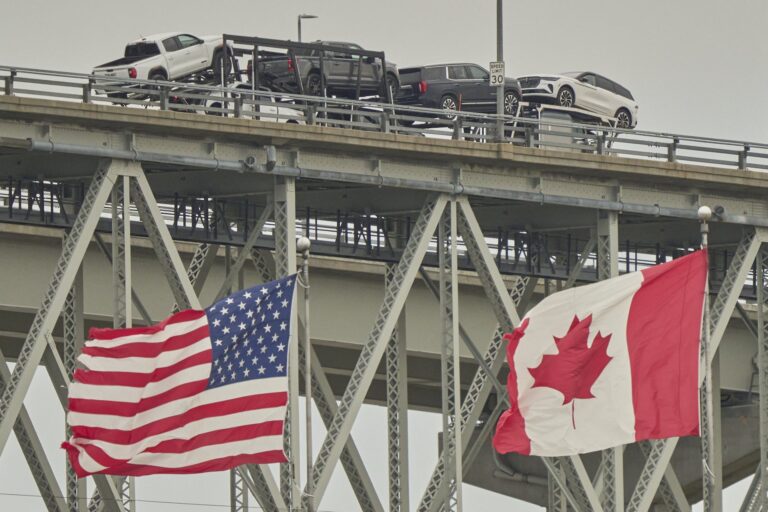
OTTAWA — Canada-U.S. Trade Minister Dominic LeBlanc headed back to Ottawa on Wednesday afternoon to join Prime Minister Mark Carney in putting the final touches on a trade deal neither is willing to talk about yet—beyond the fact the negotiations progressed enough to convince President Donald Trump to delay imposing new 50 per cent tariffs.
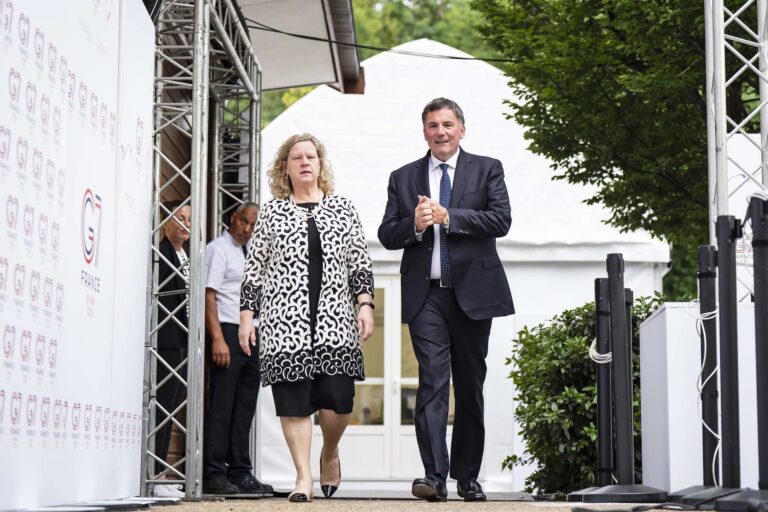
U.S. Representative Jamieson Greer, however, had already started using the past tense when speaking to reporters in Washington, D.C., where he met once again with LeBlanc and Canada’s chief trade negotiator, Janice Charette.
Talking Points
- U.S. President Donald Trump said he paused additional 50 per cent tariffs on Canadian goods until Saturday as both countries finalize a “deal,” while Prime Minister Mark Carney said talks are ongoing
- The White House proclamation claims the U.S. made gains on dairy, auto and provincial alcohol bans, while Trump hinted that the talks could result in revival of the Keystone XL oil pipeline
- Vass Bednar of the Canadian Shield Institute voiced alarm over the U.S. trade representative saying the deal includes “digital trade alignment”
“We’re very happy with where we ended up,” said Greer, who stood beside his Canadian counterparts while making the brief remarks. Greer said the parties were now working on documentation, which he must share with U.S. Congress, but that he thinks the agreement would strengthen the continental economy as well as America’s own.
“It will create a situation where North America will continue to be an energy powerhouse, a manufacturing powerhouse and align on important things like economic security and digital security,” Greer said as he turned to LeBlanc, who nodded. “So while we certainly have eliminated some of the irritants that we’ve had over the past year, we are also taking a strong foot forward on the next steps.”
Less than two hours before the threatened Section 338 tariffs on US$20 billion worth of imports were due to take effect, Trump announced in a social media post that he had paused them “for a three day period, based on the fact that Canada and the U.S.A., subject to the finalization of documents, have a DEAL!”
Related Articles
Carney’s initial statement on the talks said only that the U.S. had agreed to delay the tariffs as both sides kept talking, and made no mention of an agreement. On Wednesday, though, he suggested they were closer to the finish line. “We are now moving towards an agreement that reinforces that Canadian advantage, including by securing the best terms in each of Canada’s most important strategic sectors and providing greater certainty about our future trading relationship,” he said in a post on social media.
If there was a deal reached Tuesday, the details remain scant. In a proclamation published by the White House, the president said “senior executive branch officials” had informed him that “Canada has expressed a commitment to remove the discriminations or unreasonable and unequal impositions” regarding dairy, motor vehicles and provincial bans on U.S. alcohol that had led him to threaten the new duties. But the White House did not provide specifics on why it delayed the levies ordered under the Tariff Act of 1930, also known as the Smoot-Hawley Tariff Act, beyond saying it was in the public interest. The tariffs are now due to take effect at 12:01 a.m. EDT on Saturday.
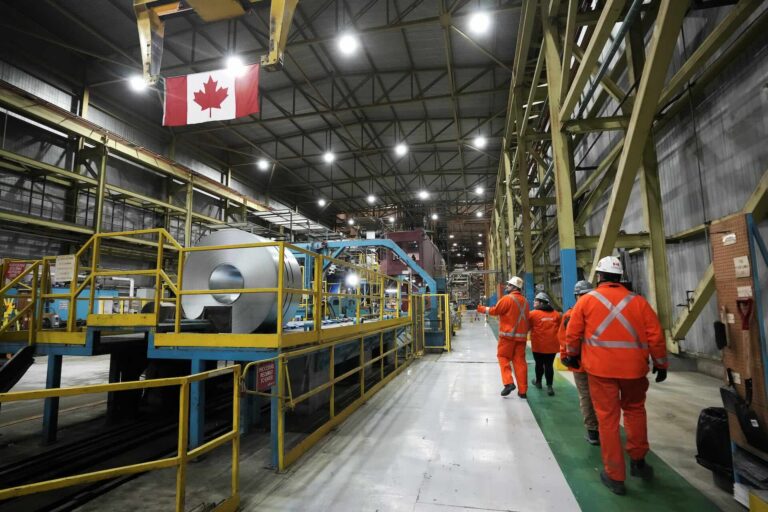
Canadian negotiators were seeking a comprehensive deal that would eliminate the threat of Section 338 tariffs while reducing Section 232 tariffs the Trump administration placed on steel, aluminum, autos and forestry products. They also wanted the U.S. to launch formal talks with Canada on the renewal of the Canada-United States-Mexico Agreement (CUSMA).
Bloomberg reported Wednesday afternoon that the tentative deal would involve the U.S. lowering its tariffs on Canadian steel and aluminum from 50 to 25 per cent, which is the level they were at when Trump imposed them in March 2025. Citing unnamed sources, the report said there could be varied rates for different derivative products. The Logic has not independently verified the report. “As negotiations are still ongoing and we are working collectively with the U.S. administration towards a finalized agreement, we will not provide further comments,” Gabriel Brunet, a spokesperson for LeBlanc, wrote in an email.
Despite the mention of dairy, LeBlanc was emphatic that the supply management system that tightly controls access to Canada’s dairy market would remain as is. In Washington, after Greer wrapped up his remarks, shook hands with LeBlanc and stepped inside, a reporter asked whether Ottawa had made any concessions on that issue. “We needed to ensure that the supply management regime remained entirely intact,” LeBlanc said. “I’m confident that that’s the case.”
Derek Nighbor, president and CEO of the Forest Products Association of Canada, told The Logic he was encouraged to hear Greer speak about how the deal would benefit the larger North American economy. “We’ll see what that means, but that’s different language,” said Nighbor, who added he had not been briefed on the details of any agreement.
Vass Bednar, managing director of the Canadian Shield Institute, was focused on another phrase from Greer she fears represents a threat to Canada’s digital sovereignty. On Tuesday night, the trade representative’s office mentioned “digital trade alignment” in a social media post about the breakthrough. “This is categorically the opposite of digital sovereignty. If we are giving up our ability to govern the digital realm in exchange for reduced tariffs on aluminum and cars, we are prioritizing the old economy, and giving up on the future,” Bednar wrote in her own post on Wednesday.
She noted Canada had already shelved its planned digital services tax to get the U.S. back to the negotiating table, and backed off forcing digital giants to devote a portion of their Canadian revenues to funding Canadian content through the Online Streaming Act. The Trump administration has also listed the Online News Act as a trade irritant and flagged Canada’s early interest in a sovereign cloud that would bar foreign governments from accessing data without consent as a potential barrier.
In an interview with The Logic, Bednar said she was concerned Greer was hinting at something that would go further than an existing provision in CUSMA restricting the ability of Canada and other members of the trade pact to bring in laws requiring data localization. She worries such an escalation could get in the way of Canada’s own AI ambitions, including data centres. “Are we going to deepen our digital dependency with the U.S. even more than we did with the digital chapter in CUSMA, or are we maintaining that space truly for our own sovereignty? That’s what I’m stressing about today.”
Barry Appleton, a Toronto-based trade lawyer who is also co-director of the Center for International Law at New York Law School, told The Logic that, while he cannot know what the text of the agreement will say, “digital trade alignment” is a phrase that carries a specific meaning.
“It sits inside a well-established category in American trade practice, and the template already exists in an agreement Canada has signed,” Appleton wrote in an email. “If Greer had said the deal includes ‘investor-state dispute settlement,’ nobody would call it speculative to explain what ISDS does,” he added, referring to the mechanism in international law that lets foreign investors sue governments. “This is the same kind of term.”
Appleton noted that “digital trade alignment” is not about interoperability, harmonization or mutual recognition—and that Greer did not use those terms. “If the negotiators are right that this is all but finalized, then the concession has already been made,” he wrote. “We are not waiting to learn whether Canada gave something on digital. Greer has said it’s in the deal. We are waiting to learn how much, and we are being asked to wait until after it is signed.”
In his Tuesday night social media post, Trump hinted at a role for the Keystone XL pipeline expansion project previously thwarted by two of his Democratic presidential predecessors, Barack Obama and Joe Biden.
Calgary-based South Bow, which spun off from previous proponent TC Energy, said earlier this year it was looking at an expansion to the pipeline that would use previously built infrastructure that already has Canadian permits. In March, Alberta MP Corey Hogan, the parliamentary secretary to Natural Resources Minister Tim Hodgson, said the proposed expansion, which could increase exports of Canadian crude south of the border by 12 per cent, “has always been one of the cards that Canada has in our deck.”
Editor’s note: This story was updated to include comment, new information and remarks by the principal parties.