Listen Now
0:00
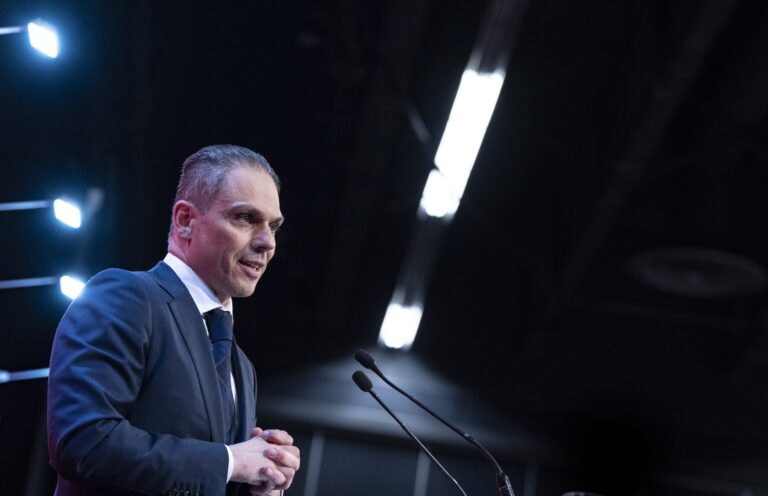
OTTAWA — Ontario Premier Doug Ford stood at a podium on Parliament Hill and spoke his mind, as he is wont to do, about what the U.S. midterm elections could mean for Canada.
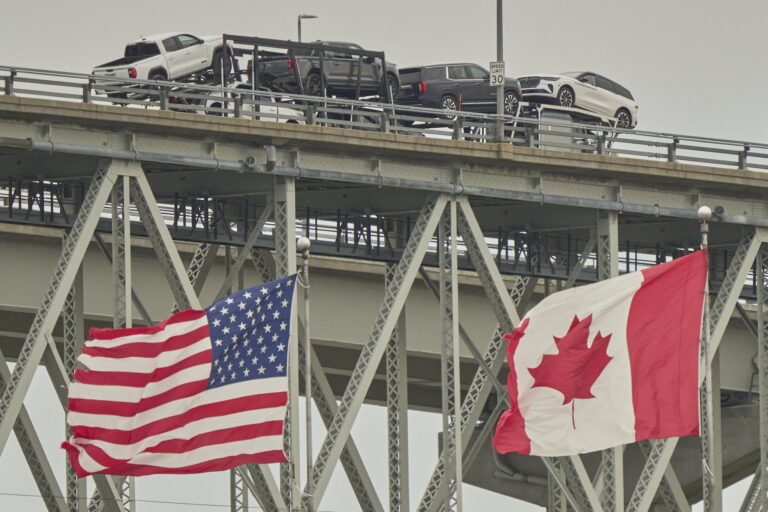
“It’s clear that Canada’s relationship with the United States has changed permanently,” he said last week as he joined Prime Minister Mark Carney to announce nearly $8 billion to help the steel and auto industries being crushed by a series of escalating U.S. tariffs.
Talking Points
- A Democratic victory in Tuesday’s U.S. midterm elections is unlikely to provide relief from the ongoing trade war or curb the executive powers President Donald Trump has used to level tariffs on Canada
- Many Democrats—including some currently in office—have voiced protectionist views in the past, and even supported pieces of Trump’s trade policies
- A The Logic survey by Abacus Data suggests many Canadians are pinning hopes to the Democrats, though few expect real change to the bilateral relationship after the midterms
“No matter what happens in the midterms, no matter who sits in the White House, we’re not going back to the way things were, and we need to plan accordingly.”
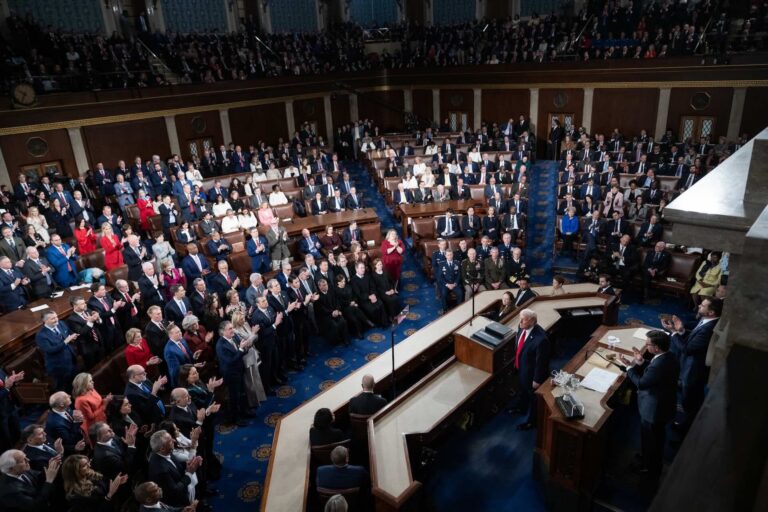
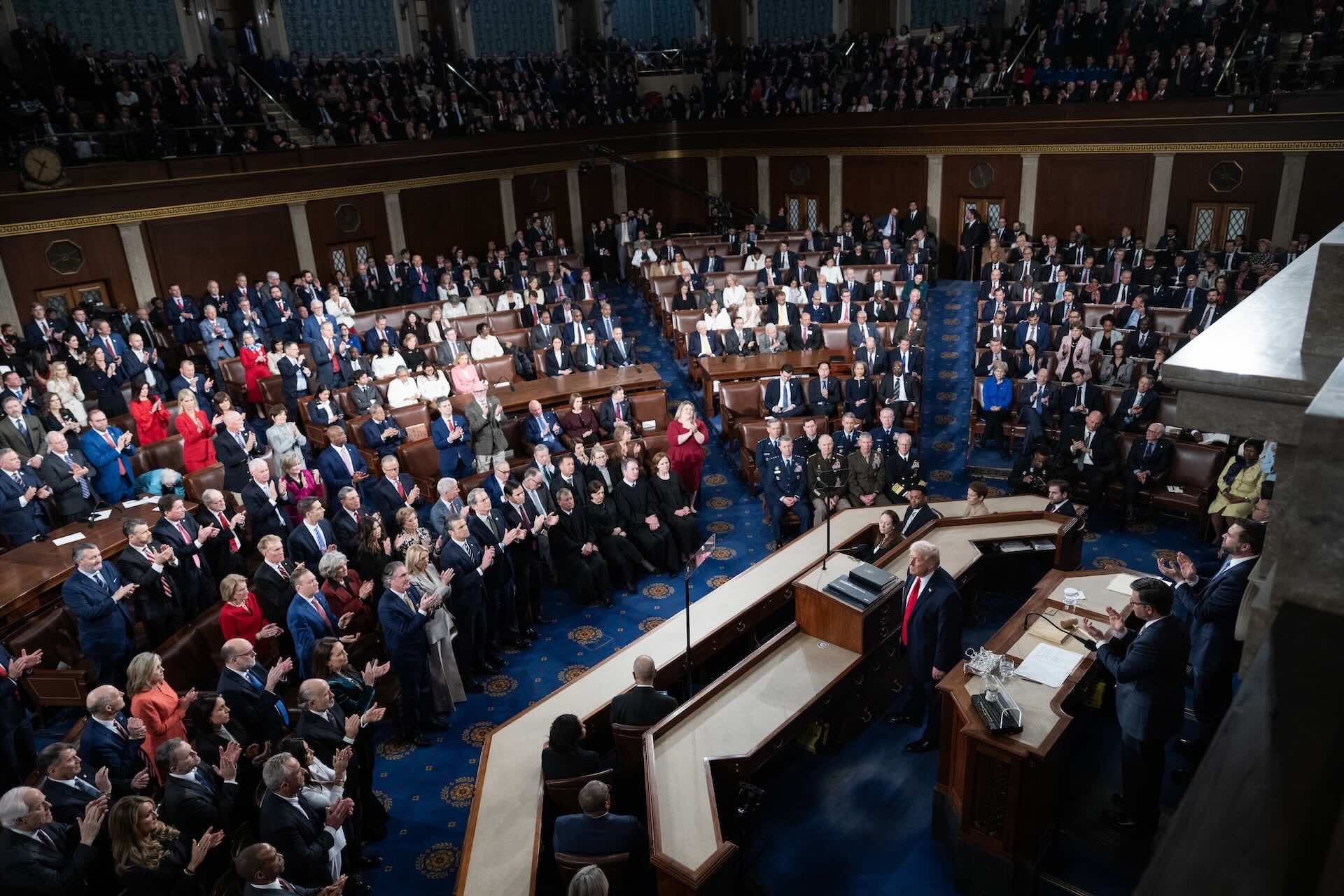
The latest polls suggest the Republican party, dragged down by low approval ratings for U.S. President Donald Trump and growing concern over the cost of living, is facing a significant loss of seats in the U.S. Congress. The odds are in favour of the Democrats gaining control of the House of Representatives in Tuesday’s midterm elections. The contest for the Senate is tighter, but polling suggests a slim Democrat majority is within reach there, too.
Many on this side of the border would welcome that news. In a Canada-wide survey conducted for The Logic last week by Abacus Data, 44 per cent of respondents said they think a Democratic Congress would improve the economic relationship between the two countries. Just eight per cent said they think it would make things worse.
But anyone who hopes such a sweep would bring relief from the trade war—or curb how often and how severely Trump makes use of tariffs—may be in for a splash of cold reality. A Democratic Congress, or a future Democrat as president, will almost surely bring a change of tone and style, but the executive authorities the president has used to impose tariffs remain largely out of their reach. What’s more, the Democrats themselves have historically been more protectionist than Republicans. More than a few who currently hold office think tariffs have a role to play in safeguarding American jobs.
Related Articles

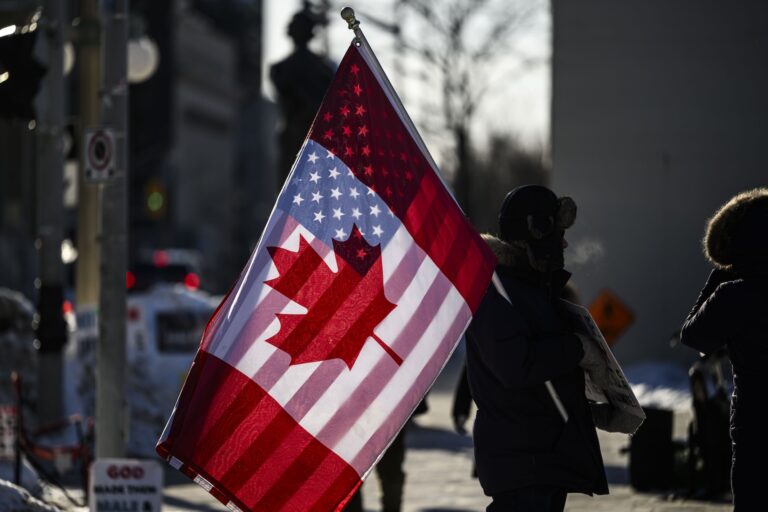
“I think Canadians are fooling themselves if they think that the results of the midterms are going to cause a dramatic shift in U.S. trade and tariff policy toward Canada,” said David Cohen, a longtime Democratic fundraiser who was ambassador to Canada under president Joe Biden. “I just think that’s an extremely unlikely result.”
The limits of congressional powers
The U.S. Constitution gives Congress the power to impose tariffs, while the executive branch has the authority to negotiate trade deals with foreign governments. Throughout history, however, Congress has delegated some of its authority to the president, or the Office of the U.S. Trade Representative, through certain statutes. Those are the levers Trump has used to impose tariffs.
Several Democratic members of Congress have tried to repeal or limit those powers since Trump launched his trade war. Illinois Rep. Bradley Scott Schneider introduced a bill to eliminate Section 338 of the Smoot-Hawley Tariff Act of 1930 more than a year before Trump used it to slap new 50 per cent tariffs on nearly $28 billion worth of Canadian goods. Such bills would not survive a presidential veto, however, and flipping Congress would do nothing to change that. Overriding a veto requires the support of a supermajority consisting of two-thirds of the seats in both the House and Senate—an outcome polls suggest the Democrats are highly unlikely to achieve.
“There’s no possibility of clawing back any of the statutory authority the president has via legislation until there’s an occupant of the White House that is willing to consider that,” said Timothy Meyer, an international business law professor at Duke University.
The Democratic record
No one should assume a Democratic president would be so willing.
The perception that Democrats are champions of free trade ignores decades of congressional voting records and bilateral disputes. In the 2008 Democratic primaries, Barack Obama promised to renegotiate the North American Free Trade Agreement (NAFTA), while his Republican presidential rival, John McCain, championed the deal on a visit to Ottawa that year. “Even now, for all the successes of NAFTA, we have to defend it without equivocation in political debate, because it is critical to the future of so many Canadian and American workers and businesses,” McCain said.
It was Trump, of course, who pushed to overhaul the trilateral pact now known as the Canada-United States-Mexico Agreement. Yet eight of the 10 votes against its 2020 ratification in the Senate were cast by Democrats—including Chuck Schumer, who is now Senate minority leader, and Kamala Harris, who became vice-president the following year.
The din of the current campaign has made that easy to forget. Over the past few months, Democratic contenders in key northern border state races have sought an edge over Republicans on affordability by blaming Trump for duties on Canadian goods that raised prices and upended supply chains. Former U.S. senator Sherrod Brown, a protectionist Democrat seeking to unseat incumbent Republican Jon Husted in Ohio, has called out the “reckless tariffs” on Canada, saying they created uncertainty and higher costs for small business owners. In Michigan, the heart of the American auto industry, even Republican Senate candidate Mike Rogers rolled out an anti-tariff ad.
After Tuesday, though, the Democrats will be looking ahead to the 2028 presidential elections. Even if they want to pivot from Trump’s trade policy, Meyer said, they will also be thinking about whether they might want to keep those tariff powers so they can use them, too.
Outgoing California Gov. Gavin Newsom, who is mulling a bid for the Democratic presidential nomination, accused Trump of throwing a “tantrum” over Canada. Yet Newsom did not guarantee that Democrats would never use tariffs, casting them as a useful economic tool in circumstances he did not specify. “Having targeted tariff policy is an industrial policy,” he told CTV News.
It has happened before. The first Trump administration imposed the Section 232 duties on steel and aluminum. Canada and other countries later secured exemptions, but the tariffs stayed on the books under his Democratic successor. In fact, Biden restored the 25 per cent tariff for steel from Mexico that was originally melted and poured outside North America—a move targeting tariff evasion. He also raised duties on many Chinese goods, including electric vehicles.

The U.S. Commerce Department conducted its Section 232 investigation into auto imports in 2018, but Trump did not carry through with his threat to impose those tariffs in his first term. “The Biden administration left that finding lying there, like unexploded ordnance,” Meyer said. “And so, when President Trump came back into office, he just picked it up and ran with it.”
Janice Charette, Canada’s chief U.S. trade negotiator, suggested another reason that tariffs are sticky: U.S. import duties will generate an estimated US$109 billion in revenues this year. “That’s a very significant form of how the government is financing programs and services right now in the United States,” Charette said at a conference last week. “So we’re into a new world.”
What Canadians think
While the Democrats’ momentum inspires measurable optimism among Canadians, The Logic’s survey suggests nearly as many are keeping their hopes in check. Thirty-four per cent of respondents did not expect the midterm elections to change anything about the Canada-U.S. economic relationship. Looking further ahead, nearly six out of 10 respondents said they think it will improve once Trump leaves office, but that it will take many years to get there.
Just 12 per cent said the relationship will quickly go back to the way it was, and one in five believe it has changed forever. Sixty-four per cent said Canada should build its economy on the assumption that we are past the point of no return.
The online survey of 1,500 Canadian adults was conducted Oct. 16 to 21.
Sacred cows and other sore points
Historically, no matter who is in the White House, Democrats have not been shy to push on bilateral trade irritants that most affect their states—especially when it comes to the long-standing dispute over softwood lumber, or access to Canada’s supply-managed dairy market.
Even during Trump’s current administration, several Democrats have supported some of the goals, if not the execution, of the president’s trade agenda. In an op-ed for The New York Times three days after the fentanyl-related 25 per cent duties on Canadian goods took effect, Pennsylvania Rep. Chris Deluzio cautioned his fellow Democrats against knee-jerk opposition to tariffs, which he said risks alienating voters in Rust Belt states like his. “Democrats need to break free from the wrong-for-decades zombie horde of neoliberal economists who think tariffs are always bad,” he wrote.
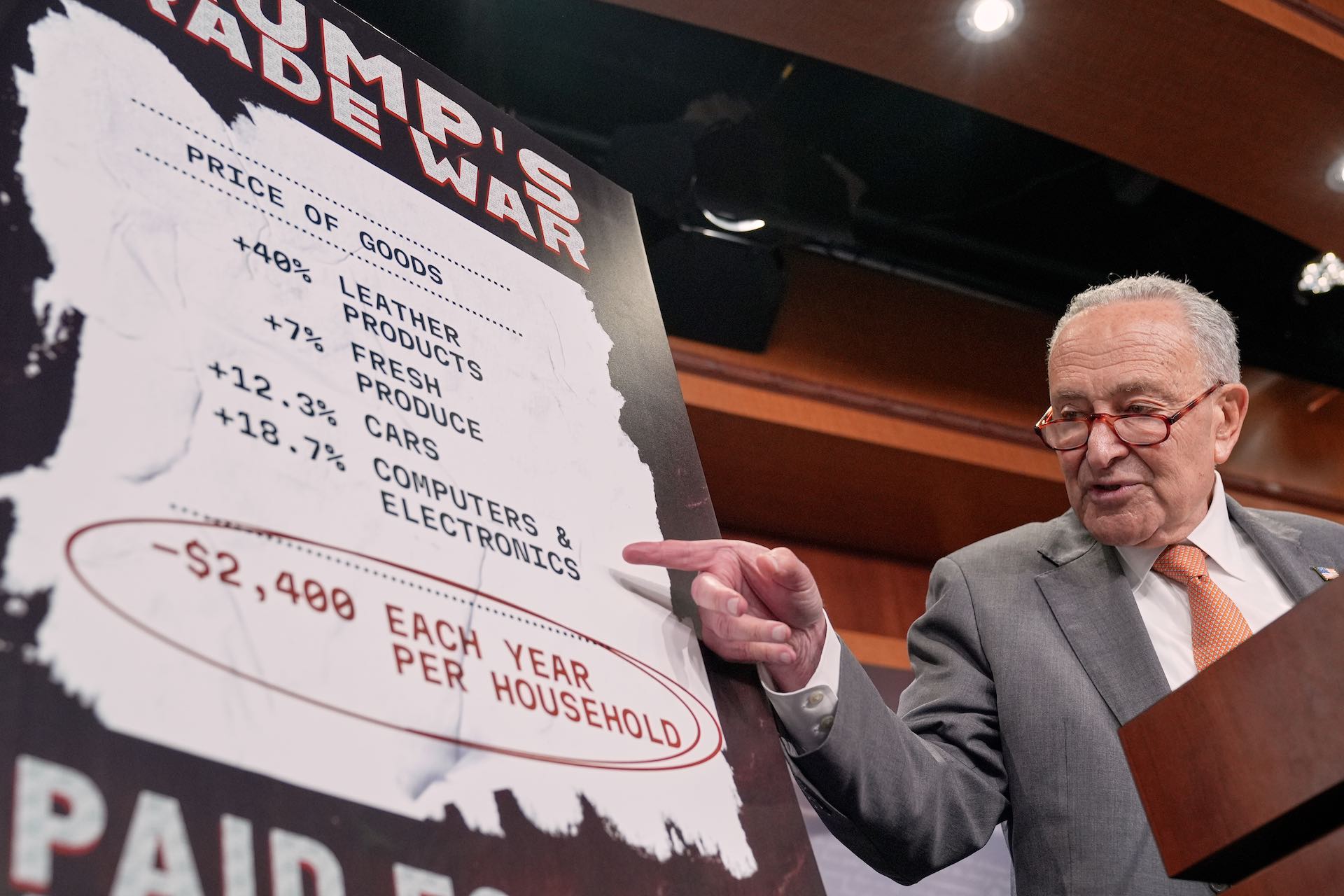
Some in the party have pushed the Trump administration to go further. In March, Sen. Tammy Baldwin of Wisconsin, joined Ohio Republican Sen. Bernie Moreno to ask U.S. Commerce Secretary Howard Lutnick for a Section 232 investigation into heavy construction and agricultural equipment. A year earlier, Baldwin joined her caucus colleagues Gary Peters and Elissa Slotkin, both from Michigan, in asking Trump for a trade agenda that takes a hard line on China but also secures greater access to Canada’s dairy market.
Even the “End Trump’s Tariff Tax Act” that Schumer introduced in the Senate last month—a symbolic move to highlight affordability ahead of the midterms—would not touch the Section 232 tariffs on autos, steel, aluminum and lumber that are hurting Canada the most.
Other ways to fight—and make up
Whether motivated by affordability issues, executive overreach or setting the stage for the next presidential primaries, a stronger Democratic contingent in Congress will likely keep trying to get in the way of tariffs, even if their moves miss the mark on what would help Canada most.
There are ways to address trade-related challenges that have long been central to Democratic politics, such as how unfair trade affects American workers, without running roughshod over allies. A Democratic majority in the House, for example, would have the power to trigger fact-finding investigations by the U.S. International Trade Commission. Nicole Bivens Collinson, an international trade expert in the Washington, D.C. office of Sandler, Travis & Rosenberg, said the commission is an independent economic agency that would give “a much more balanced, fair assessment” than Lutnick’s Commerce Department.
Regardless of the result next week, no one expects Trump to abandon tariffs. But the president has pulled back, on occasion, in response to industry complaints or political pressures. Last week, with polls indicating control of the Senate is up for grabs, he removed 50 per cent tariffs from certain Canadian goods, including some machinery, that Maine Republican Sen. Susan Collins described as key to the state’s agricultural industries. Collins is facing a tough challenge from Democrat Troy Jackson, who has made the tariffs a mainstay of his campaign.
Meanwhile, tariff opponents are testing the limits of presidential power in court. The Liberty Justice Center filed a lawsuit with the U.S. Court of International Trade over Trump’s use of the Smoot-Hawley Tariff Act. The non-profit constitutional litigation firm, which successfully challenged the earlier fentanyl-related tariffs in the U.S. Supreme Court, is arguing the Depression-era statute has been superseded by more recent authorities that require greater oversight from Congress.
Liberty Justice Center CEO Sara Albrecht said she thinks greater awareness of trade authorities, and their vulnerability to overreach, could increase the appetite among Democrats for stronger checks and balances. “You have the Democrats now sounding like free trade supporters. It’s very upside down,” she said of the opposition to Trump’s tariffs.
Albrecht was struck by a legal brief filed in March by a coalition of Democrat-led states challenging the global tariffs that Trump imposed to replace those the Supreme Court struck down. The brief quoted Milton Friedman, the influential American economist who advised two icons of 20th-century conservative politics, former U.S. president Ronald Reagan and British prime minister Margaret Thatcher. “I still have a hard time believing it,” said Albrecht, who thinks Reagan would too. “It gives me hope that maybe this has shaken things up enough that both sides sit down and go, ‘OK, what are we really doing here? Let’s sort it out.’ Now, I know that sounds naive to say, but a girl can dream.”
Cohen, the former U.S. envoy to Ottawa, said he would not rule out a significant rollback in tariffs on Canada should a Democrat take the White House in 2028. But even with a different Republican in the Oval Office, he predicted, Canadians can expect significant change in the softer aspects of the bilateral relationship. “I think with almost any new president, there’d be the beginning of restoration of more traditional trade negotiations,” Cohen said. “You can disagree without being disagreeable.”