Skip to content

Canada's Business and Tech Newsroom

  • Professional Subscription
  • Partnerships & Advertising
  • Licensing & Syndication
Log In Subscribe
Welcome,
  • My Account
  • Log Out
  • Business
  • Tech
  • National
  • The Big Read
  • Briefings
  • Commentary
Search
Log In Subscribe
Welcome,
  • My Account
  • Log Out
Commentary

Carmichael: It’s easier to be a back-seat driver, but Carney wants his hands on the wheel

Listen Now
0:00
Commentary

Carmichael: It’s easier to be a back-seat driver, but Carney wants his hands on the wheel

The prime minister’s middle-powers gambit is a bid not to repeat Canada’s past mistakes

By Kevin Carmichael
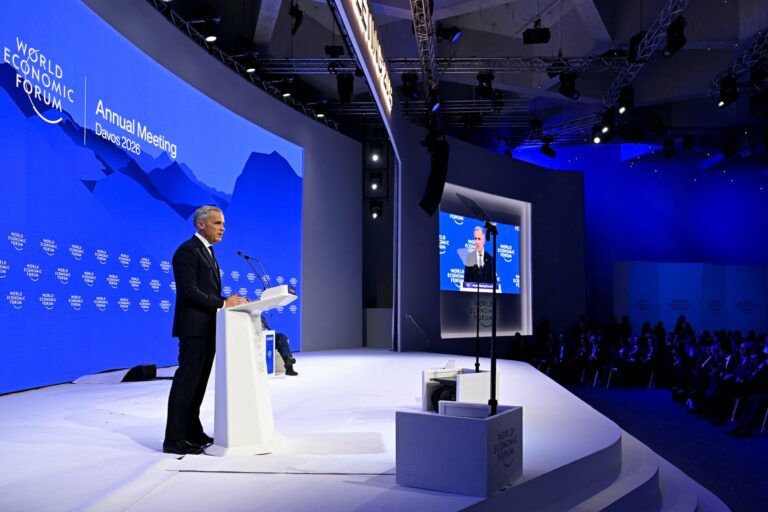
A close-up of Mark Carney wearing a solemn expression, with the World Economic Forum logo on a blue backdrop behind him.
Canadian Prime Minister Mark Carney delivers a speech at the World Economic Forum’s annual meeting in Davos, Switzerland, on January 20. Photo: Getty Images/Harun Ozalp/Anadolu
Mar 11, 2026
A A
A Small A Medium A Large
Share

Gift

Share

Listen Now
0:00

Mark Carney wasn’t the first Canadian central banker to get an offer to join the Premier League of global finance. 

More than six decades before Carney was recruited to lead the Bank of England in 2013, U.S. president Harry Truman asked prime minister William Lyon Mackenzie King to talk to Bank of Canada governor Graham Towers about becoming the first head of the International Monetary Fund. 

“They liked the way we did things in Canada and the way the government was managing,” King wrote in his diary on April 10, 1946. “[Truman] said they were very anxious to have one or the other of these men for this all-important work. He said something about the secretary of the treasury being most anxious.”

Related Articles
Carmichael: Davos Man reminds the ‘powerless’ of their power

By Kevin Carmichael
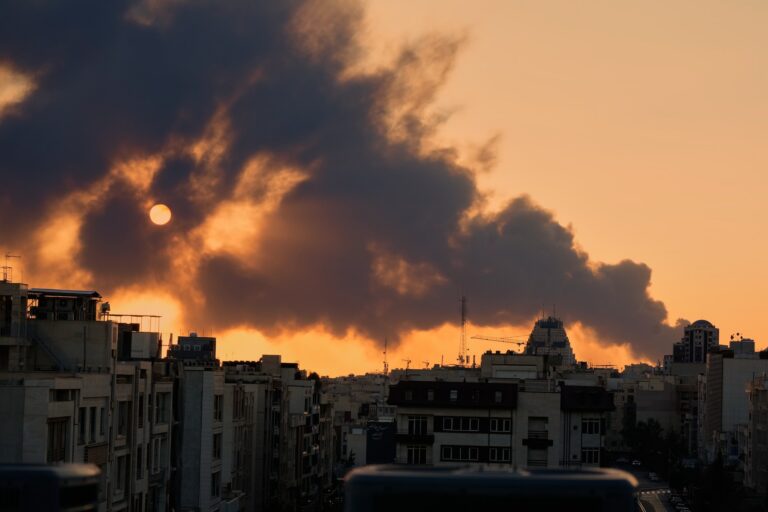
Image of Tehran skyline against a red sky with a plume of smoke billowing from a building, partially obscuring the sun

Carmichael: The war in Iran risks tripping a hedge fund trap

By Kevin Carmichael

The other man was King’s finance minister, James Ilsley. The Canadian delegation at the negotiations that created the IMF and the World Bank had helped the U.S. and the U.K. bridge their differences on how to structure the postwar financial system. The institutions that would anchor the new world order needed leaders, and the Americans wanted either Towers to lead the IMF or Ilsley to lead the World Bank. 

I’ve been thinking about this bit of trivia while watching Carney try to build support for his contention that the future needn’t belong entirely to the U.S., China and Russia. Meta forces might determine history’s direction, but contingencies decide the details. That’s why Carney’s Davos speech and his follow-up trips to India, Australia and Japan are significant. The great powers will decide the general direction of where civilization is headed, but the “middle powers,” as Carney calls them, often are presented with opportunities to adjust the trajectory. They just have to be willing to try. 

Canada was not willing in 1946, in part because the work looked too daunting. “Later when I got Towers on the phone he told me that [U.S. Treasury official] Harry White was one of the directors,” King wrote in his diary the following day. Towers relayed that White was “pleasant as long as you agreed with him, but could be very obnoxious” and that Towers “did not feel that he… could stay any time with him.” Towers told the prime minister that he “felt that there was too much in American control all through.”  

Indeed there was. Belgium’s Camille Gutt got the job at the IMF instead, and a European has led the fund ever since, while everyone appointed to lead the World Bank since its founding has been American. The U.S. set itself up with an effective veto at both institutions. But what might have happened if Towers or Ilsley had gone to Washington, D.C., and given it a try?

Maybe Canada could have helped establish a convention that prevented these global institutions from becoming the playthings of the U.S. government and European colonizers. Maybe countries such as China would have been more respectful of the rules of globalization if they felt like they had a say in how those rules were set. The point is that you don’t know if you don’t try. If you are Canada, you have to try, because you are better off in a global system based on rules and institutions than on the whims of a handful of superpowers. If you serve Canada, you do what you can to create such a system, no matter the odds—or how disagreeable you find members of the U.S. administration. 

Carney’s Davos speech continues to make waves. “We are all Canadians now,” a book reviewer wrote in the Financial Times last week. Waves by their nature are bumpy.

At home, some members of the business community think it was a mistake to risk upsetting the Trump administration with the speech, and that Carney’s analysis of the situation might even be wrong. “I don’t share the thesis of permanent rupture,” Thomas D’Aquino, the longtime business lobbyist who helped create the political conditions for the original Canada-U.S. free-trade agreement, told an audience in Ottawa on March 2. “Our deep economic integration, and with it the network of family relationships, of business, education and institutional relationship, of defense collaboration, all this is a reality that cannot, I would argue, be fundamentally reversed.” Meanwhile, Carney’s quick endorsement of the decision of the U.S. and Israel to start a war with Iran was condemned by those who thought the Canadian prime minister had nominated himself to lead a rebel alliance against hegemony. 

I want to offer another way to think about the Davos speech and what Carney is doing. It would be easier to stay out of it. That is what King, Towers and Ilsley decided when it came time to make the new postwar order a reality. As a result, they became back-seat drivers. 

“Rupture” isn’t about running away from America. Carney’s position on Iran is proof of that. Rather, it’s a recognition that internal politics have changed the U.S. government into something else—something that can’t be trusted to the degree it once was. 

Gift the full article

Canada’s best interests will always be served in a global system that respects human rights and the relatively free movement of people, capital and goods. 

For much of our history, that meant supporting America. Now, it means trying to stitch a new system together. By daring to go against the U.S. on occasion, Carney is showing potential allies that Canada might finally be willing to take a turn at the wheel. 

Kevin Carmichael is The Logic’s economics columnist and editor-at-large. He has spent more than two decades covering economics, business and finance for outlets including Bloomberg News, The Globe and Mail and the Financial Post, where he also served as editor-in-chief.


#commentary #Davos #economy #Geopolitics #Mark Carney

Sponsored Content

Why cybersecurity needs to match pace with AI

By Jessica Aftimus Rosa

How to shift your workforce from AI experimentation to adoption

By Jessica Aftimus Rosa

The real-world economic offshoots of sovereign AI

By Deborah Aarts
Paid promotional content

Loading...

Thanks for sharing!

You have shared 5 articles this month and reached the maximum amount of shares available.

Close
This account has reached its share limit.

If you would like to purchase a sharing license please contact The Logic support at [email protected].

Close
Want to share this article?

Upgrade to all-access now

Close
Gift the full article!

You have gifted 0 article(s) this month and have 5 remaining.

Copy link and gift
Copy Link
Email to a friend
Send Email
Gift on Social Media

Recipients will be able to read the full text of the article after submitting their email address. They will not have access to other articles or subscriber benefits.

A close-up of Mark Carney wearing a solemn expression, with the World Economic Forum logo on a blue backdrop behind him.

Photo: Getty Images/Harun Ozalp/Anadolu

Most Popular This Week

News

ApplyBoard was the worst-performing Canadian startup in Fidelity’s portfolio in 2026

By Claire Brownell
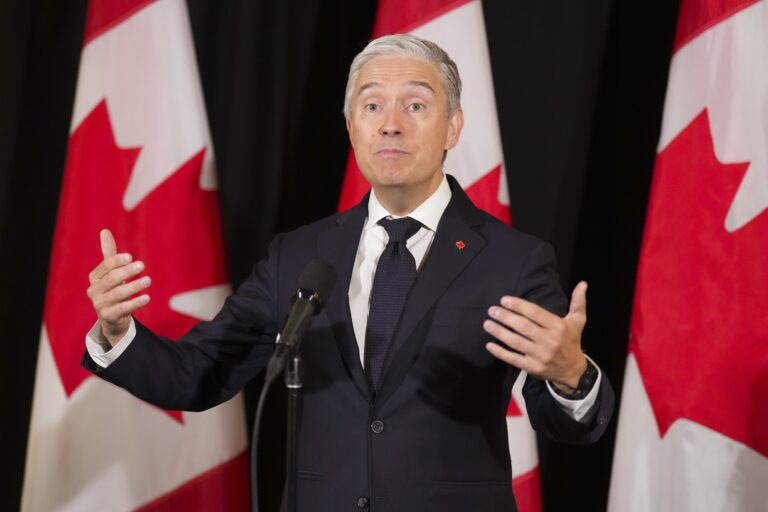
An image of Finance Minister François-Philippe Champagne wearing a dark suit and tie, gesturing while he speaks into a microphone. There are three Canadian flags in the background.
News

Investors and CEOs are urging Ottawa to expand tax breaks for entrepreneurs

By Catherine McIntyre
News

Cohere opens up its AI platform to give businesses more control

By Murad Hemmadi
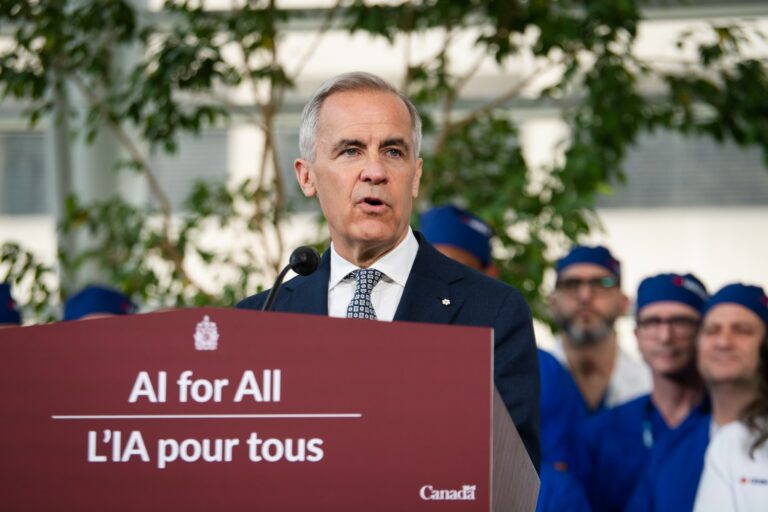
An image of Mark Carney standing in front of a red podium with the words "AI for All / L'IA pour tous." He is wearing a suit and tie. In the background, people wearing scrubs and white coats are visible.
News

Carney picks big-name researchers and investors for new AI advisory council

By Murad Hemmadi

In-depth, agenda-setting reporting

Great journalism delivered straight to your inbox.

Commentary

Carmichael: Canadian ignorance about India is a strategic weakness

By Kevin Carmichael

Briefing

Aritzia shares pop after earnings rise 204%

By Anita Balakrishnan   |   Oct 9, 2026

First Nation in Alberta goes to court over fast-tracked oil pipeline

By Chaimae Chouiekh   |   Oct 9, 2026

Chinese EV maker Geely Auto Group to launch in Canadian market in 2027

By Joanna Smith   |   Oct 9, 2026

Best business newsletter in Canada

Get up to speed in minutes with insights and analysis on the most important stories of the day, every weekday.

Exclusive events

See the bigger picture with reporters and industry experts in subscriber-exclusive events.

Membership in The Logic Council

Membership provides access to our popular Slack channel, participation in subscriber surveys and invitations to exclusive events with our journalists and special guests.

Recent Popular Stories

News

Carney picks big-name researchers and investors for new AI advisory council

By Murad Hemmadi   |   Oct 2, 2026
An image of Mark Carney standing in front of a red podium with the words "AI for All / L'IA pour tous." He is wearing a suit and tie. In the background, people wearing scrubs and white coats are visible.
The Big Read

Cameco’s high-stakes bid to be Canada’s next nuclear champion

By Joanna Smith   |   Sep 23, 2026
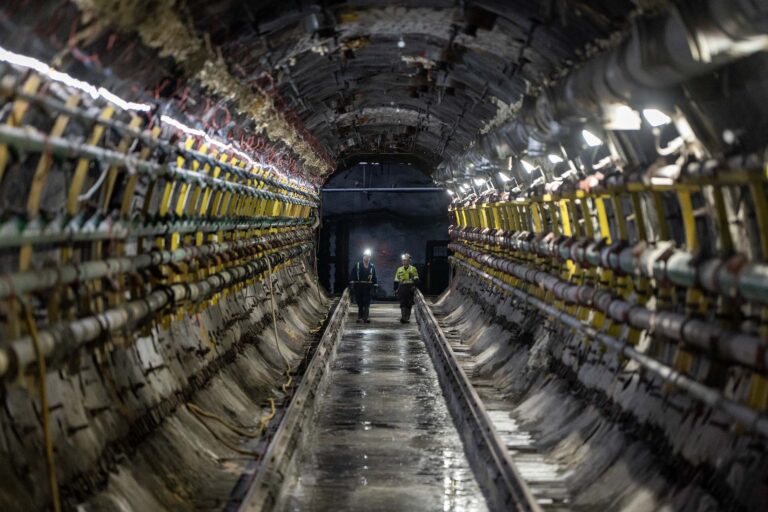
A shot looking down the length of a tunnel with conduits along its sides and railroad-style tracks on its floor. There are two workers in the distance wearing hardhats and headlights and walking toward the camera.
News

ApplyBoard was the worst-performing Canadian startup in Fidelity’s portfolio in 2026

By Claire Brownell   |   Oct 6, 2026
News

TD cracks global top 10 for AI again as banks race for returns on investments

By Chaimae Chouiekh   |   Oct 6, 2026
News

Cenovus announces $5.7B takeover of Athabasca, with a nod to Carney’s Mega Deduction

By Meghan Potkins   |   Oct 5, 2026
A view of oil extraction equipment consisting of pipes, catwalks and cylindrical tanks; there are three company representatives in the foreground wearing white hard hats and blue coveralls with yellow reflective striping.
News

Investors and CEOs are urging Ottawa to expand tax breaks for entrepreneurs

By Catherine McIntyre   |   Oct 6, 2026
An image of Finance Minister François-Philippe Champagne wearing a dark suit and tie, gesturing while he speaks into a microphone. There are three Canadian flags in the background.

Canada's most influential executives and policymakers are reading The Logic

  • CPP Investments
  • Sun Life Financial
  • C100
  • Amazon
  • Telus
  • Mastercard
  • bdc
  • Shopify
  • Rogers
  • RBC
  • General Motors
  • MaRS
  • Government of Canada
  • Uber
  • Loblaw Companies Limited
logic-logo

Canada's Business and Tech Newsroom

100% human-crafted journalism

Newsroom

  • News Tips
  • AI Policy
  • Editorial Disclosures
  • Story Pitches

Company

  • About Us
  • Terms of Service
  • Privacy Statement
  • Corporate Information

Contact

  • Contact Us
  • Advertise
  • FAQs
  • Work at The Logic

© 2026 The Logic Inc. All Rights Reserved.

Trusted by leaders

Error

Account creation failed.

Please email us at [email protected].

Create Account

[wppb-register form_name=”cozmo-registration-form-for-modal”]

I do have an account
Login
or

[wppb-login]

I don’t have an account