Listen Now
0:00
The latest eruption of state-ordered destruction and killing feels more distant than the others. “There’s not a lot we can do to alter the course of things, even if we wanted to,” Dennis Horak, the diplomat who delivered the 2012 note telling the Iranian regime that Canada was ending official ties, recently told The Walrus. “We’re just not players in this.”
Distance—geographic, psychological and diplomatic—won’t shield Canada from the economic effects. Some were immediate. Air Canada’s stock price plunged more than 11 per cent this week, as the cost of jet fuel surged. Others will come later. Traffic through the Strait of Hormuz has all but stopped, suggesting price spikes when current supplies of oil and goods run low. “This will bring down the economies of the world,” Qatar’s energy minister, Saad al-Kaabi, told the Financial Times.
Related Articles
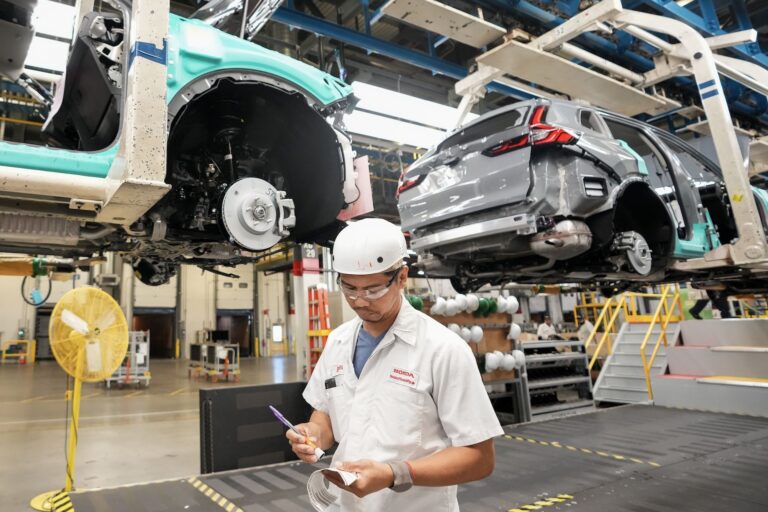

As ominous as that sounds, I don’t think those ripples are what we need to worry about. Because Canada is a net exporter of oil, the energy price shock will boost economic growth. Higher fuel prices and faster growth are inflationary, but the uncertainty over the future of the North American trade agreement and U.S. tariffs on automobiles, steel and lumber are disinflationary. The two forces should cancel each other out, for now, and allow Bank of Canada governor Tiff Macklem to keep monetary policy on cruise control. In that regard, nothing has really changed.
But of course, much has changed. Early in the week, I had breakfast with a trusted guide. The thrust of the conversation was that negativity bias was making the narrative around Canada’s prospects darker than the reality. I left thinking that I might try to highlight some of the positives. Instead, as Iran fought back against U.S. and Israeli missile strikes despite losing its supreme leader, I spent several hours drawing a map of how the war could lead to a global financial crisis.
That thought exercise was prompted by Macklem, who on Wednesday put a spotlight on how hedge funds have become major buyers of government debt.
Evidence that the apex predator of modern finance has developed a taste for the assets that underwrite the welfare state might cause your amygdala to send warning signals. Macklem wasn’t trying to scare anyone. The addition of hedge funds at government bond auctions isn’t necessarily bad. In fact, it’s mostly been good because the extra demand is what has been keeping interest rates at reasonable levels despite extreme levels of global debt.
But the arrival of hedge funds as major creditors is different, and that means overseers like Macklem are still getting their heads around what it could mean. Hedge funds realized they could make money on government bonds by taking advantage of basis-point price differences in secondary markets. They must execute the trades at large volumes to earn a profit, and they typically borrow the money via short-term arrangements called repurchase agreements, or repos.
It all works fine—until it doesn’t. The bond-market tantrum that forced former British prime minister Liz Truss from office in 2022 was a warning that debt markets have become extremely fragile. A surprise that causes interest rates to spike becomes a cascade if too many investors are forced to make good on repos at higher rates than they expected. “One scenario we worry about is a shock to markets that leads to a spike in interest rate volatility,” Macklem said. “Because repo funding is very short-term, that adjustment can happen fast.”
It’s legitimate to wonder how many shocks markets can take. The yield on 10-year government of Canada bonds jumped above 3.3 per cent this week, almost a quarter-point higher than at the start of the war. That spike was indicative of what was happening in bond markets, as prices adjusted to higher inflation expectations—and maybe the sight of an already highly indebted government spending hundreds of millions of dollars per day to destroy an enemy without an apparent endgame. The S&P 500 index fell about 2 per cent this week, and is now down 1.5 per cent on the year.
U.S. equity markets exhibit lots of exuberance related to artificial intelligence, but they aren’t made of straw. Outsized productivity gains suggest American companies are doing something right. But those awe-inspiring gains amid all the Trump-induced uncertainty aren’t built on a brick foundation, either. Days before the war started, a “thought exercise” on how AI could wipe out white-collar employment caused the S&P 500 to drop more than one per cent.
The link between equity prices and the real economy is tenuous. But there’s reason to think that wealth effects might have become a more important driver of consumption. Because of growing income inequality, richer households in the U.S. have become responsible for a greater share of consumption, and much of their wealth is derived from the return on their investments. “The U.S. economy is now overexposed to an equity market claimed by a minority of the population,” former Bay Street banker Andrew Spence wrote in his Substack newsletter.
If Spence is correct, a shock of the sort that Macklem worries would spook hedge funds could create a chain reaction that would lead to a major recession. In the current environment, a Truss-style panic in bond markets surely would spill into equity markets. The rich American households driving U.S. demand for goods and services would take cover, probably in cash. Economic growth would collapse for lack of consumption. A recession in the world’s largest economy would spread to the rest of the world, just like it did in 2008.
This isn’t a prediction. Not yet, anyway. It depends how long the war drags on.
Kevin Carmichael is The Logic’s economics columnist and editor-at-large. He has spent more than two decades covering economics, business and finance for outlets including Bloomberg News, The Globe and Mail and the Financial Post, where he also served as editor-in-chief.