One of the big ideas from the election campaign that concludes today has been the creation of a pathway that would let electricity, oil and natural gas flow easily across the country. Polls have found as many as three quarters of Canadians support the idea as a response to the Trump administration’s economic warfare.
Skip to content

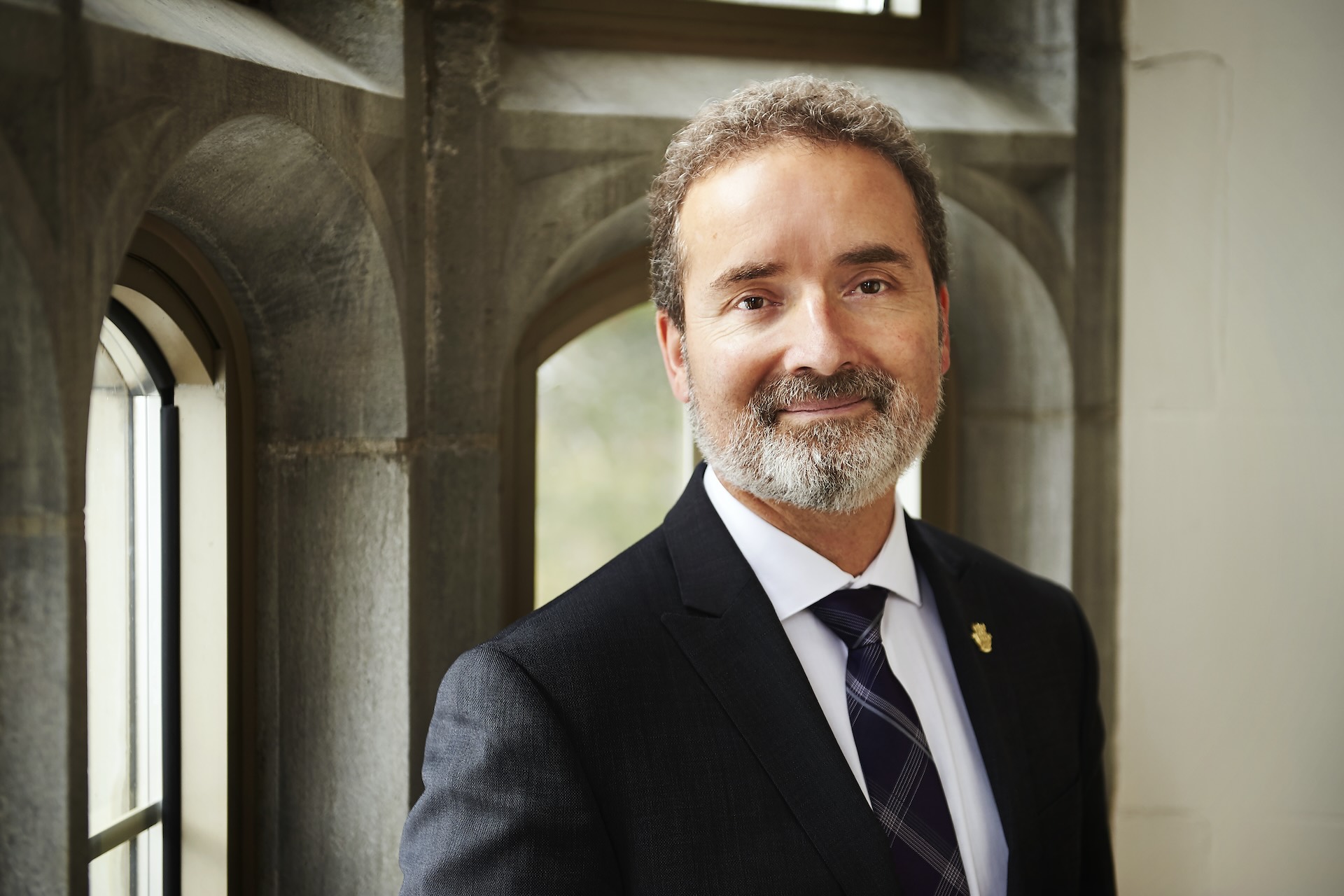 Dr. Rene Van Acker, interim president and vice-chancellor, University of Guelph. Photo: Handout/University of Guelph
 Filsan Farah (L) and Lina Bowden of Verge Capital. Farah said Canadians recently have all developed a working knowledge of trade and economics, “conversations that average people weren’t having before.” Photo: Nicole Osborne for The Logic
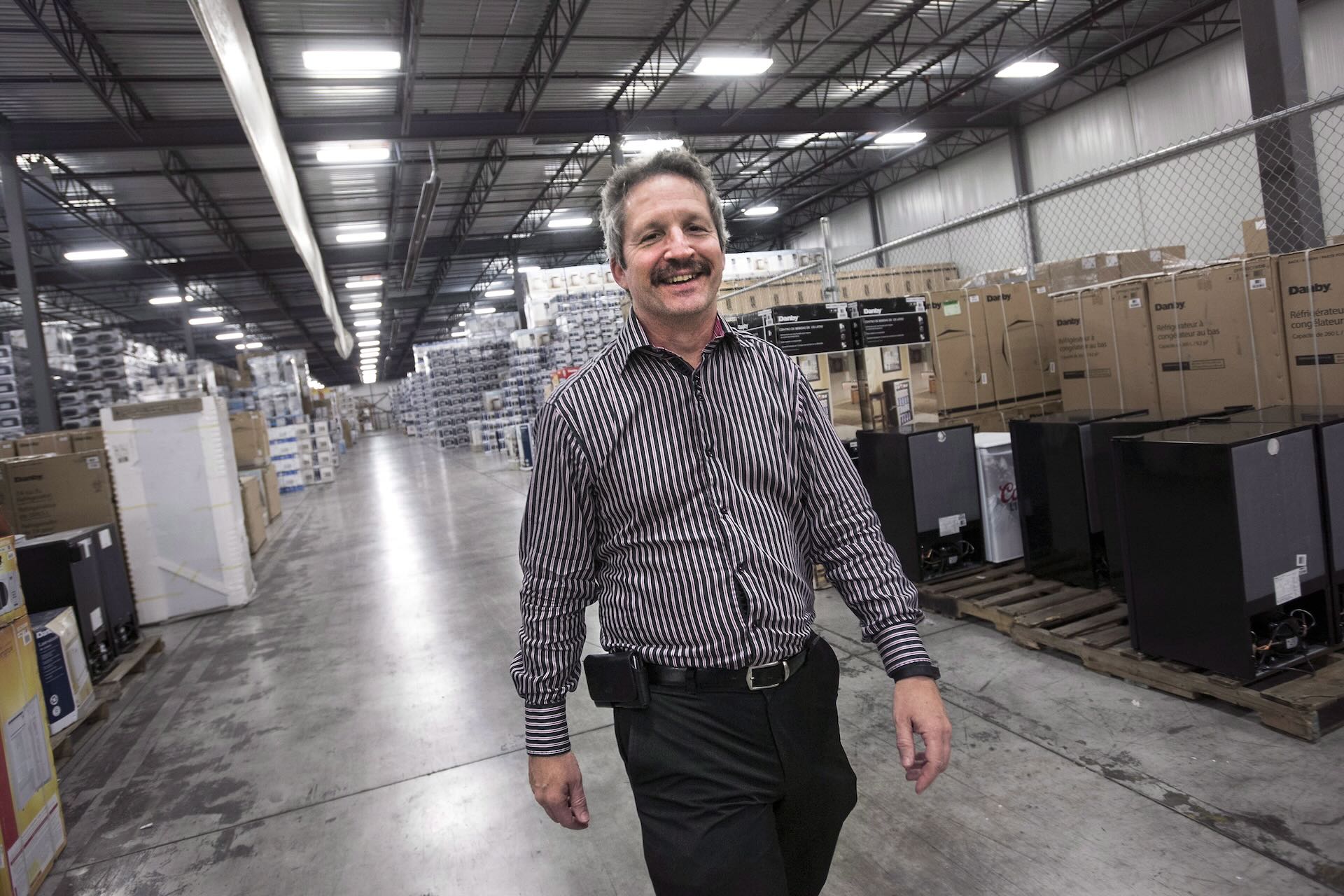 Jim Estill, president and CEO of Danby, at the company's warehouse in Guelph, Ont. in November, 2015. Photo: The Canadian Press/Darren Calabrese
 The Lachine Canal in Montreal in June, 2024. Now used for recreation, it was once one of the country’s industrial lifelines. Photo: The Canadian Press/Christinne Muschi

Commentary
Carmichael: There are signs of resilience along Canada’s economic mainline
Trump, tariffs and trade set the tone for this election campaign. However Canadians vote, they’re ready to rise to the challenge
Filsan Farah (R) and Lina Bowden of Verge Capital at Innovation Works in London, Ont. in April, 2025. The changing nature of the Canada-U.S. relationship is “a great opportunity for people,” Bowden said. “Whether people are seeing that, I don’t think so.” Photo: Nicole Osborne for The Logic
Filsan Farah (R) and Lina Bowden of Verge Capital at Innovation Works in London, Ont. in April, 2025. The changing nature of the Canada-U.S. relationship is “a great opportunity for people,” Bowden said. “Whether people are seeing that, I don’t think so.” Photo: Nicole Osborne for The Logic
One of the big ideas from the election campaign that concludes today has been the creation of a pathway that would let electricity, oil and natural gas flow easily across the country. Polls have found as many as three quarters of Canadians support the idea as a response to the Trump administration’s economic warfare.
Of course, Canada already has an economic corridor—one that will be crucial in determining its ability to go it alone in the world, no matter what becomes of the promises to facilitate the sharing of Alberta’s oil with the East and Quebec’s hydroelectric power with the West.
Talking Points
- Nearly 20 million people live along the corridor that stretches between Quebec City and the midsize cities of southwestern Ontario, and 11 of the country’s 20 most highly regarded universities are located here
- While this election campaign has featured talk of east-west trade links and energy connections, this vital economic corridor also needs attention
Staples add to gross domestic product. But economic growth is ultimately determined by innovation, and innovation depends on the generation of useful ideas and skills that entrepreneurs find ways to monetize. “It’s undeniable, when you look at what drives the success of economies,” said Julian Birkinshaw, dean of Western University’s Ivey Business School.
Canada’s knowledge and manufacturing corridor runs along the highways and network of Via Rail stops that connect Quebec City to Montreal, Montreal to Toronto, and Toronto to the constellation of secondary cities that dot southwestern Ontario.
Nearly 20 million people live along this stretch, and 11 of the country’s 20 most highly regarded universities are located here, according to the latest Maclean’s survey. They include not just those with the highest international profile—the sprawling urban campuses of McGill and University of Toronto, the world class computer science and engineering programs of University of Waterloo—but blue chip institutions such as Western in London, Ont., the alma mater of the current and previous Bank of Canada governors, and the University of Guelph, perhaps the country’s deepest source of agriculture and food science.
On the Trail
The Logic’s reporters have spread out across the country during this election campaign to visit parts of Canada that are on the front lines of economic transformation, and to cover the issues people there tell us the next government must address. Read all of our campaign trail stories here.
It isn’t an accident that most of the country’s manufacturing takes place in and around those schools. “I don’t know why, but in the popular discourse, it’s forgotten that what universities do first is graduate highly qualified people—like, hundreds of thousands of them,” said Rene Van Acker, interim president of the University of Guelph. “Employment rates for those people are typically above 90 per cent.”
Universities have barely rated a mention in this campaign. There’s lots of talk about trades and apprenticeships, which causes Van Acker to worry that universities have been swept up in the backlash against elites. Whatever the politics, beyond campus this vital economic corridor needs some attention.
Its congested and aging transportation infrastructure is one of the most visible examples of our underinvestment. Silicon Valley’s greatest strength is that a critical mass of smart, ambitious people are constantly tripping over each other. Montreal and Toronto have good business schools, but imagine if it were easier for the cutting-edge AI researchers in those cities to connect with Ivey’s hothouse of future entrepreneurs, or for the tech leaders of Kitchener-Waterloo to visit prospective investors in Toronto’s financial district. Instead, it takes a full day to travel the corridor by train, an impediment to growth that is every bit as important as the country’s lack of trade infrastructure.
“Don’t get me started on Canada’s rail system,” quipped Birkinshaw, who earned a PhD at Western in the 1990s, then taught at the London Business School in the U.K. before returning in 2024 to start his current job. “Thirty years away from Canada and Via is still trundling along at 60 miles per hour.”
Related Articles


I travelled the corridor last week on the same rail network Birkinshaw lamented, wanting to spend the final days of the election campaign visiting some of the cities the spotlight often neglects, then returning home to Montreal. One positive of Canada’s trundling passenger train service is that it leaves you with plenty of time to think.
LONDON, Ont. — Up until very recently, the crisis that tormented London was homelessness, said Filsan Farah, a senior associate at Verge Capital, a social impact investor.
Homelessness is still a problem. The opioid epidemic has hit this part of the world pretty hard—not Appalachia hard, but hard enough. However, like almost everywhere else, all anyone can talk about now is Trump. “It’s non-stop shock, the news,” Farah said. “You’re holding on to what you have as much as you can because you don’t know if it’s going to be there tomorrow.”
The dramatic shift in priorities in this election created a mix of opportunity and peril for the main political parties. Both Liberal Leader Mark Carney (opportunity) and New Democratic Party Leader Jagmeet Singh (peril) held rallies in London on Friday night, competing for the attention of locals who weren’t at the Canadian Hockey League playoff game between the hometown Knights and the Kitchener Rangers, which the Knights won 5-2 in front of more than 15,000 at the Canada Life Centre. Conservative Leader Pierre Poilievre staged a rally there in March, on the day the Liberals announced Carney as leader.
For anyone not running for office, London is the kind of place that’s easy to take for granted.
There’s old money. Labatt Memorial Park is a reminder that Labatt Breweries was founded here in 1847. London Life—which Power Corporation of Canada’s Great-West Lifeco purchased in 1997, before acquiring Canada Life in 2003 and combining all of its insurance holdings in 2020—was created in 1874, when London was home to five savings and loan companies, eight banks, 21 insurance companies and three daily newspapers, according to Canada Life’s corporate history.
Read more from the campaign trail

But there’s not a tremendous amount of new money. The downtown is a little rough at the edges. The multinational automotive plants that anchor southwestern Ontario’s core manufacturing industry are based in surrounding communities such as St. Thomas and Alliston. The GTA is a couple hours away, so you can’t really commute to Bay Street.
The absence of an easy source of cash means London knows something about resiliency. There’s a scrappiness to the place. Western University, which counts the current and previous Bank of Canada governors among its alumni, looms large. The local economy is largely driven by smaller and medium-sized businesses, according to Lina Bowden, a former partner at an asset management firm and co-founder of Verge.
Carney’s message in London, as it’s been since he entered the race to replace former prime minister Justin Trudeau as Liberal leader, was that Canada must get serious about resiliency, albeit at a national scale. Bowden, who said she had been canvassing for the Liberals in St. Thomas for the previous three weeks, observed that Carney is winning over Conservative voters who are fearful of Trump, although she’s unsure if people are convinced Canada can stand on its own.
“Could Canada survive without a U.S. relationship? I hope so,” Bowden said. “It’s a great opportunity for people,” she added. “Whether people are seeing that, I don’t think so. I think people are still frozen in fear, generally.”
Canada’s circumstances have narrowed the policy options on offer during this election campaign; Carney and Poilievre have both emphasized business investment, but the differences between much of what they offered could be measured in degrees.
There’s a stark difference in philosophy, however. Carney would use public investment and the power of the bully pulpit to try to cajole private spending off the sidelines, while Poilievre believes that can be done by cutting taxes and regulation.
Carney’s approach echoes Canada’s history. Government intervention and considerable public investment is how we built infrastructure such as the Lachine Canal, the St. Lawrence Seaway, the pipeline company that became TC Energy, the oilsands and the Trans Mountain pipeline expansion.
One could argue that a country that has mythologized C.D. Howe—the “minister of everything” in post-war Liberal governments led by Mackenzie King and Louis St. Laurent—has never given Poilievre’s approach a chance. One could also argue that our embrace of a version of let-it-rip capitalism in the 1980s and 1990s is what landed us in the situation we’re in now. An aggressive top-down economic agenda will be necessary to counter private capital’s flight reflex during a time of such great uncertainty.
But Ottawa and the provinces can’t do everything. Resiliency will also require bottom-up development. “It can’t be one thing,” said Bowden. “It has to be a community effort.”
It’s been a slow build for Verge. It started with a $500,000 fund for local startups, then the $2.26-million Breakthrough Fund in 2018 followed by the $5-million Breakthrough II Fund in 2023. Verge earns its backers returns of about two per cent, said Bowden, enough to “demonstrate to investors that we [can] return their capital, which was actually priority number one.”
Verge’s backers don’t want to lose money, but the objective of impact investing isn’t a big payday. It’s the kind of model that could help keep more of Canada’s wealth at home. Why earn three per cent on a U.S. treasury bond when you could make a similar amount investing in your local community? Few of us were thinking that way before Trump’s return to the White House. More of us are now.
Farah observed that we’ve all recently developed a working knowledge of trade and economics. “It’s conversations that average people weren’t having before,” she said. “It’s obviously very difficult, but there is some aligning in that too, right? We’re getting on the same page in an accelerated way.”
GUELPH, Ont. — “Four years from now we’ll be fine, but we’re going to have a very hard time for the next two or three years,” Jim Estill said when I asked him how he thought Canada would come out of all this.
Earlier, Estill—the owner and CEO of appliance-maker Danby, which produces apartment-sized refrigerators, ovens and the like—had described the mood around his homebase of Guelph as “generally depressed and horrified.” No one is making investment decisions. That will show up a year from now when no one is paving their driveways or fixing their roofs. The economy slowly sinks and everyone feels it. “This is the nightmare,” he said.
Danby is facing all kinds of headwinds. Costs are rising. Estill can no longer manage inventory by running a truck back and forth between his operations in Canada and the U.S. on a daily basis, so filling orders will become harder. Danby and competitors such as Whirlpool are about to learn whether the elasticity of demand for bar fridges and wine coolers stretches to cover a sharp increase in price amid recessionary conditions. Talking to him, you get the sense that Estill already knows the answer to that question.
The psychological challenge of the next few years will be resisting the urge to emphasize the negative. Underneath the pain, positive things will be happening. Tariffs may be a businessperson’s nightmare, Estill said, but they are also an entrepreneur’s dream. Already he is adjusting.
As Danby is a Canadian company, Estill reckons he will be helped by increasing demand for local goods and services. He’s shifting his sales strategy to focus on Canada, Mexico and the Caribbean because he anticipates that hotels there are about to experience of windfall of anti-Trump tourists. Danby is “perfecting” its supply chain to bypass the U.S. and its new tariff regime.
Estill also is actively exploring new lines of business. One example: a snowplow maker Estill bought last year is now manufacturing replacement parts for a company that leases truck trailers and that previously imported those parts. This is how market economies adjust. The initial shock hurts, then entrepreneurs and other creative people adjust to the new reality.
Estill said that he and some others are close to creating an online marketplace that will connect Canadian buyers with Canadian sellers. Estill said he’s currently combing through a list of everything that Canada imports from the U.S. looking for other opportunities. Specifically, he’s scanning for products that have a large market share, betting a Canadian supplier might now be more competitive than it was previously.
“We’re going to have a very hard time for the next two or three years. But we lived through COVID. This is not a big deal,” Estill said of the trade war. “The economy will be slightly reformulated, and there will be products which will be made in Canada that weren’t, [but] that were made in the United States. Canada will be dealing in markets that we weren’t very strong in in the past,” he continued. “The patriotism and those [new] alliances are a multi-decade thing. I think probably for the rest of my lifetime, I’ll be buying Canadian. I don’t think that changes.”
MONTREAL — The tracks connecting the cities of Ontario to Montreal traverse the Lachine Canal, infrastructure born out of an earlier period of fear and loathing over American belligerence. It’s a reminder that serious countries do hard things. The canals that were built in the late 1700s and the first part of the 19th century were expensive and controversial. Two hundred years later, no one remembers. They’re simply part of the landscape. People love walking alongside them.
We certainly need a series of new east-west trade links to achieve economic independence. But that alone isn’t the answer.
The canal system is what the British Empire used to exploit Canada’s resources, collecting them here and adding real value back in England. Canada had little choice then. It was a developing country. We might be vulnerable now, but we’re still one of the richest places on Earth. If we’re smart, we can become even richer.
Construction of the Lachine Canal started in 1821. Something else of significance was founded in Montreal that year: McGill University.
One of those was long a lifeline for industry in this country. The other remains one of the country’s greatest sources of human capital. Something to keep in mind after Election Day.
This reporting is made possible by the generous support of the Covering Canada: Election 2025 Fund, a non-partisan granting initiative by the Public Policy Forum, the Rideau Hall Foundation and the Michener Awards Foundation. Its goal is to help journalists cover election stories that would otherwise go untold.



Loading...
Thanks for sharing!
You have shared 5 articles this month and reached the maximum amount of shares available.
CloseThis account has reached its share limit.
If you would like to purchase a sharing license please contact The Logic support at [email protected].
CloseGift the full article!
You have gifted 0 article(s) this month and have 5 remaining.
Recipients will be able to read the full text of the article after submitting their email address. They will not have access to other articles or subscriber benefits.
Photo: Nicole Osborne for The Logic
Dr. Rene Van Acker, interim president and vice-chancellor, University of Guelph.
Filsan Farah (L) and Lina Bowden of Verge Capital. Farah said Canadians recently have all developed a working knowledge of trade and economics, “conversations that average people weren’t having before.”
Jim Estill, president and CEO of Danby, at the company's warehouse in Guelph, Ont. in November, 2015.
The Lachine Canal in Montreal in June, 2024. Now used for recreation, it was once one of the country’s industrial lifelines.
Most Popular This Week



In-depth, agenda-setting reporting
Great journalism delivered straight to your inbox.
News
People hired to promote Canadian rocket firm didn’t actually help, company alleges in lawsuit defence
Briefing
New 100% U.S. tariffs on drones take effect, hitting Canadian industry
Solomon says Canada will stick with its own AI rules after U.S., tech giants push G20 not to regulate
Ottawa defence supplier Allen-Vanguard put into receivership
Best business newsletter in Canada
Get up to speed in minutes with insights and analysis on the most important stories of the day, every weekday.
Exclusive events
See the bigger picture with reporters and industry experts in subscriber-exclusive events.
Membership in The Logic Council
Membership provides access to our popular Slack channel, participation in subscriber surveys and invitations to exclusive events with our journalists and special guests.