CALGARY — Farmers Edge has cut 20 per cent of its staff as it introduces a new virtual-services business model aimed at cutting costs, the company announced Thursday on an earnings call with analysts, confirming The Logic’s report on the agtech company’s struggles.
Skip to content
Why Axis
Farmers Edge announces 20 per cent workforce cut, new virtual model in effort to slash costs
Beleaguered agtech champion’s Q2 results confirm The Logic’s earlier reporting
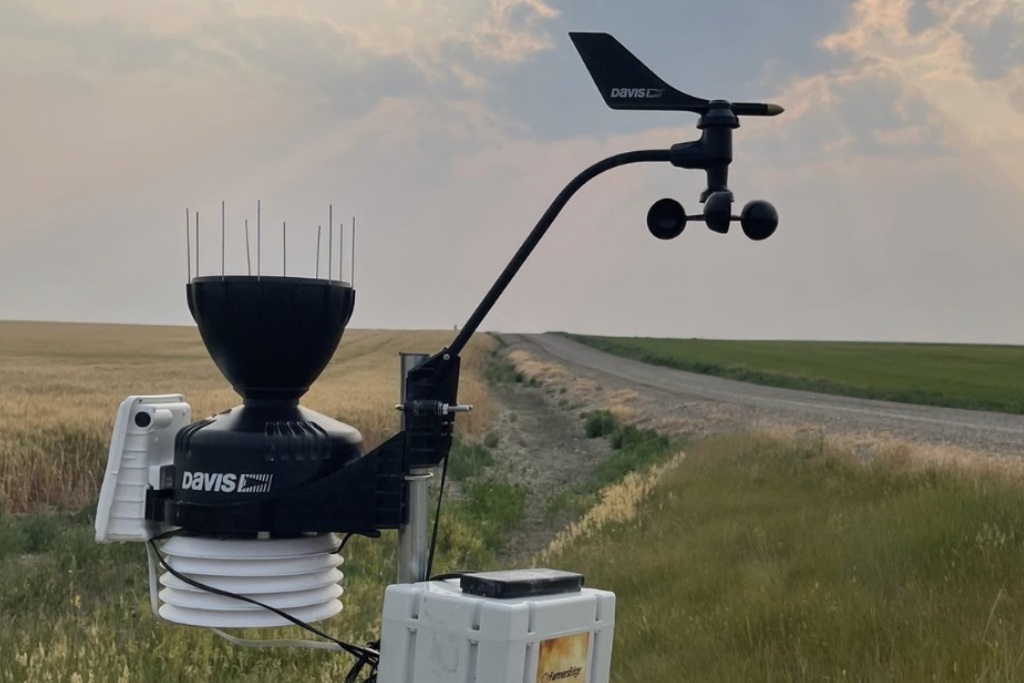
Farmers Edge will no longer offer in-person services as it looks to stave off a revenue crunch and negative cash flows. Photo: Farmers Edge/Handout
CALGARY — Farmers Edge has cut 20 per cent of its staff as it introduces a new virtual-services business model aimed at cutting costs, the company announced Thursday on an earnings call with analysts, confirming The Logic’s report on the agtech company’s struggles.
Winnipeg-based Farmers Edge, which went public in March 2021 after securing backing from major venture capital funds like Silicon Valley’s Kleiner Perkins, offers a range of digital services like satellite imaging and predictive weather forecasting through its centralized platform, which farmers use to optimize their yields. But it had historically also offered various in-person services—like on-the-ground maintenance or crop assessments—which it has now cut back as it looks to stave off a revenue crunch and negative cash flows.
Talking Points
- Farmers Edge has cut its workforce, closed its Australia office and switched to remote service offerings as it looks to reverse negative cash flows
- So far, turnaround CEO Vibhore Arora has managed to change the trajectory of negative EBITDA and cash flows, but revenues continue to decline as subscribers abandon the Farmers Edge platform
The company also confirmed Thursday that it had closed its Australia office, which The Logic had also previously reported. The closure comes after Farmers Edge shut its Russia and Ukraine operations last year, leaving just the U.S. and Brazil as its remaining foreign operations.
The moves are part of a turnaround effort led by CEO Vibhore Arora, who replaced co-founder and former CEO Wade Barnes last year. The company, once poised for rapid growth, has been wrestling with declining subscriber numbers and dwindling revenues. Its share price has fallen from more than $19 per share in 2021 to a mere penny stock.
Control costs and prosper?: Farmers Edge had previously laid out a strategy to reduce costs by $20 million, and Arora told analysts on Thursday the company achieved those plans in the second quarter.
Combined with similar efforts in recent quarters, the company has continued to yank out the plumbing and drive down its overhead. It has already cut its annual costs to $70 million, down from $102 million in 2022. In the second quarter—after reducing headcount, closing its Australia office and switching to a virtual service model—it cut annual expenses further, to $50 million, according to Arora’s estimates.
Related Articles


“We are continuing to make significant progress on our turnaround plan, which remains laser focused on profitability and free cash flow enhancements,” he told analysts.
Cash (flow) is king: So far, Arora’s cost cutting efforts seem to be working—at least gradually. The company’s cash flow deficiency improved 26 per cent over the quarter, to $13.9 million. Negative EBITDA (earnings before interest, taxes, depreciation and amortization) improved 29 per cent to $13.0 million.
Still, revenues continue to decline as the company struggles to convert unpaid subscribers to paid. Its “digital agronomy acres”, or the total surface area where Farmers Edge has successfully implemented its software platform, declined to 6.6 million in the quarter, down from 9.8 million in 2022. (Total acreage was nearly 19 million in 2021.)
Virtual assistance: Arora defended the company’s decision to shift to a remote services model, saying it would allow Farmers Edge to “deliver a much more consistent customer experience on a digital-only model.”
As The Logic previously reported, Barclay Uruski, a farmer and previous Farmers Edge client, said the company had failed to meet its in-person service agreements. Uruski, who operates a 2,500-acre farm near Winnipeg, said some of the company’s basic software offerings—including a satellite imagery service that pinpoints crop threats—didn’t always work as advertised.



Loading...
Thanks for sharing!
You have shared 5 articles this month and reached the maximum amount of shares available.
CloseThis account has reached its share limit.
If you would like to purchase a sharing license please contact The Logic support at [email protected].
CloseGift the full article!
You have gifted 0 article(s) this month and have 5 remaining.
Recipients will be able to read the full text of the article after submitting their email address. They will not have access to other articles or subscriber benefits.
Photo: Farmers Edge/Handout
Most Popular This Week



In-depth, agenda-setting reporting
Great journalism delivered straight to your inbox.
The Big Read
The professor trying to make Canada a supercomputer superpower
Briefing
BMO, CIBC join cross-border blockchain experiment Project Agorá
Trade remains greatest ‘downside risk’ to Canada’s economic growth: Deloitte
AMD to acquire Radical Ventures-backed World Labs in US$8.2B deal
Best business newsletter in Canada
Get up to speed in minutes with insights and analysis on the most important stories of the day, every weekday.
Exclusive events
See the bigger picture with reporters and industry experts in subscriber-exclusive events.
Membership in The Logic Council
Membership provides access to our popular Slack channel, participation in subscriber surveys and invitations to exclusive events with our journalists and special guests.