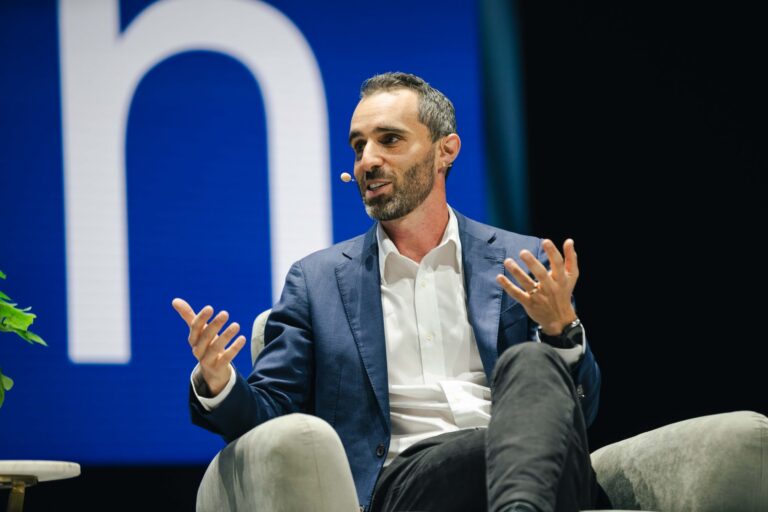
OTTAWA — With $2 million in new venture funding, virtual pediatric medical service KixCare is looking to go national.
The company claims 20 pediatricians and an equal number of other health providers—such as psychologists, sleep experts and lactation consultants—and a patient roster that’s been doubling every few weeks.
Co-founder Sheldon Elman is himself a family doctor in Montreal, and also the chair of Esplanade Ventures, which is putting up the money to expand KixCare’s virtual offering outside Ontario.
Talking Point
Patients have long wished for many of their appointments to be phone-based or online, but until the pandemic forced the issue, most provinces weren’t willing to cooperate. KixCare is planning to give parents what they’ve been looking for.
He said many practitioners don’t take to pediatric care easily even in normal times.
“The reality is that children have never been really well served within the new realm of telemedicine,” Elman said. “Other providers of telemedicine may indeed have some aspect of pediatric services but it’s really sort of an afterthought.”
Part of KixCare’s value proposition is that it’s “instant-on”: available long hours, seven days a week. Very often, Elman said, what seems to be a minor affliction in a child—a rash, a headache, abdominal pain, something most parents would wait out if they had it themselves—really is minor, but waiting two or three days for an appointment to confirm that feels impossible.
“Kids and illnesses don’t exactly pick the time that’s most appropriate, during office hours,” Elman said. “So where do they end up? They end up in the emergency room…. That is not the answer. That is categorically the most inane misuse of facilities and funding.”
Elman made his fortune with Medisys, a chain of private medical clinics that Telus Health bought for over $100 million in 2018; one of Elman’s partners in Esplanade is Josh Blair, the Telus executive who was on the other side of that deal.
Elman rejects the idea that there’s privatization by stealth with KixCare: to book an appointment with a psychologist or sleep consultant, a parent has to supply a credit-card number. But the pediatricians on the platform bill Ontario’s health program through the patients’ health cards, and the allied providers who are paid privately through KixCare would also be paid privately off its network.
“The whole public-private issue—this is categorically not the slow encroachment of that,” he said. KixCare’s idea is to take services as they’re currently offered and funded and make them more accessible online, he said.
Julie Drury welcomes the idea. An Ottawa mom, she was the first chair of a provincial advisory council asked to give patient perspectives to the provincial health ministry.
Drury’s daughter Kate, who died in 2015 at age eight, had a rare condition called sideroblastic anemia that required years of complex medical care. Her son Jack has had his own hospital appointments, including follow-ups that absolutely could have been done virtually, she said.
“Families have been asking for a long time for things like phone consults and being able to email back and forth with their clinicians,” Drury said. “There’s always been a massive pushback that that was not possible. And then something like COVID comes along and it completely upends the system. All of a sudden, all these things are possible.”
In Ontario, a provincial telehealth agency was just beginning experiments with virtual primary care at the end of the last decade: in its last annual report before it was folded into a bigger agency, covering 2018–19, the Ontario Telehealth Network said it had done 16,000 virtual appointments over two years.
But COVID-19 pushed primary-care doctors into telemedicine hard and fast. On March 13, 2020, the last day public schools were open that year, Ontario’s public insurance system issued a bulletin giving doctors new temporary fee codes allowing them to bill for virtual visits for routine care.
It asked them to hold off on submitting those billings for a few weeks while the health ministry got the bookkeeping into shape, but the message in a panicky time was clear: do everything you can to keep patients out of your office, away from each other and you, unless they absolutely need to be there.
In July, Ontario extended those temporary codes until September 2022, allowing physicians to keep billing for virtual visits.
“If I’d told you, as a pediatrician or as a family doctor, ‘Hey, you’re not going to see patients [in person], you’re going to be seeing them from the comfort of your living room or your bedroom or your home office or whatever,’ you’d have said, ‘You are absolutely crazy. Here, antipsychotic medication,’” Elman said. “Then comes a pandemic and all of a sudden, this becomes the norm.”
Doctors have learned how to use virtual contacts effectively since March 2020, he said. Those can make for calmer appointments, without second or third children brought along by a parent who has no other options, for instance.
“It wouldn’t be appropriate for us to comment on a business venture,” said Elizabeth Moreau, the director of communications for the Canadian Paediatric Society, when The Logic asked to talk about the pros and cons of virtual care for kids.
In October, though, the health ministry and the College of Physicians and Surgeons of Ontario issued a joint statement saying it was time to tilt the field back the other way—that with vaccines and protective equipment now widespread, doctors should be seeing more patients in person.
The Ontario college is also consulting on professional rules for virtual care. In Manitoba, the physicians’ regulator has a new standard of practice, starting Nov. 1, saying doctors there must offer their patients in-person care. “It is not an acceptable standard of care to solely practice virtual medicine,” the rule says flatly.
KixCare’s bet is that that won’t become the common standard across the country. Its policy is that when doctors conclude after video consultations that children need to be seen in person, they will refer the parents to practitioners who will do that. But it has no in-person offering.
“When one looks at how people will go back to office work, it will likely be a hybrid model—home and office,” Elman said. “The same will apply to the field of telemedicine. It should definitely not be 100 per cent in either direction.”
Virtual care could be tricky with children whose health is complicated, Drury said.
“There is that concern about what might be missed,” she said. “As a mom of a child who never presented very typically, and who really needed to have eyes on her, that would be something that I would worry about. But I think this is something that’s good… I think it’s going to alleviate some pressures. I think it’s going to help parents make better decisions about when they go to the emergency department.”
Ontario doesn’t exercise anything like the central control over primary-care practices that it does over hospitals, but Drury said any province planning to make virtual care a permanent part of its health system should be careful and deliberate.
“I don’t think you can design a service like this, a virtual pediatric care program, without including a range of families, caregivers, and children and youth so that you fully understand what the service needs to provide what it should look like.”