Listen Now
0:00
The race to secure graphite—a mineral critical to batteries, nuclear power and military stealth technology—is putting Canada’s stockpiling plans under the spotlight.
The pencil-core mineral, naturally found in potato-chip-like flakes, has headlined several multilateral announcements. At June’s G7 meeting, the French government signed a letter of intent to explore critical mineral deals with Canada, starting with graphite. Last October, six graphite deals were struck in Toronto, with partners including Japan, Italy, Luxembourg, Norway, Germany and Ukraine.
Talking Points
- As allies look to refine graphite on military bases, Canada’s high-purity deposits of the grey mineral are drawing international attention
- While the country has projects in advanced stages, there is work ahead if the government wants to use the mineral as the poster child for its critical minerals “buyers’ club” trade policy
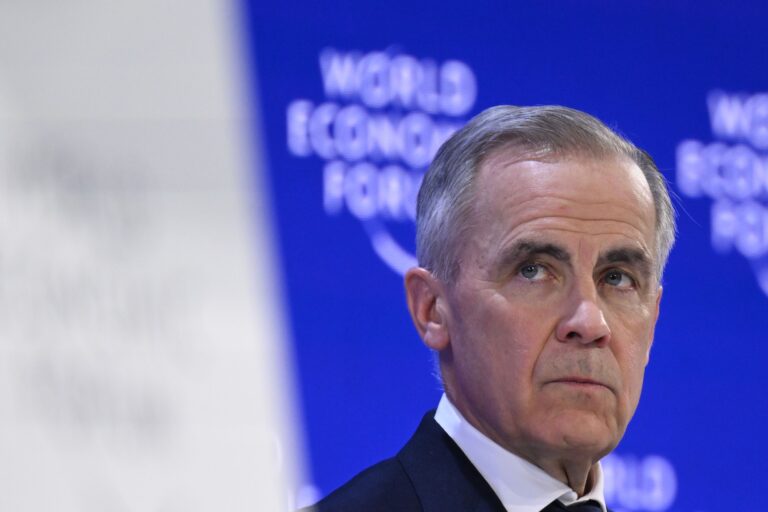
Graphite projects have become the country’s calling card for a reason: military demand is growing and projects are under construction in an otherwise slow-moving industry. Prime Minister Mark Carney’s government is also under pressure to show results from its plans to lead a critical minerals “buyers’ club,” announced at the World Economic Forum in January, alongside its pledge to invest more in “dual-use” technologies for both Canada’s consumers and armed forces.
Executives from Ottawa-based Focus Graphite recently returned from a European Commission roundtable on defence and aerospace at NATO headquarters. The federal government granted the company about $1.4 million last month to build infrastructure around its mine, as securing domestic graphite becomes more urgent. The global defence-spending blitz has collided with growing demands on the power grid, driving reliance on imports that come almost entirely from China.
“You can’t compete with the cost of labour for China, you can’t compete with the cost of capital with China, you can’t really compete with technology unless you have something special… It’s by the grace of God that you have the graphite grade,” said CEO Dean Hanisch.
Related Articles

“Luckily,” he added, “Canada has those types of deposits.”
Despite holding about two per cent of the world’s graphite reserves in 2024, Canada has an advantage because new technology favours the ultra-high-purity version naturally found here, said Hanisch, who is working with Ukrainian engineers on graphite purification technologies.
Militaries can use high-purity graphite to mask infrared signatures for submarines and drones. China, which refined and processed about 98 per cent of the global supply in 2024, began restricting exports in 2023. The U.S. military announced last month it would begin refining graphite on-site at two Army depots, and the EU is reportedly in talks to build its own graphite stockpile.
Meanwhile, other emerging technologies are also more dependent on the grey stuff, traditionally used in steelmaking. Artificial intelligence data centres are sucking power from electricity grids, supercharging demand for large energy-storage batteries and nuclear power. Both technologies rely on graphite, as do electric vehicle battery packs.
“I think we have an example where Canada has actually stepped up.”
In response, the Canadian government is building a stockpile and has added Nouveau Monde Graphite’s project to its Major Projects Office list for expedited approval. Construction began in May on what the government hopes will be the G7’s largest graphite mine.
CEO Éric Desaulniers said the company is shipping graphite to Panasonic under a national agreement between Canada and Japan in 2023, and is in talks with defence customers.
“If you’re in the submarine, for instance, you will want to hide any signal coming from your instruments, or your engine, or your batteries inside,” said Desaulniers. “We’ve made our own stealth material just in the lab to demonstrate we can do it.”
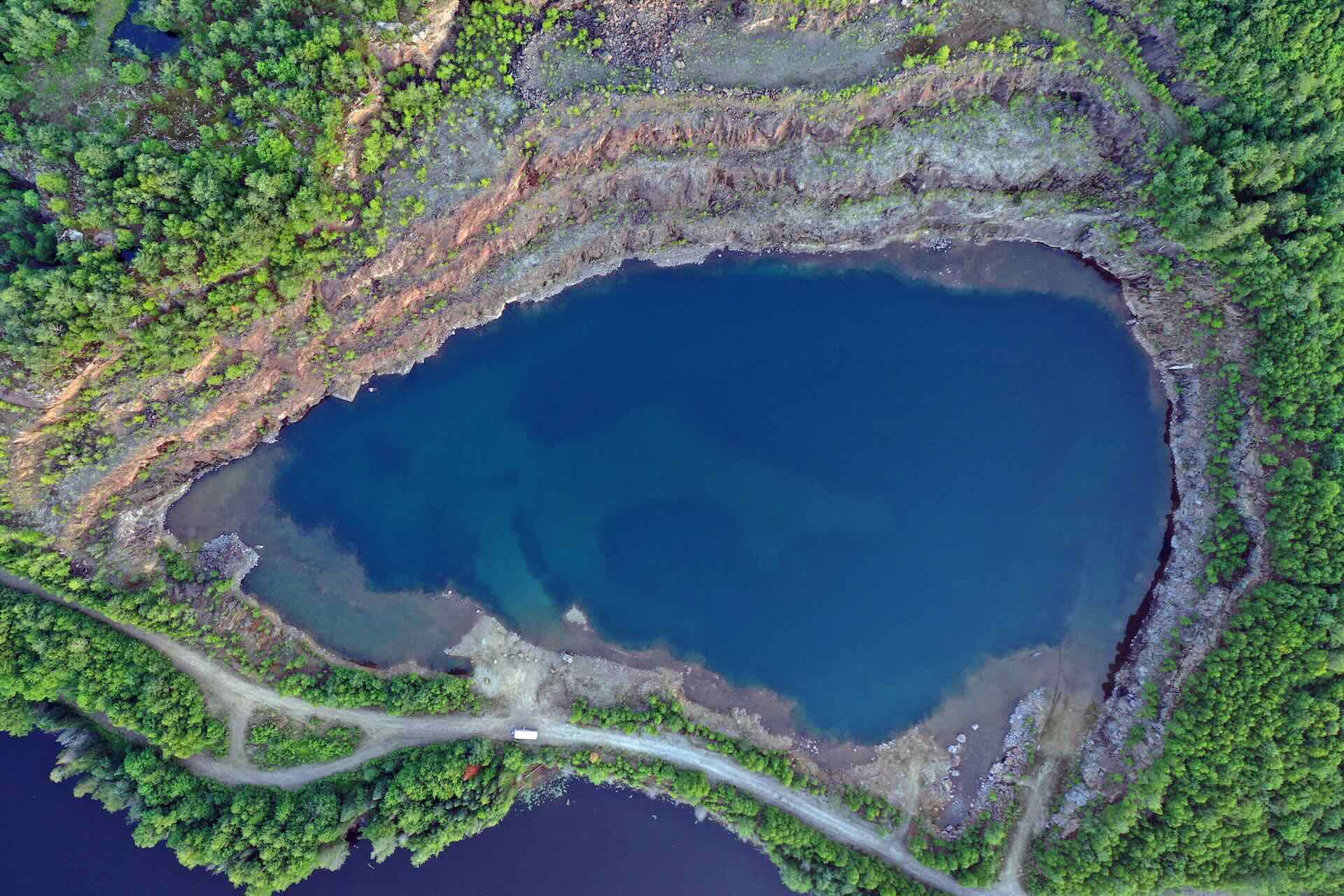
One reason graphite mines have become shorthand for Canada’s trade ambitions is that the projects are nearing completion in an industry where building a new project takes an average of nearly 18 years. Global Battery Materials, for example, is restarting an existing mine in northern Ontario.
“Companies generally aren’t going to talk to someone who’s 10 years away,” said Eric Miller, CEO of Global Battery Materials. “We’ve been finding a lot of success because we can say, ‘In 20 months, this is what it’s going to look like, and I can get a sample to you today.’”
Critics argue that graphite projects aren’t proof of deeper policy changes. Conservative Natural Resources critic Shannon Stubbs said in an email statement to The Logic that the NMG project was “already well advanced” and that its recent progress is “not proof that Carney has now become their new champion.”
NMG CEO Desaulniers said the Major Projects Office made the project more bankable, co-ordinating funding packages for lenders like the Bank of Montreal and National Bank, and making sure stockpiling agreements were solid to present to external investors.
Despite the Canadian government’s promise to fund stockpiles and stabilize mineral prices, companies argue there’s still work left to be done. While firms have been tapping local talent and finding workarounds to avoid China-made machinery, it’s hard to run a business where prices can fall about 20 per cent in a year, as they did in 2024 due to a graphite glut from China. The International Energy Agency projects that the demand will rise over 130 per cent between 2024 and 2040.
“I think we have an example where Canada has actually stepped up,” said Miller. “The world needs much more than just one project… the industry needs to be robust.”














