How Canadian businesses should prepare for a Donald Trump presidency
OTTAWA — If business leaders haven’t already been talking to their American suppliers and customers about the importance of cross-border commerce, they should start immediately, say people with experience in the trenches of North American trade battles.
The warning comes as companies and business groups contemplate the prospect of a new Donald Trump presidency and the renewal of trade tensions it could bring.
News
How Canadian businesses should prepare for a Donald Trump presidency
Talk to your U.S. suppliers and customers about trade, and hope the feds don’t get in the way
Prime Minister Justin Trudeau signs the USMCA trade deal as former U.S. president Donald Trump and former Mexican president Enrique Pena Nieto look on during a ceremony at the 2018 G20 summit in Buenos Aires. Photo: The Associated Press/Martin Mejia
OTTAWA — If business leaders haven’t already been talking to their American suppliers and customers about the importance of cross-border commerce, they should start immediately, say people with experience in the trenches of North American trade battles.
The warning comes as companies and business groups contemplate the prospect of a new Donald Trump presidency and the renewal of trade tensions it could bring.
Talking Points
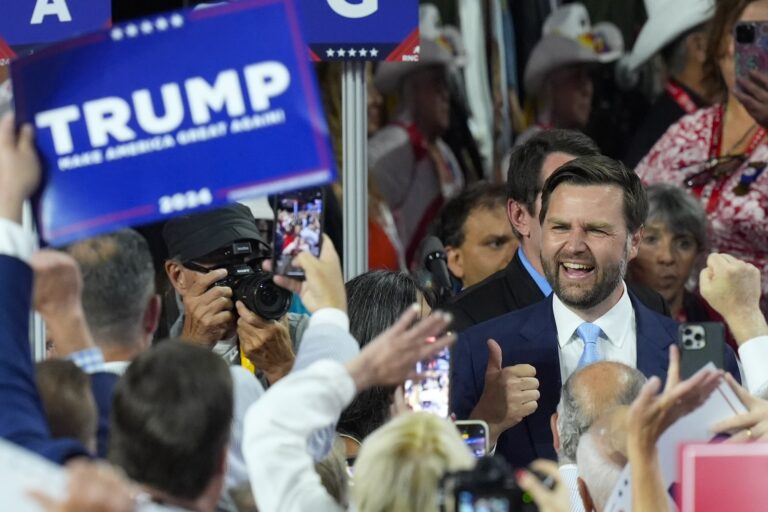
Republican presidential nominee Donald Trump is promising tariffs on all imported goods to try to promote U.S. employment, over the objections of traditional conservative free-traders in his own movement
Canada’s Liberal government is running “Team Canada” missions to remind Americans at all levels of the importance of the two countries’ trade relationships, and Canadians who do business with the U.S. need to be doing the same, multiple experts say
Impeding those efforts: low opinions of this country on the security issues that dominate American thinking
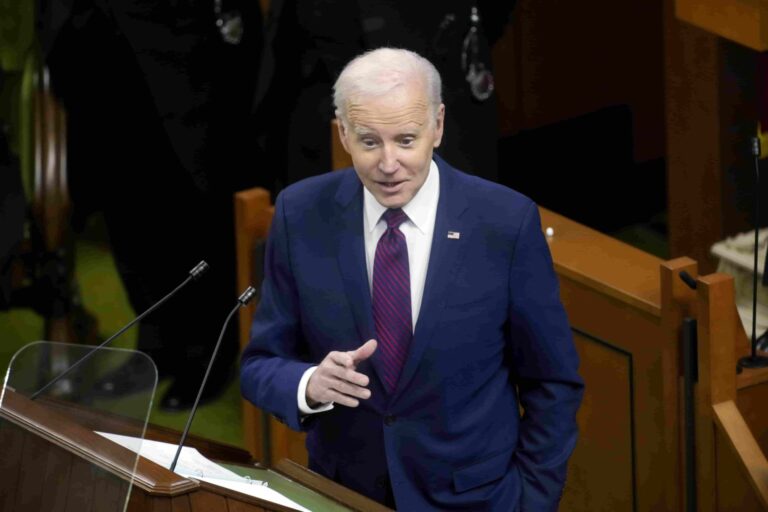
Joe Biden’s withdrawal from his re-election bid and his endorsement of Vice-President Kamala Harris might give the Democratic party a boost, but the earliest polling suggests a Harris nomination would make the race for the presidency competitive—far from a Democratic lock.
“We need to be talking clearly with each other and with our trading partners at the company level,” said the Canadian Chamber of Commerce’s vice–president of government relations, Matthew Holmes. “Reminding your supply chain who you are and how you matter to them should never be a campaign—it should be a constant.”
Trump has called for “universal baseline tariffs on most foreign products” and promised a law imposing reciprocal tariffs against any country that taxes U.S. goods—”an eye for an eye, a tariff for a tariff, same exact amount.”
Furthermore, the U.S.-Canada-Mexico Agreement on trade (USMCA) is up for a mandatory review in 2026, regardless of who is president. Preliminary work to set the three countries’ respective negotiating positions is already underway.
Canada might not be Trump’s top trade target—that’s plainly China—but it could easily be caught in the overspray.
“Canadians do not realize how quickly Americans forget the messaging that [Canadians] bring them,” said Laura Dawson, formerly the head of the Wilson Center’s Canada Institute and an economic advisor at the U.S. Embassy in Ottawa. She’s now executive director of the Future Borders Coalition, which seeks minimal friction in U.S.-Canadian border crossings.
Canada waged a multi-level charm campaign with American government and economic figures when Canada, the United States and Mexico renegotiated the North American Free Trade Agreement (NAFTA) during Trump’s previous term. It played up the two countries’ interdependence and the dangers that new tariffs and trade barriers could pose to U.S. industries.
That was just a few years ago. Assume the last echoes have faded away, Dawson said.
“Americans don’t remember that Canada is the largest buyer of U.S. goods, they don’t remember the importance of the security relationship. They don’t remember all of this stuff. And Canadians seem to believe that they do,” she said.
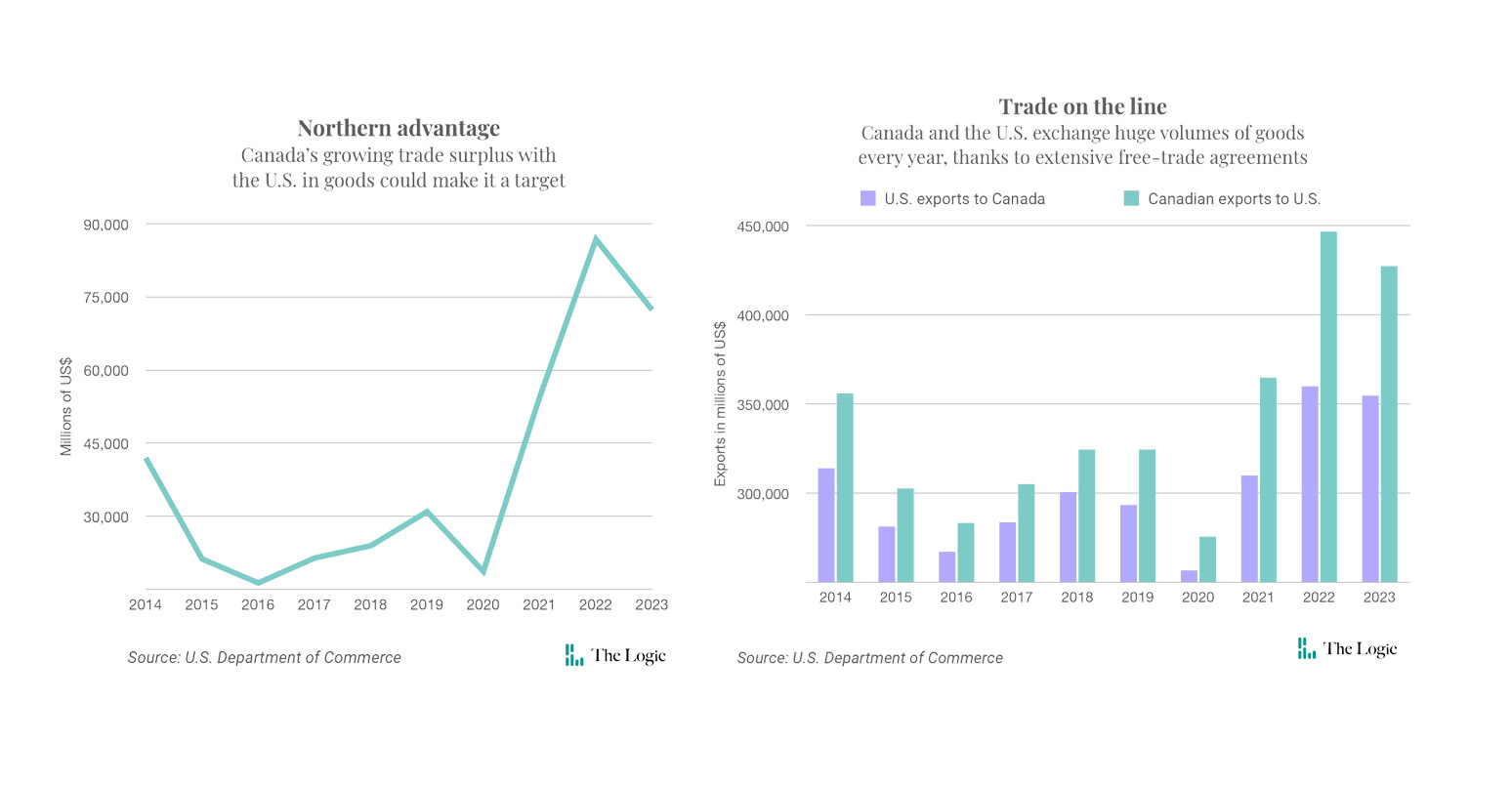
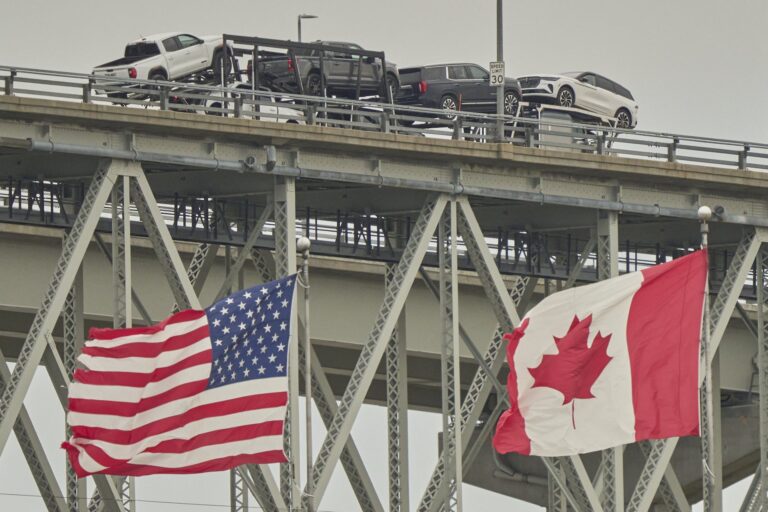
Canada is, of course, a huge U.S. trading partner, buying more than 17 per cent of its exported goods and supplying 13.7 per cent of its imported ones in 2023.
At the same time, the American goods trade deficit with Canada grew under Trump (except in 2020, the strange first year of the COVID-19 pandemic) and has grown faster under Biden. If you see trade deficits as a problem (as Trump does), and tariffs as a solution, Canada may be a tempting target.
Meanwhile, American dissatisfaction with Canada’s defence spending and security efforts has grown. Dawson and others who spoke to The Logic said. American politicians have not been quiet about Canada’s reneging on its promises, especially to NATO, but Canadians might not fully get how thoroughly it drowns out any attempt to get Americans on Canada’s side on other issues.
“Every message that Canada frames to U.S. partners needs to be in the security context, whether it is military security, or economic security, or a hedge against China, or energy security, or Arctic security,” Dawson told The Logic from Washington, D.C.
“One thing that I think that we do have to be really conscious of is the increasing frustration with Canada around the two per cent NATO commitment,” agreed Meredith Lilly, a former trade advisor to prime minister Stephen Harper. “I think [a Trump administration] will make linkages across files.”
The new “Team Canada” effort the federal Liberals launched last January is good, but it’s not enough, said Dawson. The Canadian approach to trade with the U.S. is to “fly under the radar and pass as local,” so we don’t have binational chambers of commerce all over the United States to press our case the way Mexico—or even France—does, and we have to make up for that.
Constantly making Canada’s case is a good idea regardless of who’s in the White House, agreed Lilly. She studies and teaches trade at Carleton University—where she holds a professorship named for Simon Reisman, Canada’s lead negotiator for the pre-NAFTA trade deal between Canada and the United States in the 1980s.
“A lot of the protectionism and emphasis on American manufacturing, American wages, American jobs, is exactly the same thing that we have heard from the Biden-Harris administration for three years,” Lilly said.
“I think a fresh face would be needed in Canada when it comes to dealing with the Trump administration.”
Not that conservatives and right-wingers in the United States are unanimous on these things, and would speak to Trump with one voice.
“Project 2025,” an effort led by the Heritage Foundation think tank to lay groundwork for the next Republican administration, struggled conspicuously with trade. Project 2025’s main output has been a collection of papers on major policies and approaches to parts of the government—what to do with the Department of Justice, for example, or the Environmental Protection Agency.
Nearly every subject Project 2025 took up gets one agenda-setting essay, many of them (despite Trump’s purported repudiation of the whole effort) by former Trump administration figures.
Trade gets two papers that are almost perfectly opposed.
“The Case for Fair Trade,” by ex-Trump trade policy czar Peter Navarro, argues that “America gets fleeced every day in the global marketplace,” especially by China, and needs to stop “the parasitic draining of the American manufacturing and defence industrial base.”
“The Case for Free Trade,” by Competitive Enterprise Institute CEO Kent Lassman, says the next president’s first priority should be torching generations of trade tariffs, and second should be changing laws to make bringing them back nearly impossible.
In 2018, the U.S. slapped tariffs on steel and aluminum, including from Canada, and it helped U.S. steelworkers, Lassman wrote, but “each steel job saved cost an average of $650,000 per year that had been taken from elsewhere in the economy. That is no way to strengthen American manufacturing.”
The guy behind those tariffs: Peter Navarro, who went to prison this year for contempt of Congress. After his sentence concluded last week, he went straight to the Republican National Convention in Milwaukee to deliver a speech, a clue to whose views Trump favours.
Conservative thinking on trade has undergone “a shift from what traditionally was a much more libertarian, free-market approach to today, what we see as a more populist and protectionist and sometimes anti-trade approach,” Lilly said. The libertarians are still around and jockeying for influence, she said, but not necessarily winning even in their own ideological coalition.
If there’s good news for Canada in Project 2025, it might be that we don’t come up very much, and mostly in positive terms when we do. One paper argues that it should be easier to sell us U.S.-made weapons; another says Canada should be part of a hemispheric energy policy; a third admires our air-traffic control system. Abortion comes up more than 15 times as frequently as Canada.
“What’s Donald Trump going to do? I don’t think he’s going to be bound by any particularly logically coherent set of ideas. He is going to follow many of the same lines and mantras that we’ve heard in the past,” said Dawson.
Pickups at a GM assembly plant in Oshawa, Ont., in February 2022; experts warn Canada must monitor the amount of Chinese parts going into vehicles produced here. Photo: The Canadian Press/Chris Young
In his speech accepting the Republican presidential nomination, a section on trade focused on the prospect of Chinese-run auto plants in Mexico. A Trump presidency would put 100 to 200 per cent tariffs on cars from those plants, he promised.
“Canadian exporters need to be really aware of the amount of Chinese content and the parts of the supply chain that that’s in,” Lilly said.
Canada does have some cards to play. This country is a source of raw materials, including rare critical minerals, and energy.
“Trump does not seem to object to energy imports from Canada,” said Dawson. “He wants U.S. energy self-sufficiency and to ‘Drill, baby, drill.’ But if you have to have oil from foreigners, it’s OK that you’re getting oil from Canada,” she said. Farming states know that Canada is a huge buyer of their products, too, she added.
The Canadian government is investing in semiconductor manufacturing, which is an economic security issue. It’s stepped up efforts to build icebreakers for Arctic security. Everybody wants artificial intelligence, and Canada is good at that. Hasty though it might have been, the Liberal government did announce plans to meet Canada’s NATO spending commitment.
But the government itself acknowledges that Canada is at risk of being seen as a weak security link among its allies, if it isn’t already.
Holmes said that the approach of Canada’s next federal election—due by law in October 2025 at the latest—makes preparing for the impending USMCA review very urgent.
In Canada’s favour, Trump publicly sees USMCA as a triumph of his previous administration: “I got rid of NAFTA—the worst trade deal ever made—and replaced it with USMCA, which is, they say, the best trade deal ever made,” he said in Milwaukee.
A Conservative government under Pierre Poilievre would likely have an easier time than Justin Trudeau’s Liberals in the review and possibly a wider renegotiation, said Lilly, pointing to polling that says Canadians generally think the same thing.
“I think a fresh face would be needed in Canada when it comes to dealing with the Trump administration,” she said.
But if the Conservatives win power, they will have to stand on the foundation the Liberals are building now, Holmes said.
If the election yields a second Trump administration, he said, “there will be a very narrow series of months in which we can really productively engage and be seen as constructive partners.”
Recipients will be able to read the full text of the article after submitting their email address. They will not have access to other articles or subscriber benefits.
Photo: The Associated Press/Martin Mejia
Pickups at a GM assembly plant in Oshawa, Ont., in February 2022; experts warn Canada must monitor the amount of Chinese parts going into vehicles produced here.
Great journalism delivered straight to your inbox.
The Big Read
Beacon is building an AI empire by fixing Main Street’s software
By
Murad Hemmadi
Briefing
Inovia raises US$200M for new VC fund as it eyes AI’s impact
By Anita Balakrishnan |
43% of eligible Albertans voted ahead of Monday’s referendum
By Meghan Potkins |
AI chip company Tenstorrent raises US$1.5B, valuing it at US$6.2B
By Catherine McIntyre |
Best business newsletter in Canada
Get up to speed in minutes with insights and analysis on the most important stories of the day, every weekday.
Exclusive events
See the bigger picture with reporters and industry experts in subscriber-exclusive events.
Membership in The Logic Council
Membership provides access to our popular Slack channel, participation in subscriber surveys and invitations to exclusive events with our journalists and special guests.