U.S. President Donald Trump signed an executive order on Wednesday applying 25 per cent tariffs to vehicles and major parts not made in the United States. The auto tariffs take effect at 12:01 a.m. EDT on April 3, with tariffs on parts following no later than May 3.
Skip to content
 A GM employee works on Silverado pickup trucks at the company's assembly plant in Oshawa, Ont. Photo: The Canadian Press/Chris Young
News
Trump hits cars made outside U.S. with 25% tariff in major blow to Canadian industry
U.S. president wants to push automakers to move production into his country
A GM employee works on Silverado pickup trucks at the company's assembly plant in Oshawa, Ont. Photo: The Canadian Press/Chris Young
U.S. President Donald Trump signed an executive order on Wednesday applying 25 per cent tariffs to vehicles and major parts not made in the United States. The auto tariffs take effect at 12:01 a.m. EDT on April 3, with tariffs on parts following no later than May 3.
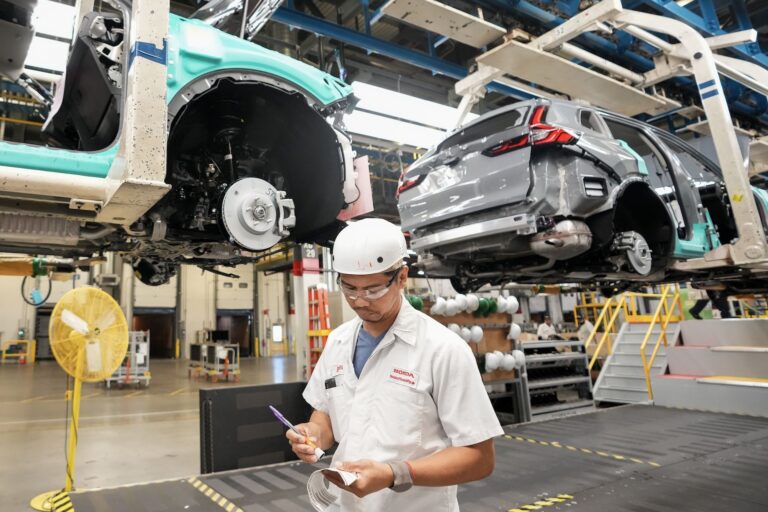
The levies will wound Canada’s second-biggest export by value, an industry that exported $51 billion in products in 2023, 93 per cent of which went to the U.S. About 1.5 million vehicles, including models like the Chrysler Pacifica, Toyota Rav 4, Chevrolet Silverado and Honda CR-V that are made in Canada, will find it difficult to compete in the U.S. market under the new tariff regime.
Talking Points
- Donald Trump signed an executive order on Wednesday adding 25 per cent tariffs to any vehicle not made in the U.S., in a significant blow to Canada’s auto industry
- The tariffs will also apply to “key” auto parts like engines, transmissions, powertrain parts and electrical components, the White House said
- Trump made it clear the order is intended to force companies to relocate production to the U.S., which he conceded will take “a little while”
The White House later said the tariffs will also apply to “key” auto parts like engines, transmissions, powertrain parts, and electrical components, adding that the commerce secretary and U.S. Customs and Border Protection are establishing a process to apply tariffs to vehicles’ non-U.S. content. Until that takes effect, which the executive order said will be within 90 days, the remaining USMCA-compliant auto parts will not be tariffed, the administration said.
That will further injure Canada’s industry. Billions of dollars in gearboxes, axles, clutches and mufflers cross the border each year, many of them several times before ending up in vehicles. Trump said his administration will be “policing” carmakers to ensure they use American-made parts, and wants them to move their parts divisions to the U.S. from Canada and Mexico.
“We were losing our plants. They were being built in Mexico and Canada and other places. Now those plants largely have stopped, and they’re moving them to our country,” the president said in an announcement in the Oval Office. He added that the policy is permanent and will prompt auto-plant construction in the U.S. although it “takes a little while.” The executive order, however, gives the commerce secretary the power to recommend that tariffs be lifted.
The move will likely pressure the five major automakers who assemble vehicles in Canada—Ford, General Motors, Stellantis, Toyota and Honda—to shut down Canadian plants and move production to the U.S.
Related Articles
It’s an outcome that Unifor, the union that represents many of the country’s 125,000 autoworkers, has previously vowed to fight. Canadian union leaders were in Detroit last week to meet with CEOs at Ford, Chrysler and GM, ahead of executives’ trip to Washington, where they made a last-ditch effort to hold off tariffs this week.
“We’ve had an auto industry in this country for well over 100 years,” the union’s national president Lana Payne said on Tuesday, the eve of the tariff announcement. “These are not Donald Trump’s jobs to steal,” she said. “We are going to do everything as a union to protect them.”
On Monday, Trump again made it clear he’s trying to induce companies to relocate to the U.S. to avoid the tariffs. Auto manufacturers “are going to be making parts and other things in those plants so that it’s one-stop shopping, finally,” he said Monday, adding that it is “ridiculous” that cars are currently made in a way that sees parts moving through Canada or Mexico.
The U.S. move comes amid a cost-of-living squeeze, where car prices have already risen faster than wages. Trump said he is working on a policy that would let citizens deduct car loan interest on American-made cars from their taxes.
On March 5, Trump granted the auto sector a temporary break from the universal tariffs he had imposed on Canada and Mexico for any vehicles going through the United States-Mexico-Canada Agreement (USMCA). The next day he extended that reprieve to all goods that comply with the trilateral trade pact. He said the pause on those universal tariffs—10 per cent on Canadian energy products and 25 per cent on all other goods—would end April 2. The executive order says the tariffs are on top of any other duties that apply to the imported automobiles and parts.
The timeline and details of sector-specific tariffs—which could include autos, pharmaceuticals, lumber and semiconductor chips—have been both vague and shifting. Trump had suggested he would impose them April 2 alongside wide-ranging reciprocal tariffs he has threatened to impose on unspecified countries. Then media reports suggested the White House was considering a more targeted approach to reciprocal tariffs and dealing with individual sectors at a later date.
On Wednesday, Trump said that new upcoming tariffs, which may include pharmaceuticals and reciprocal tariffs on all countries, will be “very lenient.”
Trump said that Tesla CEO Elon Musk, who works in his administration, did not influence his decision on the auto tariffs.
Editor’s note: This story has been updated with details from the executive order.



Loading...
Thanks for sharing!
You have shared 5 articles this month and reached the maximum amount of shares available.
CloseThis account has reached its share limit.
If you would like to purchase a sharing license please contact The Logic support at [email protected].
CloseGift the full article!
You have gifted 0 article(s) this month and have 5 remaining.
Recipients will be able to read the full text of the article after submitting their email address. They will not have access to other articles or subscriber benefits.
Photo: The Canadian Press/Chris Young
Most Popular This Week




In-depth, agenda-setting reporting
Great journalism delivered straight to your inbox.
Commentary
Carmichael: Being boxed in will help Canada focus on what matters
Briefing
Rio Tinto gets nearly $165M in additional federal funds for Quebec aluminum
U.S. to lift tariffs on some Canadian products crucial to Maine: Collins
Carney warns of tech dependence after Starlink disruptions in Ukraine
Best business newsletter in Canada
Get up to speed in minutes with insights and analysis on the most important stories of the day, every weekday.
Exclusive events
See the bigger picture with reporters and industry experts in subscriber-exclusive events.
Membership in The Logic Council
Membership provides access to our popular Slack channel, participation in subscriber surveys and invitations to exclusive events with our journalists and special guests.






