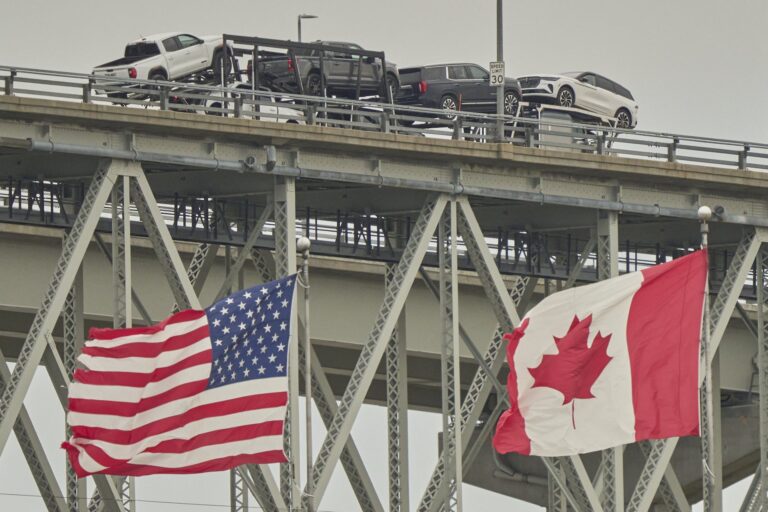
Listen Now
0:00
OTTAWA — Prime Minister Mark Carney spoke with President Donald Trump for the second day in a row on Tuesday afternoon, but the threat of new 50 per cent U.S. tariffs on Canadian goods remained as negotiators had yet to secure a deal mere hours before the deadline.
“We’re hearing furious negotiations continue with regular contact between the two teams,” said Lucas Malinowski, president and CEO of Global Automakers of Canada, the trade association representing Honda, Toyota and other foreign brands in the domestic market. “We’re still, last that we heard, far apart on some of the key sectors, including auto. But as these things go, often 80 per cent of the work can happen in the last 10 per cent of the timeline.”
The stakes
On July 20, Trump announced new 50 per cent tariffs on some US$20 billion worth of Canadian goods under Section 338 of the Tariff Act of 1930, arguing that Canada’s trade policies—including retaliatory tariffs on U.S. autos, restricted access to the dairy market and provincial bans on U.S. alcohol sales—are discriminatory. The Section 338 tariffs were set to take effect Wednesday at 12:01 a.m. EDT. Trump did not exempt goods covered by the Canada-United States-Mexico Agreement (CUSMA). That exemption has shielded the Canadian economy from the worst of the trade war.
Related Articles
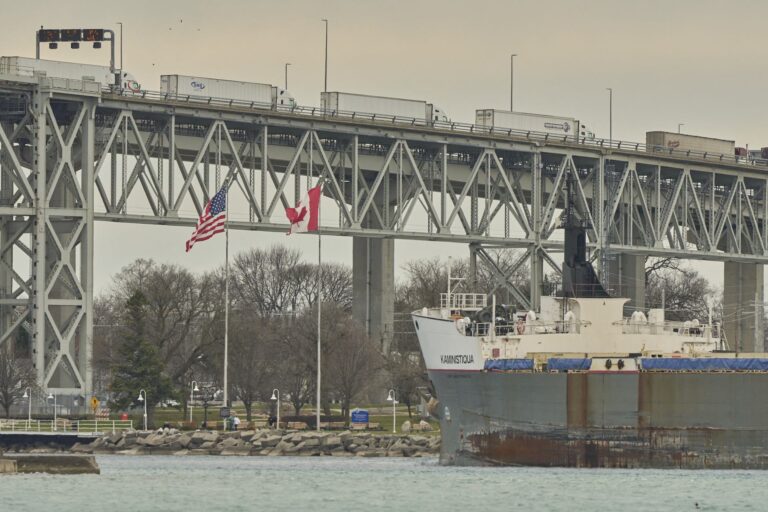
The new duties on alcoholic beverages, dairy products and a variety of goods such as seeds, hockey sticks, antiques, cement, motorcycles, plywood, clothing and Christmas ornaments would affect five per cent of Canada’s exports to the U.S. In a note on Tuesday, Derek Holt, Scotiabank’s head of capital markets economics, estimated they would raise the effective U.S. tariff rate from 5.49 per cent to 8.6 per cent.
But the impact would be uneven. “Regionally, British Columbia, Quebec and Ontario look to bear the most pain, with the latter two provinces already taking the brunt of the heavy metal and auto duties,” BMO senior economist Sal Guatieri wrote July 30. He estimated the tariffs could cause annual real GDP growth to drop by about half a percentage point.
Andrew Hencic, senior economist at TD Bank, noted Canadian businesses are used to the chaos by now. “Businesses have been operating under a cloud of uncertainty for over a year,” he wrote shortly after the tariffs were announced, “and although the new announcements are likely to dent confidence further, a repeat of the scale of the confidence shock from 2025 remains a tail risk.”
The U.S. Chamber of Commerce has called for a swift resolution. “The introduction of higher tariffs would damage both economies, drive up costs for U.S. families, further disrupt critical supply chains, and risk the 13 million American jobs that depend on trade under [CUSMA],” Neil Herrington, senior vice-president for the Americas, said in a statement Tuesday.
The (possible) retaliation
“I have a plan for every situation,” Carney said Monday in St. John’s, N.L., when asked whether the federal government intends to boost support for businesses or launch new counter-tariffs.
Canada’s chief trade negotiator Janice Charette has warned U.S. Trade Representative Jamieson Greer the Section 338 tariffs would increase the pressure on Ottawa to hit back. As Dennis Darby, CEO of Canadian Manufacturers and Exporters, put it to The Logic last week, sticking with the choice to impose them would mean “we can’t even talk about anything else.”
Scotiabank’s Holt wrote Tuesday that he would be “a cautious optimist right up to the deadline,” but outlined a few possible retaliation scenarios. Among them: repeating a version of the counter-tariffs that Canada slapped on $30 billion worth of U.S. imports in March 2025, including alcoholic beverages. Holt said that would “close the loop” by ensuring booze-related consequences stretch across the country, given Alberta and Saskatchewan lifted their bans last year.
“Obviously this risks spiraling escalation but if that’s what it takes into midterms, so be it,” Holt wrote, referring to the U.S. elections in November, which could weaken Trump’s influence over the U.S. Congress. Canada could also expand retaliatory tariffs on U.S. autos to include parts. “This is a very politically powerful tool given the U.S. auto lobby notwithstanding some pain to Canadians net of substitution effects,” Holt wrote.
Carney, meanwhile, suggested Canada would not restrict exports of Canadian oil and other natural resources to the U.S. “One of the biggest commodities, arguably the best, is trust,” he said last month in Red Deer, Alta., alongside Premier Danielle Smith, who has opposed using energy as leverage since last year.
What Canada wants
Canadian negotiators are seeking a comprehensive deal that would also reduce Section 232 tariffs the Trump administration placed on steel, aluminum, autos and forestry products. They also want the U.S. to launch formal talks with Canada on the renewal of CUSMA, also known as the USMCA.
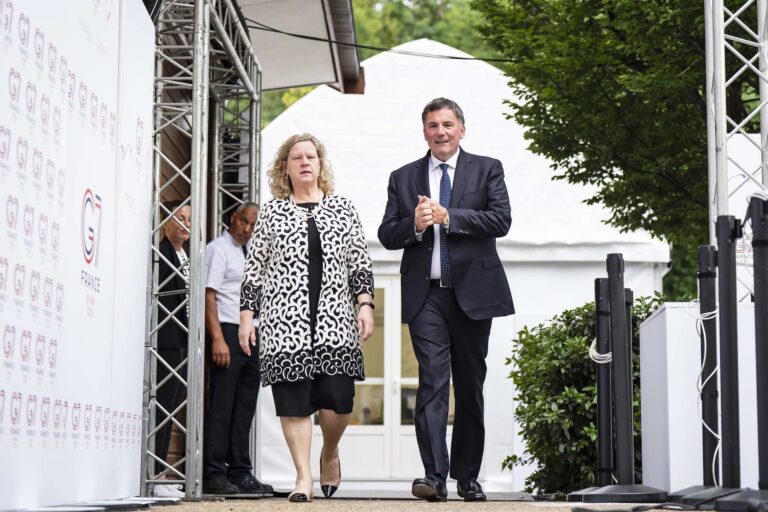
U.S. Commerce Secretary Howard Lutnick, whose department led the national security investigations that resulted in Section 232 tariffs, joined Greer for the meeting with Charette and Canada-U.S. Trade Minister Dominic LeBlanc on Monday in Washington, D.C. Yet the two sides reportedly remain far apart on autos. As The Logic reported last week, Canada is seeking a reduction in the Section 232 auto tariffs below the 15 per cent given to South Korea and Japan, with an exemption for any content produced in Canada, the U.S. or Mexico.
“We need to get that as close to zero as possible to maintain the competitiveness of Canadian manufacturing,” said Malinowski. The tariffs, now at 25 per cent, do not apply to U.S. content, but Malinowski said expanding the carve-out to North American content is vital, given the industry invested in meeting the 75 per cent regional content required under CUSMA.