OTTAWA — The federal government has shared more of its plan to impose 25 per cent tariffs this week on $30 billion worth of American products ranging from apricots to video-game consoles, plus steps Canadian businesses can take to ask for exemptions.
Skip to content


News
Canada’s tariff target list covers U.S. products from soup to nuts
Ottawa has unveiled its first moves to retaliate against Trump. Here’s what—and who—is being targeted
Canada's targeted counter-tariffs on U.S. imports will hit a range of produce and other food products. Photo: The Canadian Press/Chris Young
OTTAWA — The federal government has shared more of its plan to impose 25 per cent tariffs this week on $30 billion worth of American products ranging from apricots to video-game consoles, plus steps Canadian businesses can take to ask for exemptions.
Government officials shared the details Sunday in a technical briefing for media that was given on the condition the officials not be named or directly quoted. Here’s what you need to know.
Why did Canada choose these goods?
The government thinks Canadian consumers will be able to find alternatives to many of these products, including some made in Canada. The targeted goods were also chosen to maximize the impact in the U.S., given Canada is a major market for many of these exports. This boosts the chances of Canada’s retaliation being noticed by Americans, who might then complain to the White House about tariffs.
Related Articles
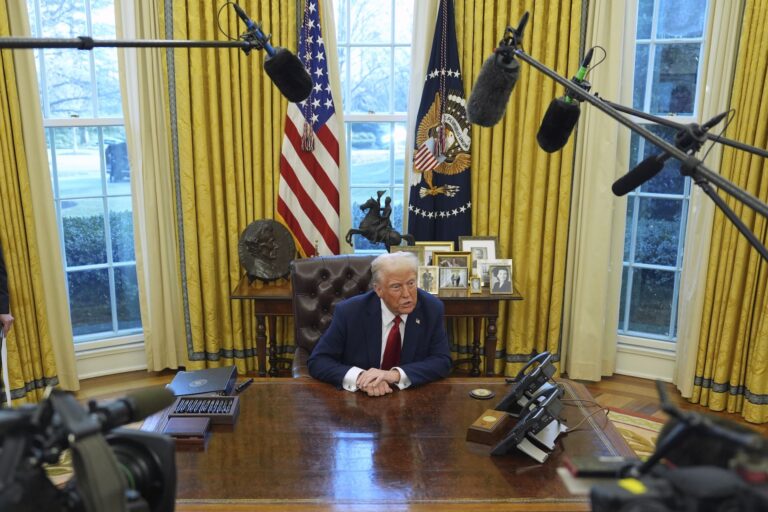


The list of targeted products includes some important to states with influential Republicans. The Canadian government officials did not name the Republicans they had in mind, but noted the tariffs on orange juice would hit Florida (where Ron DeSantis is governor), while those on household appliances would hit Ohio (led by Gov. Mike DeWine and home to Vice-President JD Vance) and South Carolina (led by Gov. Henry McMaster). Pennsylvania, a battleground state that Trump won in the 2024 presidential election and is home to a Harley-Davidson factory, would feel the hit of tariffs on motorcycles and coffee.
Could Canada target one company in particular?
Canada is threatening a second wave of 25 per cent tariffs on U.S. goods worth about $125 billion. Officials said the full list of products to be targeted in the next round would be made public in the coming days, after which the government will provide a 21-day period for businesses to look for alternatives.
The Finance Department said Saturday night that the list will include electric vehicles, which raises the prospect of Canada targeting EV maker Tesla and its CEO Elon Musk, a close ally of Trump who is leading the newly created Department of Government Efficiency. An official said the government applies tariffs only to categories of goods, not specific companies. Still, the official said, how the government decides to grant requests for remit could mean certain companies effectively end up being more targeted than others.
What if a Canadian business or sector cannot do without U.S. goods?
The federal government will consider Canadian businesses’ requests for remission for tariffs on U.S. products on the list. If granted, the government would relieve the business from paying the tariff, or refund tariffs it has already paid.
Ottawa could grant a business a remit if the goods cannot be sourced within Canada, or cannot reasonably be obtained from countries other than the U.S. The government will also consider, “on a case-by-case basis, other exceptional circumstances that could have severe adverse impacts on the Canadian economy.”
Ottawa had a similar process in 2018, when it launched countertariffs on many U.S. goods in response to the first Trump administration’s tariffs on Canadian aluminum and steel.
How much will this hurt Canada’s economy?
The Canadian Chamber of Commerce estimates that a trade war between the two countries could shrink Canada’s GDP by 2.6 per cent, or about $78 billion, while the U.S. would see its GDP decrease by 1.6 per cent, or about US$467 billion. Canada’s government did its own assessments accounting for several different scenarios, but officials said they are not ready to share those estimates. Those models are going to need some tweaking, anyway. Until Saturday, officials said, the government did not know definitively what tariffs the U.S. would impose. The scenario that played out on Saturday—25 per cent universal tariffs on Mexico, 10 per cent on China and 25 per cent on Canadian imports except for energy, which has a 10 per cent tariff rate—in addition to tariffs already in place is one they want to look at more closely. The official said the tariffs on Mexico and China will affect Canada’s outcomes, so they need to work those details into the assessment.
How much money will the countertariffs bring to federal coffers?
The government has promised financial support to businesses and individuals suffering losses in the Canada-U.S. trade war, including by redistributing revenue from retaliatory tariffs. Officials say it is too early to say how much that will be. The new trade barriers between Canada and the U.S. will disrupt normal trade patterns, so it is not as easy as calculating 25 per cent of $30 billion. What’s more, remission grants to Canadian businesses would reduce the size of the pool. Eventually, though, the revenue will show up in the Fiscal Monitor, a monthly publication from the Finance Department on the government’s fiscal performance.



Loading...
Thanks for sharing!
You have shared 5 articles this month and reached the maximum amount of shares available.
CloseThis account has reached its share limit.
If you would like to purchase a sharing license please contact The Logic support at [email protected].
CloseGift the full article!
You have gifted 0 article(s) this month and have 5 remaining.
Recipients will be able to read the full text of the article after submitting their email address. They will not have access to other articles or subscriber benefits.
Photo: The Canadian Press/Chris Young
Most Popular This Week




In-depth, agenda-setting reporting
Great journalism delivered straight to your inbox.
Commentary
Carmichael: Canadian ignorance about India is a strategic weakness
Briefing
Aritzia shares pop after earnings rise 204%
First Nation in Alberta goes to court over fast-tracked oil pipeline
Chinese EV maker Geely Auto Group to launch in Canadian market in 2027
Best business newsletter in Canada
Get up to speed in minutes with insights and analysis on the most important stories of the day, every weekday.
Exclusive events
See the bigger picture with reporters and industry experts in subscriber-exclusive events.
Membership in The Logic Council
Membership provides access to our popular Slack channel, participation in subscriber surveys and invitations to exclusive events with our journalists and special guests.





