Three of the world’s major conglomerates leaned into the energy of a Taylor Swift breakup album this week, each announcing they’re fracturing their companies into separate units. The message to investors is that smaller units mean better returns. Here’s why:
Skip to content

News
This is our (GE, J&J, and Toshiba) breakup song
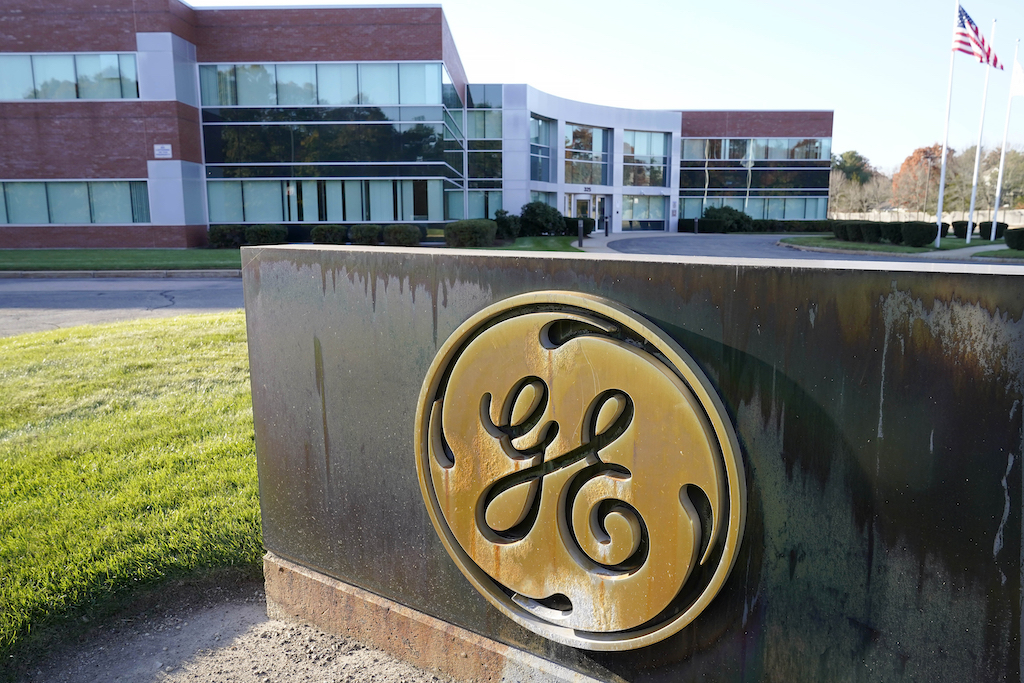
A General Electric logo rests outside a building in November 2021, in Foxborough, Mass. Photo: AP Photo/Steven Senne
Three of the world’s major conglomerates leaned into the energy of a Taylor Swift breakup album this week, each announcing they’re fracturing their companies into separate units. The message to investors is that smaller units mean better returns. Here’s why:
Johnson & Johnson: J&J plans to split its fast-growing pharmaceutical and medical-device business from its drugstore consumer brands like Neutrogena, Tylenol and Listerine. Executive chair Alex Gorsky said the consumer-facing business would be able to better grow and innovate on its own. The spin-out would also split the unit behind its COVID-19 vaccine from the one being sued over allegedly contaminated baby powder.
GE: The company said it’s taking advantage of its strong finances to spin off GE Healthcare, while the aviation business will keep the GE name. A third public company would combine GE’s renewable-energy, power and digital units. The strategy, GE said, will give each business flexibility to chase more growth.
Toshiba: After strategic investors said they were only interested in specific businesses, not the sprawling and embattled conglomerate, Toshiba now plans to spin off its energy-infrastructure and electronic-devices businesses, and form a standalone company that would be selling its stake in a computer-memory manufacturer.
What’s driving the trend: Theodore Peridis, professor of strategic management and director of the global leadership program at York University’s Schulich School of Business, said that larger companies sometimes have more power to access capital and take risks—to a point. But if they get too large they face a “conglomerate penalty,” where each business unit is large enough to access its own capital, and investors are valuing the whole business as less than the sum of its parts.
The Canadian angle: Some have speculated that GE’s slimdown could prompt other conglomerates to follow suit. Could it be in the cards for any Canadian brands? Telus, which spun out Telus International this year, has hinted that other units like health and agriculture could do the same.
Peridis said these cycles come and go. Many Canadian conglomerates are family-owned, and are less likely to break up without a strong reason. Bombardier, for instance, saw its value decline heading into its breakup. “The issue with innovation is Canada is not investing as much. And I don’t think it has to do with corporate structure,” he said. “We don’t have aggressive venture capitalists. We don’t have as aggressive entrepreneurial activity. We shouldn’t be blaming the large corporations that we don’t have innovation.”



Loading...
Thanks for sharing!
You have shared 5 articles this month and reached the maximum amount of shares available.
CloseThis account has reached its share limit.
If you would like to purchase a sharing license please contact The Logic support at [email protected].
CloseGift the full article!
You have gifted 0 article(s) this month and have 5 remaining.
Recipients will be able to read the full text of the article after submitting their email address. They will not have access to other articles or subscriber benefits.
Photo: AP Photo/Steven Senne
Most Popular This Week



In-depth, agenda-setting reporting
Great journalism delivered straight to your inbox.
Subscriber Survey
The majority of you think Albertan secession would hurt the oilpatch
Briefing
Weston retail empire in talks to buy iconic U.K. drugstore Boots for US$9B, reports say
Grindr agrees to buy Calgary telehealth company PurposeMed for US$250M
Canada to seek ‘associated country’ status under EU artificial intelligence law
Best business newsletter in Canada
Get up to speed in minutes with insights and analysis on the most important stories of the day, every weekday.
Exclusive events
See the bigger picture with reporters and industry experts in subscriber-exclusive events.
Membership in The Logic Council
Membership provides access to our popular Slack channel, participation in subscriber surveys and invitations to exclusive events with our journalists and special guests.