OTTAWA — When a new government takes over (or an old one gives itself a post-election makeover) there’s a lot of meeting and greeting to be done. Since the Sept. 20 federal election, lobbyists have been contacting old and new ministers and their staff to make sure their clients’ priorities get addressed. In this regular feature, The Logic takes stock of who’s reaching out to whom on and around Parliament Hill.
Skip to content

News
The Room Where It Happens: Pitching strategic innovations for the Strategic Innovation Fund
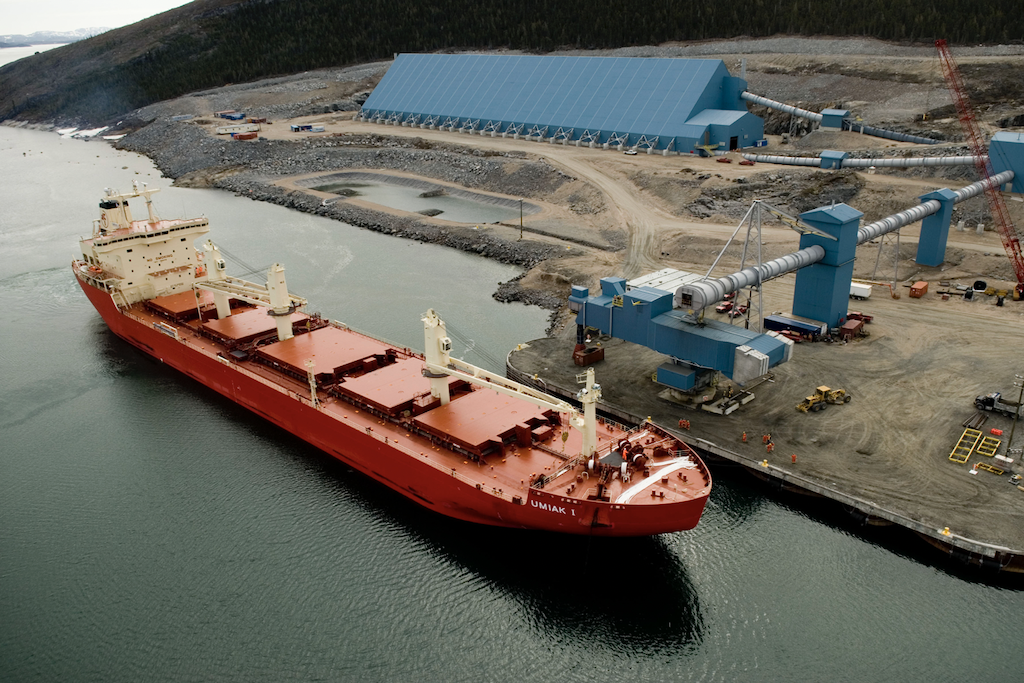
Vale’s Voisey's Bay port site in Labrador. Photo: Vale | Handout
OTTAWA — When a new government takes over (or an old one gives itself a post-election makeover) there’s a lot of meeting and greeting to be done. Since the Sept. 20 federal election, lobbyists have been contacting old and new ministers and their staff to make sure their clients’ priorities get addressed. In this regular feature, The Logic takes stock of who’s reaching out to whom on and around Parliament Hill.
Another miner looks for major money (1): Some of the busiest lobbyists since the election have been working for Vale Canada. They’ve had contacts with Liberal MPs Yvonne Jones and Ken McDonald of Newfoundland and Labrador, and Vance Badawey and Marc Serré of Ontario, plus senior officials in the innovation and environment departments, to talk about “federal funding programs aimed at supporting the mining sector and low-carbon initiatives under the Strategic Innovation Fund.”
Talking Point
In this regular feature, The Logic looks at how players in the innovation economy are seeking public money and to influence federal policy.
The $13.9-billion fund is the Liberals’ program to subsidize major corporate projects meant to help vault the Canadian economy into the future. It includes an $8-billion “Net Zero Accelerator” component for efforts to reduce greenhouse-gas emissions.
Vale mines nickel in Labrador and processes it in Newfoundland, and does the same for multiple minerals in Sudbury, Ont. The federal government has promised SIF money to Algoma Steel and ArcelorMittal to take coal out of their smelting; Vale has been touting its nickel’s low-carbon cred alongside promises to reduce its greenhouse-gas emissions further, which is where federal money might come in.
Asked what the lobbying is about, spokesperson Jeff Lewis was firmly vague: “Vale regularly interacts with federal and provincial governments and stakeholders about the business environment and developments in the mining industry. This includes initiatives that align with Vale’s decarbonization ambitions and target for net-zero emissions by 2050.”
Aluminum company Alcoa had a contact with François Massicotte, ISED Minister François-Philippe Champagne’s director of operations, either to talk about trade agreements or “to inform the government of opportunities for new aluminum production technologies that could be developed in Canada through the Strategic Innovation Fund.”
Another minor looks for major money (2): Lobbyists for Ontario-based First Cobalt have been in touch with prime ministerial advisers John Brodhead (who is back in government after a stint at the aborted Sidewalk Labs project in Toronto) and Dominic Cormier. The company has a disused cobalt refinery near—where else—Cobalt, Ont., and is looking “to collaborate with the Government in order to identify potential business and regulatory supports that would enable the refinery to restart.”
Although it’s previously been a pure-play cobalt company, First Cobalt is looking to rename itself to Electra Battery Materials and build a whole complex for making and recycling batteries for electric vehicles around the refinery—and far from musing about firing it up again, the company’s latest statement says it’s “currently expanding a permitted hydrometallurgical refinery north of Toronto to produce 5,000 tonnes of cobalt starting in Q4 2022.”
Introducing new IP at Introhive: Brodhead has also heard from lobbyists for Fredericton-based Introhive, which makes business-intelligence software for managing customer relationships and sales leads. (It’s also lobbied Kevin Deagle, a policy advisor to ISED Minister Champagne.) Introhive is trying to “secure a project loan from the Strategic Innovation Fund to support the development of new intellectual property.”
What kind of intellectual property? Introhive didn’t answer an inquiry from The Logic.
Moderna keeps taking shots: The U.S.-based pharmaceutical company has sold Canada millions of doses of its mRNA-based vaccine against COVID-19. Just before last summer’s election call, its CEO Stéphane Bancel visited Montreal with Innovation Minister Champagne to announce an agreement to have Moderna build a new factory and research centre north of the border, exact location TBD.
The federal government is to guarantee purchases of vaccines from the plant—though Moderna’s only marketed product right now is the COVID-19 shot, it has high hopes that the novel technology it uses will work in vaccines against influenza, respiratory syncytial virus and other illnesses. Just how much the government pays depends on how much of what vaccines it ends up buying.
Since the election, Moderna’s filings say it’s been in touch with MPs Anita Anand (who’s now defence minister but was the procurement minister until Oct. 26) and Filomena Tassi (who took over as procurement minister in Justin Trudeau’s new cabinet), plus senior officials in both the procurement ministry and ISED.
Sandoz Canada, another pharma company, has also lobbied ministerial advisors at the Department of Health. AstraZeneca Canada contacted two officials in Health Canada’s office of pharmaceutical-management strategies. Merck lobbied two Health Canada Officials and also directed some attention across the aisle, reaching out to aides to Opposition Leader Erin O’Toole about drug prices and the jurisdiction of the federal board that controls them.
Container crops: Hydroponics startup Growcer says its shipping-container-based gardens can be used to grow fresh produce in harsh environments from the Arctic to the desert, and it wants the federal government to know about it.
Headquartered in Ottawa, Growcer has contacted Yasir Naqvi (the newly elected Liberal MP for Ottawa Centre) and Sen. Robert Black (for whom agriculture is a specialty), plus Agriculture Canada ADMs Paul Samson and Vidya Shankarnarayan, “seeking to raise the awareness of its projects and partnerships to secure federal government funding and raise the company’s profile.”
In other news:
- SkipTheDishes hit up three staffers in Finance Minister Chrystia Freeland’s office (Leslie Church, Tyler Meredith and Hilary Travis) in late October for its usual purpose of “proactively educating government on the food delivery app business model and the role it plays in supporting restaurants and businesses, especially in light of the state of emergency and physical distancing requirements.”
- Payments processor Square registered contacts with officials at ISED and Finance to “present information regarding the online payments system. These meetings could also include regulatory discussions around e-commerce in Canada as well as online privacy and banking.”
- D-Wave Systems, a quantum-computing company, contacted ISED Minister Champagne’s chief of staff “to engage the Government on the implementation of the announced Quantum Strategy, and on other support for Canadian quantum innovation.”
- Crystallex, a gold-mining company that worked in Venezuela until the government there nationalized its operations (for which it’s spent years pursuing an international arbitration award), is looking for a World Bank contract. It wants Canadian government help—and its lobbying registration emphasizes that the contract is “legitimate.” Lobbyist Sergio Marchi, who was a minister under Paul Martin, has been in touch with the Canadian Embassy in Washington, including ambassador Kirsten Hillman.
- Terramera lobbied the deputy minister at ISED and two senior officials at Agriculture Canada. The Vancouver-based company promotes green agricultural products; it’s specifically “building support for Terramera’s technology to improve soil carbon sequestration in Canada.”
- Stemcell Technologies, which makes tools to work with cells in life-sciences research, contacted an ISED manager who works on the Strategic Innovation Fund about “possible funding mechanisms under various innovation funds for potential construction of production and other facilities” and/or “modernization of tax benefits and associated funding programs.”



Loading...
Thanks for sharing!
You have shared 5 articles this month and reached the maximum amount of shares available.
CloseThis account has reached its share limit.
If you would like to purchase a sharing license please contact The Logic support at [email protected].
CloseGift the full article!
You have gifted 0 article(s) this month and have 5 remaining.
Recipients will be able to read the full text of the article after submitting their email address. They will not have access to other articles or subscriber benefits.
Photo: Vale | Handout
Most Popular This Week



In-depth, agenda-setting reporting
Great journalism delivered straight to your inbox.
News
Panel decries Canada’s chaotic way of funding world-class science
Briefing
AI is pushing insurers to become asset managers, Canadian CEOs say
Trump administration faces lawsuit over 50% tariffs on Canadian goods
Canada-U.S. trade war to reduce real GDP by 1.4% over 2024 levels after five years: PBO
Best business newsletter in Canada
Get up to speed in minutes with insights and analysis on the most important stories of the day, every weekday.
Exclusive events
See the bigger picture with reporters and industry experts in subscriber-exclusive events.
Membership in The Logic Council
Membership provides access to our popular Slack channel, participation in subscriber surveys and invitations to exclusive events with our journalists and special guests.





