Cenovus Energy chief executive Jon McKenzie needs no introduction. At least, he shouldn’t. If Canada is serious about diversifying exports and becoming an energy superpower, the leader of the country’s biggest oil and gas company by revenue will have an outsized role.
Skip to content

 Workers at the Cenovus Christina Lake oil sands facility steam-assisted gravity drainage pad southeast of Fort McMurray, Alta., on Wednesday, April 24, 2024. Company representatives have said the pad requires less energy than earlier versions, thanks to technological advancements. Photo: The Canadian Press/Amber Bracken
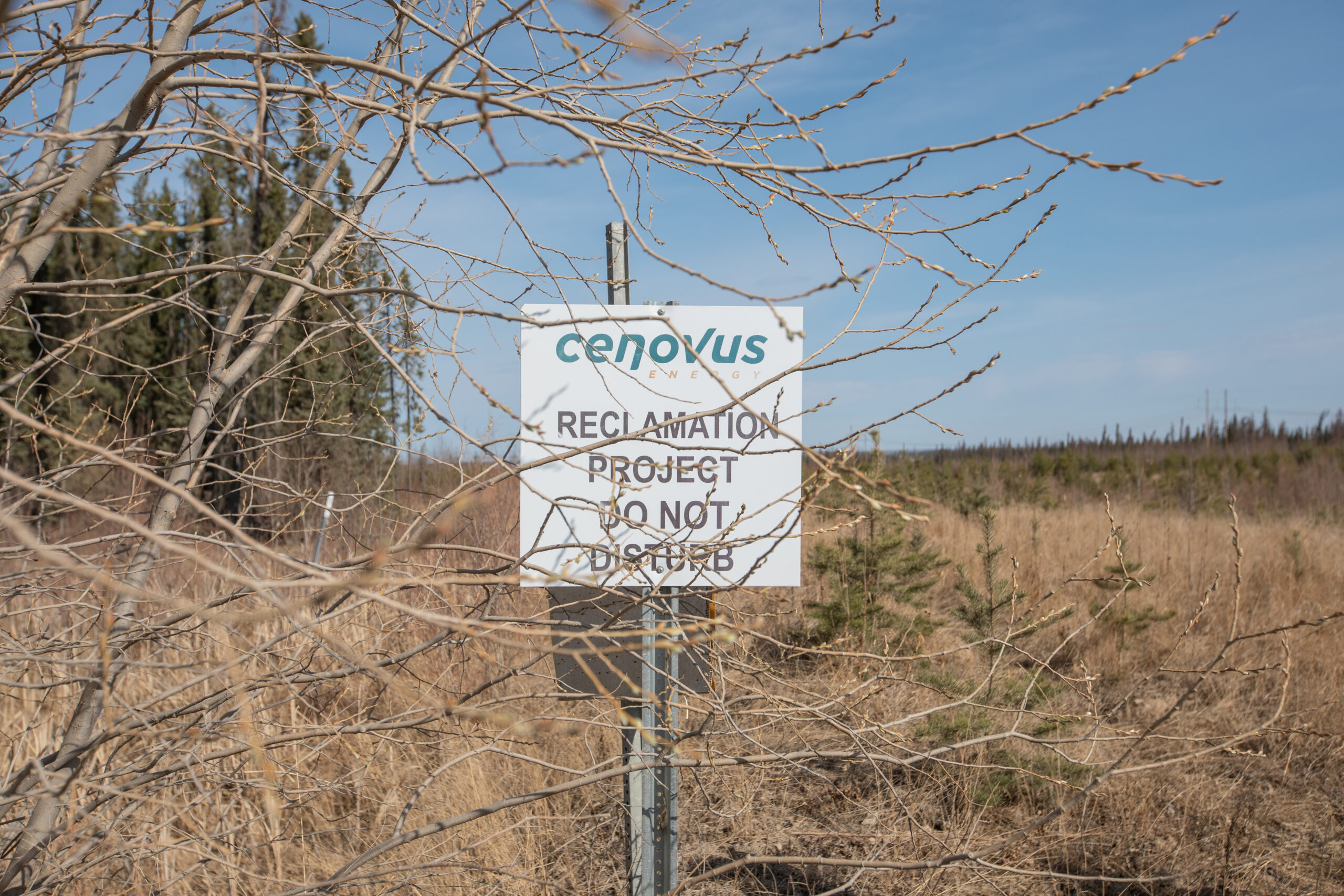 A reclaimed area of the Cenovus Christina Lake steam-assisted gravity drainage oil sands site southeast of Fort McMurray, Alta., on Wednesday April 24, 2024. Photo: The Canadian Press/Amber Bracken
The Interview
Why the CEO of oilsands giant Cenovus is feeling hopeful amid the chaos
Jon McKenzie on tariffs, what he wants from Mark Carney and how worried the rest of Canada should be about Alberta separatism
Cenovus Energy chief executive Jon McKenzie. Photo: Cenovus | Handout
Cenovus Energy chief executive Jon McKenzie needs no introduction. At least, he shouldn’t. If Canada is serious about diversifying exports and becoming an energy superpower, the leader of the country’s biggest oil and gas company by revenue will have an outsized role.
McKenzie talked to The Logic last week about how he’s navigating one of the most chaotic periods in memory, what it would take to get Cenovus investing again and what Eastern Canada should make of the threat of Alberta separation.
Related Articles



This transcript has been edited for length and clarity.
How do you process everything that’s happening in the world today?
I wouldn’t describe what’s going on today as being anything different than this industry has been through for the past number of decades.
We’ve had a view for a long period of time that this is an industry that’s going to be under attack internally and externally. Tariffs—that’s been a new risk to the business. But the reality is we designed these businesses to be resilient under almost any kind of economic condition for a number of years.
A thing that has changed in this business is everybody runs on a free-cash-flow basis. Very little need to tap the debt or equity markets. Live within your means. Live within your cash flow. Focus on your costs. Make sure that you are as competitive as you can be, across any kind of reasonable commodity price environment. That’s been a new way of operating for probably the last 10 years. Canada probably got religion on this some time ago.
I would also say that we’ve been very cognizant of our carbon intensity for a very long period of time. Social license is something that we don’t take for granted. In many ways, I think Canadian industry was way ahead of the current political and business environment, probably more so than any other industry that I’m aware of globally. We’ve been dealing with environmental pressure. We’ve been dealing with our need for economic First Nations reconciliation. We’ve been dealing with lack of access to capital markets. We’ve been dealing with hostile political environments for some period of time. In many ways, we’ve designed our industry, this company, to be resilient in those kinds of environments.
Is there something you find yourself thinking about more than all the things that you could think about on a given day right now?
I think a lot more in today’s world about government policy. I think a lot more in today’s world about the positioning of this industry and this company for the long term.
One of the fundamental beliefs I have—and I think the world is coming to accept this—is that we’re going to need oil and gas for a long period of time. Positioning this industry to kind of thread a needle, where it can be competitive on a global basis, where we can influence government policy, but also try to present ourselves as part of the solution for this country versus part of the problem.
One of the issues is that we’ve allowed ourselves to be painted as a pariah. We’re such a necessary part of the solution for this country, but people aren’t necessarily of that view, and that’s something that we’ve got to change. So government relations, community relations, politics and government policy are all things that I think about a lot more today than I probably did even five years ago.
Is there something about the way government works now, or the way politics works now, that is forcing you to think about these things more?
Yes. I’m hopeful this is going to change under the Carney government. But I think over the last 10 years, we’ve been a world where the politics of envy, the politics of divisiveness, the manipulative nature of politics has kind of come to the fore. It’s been very destructive for the country and for the unity of the country. It’s taken a toll in terms of not just national unity, but the economy as well. But I’m hopeful, with the new government and a fresh start, maybe some of these things can change.
I’m based in Montreal, so not the most friendly place for the oil and gas industry. I often bump into people who point out that the industry has wide profit margins, yet they don’t see investments in climate.
This industry has already done a significant amount to reduce the intensity of the carbon in each and every barrel. If you look at where we are, and where we’ve come from, our carbon footprint is getting smaller on a unit basis, not larger. No other country is doing that. We have some of the most stringent regulation already as it relates to methane and as it relates to carbon abatement of any of the top producing nations.
As we think about decarbonizing under the time frames that the federal government has given us, and under the Paris Climate Accord, there are only one or two commercial technologies that are available to do this at scale. The most proven of those is carbon capture and sequestration, which is expensive, and there’s no revenue line associated with it. This is an expense, not an investment.
So what we’ve talked to the government about repeatedly—and this happens at both the federal and the provincial level—is that this industry can afford to do some of this. We will put up some of those profits and some of our capital to decarbonize our barrels because we do see value in that. But what we can’t do is make this industry uncompetitive, which just drives out investment and drives down production, which is counterproductive to what we’re trying to do.
What we’ve asked for is 75 per cent investment tax credits on capital, and then we need some relief on operating costs as well. Industry is willing to absorb one-third of the operating costs, but we have to remember again that these projects don’t have any revenue associated with them. This is a pure cost to the industry. We’ll do our part as an industry, and as a company, but we need a financial framework from the government that keeps us competitive.
We’re facing a productivity crisis, and at its heart is a lack of business investment. What would it take for Cenovus to increase its capital investment by, say, 25 per cent?
One of the things that we have done as a company—that I think we have done as an industry—is we have gotten incredibly religious around costs. A lot of productivity gains that you’ve seen in this industry go a bit unnoticed because they manifest themselves in the reduction of operating costs. We’ve been beating back inflation for 30 years. But since 2015, we’ve dropped operating costs about $14 a barrel, to around $6. That wasn’t just done by tackling the supply chain; that was done by employing a lot of new technology.
If we look at Canada, over the last 10 years in particular, we’ve driven out a lot of foreign investment. It’s gone into the U.S., where they have a different business environment. They continue to build pipelines. There’s much less regulation, no carbon tax.
I think technology has made Canadian oil and gas competitive with anybody globally. We were perceived as a high-cost industry through time. I think today that is a poor view of where the industry is. We’re competitive on every level.
If we want to draw back investment into Canada, we need to solve for a couple of things. We have to have access to markets. Today, all of our markets are really in the U.S. We did get the TMX pipeline done, which gives us access to global markets, but the regulatory environment has to change.
Capital tends to flow to where it gets the highest return. It follows the path of least resistance. We’ve made this a very difficult environment for us to get those kinds of things done.
If the government recognizes that this is going to take time, to rebuild trust, to demonstrate political stamina, I think that [increased capital investment] can be done through time. We as a company are sitting on billions of barrels. The only thing that’s stopping us from reinvesting is the political climate that we live in, the kind of economic realities that we face.
I love the term “political stamina.” What will you need to see before you’re ready to conclude that Ottawa and the provinces have that stamina?
This is going to take time. Trust is thin right now. It’s been eroded through time. But the best day to start was yesterday, and the next best day is today. The sooner that we can get started on the regulatory environment and understanding that we are an important part of the economy—and as soon as we can start to have a more adult conversation with Canadians about our contribution—the sooner we can start thinking through what investment we can make in the short, medium and long term.
One of the things that we have to remember is, when we make an investment in this business, we’re typically into an investment cycle that takes five to seven years to bring a project to fruition, and then the projects typically have a 20-30-year life beyond that. So we have to look beyond the next five years of the political climate and understand that we’re not going back to where we were, and that’s going to take some time, and I don’t think it’s something that we’re going to resolve in the next three months to three years. You have to have some political momentum, political stamina and a national will to move those kinds of things forward.
I feel like I need to ask you about Alberta separation. [ATCO chief executive Nancy Southern] says it’s adding another layer of uncertainty. What do you think? Is it something that those of us in Central Canada need to take seriously?
I don’t think that it makes business any more difficult. It is something that you hear about. There’s an element of it in our provincial politics.
It shouldn’t be summarily dismissed as [coming from] a group of crackpots. I would suggest that Eastern Canada needs to understand the underlying concerns. There is some relevance, and there is some justification to some of the positions. It’s manifesting itself in a way that is unproductive for the national interest and we need to address the root cause and the underlying concerns.
I’m not sure that ultimately it goes anywhere. But there is a lot of feeling of mistrust and being taken advantage of that I think starts to resonate here in Alberta.



Loading...
Thanks for sharing!
You have shared 5 articles this month and reached the maximum amount of shares available.
CloseThis account has reached its share limit.
If you would like to purchase a sharing license please contact The Logic support at [email protected].
CloseGift the full article!
You have gifted 0 article(s) this month and have 5 remaining.
Recipients will be able to read the full text of the article after submitting their email address. They will not have access to other articles or subscriber benefits.
Photo: Cenovus | Handout
Workers at the Cenovus Christina Lake oil sands facility steam-assisted gravity drainage pad southeast of Fort McMurray, Alta., on Wednesday, April 24, 2024. Company representatives have said the pad requires less energy than earlier versions, thanks to technological advancements.
A reclaimed area of the Cenovus Christina Lake steam-assisted gravity drainage oil sands site southeast of Fort McMurray, Alta., on Wednesday April 24, 2024.
Most Popular This Week




In-depth, agenda-setting reporting
Great journalism delivered straight to your inbox.
Commentary
Carmichael: Being boxed in will help Canada focus on what matters
Briefing
Rio Tinto gets nearly $165M in additional federal funds for Quebec aluminum
U.S. to lift tariffs on some Canadian products crucial to Maine: Collins
Carney warns of tech dependence after Starlink disruptions in Ukraine
Best business newsletter in Canada
Get up to speed in minutes with insights and analysis on the most important stories of the day, every weekday.
Exclusive events
See the bigger picture with reporters and industry experts in subscriber-exclusive events.
Membership in The Logic Council
Membership provides access to our popular Slack channel, participation in subscriber surveys and invitations to exclusive events with our journalists and special guests.






