It’s been a slog trying to make open banking a thing in Canada. Bill Morneau was still finance minister when the federal government said in 2018 that it would look at changing the rules to allow consumers to share their financial data with whomever they choose. Fintechs were already complaining that the government was moving too slowly when the COVID-19 pandemic effectively moved all non-urgent business to the backburner. Then, in 2022, the federal government indicated that it was readying to move ahead, but only after yet more consultations.
Skip to content

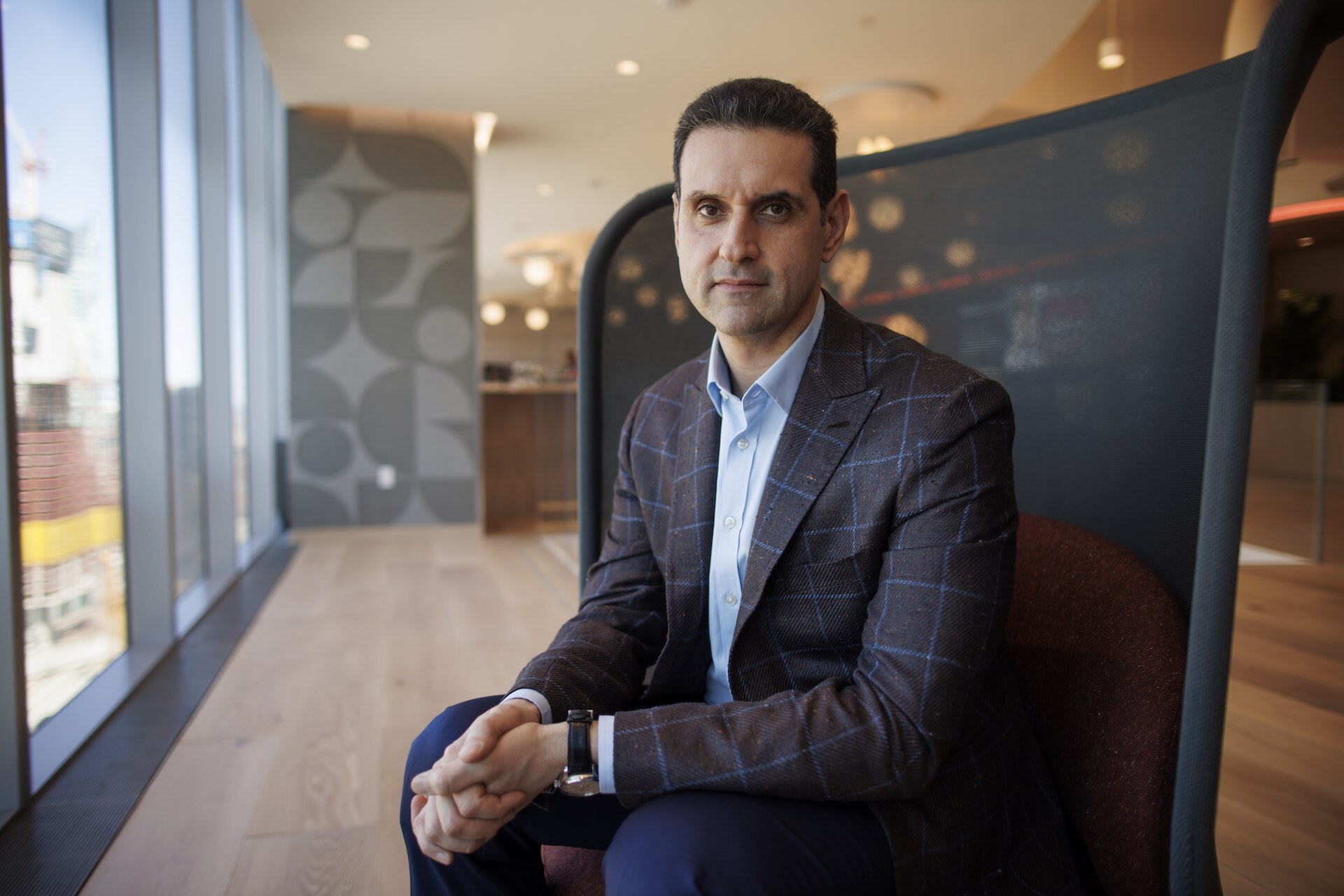 Canada’s fintechs have grumbled for years about the seemingly endless push to bring open banking to Canada. ‘I appreciate the grumblings,’ Tachjian says. Photo: Cole Burston for The Logic
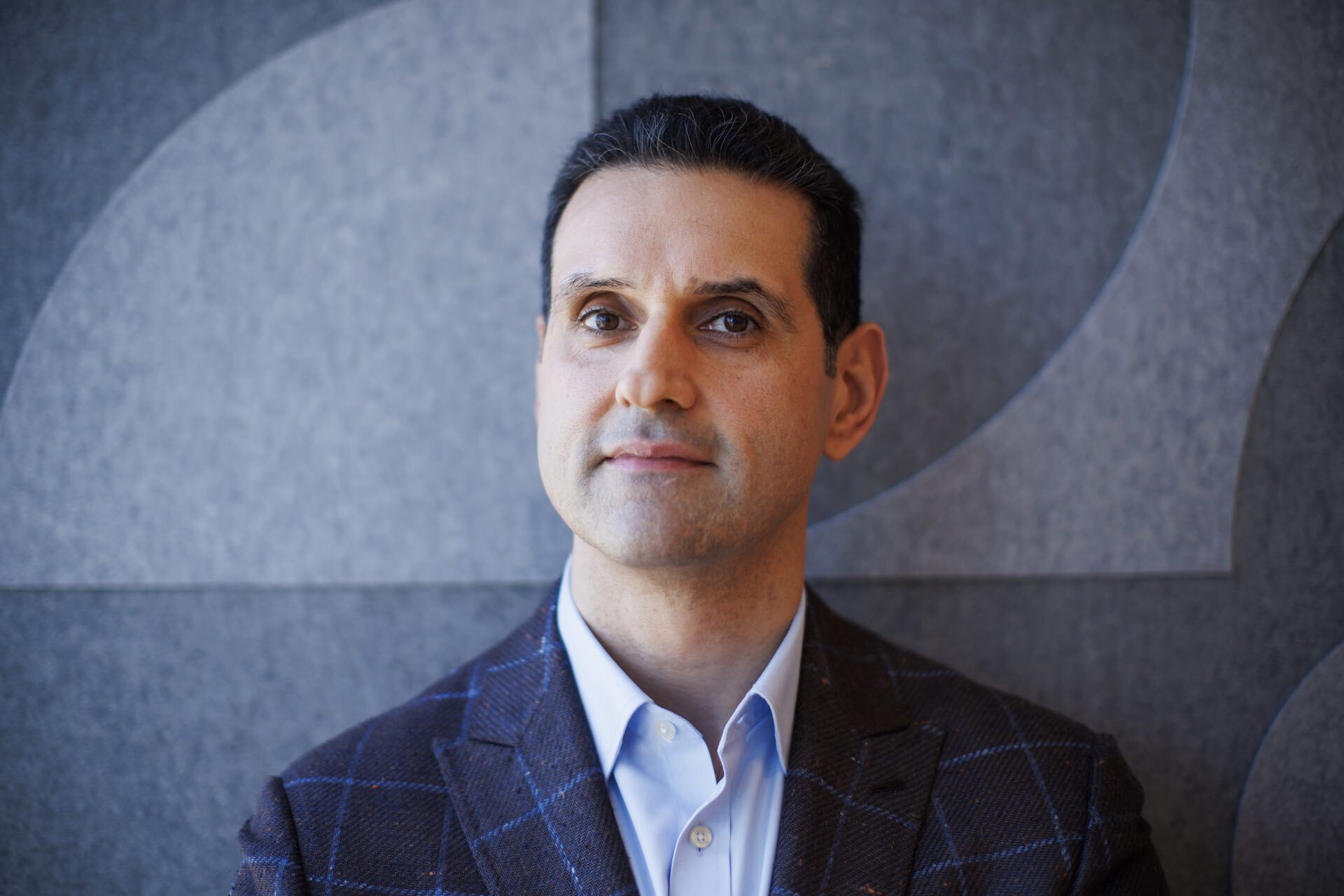 Tachjian wouldn’t be drawn on whether he thinks Canada needs a new open banking regulator: ‘Could be. I don't know. Thankfully, I don't have to make that decision.’ Photo: Cole Burston for The Logic

The Interview
‘There’s buy-in from the industry. They’re ready to go’: An exit interview with Canada’s unofficial open banking czar
As Ottawa prepares to unveil its long-awaited plan, Abraham Tachjian thinks banks and fintechs alike will like what they see
Abraham Tachjian, former open banking head for the Department of Finance, at PricewaterhouseCoopers’ Toronto offices on March 8, 2024. Photo: Cole Burston for The Logic
It’s been a slog trying to make open banking a thing in Canada. Bill Morneau was still finance minister when the federal government said in 2018 that it would look at changing the rules to allow consumers to share their financial data with whomever they choose. Fintechs were already complaining that the government was moving too slowly when the COVID-19 pandemic effectively moved all non-urgent business to the backburner. Then, in 2022, the federal government indicated that it was readying to move ahead, but only after yet more consultations.
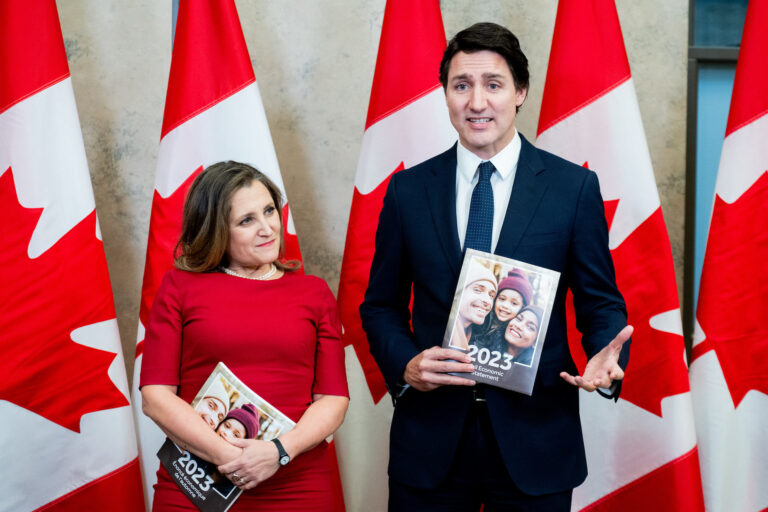
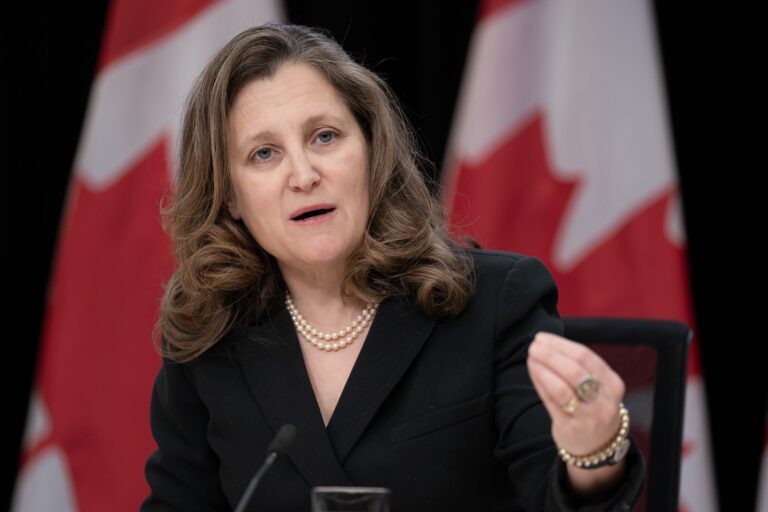
Finally, it looks like open banking’s time has arrived. Opposition Leader Pierre Poilievre, whose party likely would win a majority government if elections were held today, wants it to happen. But so too does Finance Minister Chrystia Freeland, who said in the fall economic statement that next month’s budget will contain legislation that would enable “consumer-driven banking,” the new name that open banking acquired along the way.
Whenever it does become a reality, Abraham Tachjian will deserve much of the credit. The Liberal government appointed Tachjian, a director at PriceWaterhouseCoopers who acquired experience in digital banking in Hong Kong and Singapore, to lead that final round of consultations, making him the country’s unofficial open banking czar.
Related Articles
Tachjian, whose appointment ended at the end of 2023, says he talked to more than 200 people in the almost two years he was in the role, grinding his way to a consensus between rivals in legacy banking and fintech upstarts that will form the basis of what will be one of the most significant overhauls of financial regulation in recent memory.
“When these rules come out, I don’t think it will catch anyone off guard, because it will be based on every single conversation that we’ve had,” Tachjian told The Logic in a recent interview at PwC’s headquarters in Toronto.
Tachjian reflected on his experience working with policymakers, the complaints over the many delays, the benefits of learning from mistakes made elsewhere, and his belief that what’s happening in banking will move to other data-rich industries.
The interview has been edited for length and clarity.
You had a unique opportunity to get inside Ottawa. What surprised you? What misconceptions do you think your colleagues down here on Bay Street have about the way the government works?
I was very happy with the degree of skill and knowledge within the Department of Finance with respect to this topic, a lot of ancillary topics that have interconnections with open banking, like payments. It’s a hot topic in this country with payment modernization, and everything else that’s happening around that. The degree of knowledge that existed within Finance was one of the things that reassured me going into this job.
Did you get a sense of what Ottawa doesn’t understand about the way things work on Bay Street?
If the government wanted to do this work in a different way, they would have just drafted legislation, sent it to everyone—the banks, the credit unions and the fintechs—and said, ‘Look, this is coming into force on this date, deal with it.’ Which is what you’ve seen in some jurisdictions, to a certain degree.
“Other countries have gotten ahead of us in terms of launching open banking, not in terms of being better than us.”
We didn’t have that. To the government’s credit, they realized early on that we’re building a data ecosystem. It’s a lot of work, it’s going to require a lot of input.
There’s lots of grumbling in the fintech community about how long it’s taken to get here. You’re saying that because we put in this amount of work, we’re in a stronger position than other countries.
Other countries have gotten ahead of us in terms of launching [open banking], not in terms of substantively being better than us. You can’t argue against that. They have a live system, we don’t.
But I think one of the benefits we have is that we can learn what’s worked elsewhere [and] what hasn’t, and try to avoid that.
I spent a lot of time speaking to peers in other jurisdictions. I got very good insight, in terms of some of the regrets, some of the things that could have been done differently. So although I acknowledge it’s taken us a while to get here, I think one of the advantages we’ll have is we avoid some of the slip-ups from other jurisdictions, be it with overly onerous requirements or otherwise. I appreciate the grumblings—I know the value of data and how it can contribute to a fintech business model. But I think when the system is out, they’ll be rewarded with something that hits the right balance.
What’s gone wrong in other jurisdictions?
It’s hard to say anything was wrong. These are novel concepts.
You look at the Australian system—I think one of the challenges, when non-banks or non-credit unions were getting admitted into the system, it was very difficult. The requirements were very tough. You have to reach a balance between letting the right organizations in that will be good custodians of customers’ data, but at the same time, not making it too easy.
What’s your assessment of what you saw in the fall economic statement?
That announcement maintained the momentum. But the content and the specificity of the content was really reassuring. I think that was a very, very good first step in reaffirming the government’s commitment to this.
The Council of Canadian Innovators, an important voice in all this, seems worried the government might create a walled garden that would make innovation harder. Is that a fair criticism?
I don’t think that’s the right qualifier, a ‘walled garden.’
Using that term implies that you’ve arbitrarily determined the conditions for entry, which couldn’t be further from the truth. We looked at what other countries have done, we presented that as a template and we fine-tuned it from there. Every stakeholder that will have to be involved in the system had a say in it.
Do you have a sense if the rules will be more prescriptive, or will it be a less restrictive regulatory environment?
I think the core of that question is the degree of involvement we have from government. If you’ve looked at some other jurisdictions, you need the government to be driving this forward. This can’t be an exclusively market-driven approach, because the market can’t dictate the way consumers will share their data.
“I think there’s a misconception that open banking is a conversation that pits banks versus fintechs. Not at all.”
I think there was an admission [in the U.S.] that a purely market-driven approach does not lead to the best consumer outcomes. For such a long time, we had seen certain stakeholders [present] the U.S. as the benchmark for a market-driven approach; laissez-faire, hands off, let the market deal with it. But I think when you started collecting feedback from banks, fintechs and credit unions … it wasn’t working out properly.
The government is considering whether to hand oversight to an existing regulator or create a new one. What’s the best way to go?
I think it’s very good that the government’s taking over the oversight responsibility. Like I mentioned, that’s my biggest driving factor for this. But I think if you’re looking at who should have oversight on this, I take a step back and kind of put on my consultant’s hat. And I would look at it from an operating perspective, as in what are you doing on a day-to-day basis, and what capabilities do you need?
How are you going to be able to vet these [non-bank, non-credit union] organizations? Privacy requirements—how are you going to maintain security? This isn’t the typical type of government oversight, where you’ve got high-level principles and a skill set that’s very focused. This one touches on a lot of disciplines.
What’s the mission of whatever entity ends up regulating open banking? What’s the main responsibility?
Some of them are already addressed by existing regulators. Like privacy, as you mentioned—we don’t want to recreate a parallel privacy regime. In fact, that’s something I stayed away from on purpose, based on my learnings from Australia. Our focus was on more practical privacy considerations: How do you show this on your phone? How do you collect consent? How do you manage it?
“I don’t think that’s the right qualifier, a ‘walled garden.’ That implies you’ve arbitrarily determined conditions for entry, which couldn’t be further from the truth.”
Consumer education—we’ve got the [Financial Consumer Agency of Canada]. That’s their job. You’ve got security matters, which OSFI takes care of for banks. There’s all these different skill sets, but it’s like a Jenga tower: You can’t focus on one [block] to the detriment of the other; once you start ignoring one [piece], the tower starts to jiggle a bit. And that affects confidence. That’s why I keep going back to the difficulties in developing a data ecosystem. Because otherwise, what you’re going to have is a loss of trust by consumers.
How do you think the work you’ve done could evolve to include other industries?
I always approached this work from the infrastructure perspective, in the sense that I wanted to make sure that we have the foundations to expand the system. And I know we do.
The Australians provide a very, very good template on this. They don’t even call it open banking. They don’t call it open anything. They call it the consumer data right. You’re empowering consumers to share information. And they’ve parked the legislation that empowers you in competition legislation. They’ve started to see the opportunities beyond banking—the energy space, [for example]. I think they’re on the right track. And there’s nothing stopping us from taking a similar approach.
Sounds like we need a new regulator.
Could be. I don’t know. Thankfully, I don’t have to make that decision.
How important is the competition piece of open banking?
If we look at some of the smaller players, eventually, you’re going to hit a ceiling in terms of your ability to grow without data. It’s fundamentally what drives finance today. So I think it really helps in empowering them with specific capabilities.
[But] that was never my concern. My focus was, let’s create a system that determines what data has to be shared, and what your responsibilities [are], and let the market run with it [and] develop these products. I think we have that.
And I’m not just talking about fintechs. I think there’s a misconception that open banking is a conversation that pits banks versus fintechs. Not at all. It’s a conversation that allows greater competition among banks, credit unions, fintechs, or anybody else who’s providing a service for you. I think in that ecosystem, when you empower them with consumer-permission data, forcefully, you’re going to create more competition and better outcomes for consumers.
What do we need to be watching out for from here?
The first major piece is governance—who’s going to have oversight of this within the government. Then I think it’s important to look at which organizations will be mandated to participate, and which organizations will have options to join.
As it trickles down, you have to look at what are the requirements for entry, always making sure that you’ve got that balance. But importantly, not only who’s in, under what conditions, but what data can they share? Because the capabilities that you can build are dependent on the type of data you’re getting.
Is there some urgency here? Do we need to move quickly?
We do, [because of] security threats, the security weakness of screen scraping, but also because there’s buy-in from the industry. There’s anticipation. They’re ready to go. Over these last couple of years, they’ve built this internal muscle memory. We just have to start plugging into one another and start sharing. I think there is urgency, but I’m encouraged by the work we did. I’m encouraged by the fact that the government gave me 18-plus months to do this right.
To what extent does Canada need to have its rules line up with those of others?
I don’t think you need to mirror anyone. We’re our own country, we have our own considerations. When you look at it from an international perspective, different policy objectives drove the implementation of [other countries’] data-sharing networks.
If you look at the UK, the conversation really started on the heels of the financial crisis—banks taking huge bailouts and the admission that we need more competition to address certain market behaviors. Similarly, in Australia, this is developing against the backdrop of a Royal Commission that’s looking at certain bad behavior.
We have to be conscious that the world is developing towards a data ecosystem. But we can’t copy-paste everything, because our policy objectives are different. We’re not trying to address market behaviour, we’re not trying to punish certain organizations. We’re trying to empower consumers.
It’s always good to have degrees of interoperability in the system, and we’ve looked at that from a technical perspective when we were doing our work. But I think it’d be a misconception to say that ours should mirror foreign systems, so that we can have interoperability. I think that misses the point.



Loading...
Thanks for sharing!
You have shared 5 articles this month and reached the maximum amount of shares available.
CloseThis account has reached its share limit.
If you would like to purchase a sharing license please contact The Logic support at [email protected].
CloseGift the full article!
You have gifted 0 article(s) this month and have 5 remaining.
Recipients will be able to read the full text of the article after submitting their email address. They will not have access to other articles or subscriber benefits.
Photo: Cole Burston for The Logic
Canada’s fintechs have grumbled for years about the seemingly endless push to bring open banking to Canada. ‘I appreciate the grumblings,’ Tachjian says.
Tachjian wouldn’t be drawn on whether he thinks Canada needs a new open banking regulator: ‘Could be. I don't know. Thankfully, I don't have to make that decision.’
Most Popular This Week



In-depth, agenda-setting reporting
Great journalism delivered straight to your inbox.
The Big Read
Alberta’s referendum is just the start of the turmoil
Briefing
EverWind plans $10B data centre and wind development in Nova Scotia
Canada ready to force Stelco to sell its Canadian operations, Joly says
Feds plan a 60 MW defence-oriented data centre for Ottawa
Best business newsletter in Canada
Get up to speed in minutes with insights and analysis on the most important stories of the day, every weekday.
Exclusive events
See the bigger picture with reporters and industry experts in subscriber-exclusive events.
Membership in The Logic Council
Membership provides access to our popular Slack channel, participation in subscriber surveys and invitations to exclusive events with our journalists and special guests.






