When Travis Kalanick hosted all-hands meetings at Uber in the 2010s, things could get ugly. Kalanick, who was CEO of the ride-share giant during its period of frenetic scale-up, was known to encourage a form of aggressive competition called “toe-stepping”—where questioning and confronting your colleagues was a sign of success.
Skip to content

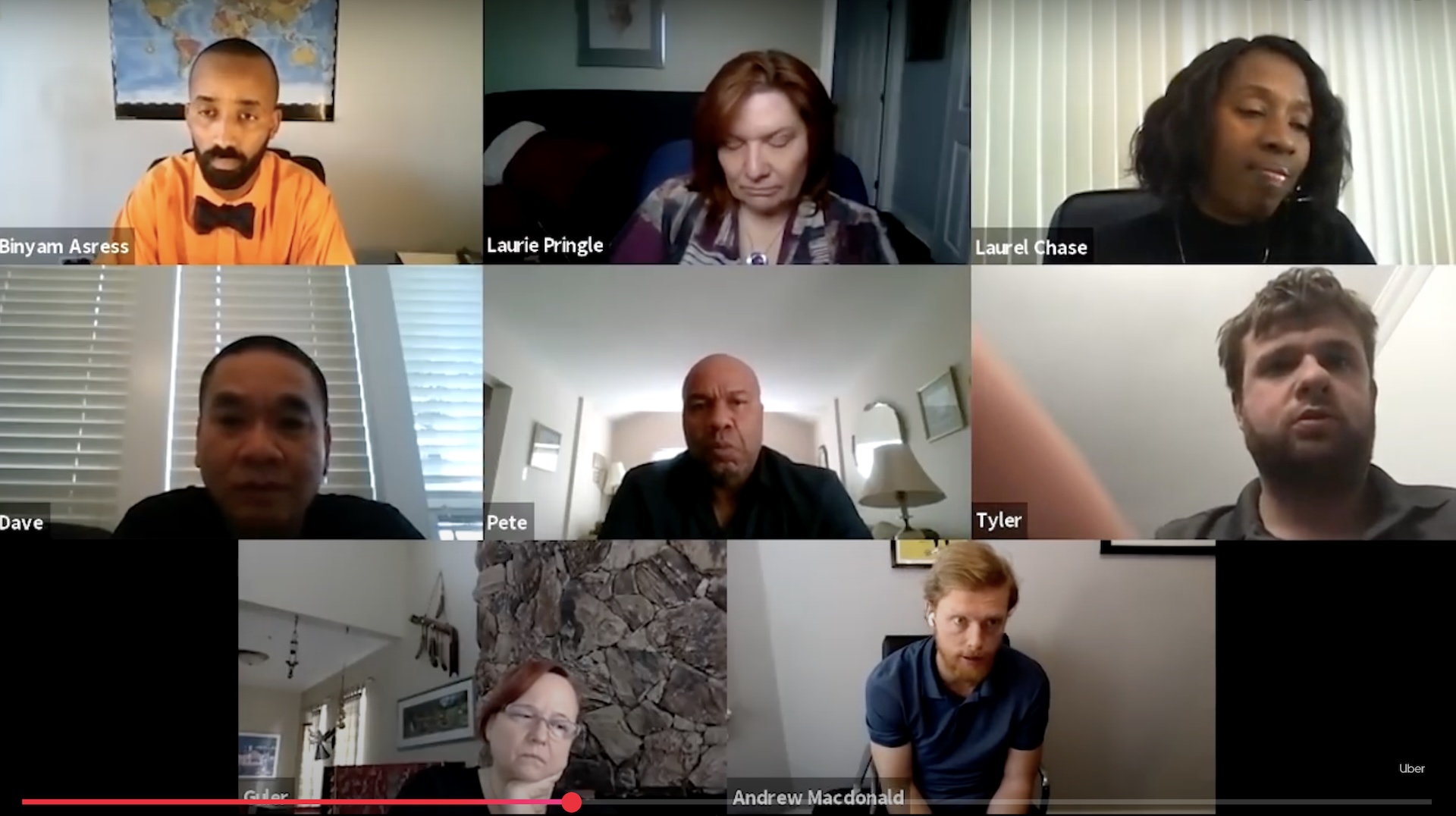 Macdonald taking questions in a video call with Uber drivers in January 2021. Photo: YouTube/Screengrab
 Macdonald on stage at a Collision conference in Toronto in June 2022. Photo: Getty Images/Sam Barnes
 Taxi drivers in Buenos Aires demanding the shutdown of Uber in June 2016. Photo: AP Photo/Natacha Pisarenko

The Big Read
How Andrew Macdonald became Uber’s heir apparent
An early leader in Uber’s Toronto office and one of the creators of the gig economy as we know it, Macdonald is quietly spreading his influence
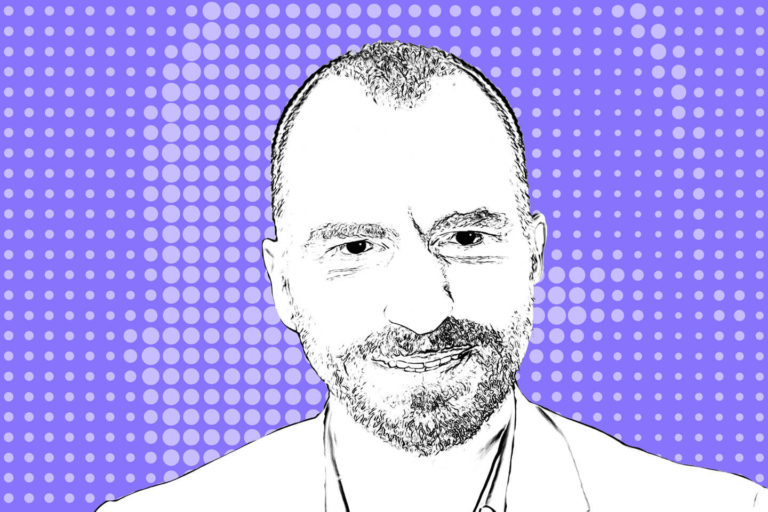
Photo: Photo illustration for The Logic by Paul Kim; Photo of Macdonald: Getty Images.
When Travis Kalanick hosted all-hands meetings at Uber in the 2010s, things could get ugly. Kalanick, who was CEO of the ride-share giant during its period of frenetic scale-up, was known to encourage a form of aggressive competition called “toe-stepping”—where questioning and confronting your colleagues was a sign of success.
The atmosphere at Uber devolved during that time into one of the tech world’s worst examples of bro culture, leading to accusations of sexism and harassment at the company’s Silicon Valley headquarters.
Talking Points
- Andrew Macdonald, a 41-year-old Torontonian who played a big part in Uber’s breakneck growth, was recently appointed COO of the company
- The unique position of the Toronto office within Uber—as well as Macdonald’s stewardship during its controversies—has launched him and his inner circle to success, within the company and beyond
But not everyone in Uber’s upper echelon was in on the act. After one such video call, Andrew Macdonald, then a Toronto-based general manager with responsibility for Asia and Latin America, pulled a group of his workers into a room at the company’s Toronto offices to block out the drama in San Francisco and re-focus them on their mission: building Uber’s footprint in Canada’s largest city.
“During that time, many of us were looking to Mac,” recalls Anne French, who had just joined Uber as a senior marketing manager and would go on to become head of operations at Uber Eats. “He was like a guiding light for us.”
Uber named Macdonald president and chief operating officer in early June. His quiet rise to becoming the right-hand man of now-CEO Dara Khosrowshahi shocked neither French nor a half-dozen other sources who passed through the upper ranks of Uber Toronto during his time there, and who spoke to The Logic for this story. (An Uber spokesperson declined requests for an interview on Macdonald’s behalf.) While he is not a household name, former colleagues say the 41-year-old known as “Mac” has been a grounding force through the ride-hailing firm’s many ups and downs, and has long been seen within the company as CEO material.
Related Articles

His influence stretches beyond Uber, as members of his inner circle in Toronto have gone on to found several Canadian startups—in several cases with funding provided by Macdonald. Between his growing reach in the innovation space and his place near the top of a tech company valued at US$190 billion, Macdonald has, with little fanfare, become one of the most powerful Canadians in the business world.
That means the future of the gig economy will be shaped in part by the low-key approach to disruption Macdonald mastered in Canada. Under his leadership, Uber’s Toronto team gained a reputation as a lab for “stealth” and emerging projects like Uber Eats that the company applied globally. In doing so, they laid the groundwork for a gig economy that has no shortage of critics—labour advocates who say it rests on the labour of a new economic underclass; city politicians who say it end-runs basic public safeguards; taxi drivers who say it ruined their livelihoods.
Macdonald rose at Uber thanks in no small part to his ability to quell that opposition through diplomacy—or simply wait it out. “There would be this groundswell of grassroots support from consumers and drivers, and sometimes it would take years to play out,” he said in a 2021 podcast, describing how the company spread its business model across North America. “But usually, eventually, governments would respond and modernize rules and regulations to do what the consumer wants. It was just because the product was so powerful.”
Macdonald grew up in the Toronto suburb of Thornhill, with ambitions shaped in part by his father, a lawyer who worked 30 years at General Motors while it yo-yoed from industrial superpower to bankruptcy and back. A voracious reader, Andrew Macdonald spent summers as a young adult on the GM assembly line, usually with a book close at hand.
By the time he was in his early 20s, with an undergraduate degree from Western University’s Ivey Business School, Macdonald’s ability to mobilize people already stood out, said Ian Black, who worked with him at the management consulting firm Bain & Company before they both joined Uber in Toronto under Kalanick.
The company was three years old with less than 100 employees, and Macdonald was working long hours, tracking key metrics on a week-by-week basis to maintain Uber’s growth. But he was the kind of boss who showed concern for colleagues’ career growth and their ideas, they say, answering messages within minutes from the other side of the globe, and remembering everyone’s name. “People would go take roles and assignments that might be especially challenging and require some sacrifice for the opportunity to work with him,” said Black.
Macdonald’s knack for making others feel like they had his full attention proved vital as Uber’s team navigated the politically fraught business of integrating their model into local markets—each with its unique features and challenges.
Just three months after Uber’s international debut in Paris, Macdonald launched the service in Toronto, which would be one of the company’s first 10 cities. Communitech CEO Sheldon McCormick, who was at Uber from 2014 to 2018, said the move turned out to be a “product-market fit that most startups dream of having.” Canada’s constitutional structure, which keeps federal politicians out of local issues, was seen as an advantage. So was the generally laissez-faire view of its provincial politicians toward cities. Uber’s chief competitor Lyft selected Toronto as its first international market. By October 2016, nearly 15 per cent of Torontonians were using ride-hailing apps.
As Uber’s founding general manager in Toronto, Macdonald could take credit for this success, because local managers and launch teams were treated in those early days like “gods” at Uber, according to Rob Khazzam, who joined the company in 2014 and went on to become its general manager for Canada. “Every single aspect of the business—PR strategy, competition—started and stopped with the general manager,” he says. “The entire company, including the CEO, really took cues from them.”
That was especially true of local regulatory issues—a constellation of which Uber faced as it sought to supplant the entrenched system of licensed taxis. Teams like Macdonald’s owned those challenges with little input from head office, says Khazzam, who left Uber to co-found the fintech Float, where he is now chief executive. “They might work with a handful of people in San Francisco,” Khazzam says.
“One of the hallmarks of Mac’s leadership emerged, which was incredible calm and focus through turbulence and challenging times.”
For Macdonald, that meant shouldering the burden of legal and regulatory maneuvering in Toronto. And despite riders’ overall receptiveness, there was plenty of pushback. Jim Karygiannis was among the company’s vocal critics as a city councillor and still feels that the company shoved its mission down people’s throats. He was skeptical that a firm like Uber would hold its drivers accountable the way a conventional taxi dispatcher could, citing an incident this year when a driver drove off with a child in the vehicle. “I think they’ve got to be a little bit more responsible,” he says.
Still, Uber built close ties with then-mayor John Tory’s office, reportedly contacting city officials and council members more than 4,700 times between 2013 and 2022. The city trumpeted being one of the first in North America to regulate ride-sharing.
Toronto quickly gained recognition within the company thanks to high adoption of the app. Macdonald and his team came to have a “loud voice” at the table where Uber’s corporate decisions were made, says Dan Park, who was part of the group that launched Uber Eats and is now CEO of the car-selling startup Clutch. The food courier service, which started in Toronto, now underpins a global delivery business that is nearly as valuable as Uber’s ridesharing operations.
Those experiments multiplied, making the city a kind of lab where the company tested new products, from cannabis delivery (still available) to a fixed-route shuttle-van service (no longer available in Toronto but running in a similar form elsewhere). By 2018, Uber had committed $200 million to a research and development hub in Toronto, led by computer scientist Raquel Urtasun. Being outside the United States helped because the U.S. press was less likely to blow up stories of its growing pains.
It was otherwise a period of massive upheaval for Uber, which grew from serving less than 10 cities in 2012 to 600 by 2017. For Macdonald, that meant opportunity. Even in a company like Uber that encouraged ambition, his ascension was meteoric, according to his co-workers.
“In a hyper-scale, fast-growing business, just staying and continuing to be successful in your current role is a very challenging thing to do,” said French. “You’re hired to be an individual contributor, and then six months later, you’re managing a team of five. And then six months later, you’re managing five teams of five. To keep up with that baseline pace for a lot of people is incredibly challenging.
“Then you see leaders like Mac, who are not able to just keep up with the pace of their role, but also get promoted.”
Macdonald’s role grew as he spearheaded Uber’s steady expansion, from other major cities like Chicago, through regional markets like the Midwest, to global regions like Latin America and the Asia Pacific. In 2019, he was promoted to lead the company’s entire ride-hailing business.
In doing so, he saw his share of crises. In global cities like Hong Kong, drivers were arrested when the government deemed Uber an illegal service. In India, an Uber driver was convicted of raping a passenger, fuelling outrage. Back in Toronto, an Uber driver pleaded guilty to careless driving after a 2018 crash that killed the 28-year-old passenger in the car. Brendan Agnew-Iler, who advocates with non-profit RideFair TO for stricter regulation of Uber, said the group spent years after the crash calling for better training for Uber drivers. Agnew-Iler said he received little contact from company leadership on the issue, and doesn’t recall any from Macdonald.
Travis Kalanick resigned in 2017 amid severe criticisms over Uber’s corporate culture, particularly from women. One was engineer Susan Fowler Rigetti, whose book Whistleblower recounted stories of sexual harassment and gender discrimination overlooked amid what Rigetti described in a blog post as a “Game-of-Thrones political war raging within the ranks of upper management.”
By this point, Macdonald was part of an executive inner circle some called the “A-team” and, within that, one of three key operational leaders steering Uber through its uneasy leadership transition, alongside Rachel Holt and Pierre-Dimitri Gore-Coty. While Macdonald has praised Kalanick’s decisiveness, work ethic and intellectual “horsepower,” he conceded publicly in 2017 that the firm needed to pivot and invest more in human resources.
Those who spoke with The Logic say he seemed to walk the walk. Macdonald was an early proponent of support groups for women and the many young parents at Uber, French notes, encouraging workers to be themselves at work despite the high-pressure environment. She credits him with “leading as a human and with compassion” in the cutthroat world of tech, adding: “I think a lot of leaders get that balance wrong.”
Black, the former Uber Canada leader, recalls the time as one of intense scrutiny due to both the company’s rapid growth and “the personality and character of the founder.” “One of the hallmarks of Mac’s leadership emerged, which was incredible calm and focus through turbulence and challenging times,” says Black, who now leads the Toronto-based investment and buyout firm Rundle Partners.
“They push a narrative that, oh, we’re going to make sure that the drivers are paid fairly. But the pay continues to degrade.”
Brett Chang worked under Macdonald in Toronto during that period before founding the business publication The Peak, in which Macdonald was an investor. He says the Uber team stayed motivated amid the criticism by focusing on the stories of people who had been denied service by cabs and did not face the same hurdles with their app. “I do think that kind of crusade bound us together on the journey,” he says.
Curiously, the chief operating officer position at Uber has sat empty for a long stretch, despite a workplace investigation before Kalanick’s resignation in 2017 recommending that the company appoint a COO who would be a “full partner” to the CEO, with a focus on improving the company’s culture. Macdonald is the first person to take the role since 2019.
In his previous position of senior vice-president of mobility and business operations, Macdonald was already fulfilling many of the duties of a COO, stickhandling dicey moments like a deal to list New York taxis on the Uber app, and Proposition 22 in California, which defined rideshare drivers as independent contractors with separate benefit packages from Uber employees. He continued to weigh in on labour controversies in Canada, defending in 2021 the company’s position that drivers should be provided benefits as independent contractors rather than as employees.
Toronto Uber driver Earla Phillips was unimpressed to hear of Macdonald’s new role, comparing the relationship between Uber’s executives and its drivers to that of landlords and serfs.
Phillips, who is the vice-president of the Rideshare Drivers Association of Ontario, had been on the job for three hours when she called The Logic from her car. That morning, she said, Uber had offered her only two fares—including one that paid $2.10.
“They push a narrative that, oh, we’re going to make sure that the drivers are paid fairly,” said Phillips, who has been a driver for about a decade. “No, you’re not, and the pay continues to degrade.” While Macdonald has attended some events with drivers, Phillips said the two have never spoken.
In a statement to The Logic, Uber Canada spokesperson Keerthana Rang defended the company’s work with UFCW Canada in improving driver pay, a deal announced in 2022 that Macdonald helped negotiate. “We’ve moved from an era of confrontation to one of collaboration, demonstrating a willingness to come to the table and find common ground on the issues that matter to the people who use the Uber platform,” Rang wrote.
Whether Macdonald is bound for the CEO’s chair isn’t clear. In a memo reported by Bloomberg, Khosrowshahi acknowledged that the move to consolidate Uber’s delivery business and ride-hailing business under one president—Macdonald—“might prompt some questions” about Khosrowshahi’s own future. He told employees he has “no plans to go anywhere, anytime soon.” Rather, he wrote, Macdonald’s appointment was the “natural next step in our evolution as a company,” allowing the CEO to travel and address more global issues.
Although Macdonald will move from Toronto to New York for his role as COO, he is likely to keep exerting influence in Canada. Startups founded by former Uber employees and funded by Macdonald include Park’s Clutch, Khazzam’s Float, and McCormick’s Properly. Uber is also an investor in Urtasun’s Waabi.
Time will tell how many go the distance. But Park, Khazzam, McCormick and Chang all say Macdonald shaped their leadership styles, and agree that the network formed during the early days of Uber Toronto taught them more than most other career experiences.
“Uber in 2015 was like Open AI today,” said Chang, referring to the ChatGPT-maker. “It really opened my eyes.”
Editor’s note: This story was updated clarify the timeline of Uber’s evolving position on drivers’ pay and benefits, and Macdonald’s father’s role at GM.



Loading...
Thanks for sharing!
You have shared 5 articles this month and reached the maximum amount of shares available.
CloseThis account has reached its share limit.
If you would like to purchase a sharing license please contact The Logic support at [email protected].
CloseGift the full article!
You have gifted 0 article(s) this month and have 5 remaining.
Recipients will be able to read the full text of the article after submitting their email address. They will not have access to other articles or subscriber benefits.
Photo: Photo illustration for The Logic by Paul Kim; Photo of Macdonald: Getty Images.
Macdonald taking questions in a video call with Uber drivers in January 2021.
Macdonald on stage at a Collision conference in Toronto in June 2022.
Taxi drivers in Buenos Aires demanding the shutdown of Uber in June 2016.
Most Popular This Week




In-depth, agenda-setting reporting
Great journalism delivered straight to your inbox.
News
Panel decries Canada’s chaotic way of funding world-class science
Briefing
RBC weighs blocking Meta’s AI agent from accessing customer accounts
Feds pledge $15M for U.S. satellite navigation company Xona to expand in Montreal
Inovia raises US$200M for new VC fund as it eyes AI’s impact
Best business newsletter in Canada
Get up to speed in minutes with insights and analysis on the most important stories of the day, every weekday.
Exclusive events
See the bigger picture with reporters and industry experts in subscriber-exclusive events.
Membership in The Logic Council
Membership provides access to our popular Slack channel, participation in subscriber surveys and invitations to exclusive events with our journalists and special guests.





