TORONTO and ROCHESTER, N.Y. — Li-Cycle, once a darling of North America’s electric-vehicle supply chain, is in trouble. Layoffs, lawsuits and leadership changes have rocked the Toronto-based battery recycling startup, but sources say that issues at its factory in Rochester, N.Y., are a much bigger concern. Work at the factory, part of a bold political gambit for Canada to challenge China’s EV supply chain dominance, has been on pause since October 2023 and has yet to restart.
Skip to content

 Construction on Li-Cycle’s battery recycling hub in Rochester has been paused since October 2023. Photo: Christopher Katsarov Luna for The Logic
 Joe Morelle, the executive director of Unicon, at his office in Rochester, N.Y. Photo: Christopher Katsarov Luna for The Logic
 Bill Reilich, the supervisor of Greece, the Rochester suburb where Li-Cycle’s hub is being built. Photo: Christopher Katsarov Luna for The Logic
 Li-Cycle’s spoke facility in Rochester. Here, the company strips old batteries of their useful materials, which will be sent to its nearby hub—once it’s complete—to turn into sellable products. Photo: Christopher Katsarov Luna for The Logic
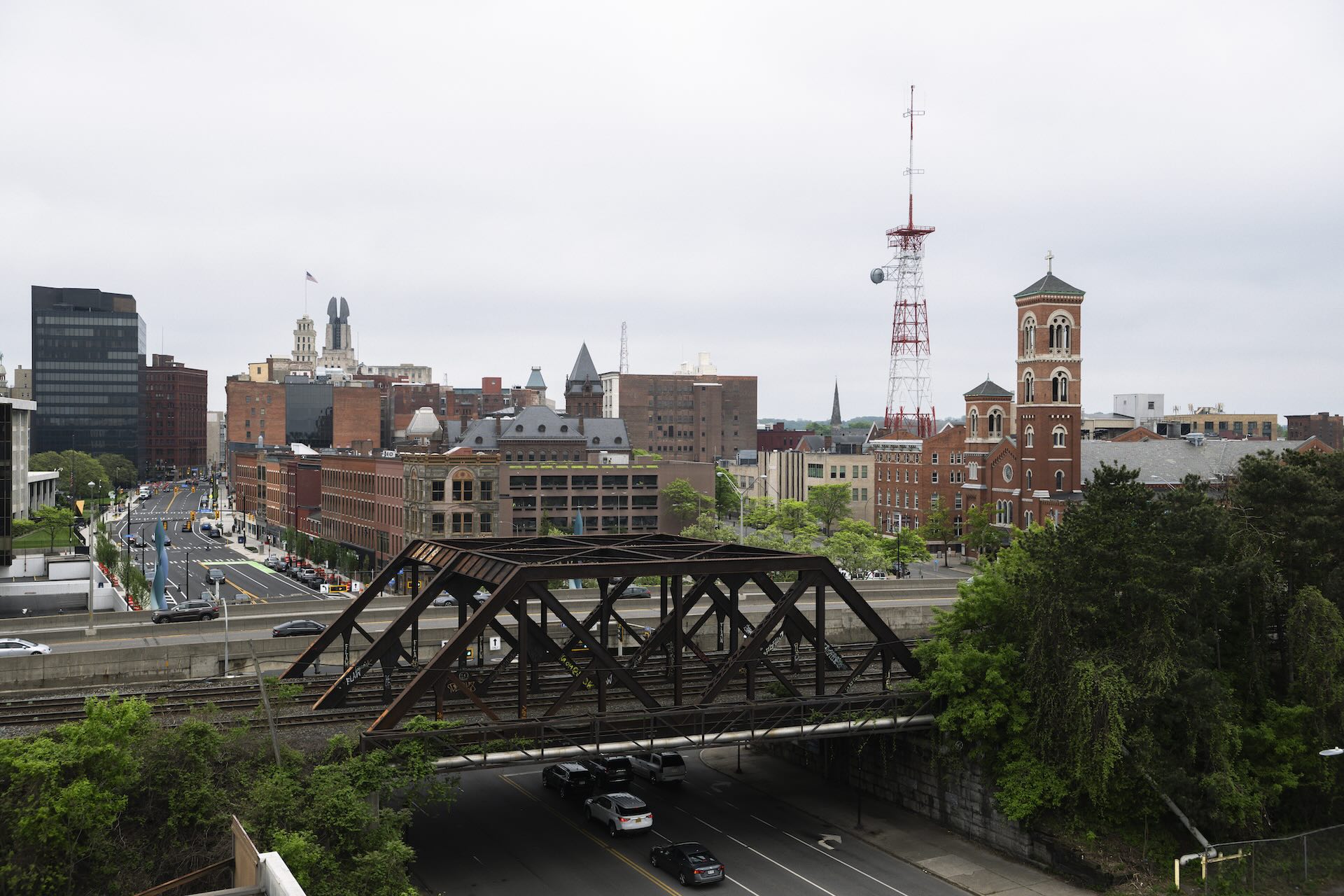 Downtown Rochester. Labour and political leaders hoped Li-Cycle’s arrival in the Rust Belt city would create new jobs in the wake of the Kodak factory’s demise. Photo: Christopher Katsarov Luna for The Logic

The Big Read
Li-Cycle’s struggles threaten North America’s EV dreams
The Toronto battery recycling startup is mired in financial and logistical issues. Sources say it’s a symptom of a bigger problem.
The inactive construction site of Li-Cycle’s battery recycling hub in Rochester.
TORONTO and ROCHESTER, N.Y. — Li-Cycle, once a darling of North America’s electric-vehicle supply chain, is in trouble. Layoffs, lawsuits and leadership changes have rocked the Toronto-based battery recycling startup, but sources say that issues at its factory in Rochester, N.Y., are a much bigger concern. Work at the factory, part of a bold political gambit for Canada to challenge China’s EV supply chain dominance, has been on pause since October 2023 and has yet to restart.
Talking Points
- Toronto battery recycling startup Li-Cycle was a darling of the EV industry, charming investors and politicians with its promise for a greener, more ethical battery supply chain
- But corporate missteps, a SPAC crash and an EV downturn hit Li-Cycle hard, stalling its hubs in Rochester, N.Y.
- It’s learning the same hard lesson as the auto industry: neither geopolitical pressure nor plying promising tech firms with money has worked to complete Canada’s EV supply chain
It could have been so different. Since its founding in 2016, Li-Cycle has captured the imaginations of EV boosters, hosting global political leaders and gathering impressive financial backers in an initial public offering. Union leaders in Rochester told The Logic they were initially wooed by the promise of a thousand construction jobs that building the factory would create, plus hundreds more permanent positions locally once it was complete. If the Rochester factory had stayed on schedule and launched in 2022, backers believed it would have finally allowed North America to compete with China’s dominance of the EV supply chain.
But the factory is still far from finished. A market bubble, a slowdown in the EV industry and legal issues for Li-Cycle all combined to force the firm to pause construction on the site, sending its stock price tumbling. As losses mount and it struggles to secure new financing, Li-Cycle is reviewing the fate of most of its global operations.
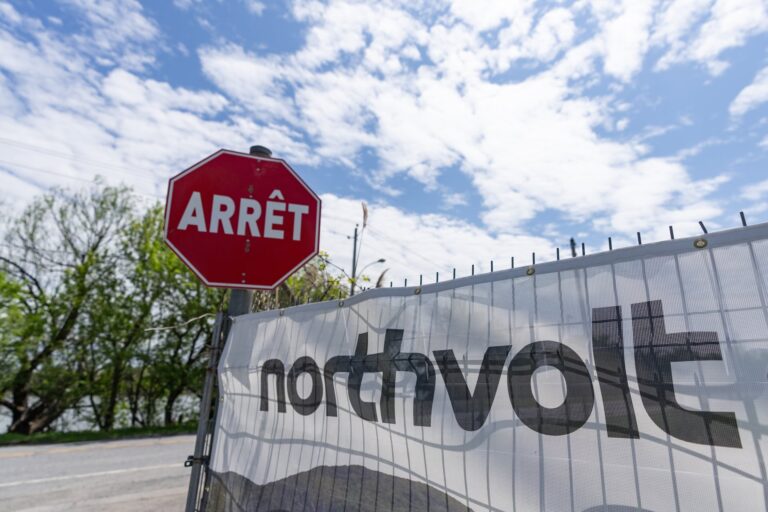
As Sweden-based Northvolt is finding, the technical, political and financial challenges of EV battery recycling are not insignificant. But for Li-Cycle, failure to launch could seriously dent Canada’s dream of becoming the world’s green EV supplier.
Related Articles
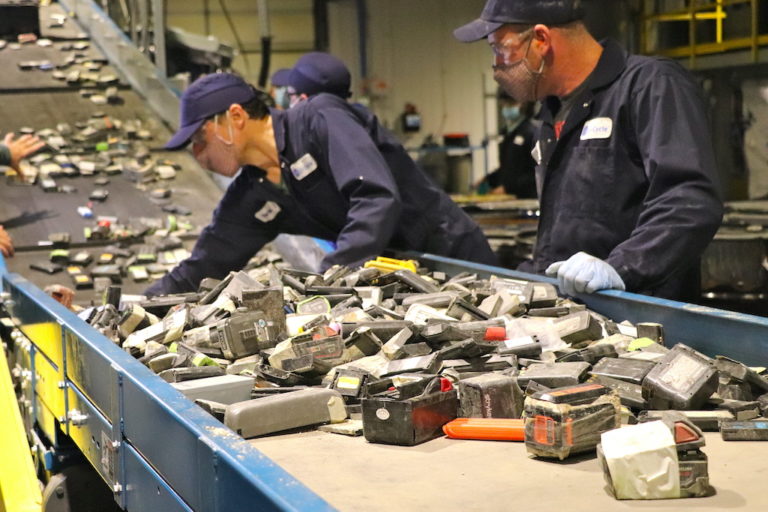

Recycling EV batteries is a complex, messy business. The stakes are high—and not just for North America’s energy independence. Making the supply chain more sustainable could be a major boon for the EV industry, easing reliance on mines in fraught regions of the world and reducing the environmental impact. Li-Cycle’s early backers believed it could solve both problems, and in relatively short order. This was a startup, they felt, that had the technology and the leadership to really succeed.
Li-Cycle was founded by Ajay Kochhar and Tim Johnston, who had previously worked together in the lithium and mining divisions of engineering firm Hatch. Kochhar, the company’s CEO, was a first-time entrepreneur, but early mentors describe him as a model startup founder, with the requisite hustle, focus and willingness to learn. “He was a sponge,” said James Sbrolla, a mentor and cleantech investor who worked with Kochhar at Brampton, Ont.-based startup incubator Altitude Accelerator, then the RIC Centre, in 2017. Of the more than 1,000 founders Sbrolla has worked with, Kochhar ranks in his top 10. “He’s as good a startup CEO as we’ve ever had come through the ecosystem, in my experience,” said Sbrolla.
Pam Banks, another mentor and executive director of Altitude Accelerator, said she was impressed with Kochhar’s ambition. “I gave Ajay a lot of credit for being that forward-thinking,” Banks said. She admired his instinct to look beyond the transition from gas to electric vehicles and spot the business opportunities in solving the second-order problem: what happens with spent batteries?
Johnston and Kochhar seemed to have hit on a novel solution to that battery-recycling problem—one that captured the best of two existing methods, both of which have their pros and cons. One involves heating the batteries to retrieve reusable materials, which can destroy some of the metals inside and create air pollution. The other involves dismantling the batteries bit by bit, an intricate process that is difficult to automate. Li-Cycle proposed a third way: directly processing full EV battery packs without discharging, dismantling or combustion.
Its method shredded the batteries and required zero wastewater, which, the company said, would be both safer and cleaner. Its business plan—“spokes,” its jargon for localized factories near automakers, and a central “hub” to turn materials into sellable products—meant it could minimize transporting heavy batteries over long distances. Georg Bieker, senior researcher at the International Council on Clean Transportation, said Li-Cycle’s technological approach to recycling has since become the prevailing direction of the sector.
It was a bold, ambitious plan, and Sbrolla felt the odds were against Li-Cycle from the start. The company needed to raise hundreds of millions of dollars to build its business. That kind of money just wasn’t available to Canadian startups at the time, especially those in the risky and capital-intensive cleantech space, said Sborlla. “I thought it was a long shot they’d ever get anywhere.” But like a slew of other companies in the EV sector, a pandemic-era stock market trend tilted things in Li-Cycle’s favour.
By July 2020, Wall Street investors fell in love with an unconventional idea: publicly listed blank-cheque firms called special purpose acquisition companies, or SPACs. That special purpose was to accrue cash and buy another company with the goal of getting it listed on the stock market faster than it could through a traditional public offering. For Sbrolla, the SPAC boom was Li-Cycle’s key to raising the huge sums of money it needed to match its ambitions.
By August 2021, the company had reached an agreement to merge with U.S.-based Peridot Acquisition Corp., a Cayman Islands-based blank-cheque investment firm, and go public on the New York Stock Exchange. Despite racking up US$6.8 million in losses on just US$1 million in revenue in the first quarter of 2021, the listing gave Li-Cycle a US$1.55-billion valuation and about US$580 million to help make its vision a reality. Big raises of the sort weren’t unusual in the SPAC boom, which was mostly a U.S. phenomenon. But for a Canadian cleantech startup, the numbers were eye-catching, far outdoing its peers, like Lithion Technologies’ $22.5-million raise in April 2022.
“He’s as good a startup CEO as we’ve ever had come through the ecosystem.”
Li-Cycle also signed partnerships with blue-chip clients like General Motors and battery giant LG. Then, in May 2022, it struck a key deal with mining firm Glencore that provided the firm with a US$200-million convertible note investment. Through the partnership, Glencore guaranteed a supply of batteries and scrap for Li-Cycle to recycle, while it also agreed to buy metal back from the startup.
This momentum was pushing Li-Cycle towards the inflection point that would rocket its revenue, executives said: a hub factory in Rochester, N.Y., that could complete its battery recycling dream.
The hub was to be built on a 65-acre swath of land left vacant by ailing photography firm Kodak. The site in Eastman Business Park, formerly Kodak Park, is less than 10 kilometres south of Lake Ontario, and came equipped with infrastructure Kodak had built when the company was virtually a city unto itself. That included a dedicated fire department for chemical fires and an internal rail service that Li-Cycle could use to transport products to and from the plant. Access to power was another plus, as were state tax incentives to create jobs, and loans on offer from the U.S. government’s Chips Act.
In July 2021, Li-Cycle estimated the hub would cost US$175 million to build, give or take 30 per cent. In December 2021 when it announced that the project would proceed, the cost had surged to approximately US$485 million. The company cited higher material costs and an increase in how much product it planned to produce at the hub. In January 2022, Li-Cycle said it had the funds to complete the hub, but was still seeking government financing.
In February 2023 that financing seemingly arrived in the form of a US$375-million loan commitment from the U.S. Department of Energy. “It helps make America the centre of electric car and electric battery production in the world,” said Sen. Chuck Schumer on a visit to Rochester to announce the Li-Cycle loan. “We no longer want to let another country—China or anywhere else—become the leader in these cutting-edge technologies.”
On the construction site, there were signs of trouble.
Early in October 2023, Joe Morelle, the executive director of Unicon, a union representing construction workers in Monroe County, got a visit from Kurtis Boehm, director of hub development at Li-Cycle. The company needed 700 more workers over the next six months to help complete construction on the battery recycling plant in Rochester, Boehm said. It was welcome news for a man charged with securing stable, good-paying work for union members.
Within a week, the good news had turned to bad. On Oct. 12, Morelle’s phone started ringing, but this time he was hearing from one of the union presidents saying the job site had shut down. Morelle was sure the workers were mistaken. “That can’t be right,” he said. “That can’t be right.”
But it was. Escalating costs had forced the shutdown, Li-Cycle said in a press release on Oct. 23, adding that it was taking time to reassess the project’s scope and budget. The disappointment reverberated through the Rochester area. Labour and political leaders had embraced Li-Cycle’s arrival in the Rust Belt city, which had struggled to create new jobs in the wake of the Kodak factory’s demise. Morelle described Li-Cycle’s arrival in Rochester as “massive.”
Bill Reilich, the supervisor of Greece—the Rochester suburb where Li-Cycle’s hub is being built—said he was disappointed but not surprised when work at the factory was paused—a consequence, he claimed, of poor company management. “Somebody dropped the ball to get to the point where you have to shut down the construction,” he said. “One would think that if certain benchmarks were necessary, certain dollars were needed to get to these benchmarks, that you would have put your ducks in a row and structured your financial outlay to meet those objectives.”
Reilich claimed there were other signs Li-Cycle didn’t have the resources to follow through on its plans. It was consistently late paying its bills to the municipality for things like permits and inspections, the supervisor said. Reilich, who effectively serves as the town’s CEO, said in mid-May that Li-Cycle would soon owe Greece US$1 million. Deputy supervisor Kirk Morris confirmed the company has yet to pay the outstanding fee. Louie Diaz, vice-president of marketing and communications at Li-Cycle, said the firm has now agreed to a payment plan with the city.
It’s a relatively small amount of money, but it concerns Reilich. “If they don’t have the wherewithal to come up with a million dollars, they’re certainly not going to have the wherewithal to continue with this project,” he claimed.
Li-Cycle’s quarterly reports and lawsuits involving contractors and investors paint a picture of a company teetering on the edge—unable to restart its hub construction for lack of money and unable to bring in capital for lack of progress on its hub.
In January 2024, the company filed a lawsuit in Monroe County against landlord and construction manager Pike Conductor over who was responsible for the failure to close a financing deal for over $50 million spent on building the Rochester hub. The litigation was one factor stalling progress for four months until Li-Cycle got a new lease and withdrew the suit in late May.
Class-action lawsuits filed in Manhattan and Toronto last November put Li-Cycle’s finances under further scrutiny. In the suits, Li-Cycle investors claim the company misled them by downplaying its financial troubles. The Manhattan suit was dismissed in June, although it has been appealed, and the allegations in Toronto have not been proven in court. Li-Cycle has said it will defend itself, but it hasn’t filed a response to the Toronto suit.
“Somebody dropped the ball to get to the point where you have to shut down the construction.”
Andrew Morganti, a lawyer representing the Toronto plaintiff, said he doesn’t think Li-Cycle has intentionally misled investors. Rather, he believes the company has gotten in over its head. “What I fear and what my client fears happened here was that there were simply not enough experienced personnel to make proper recordings up the chain of command,” Morganti claimed.
It’s an assessment shared by KPMG, the company’s auditor, in a March 2024 report. The report flagged “material weaknesses” in Li-Cycle’s internal financial documentation, citing among its concerns “insufficient number of experienced personnel” to effectively assess and report risks. Li-Cycle said it has since made several changes to address the report’s concerns, including hiring experienced finance personnel.
In the first half of 2024, Li-Cycle’s revenue grew to US$12.6 million, up from US$7.2 million a year earlier, thanks in large part to business with an unnamed U.S. customer “with a substantial global EV market share.” Pausing construction on the Rochester hub, meanwhile, helped save the company about US$150 million compared to the same period last year. Still, it logged a net loss of nearly US$145 million, up from US$68.5 last year.
Those losses have led to cuts. On March 27, the company laid off around 60 people, representing about 17 per cent of its workforce—part of a “cash preservation plan” that involved moving from a “regional to a centralized management model,” it said in a press release. On March 19, the company also said it was slowing work in its battery-shredding facilities in New York, Alabama and Arizona. Its website lists proposed factories in France and Norway as being under review, as well as its Italy processing hub, which would be similar to the Rochester operation and eventually process even more materials. In August, it said it would close its spoke factory in Kingston, Ont.
Among those affected by the cuts was co-founder Tim Johnston, who, in March, was moved to the role of non-executive board chair. In May, Kochhar announced that Johnston would step down to pursue “other business opportunities.” Several other executives have also left after the company made room for potential new board members nominated by Glencore and replaced its regional management teams with centralized executives it hired from major mining companies. In June, Li-Cycle narrowly avoided being delisted from the New York Stock Exchange over its low stock price.
Ultimately it could be the financial and operational hurdles, not the technology, that brings down Li-Cycle. The company is not alone. In September, Northvolt, Europe’s most-capitalized startup, announced deep cuts to its business amid an ongoing strategic review.
Failures at startups like Northvolt or Li-Cycle may stoke fears that the EV transition will erode North America’s energy independence as China pours money into its battery industry. For years, Liberal government officials like Innovation Minister François-Philippe Champagne and Natural Resources Minister Jonathan Wilkinson have spoken of their commitment to build a “mines to recycling” battery ecosystem in Canada, and companies from Toyota to Honda and Renault to Rio Tinto have pledged to build recycling into their supply chains.
Li-Cycle has also been a victim of factors outside its control. Many other EV technology SPACs, like Arrival, Canoo, Lordstown Motors, Proterra and Nikola, struggled to stay afloat after going public, as automakers delay electrification plans due to steep competition and lower-than-expected customer demand.
Hybrid vehicles, which have smaller batteries, still make up more of the U.S. market than battery-only EVs, causing automakers like Ford, General Motors and Volvo to pivot toward adding more hybrids to their lineups. Bieker, the clean transportation researcher, said that batteries are also lasting longer than expected, and battery firms have been trying to use cheaper materials like iron and phosphate in place of pricey nickels and cobalts. Low market prices for nickel have cut further into how much companies, Li-Cycle included, can recoup for recycled materials, as cheap nickel from Indonesia, much of it subsidized by Chinese investments, has flooded the market.
In response to shifts in material prices and EV demand, Li-Cycle said in March that it plans to focus its recycling efforts less on making nickel sulphate and cobalt sulphate, and instead produce lithium carbonate and a mixture of nickel, cobalt and manganese. Bieker said such plans seem logical in the context of the battery supply chain.
Meanwhile, the conditions of the US$375-million U.S. Energy Department loan are yet to be met, keeping a huge pot of cash locked away. An Energy Department spokesperson declined to comment, citing the confidentiality of the lending process, but confirmed that each conditional commitment with the department is bespoke to each business. In order for a company to move from a conditional commitment to secure its loan, it must meet a unique term sheet of conditions that could include financial or equity obligations, environmental permitting, engineering or manufacturing quality expectations, and staying out of legal disputes that could affect the project.
Li-Cycle declined to comment on ongoing litigation but Diaz said in a statement that it is focused on driving down costs and that it’s still working on securing its Energy Department loan, and evaluating its finances and broader strategy.
In its recent earnings report, Li-Cycle said it is still evaluating the costs for the Rochester factory, which now stand at about US$960 million total, with US$490 million to go. Kochhar said in August the company is pushing as hard and fast as possible on the Energy Department loan, which is the cornerstone of its financing package.
“Yes, I mean, look, we’re in a soft period for nickel, cobalt and lithium,” he said on an earnings call. But, he argued, he still sees a path to grow financially, “otherwise we wouldn’t be pursuing it.”
Reilich said the prolonged closure has shaken people’s trust in the company in Rochester and beyond. “There’s a certain amount of cynicism,” said George Conboy, a Rochester-based financial adviser. “Pausing the hub and subsequent earnings reports … it seems unlikely the Rochester hub will be a going thing any time soon.”
Morelle, meanwhile, is still rooting for Li-Cycle. He has been in regular contact with Li-Cycle personnel, who tell him the project could restart as soon as November—assuming the company secures the US$375-million government loan. With the U.S. inaugurating a new, potentially less EV-friendly president in January, time to do so could be running out. Still, while Morelle says Li-Cycle’s future isn’t certain, he’s optimistic Rochester will be part of it. “We’ll be ready when they’re ready to get back to work.”



Loading...
Thanks for sharing!
You have shared 5 articles this month and reached the maximum amount of shares available.
CloseThis account has reached its share limit.
If you would like to purchase a sharing license please contact The Logic support at [email protected].
CloseGift the full article!
You have gifted 0 article(s) this month and have 5 remaining.
Recipients will be able to read the full text of the article after submitting their email address. They will not have access to other articles or subscriber benefits.
Photo:
Construction on Li-Cycle’s battery recycling hub in Rochester has been paused since October 2023.
Joe Morelle, the executive director of Unicon, at his office in Rochester, N.Y.
Bill Reilich, the supervisor of Greece, the Rochester suburb where Li-Cycle’s hub is being built.
Li-Cycle’s spoke facility in Rochester. Here, the company strips old batteries of their useful materials, which will be sent to its nearby hub—once it’s complete—to turn into sellable products.
Downtown Rochester. Labour and political leaders hoped Li-Cycle’s arrival in the Rust Belt city would create new jobs in the wake of the Kodak factory’s demise.
Most Popular This Week



In-depth, agenda-setting reporting
Great journalism delivered straight to your inbox.
The Big Read
Alberta’s referendum is just the start of the turmoil
Briefing
EverWind plans $10B data centre and wind development in Nova Scotia
Canada ready to force Stelco to sell its Canadian operations, Joly says
Feds plan a 60 MW defence-oriented data centre for Ottawa
Best business newsletter in Canada
Get up to speed in minutes with insights and analysis on the most important stories of the day, every weekday.
Exclusive events
See the bigger picture with reporters and industry experts in subscriber-exclusive events.
Membership in The Logic Council
Membership provides access to our popular Slack channel, participation in subscriber surveys and invitations to exclusive events with our journalists and special guests.






