Investors in Canadian-backed SPACs are pulling their money out as the blank-cheque companies miss deadlines to close acquisition deals.
Skip to content


News
Canadian SPACs still hope for deals as investors pull cash
The shell companies are facing an outflow of capital, and some have liquidated completely
Investors of Canadian-backed SPACs are redeeming their money, as the blank-cheque companies pass their two-year deadline to close a merger deal. Photo: Shutterstock
Investors in Canadian-backed SPACs are pulling their money out as the blank-cheque companies miss deadlines to close acquisition deals.
The COVID-19 pandemic era saw a craze for special-purpose acquisition companies, or SPACs. Public entities formed with the sole purpose of taking another company public through a merger, after listing on a stock market they typically have two years to complete a deal.
Talking Points
- Investors in Canadian-backed SPACs are pulling their money, as the blank-cheque companies face deadlines to close merger deals
- Some Canadian SPACs have simply liquidated and delisted from public stock exchanges
The SPAC boom was mostly a U.S. phenomenon. In 2021, 613 companies used the vehicle to go public in the U.S. High-profile investors and celebrities piled more than US$160 billion into SPACs to merge with companies like WeWork, BuzzFeed and Saudi-majority-owned electric-vehicle firm Lucid Motors.
But 2021 was the SPAC market’s peak, and a number of the special-purpose companies have since either folded or had their coffers depleted as investors demand repayment in the absence of deals.
According to SPAC Research, a platform that monitors the industry, the number of SPAC liquidations since 2021 has outstripped the number of mergers. From January 2022 through July 2023, 274 SPACs dissolved without finding a merger candidate. In that same period, just 147 SPACs successfully completed a merger. As of July 31, there have been just 45 SPAC mergers in 2023 and just 21 new SPACs created.
Related Articles

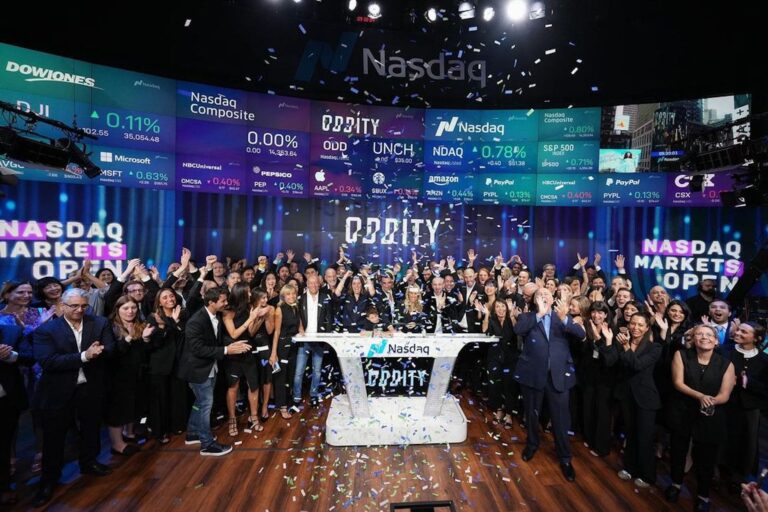
Canadian investors largely sat out the boom, with some notable exceptions. Many Canadian-backed SPACs have either folded or are struggling to complete deals.
Perhaps the highest-profile Canadian SPAC, the Nasdaq-traded Portage Fintech Acquisition Corp.—founded by Montreal-based Sagard Holdings, the alternative-investment arm of Desmarais family-controlled Power Corporation—was set to wind down on July 23, after failing to find a company to merge with. The shell company had the option to liquidate and return capital to investors, or request more time to close a deal.
However, shareholders agreed to give Portage another year to find a target company, but the extension came at a cost. Investors holding more than 22 million in shares opted to redeem them for cash at a price of about US$10.41 per share, according to public filings. The US$229.1-million payout left Portage with just US$40.7 million in its trust.
Through that process, Portage transferred control of the company to a new sponsor, Delaware-based Perception Capital Partners. Sagard executives, including Portage CEO Adam Felesky and Sagard CEO Paul Desmarais III, are no longer affiliated with the SPAC. Portage declined The Logic’s request for comment.
Meanwhile, Lava Medtech Acquisition Corp., backed by Toronto-based biotech VC firm Lumira Ventures, and Soar Technology Acquisitions Corp.—whose board included Chris Arsenault and Patrick Pichette of Inovia Capital—are among the growing list of SPACs that have liquidated their assets and delisted from U.S. stock exchanges after failing to find merger targets.
613
The number of SPACs created on U.S. markets in 2021. As of July 31, there had been just 21 created this year.
Erik Sloane, chief revenue officer at Cboe Canada, which owns the Toronto-based Neo Exchange stock market, said the swing in interest rates—from nearly zero when SPACs were thriving to over five per cent today—has contributed to the chill.
Proposed regulations from the U.S. Securities and Exchange Commission, which would crack down on conflicts of interest and bolster disclosure requirements and accountability for underwriters, have also softened the market.
If a SPAC doesn’t have any merger prospects at this point, Sloane said, it may be better off returning money to its investors and trying again in a better market rather than settling for a subpar deal.
But like Portage, some Canadian SPACs are still set on closing a deal.
Swiftmerge Acquisition Corp., formed by a group of B.C. investors and listed on the Nasdaq, was just over a month away from being dissolved when the shell company asked investors to extend its deadline to close a deal from June 17, 2023 to March 15, 2024.
US$229.1M
The amount a SPAC formerly sponsored by Portage has returned to investors, leaving it with just US$40.7 million.
Like Portage, Swiftmerge’s shareholders agreed to give the company more time to find a target—although most decided not to stick around. Swiftmerge investors chose to redeem 90 per cent of their capital, leaving the SPAC with just over US$23 million in its trust, down from about US$234 million.
Regardless, the company had its sights on merging with HDL Therapeutics, a Florida-based biotech company with an FDA-approved cardiovascular therapy. It formally announced plans on Aug. 11 to take HDL public. The deal, in which Swiftmerge agreed to pay US$104 million for HDL, is still being finalized—and because most of Swiftmerge’s initial investors have pulled their money out, it has to raise US$80 million in new financing to buy HDL.
In an interview with The Logic, Swiftmerge CEO Sam Bremner expressed feeling disillusioned by the SPAC process. He said he initially sponsored a SPAC because he was confident he could find a solid company to take public. But that turned out to be “way harder” than he had anticipated. “All the companies that lined up for the SPAC got hurt by the recession, got hurt by consumer wallet shrinkage, got hurt by interest rates,” he said.
Bremner said he was in talks with a Canadian furniture company about merging through the SPAC, but said shipping and logistics challenges tied to the COVID-19 pandemic eroded the company’s value. Several other health-care companies he had considered were also affected by the market slump, he said.
US$23M
The amount left in Swiftmerge’s trust after investors pulled 90 per cent of its funds, leaving it scrambling.
On top of poor market conditions, Bremner said the SPAC model itself is prone to attracting “arbitrage” investors who simply want a quick return on their principal and have no intention of supporting a company after it goes public. If a SPAC is liquidated or if investors don’t support the SPAC’s proposed merger, those investors get their money back, plus any accrued interest. “It’s kind of a juiced system that allows everybody to exploit [it],” said Bremner.
With signs that traditional public listings are picking up and speculation that interest rates have peaked, investors may have a renewed confidence in SPACs. “The hope is we get a market that’s ready for a little more risk,” said Sloane.
Some SPAC investors are also hopeful that potential merger targets will be increasingly desperate for capital, after long droughts in the venture capital and private equity markets.
As Bremner tries to raise the capital he needs to merge with HDL, he’s looking to traditional health-care investors, like family offices and institutional investors. In this market, he expects that process to be a slog—but he thinks it will lead to a more dedicated investor base for HDL in the long term.
Like Sloane, he thinks the SPACs that haven’t completely liquidated may end up closing good deals—that they’ll benefit from less hype and more regulatory scrutiny.
“There’s a lot more accountability,” he said. “Hopefully, along with mine next year, other [SPACs] will start to emerge that hold their value and turn out to be good companies.”



Loading...
Thanks for sharing!
You have shared 5 articles this month and reached the maximum amount of shares available.
CloseThis account has reached its share limit.
If you would like to purchase a sharing license please contact The Logic support at [email protected].
CloseGift the full article!
You have gifted 0 article(s) this month and have 5 remaining.
Recipients will be able to read the full text of the article after submitting their email address. They will not have access to other articles or subscriber benefits.
Photo: Shutterstock
Most Popular This Week




In-depth, agenda-setting reporting
Great journalism delivered straight to your inbox.
Commentary
Carmichael: Being boxed in will help Canada focus on what matters
Briefing
Rio Tinto gets nearly $165M in additional federal funds for Quebec aluminum
U.S. to lift tariffs on some Canadian products crucial to Maine: Collins
Carney warns of tech dependence after Starlink disruptions in Ukraine
Best business newsletter in Canada
Get up to speed in minutes with insights and analysis on the most important stories of the day, every weekday.
Exclusive events
See the bigger picture with reporters and industry experts in subscriber-exclusive events.
Membership in The Logic Council
Membership provides access to our popular Slack channel, participation in subscriber surveys and invitations to exclusive events with our journalists and special guests.






