Skip to content

 Gerry Reid’s family has been growing potatoes in Dufferin County for 180 years. He’s been courted by investors looking to buy his property, but said he won’t sell. Photo: Laura Proctor for The Logic
 Institutional investors have acquired significant portfolios in farmland over the past 20 years as the cost of that land has increased tenfold in some regions. Photo: Laura Proctor for The Logic
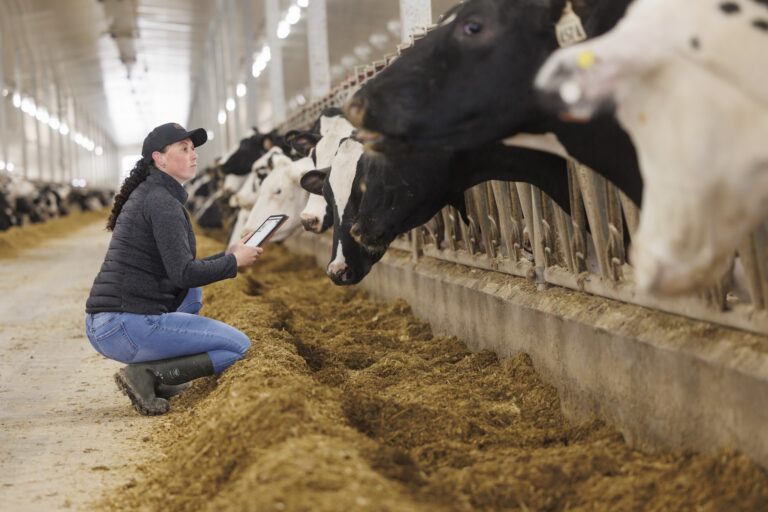
 The fragmented industry of family-run farms has made it difficult for institutional investors to scale up their farmland portfolios quickly. Photo: Laura Proctor for The Logic
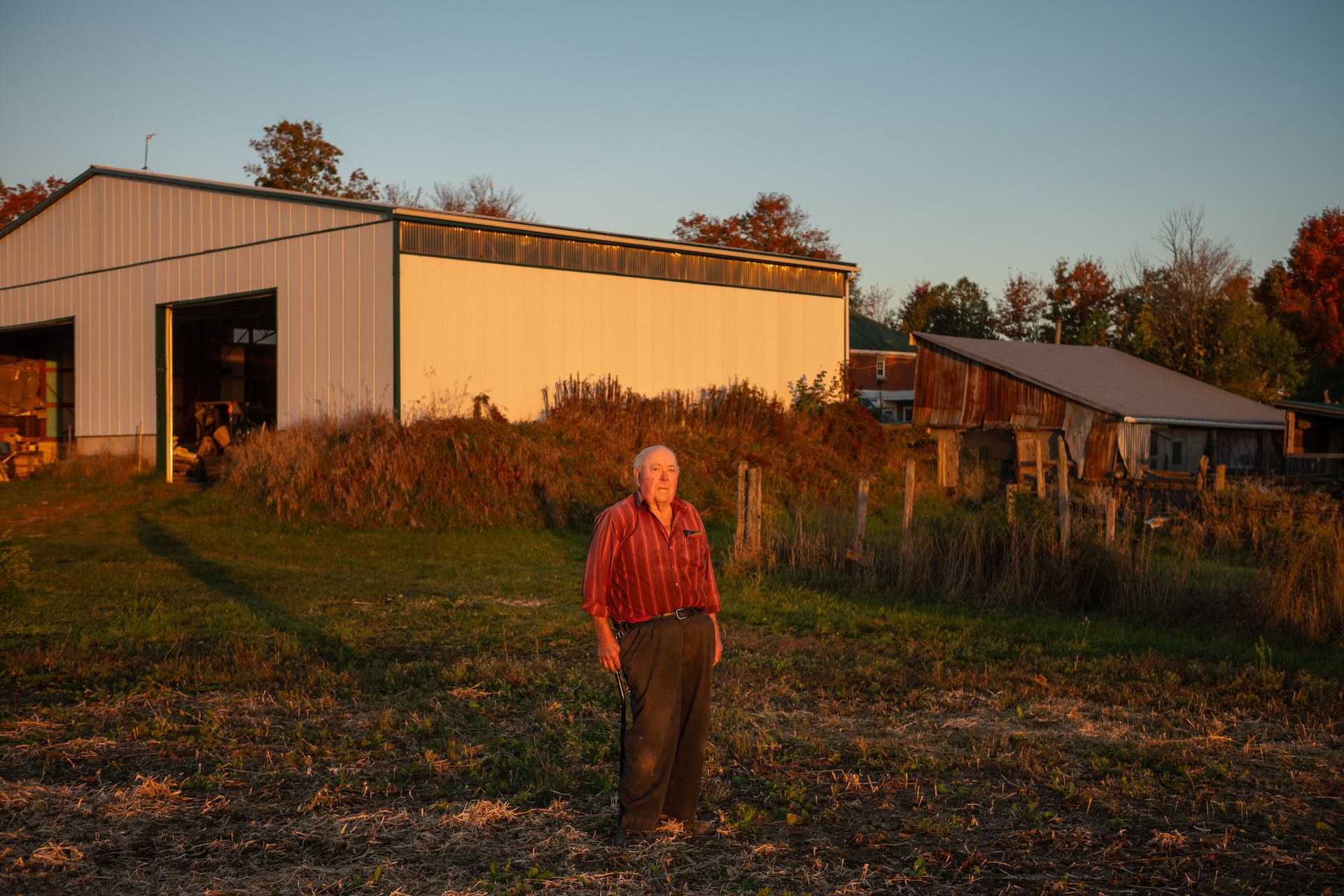 Gerry Reid, 78, hopes to keep his Mono, Ont., farm in the family for at least one more generation. Photo: Laura Proctor for The Logic
The Big Read
Investors are buying up Canada’s farmland. Some farmers are getting worried
Private equity and institutional investors see agricultural land as a safe haven in a shaky economy, but not everyone welcomes the trend
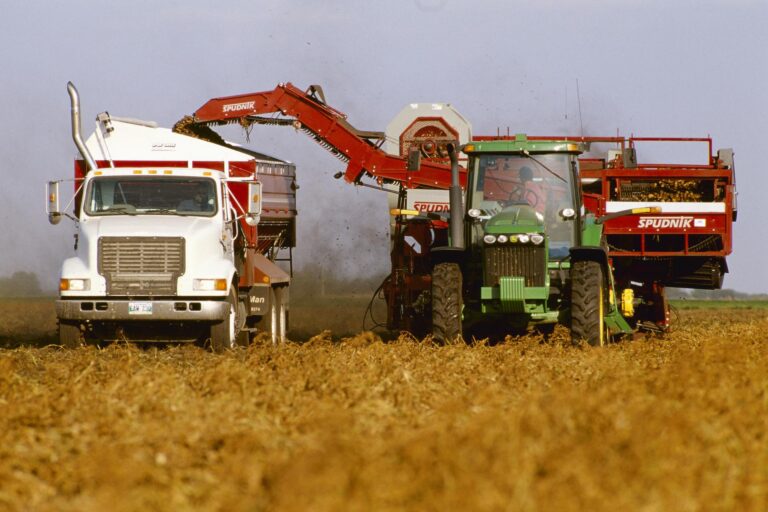
Institutional investors have acquired plenty of farms similar to Gerry Reid's in Mono, Ont., as they look for stable investments in uncertain times. Photo: Laura Proctor for The Logic
It’s not unusual for a motorist to greet Gerry Reid with a middle finger while Reid is driving his tractor down the road in Mono, Ont. In the last decade or so, the farming community 80 kilometres northwest of downtown Toronto has changed, says Reid, 78, who blames big investors for what he sees as his town’s loosening grip on its farming identity.
Reid’s family has been growing potatoes in Dufferin County for 180 years. He said he’s been courted plenty of times by investors looking to buy his property, which sits on some of the country’s most valuable farmland. He won’t bite. “This particular farm has been in the family since 1845, so I guess I’m a hanger-on-er,” he said.
Talking Points
- Canadian farmland has become a hot asset for investors seeking to diversify their portfolios with holdings that are resistant to economic downturns
- Some warn investor consolidation could drive up land prices, eroding local farm ownership and weakening the fabric of rural communities
While Reid hasn’t entertained acquisition offers, many of his neighbours—and farmers across the country—have. Canadian farmland has become an increasingly popular investment for private equity and institutional investors looking for alternative assets that are resistant to economic downturns. With a growing population and shrinking agricultural lands, investors in the space say the demand for farmland is only going up.
For farmers, that’s a double-edged sword. Many of the investments are leaseback agreements, where a farmer sells their property to an investor, then rents it back as they continue to work the land. While the sale frees up cash for the farmer to expand their operations and boost profits, some worry it shuts farmers out of land ownership, making them and their communities financially precarious. “A lot of the family farms disappeared, simple as that,” said Reid. “It affected the community.”
Financial services firm Farm Business Consultants estimates that between nine and 15 per cent of land transactions in Canada involve non-farming investors. That’s based on data from Crown corporation Farm Credit Canada, real estate listings and business with their 20,000-plus clients, said CEO Yves Millette. “It’s no different than any other industry where I see financial investors coming in and saying, ‘Hey, I can consolidate this industry.’”
University of Regina sociology professor André Magnan said investors started becoming interested in Canada’s farmlands around 2007. A global food crisis that year sent commodity prices soaring and fuelled demand for more food production as the world’s population grew. At the same time, the global financial crisis left investors searching for safer bets after being burned by risky financial products such as mortgage-backed securities and other complex debt products. Farmland—tangible, inflation-resistant and uncorrelated with stock markets—suddenly looked like a safe haven.
Related Articles


Magnan’s research has focused on Saskatchewan, the country’s biggest farmland market, as a gauge of how quickly financial players have gained ground in the sector. In 2002, there was virtually no outside investment in Saskatchewan farms, Magnan found. In 2014, investors owned around 800,000 acres, and by 2023, that number had climbed to about a million—about two per cent of the province’s farmland. It may not sound like a lot, but Magnan notes that kind of growth isn’t easy to achieve, when you consider most of the land was acquired a parcel at a time by farm families over multiple generations. “We were impressed by the speed at which this had scaled up,” he said.
Over this period, a new class of investment firm emerged with the singular focus on buying farmland. Three of the biggest investors in the space—Bonnefield, Veripath and Area One—collectively manage nearly more than 450,000 acres worth about $2.2 billion. The firms are backed by family offices, retail and institutional inventors. In 2021, Montreal-based Walter Global Asset Management bought a majority stake in Bonnefield for an undisclosed amount, citing institutional and private investors’ increasing interest in farmland.
Millette said this kind of investment inflates the cost of land and can freeze some farmers out of the market. Canadian farmland value increased 8.6 per cent annually from 2015 to 2024, according to Farm Credit Canada, with 2022 through 2024 representing three of the four largest annual price jumps over that period. In East-Central Saskatchewan, average farmland prices have spiked more than tenfold since 2006—from $297 per acre to $3,200 per acre—more than anywhere else in the country over that period.
Investors and economists who spoke to The Logic said other factors have a bigger impact on the cost of land, like high crop prices, farming operations becoming more productive, and farmers buying land themselves, often willing to pay above market rate to buy property adjacent to theirs. While Magnan agreed these are factors in rocketing land prices, he said Bay Street plays a role, too. “In an already very competitive farmland market, I do tend to think that their presence is going to increase land prices that much more,” he said.
Magnan said large investors may also accelerate the generations-long trend of shrinking farm communities. “Corporate farms that are in the range of 30,000 to 100,000 acres in a single farming operation [are] way bigger than family farms were a couple of decades ago,” he said. “When you have a kind of massive consolidation, you lose people at the community level… It means a hollowing out. It means depopulation.”
Joelle Faulkner, CEO of Area One, said there are ways investors can counteract some of the problems they tend to exacerbate in farm country.
Having grown up on a dairy farm in southwestern Ontario, Faulkner could see farmland was a good investment, “but the idea of turning ownership back to a landlord-serf model wasn’t a good idea,” she said. Instead of the typical leaseback model, Area One invests in land alongside farmers who contribute as much equity as they can toward the purchase. The arrangement gives them access to capital to expand their production, and as their profit increases, they gradually buy out Area One’s stake.
Faulkner said the firm is able to generate strong returns for its backers, which include pension plans, endowment funds and insurance firms, in part by purchasing cheap land that’s fallen into disuse and rehabilitating it. The firm has revived about 40,000 acres of farmland that way. “We’ve been able to create enough extra return that investors have been totally happy,” she said.
While investors like Faulkner are convinced Canadian farmland will continue to appreciate, they still account for a relatively small share of the market. That’s in part because farmland is fragmented in much of the country, making it difficult to piece together the kind of large-scale portfolio that would appeal to a Maple 8 pension fund, for example. “It causes ulcers for big institutional investors that want to cut cheques for $300-$400 million at a time,” said Kent Willmore, founder and CEO of Crescero Natural Capital in southern Ontario.
Regulations restricting investor ownership in some provinces also limit land consolidation among non-farmers. In Manitoba, for instance, non-Canadian entities can only own 40 acres of land. In Saskatchewan, foreign investors are limited to 10 acres, and large investors including Canadian pension funds are barred from the market—a rule the provincial government implemented in 2016 after intense backlash to CPP Investments buying 115,000 acres of land growing wheat, barley and canola. Last year, Quebec issued a moratorium on investment funds buying farmland under an act meant to preserve the province’s agricultural lands.
With complicated investment dynamics at home, big Canadian investors are looking outside the country for farm assets. The Public Sector Pension Investment Board co-owns Maui-based company Mahi Pono, which operates about 41,000 acres of land on the island. Ontario Teachers’ Pension Plan has agriculture subsidiaries in Australia and the U.S., where it owns one of the country’s largest apple orchards. In 2021, Caisse de dépôt et placement du Québec launched an in-house farmland investment and timber unit targeting investments in the U.S. and Australia.
Still, some farmers and their advocates want stronger protections to keep croplands in farmers’ hands. Ahead of the federal government’s budget next month, the National Farmers Union has recommended cutting tax incentives for farmland investments, including capital gains exemptions, and imposing a 100 per cent surtax on all dividends from private equity funds with farmland holdings. The union also wants a public registry disclosing farmland ownership. “Disincentives for passive investment in farmland would help restore the relationship between farmland prices and its productive value,” the union said in its pre-budget submission.
For now, investor ownership remains a small share of Canada’s farmland. But as Magnan pointed out, it doesn’t take much outside capital to reshape a tight market. With the global economy once again unsteady, the same forces that drew money into farmland after the 2007 financial crises could tempt more investors to the sector.
For farmers already feeling pressure, the money may be too good to resist. “I’ve got a daughter that I hope is going to take over if we can keep the operation viable,” said Reid of his intergenerational potato farm. “I guess the other option is put a ‘For sale’ sign on it.”



Loading...
Thanks for sharing!
You have shared 5 articles this month and reached the maximum amount of shares available.
CloseThis account has reached its share limit.
If you would like to purchase a sharing license please contact The Logic support at [email protected].
CloseGift the full article!
You have gifted 0 article(s) this month and have 5 remaining.
Recipients will be able to read the full text of the article after submitting their email address. They will not have access to other articles or subscriber benefits.
Photo: Laura Proctor for The Logic
Gerry Reid’s family has been growing potatoes in Dufferin County for 180 years. He’s been courted by investors looking to buy his property, but said he won’t sell.
Institutional investors have acquired significant portfolios in farmland over the past 20 years as the cost of that land has increased tenfold in some regions.
The fragmented industry of family-run farms has made it difficult for institutional investors to scale up their farmland portfolios quickly.
Gerry Reid, 78, hopes to keep his Mono, Ont., farm in the family for at least one more generation.
Most Popular This Week
In-depth, agenda-setting reporting
Great journalism delivered straight to your inbox.
Analysis
Canada’s counter-tariffs would hit the Prairies hard, trade data shows
Briefing
OpenAI, 1Password, Shopify and other tech firms call for ‘collective response’ to AI attacks
Indian finance minister seeks more Canadian money in infrastructure, renewables and startups
Sports and entertainment bets on prediction markets aren’t investments: CSA
Best business newsletter in Canada
Get up to speed in minutes with insights and analysis on the most important stories of the day, every weekday.
Exclusive events
See the bigger picture with reporters and industry experts in subscriber-exclusive events.
Membership in The Logic Council
Membership provides access to our popular Slack channel, participation in subscriber surveys and invitations to exclusive events with our journalists and special guests.