Alex Strachan’s partner Nicola likes to joke about his mistress. Her name, she says, is Pine Cove, a luxury cottage retreat tucked into the French River shoreline, south of Sudbury, Ont. After 25 blissful years together, Strachan admits it’s hard to let her go.
Skip to content

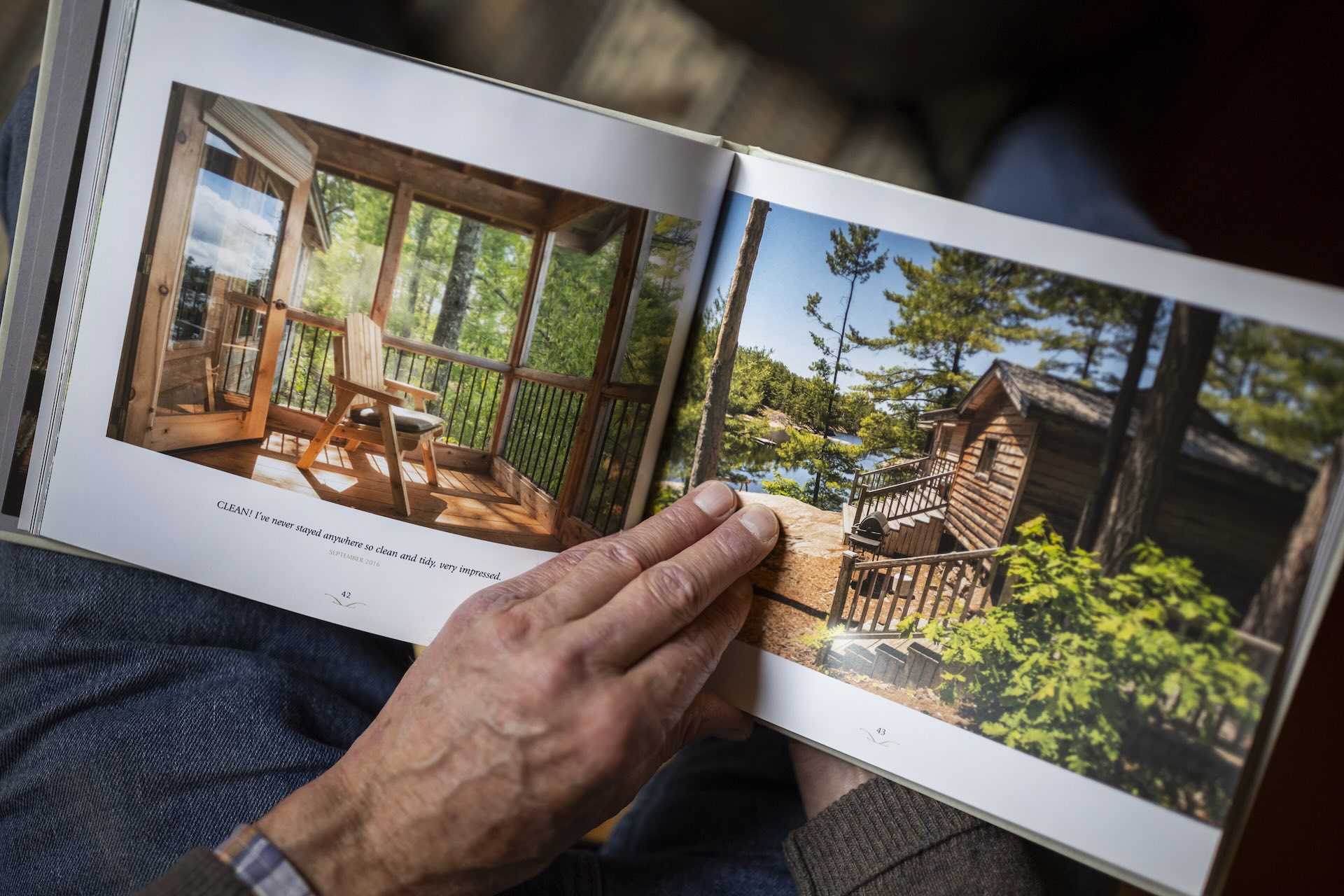 Strachan, like many small business owners preparing to retire, says he could have sold to a large investor but was concerned about what would happen. Photo: Nick Iwanyshyn for The Logic
 Andrea and Ken, owners of Pulse Metalworks, at their factory in Edmonton, Alta. on Nov. 4, 2024. Photo: Amber Bracken for The Logic
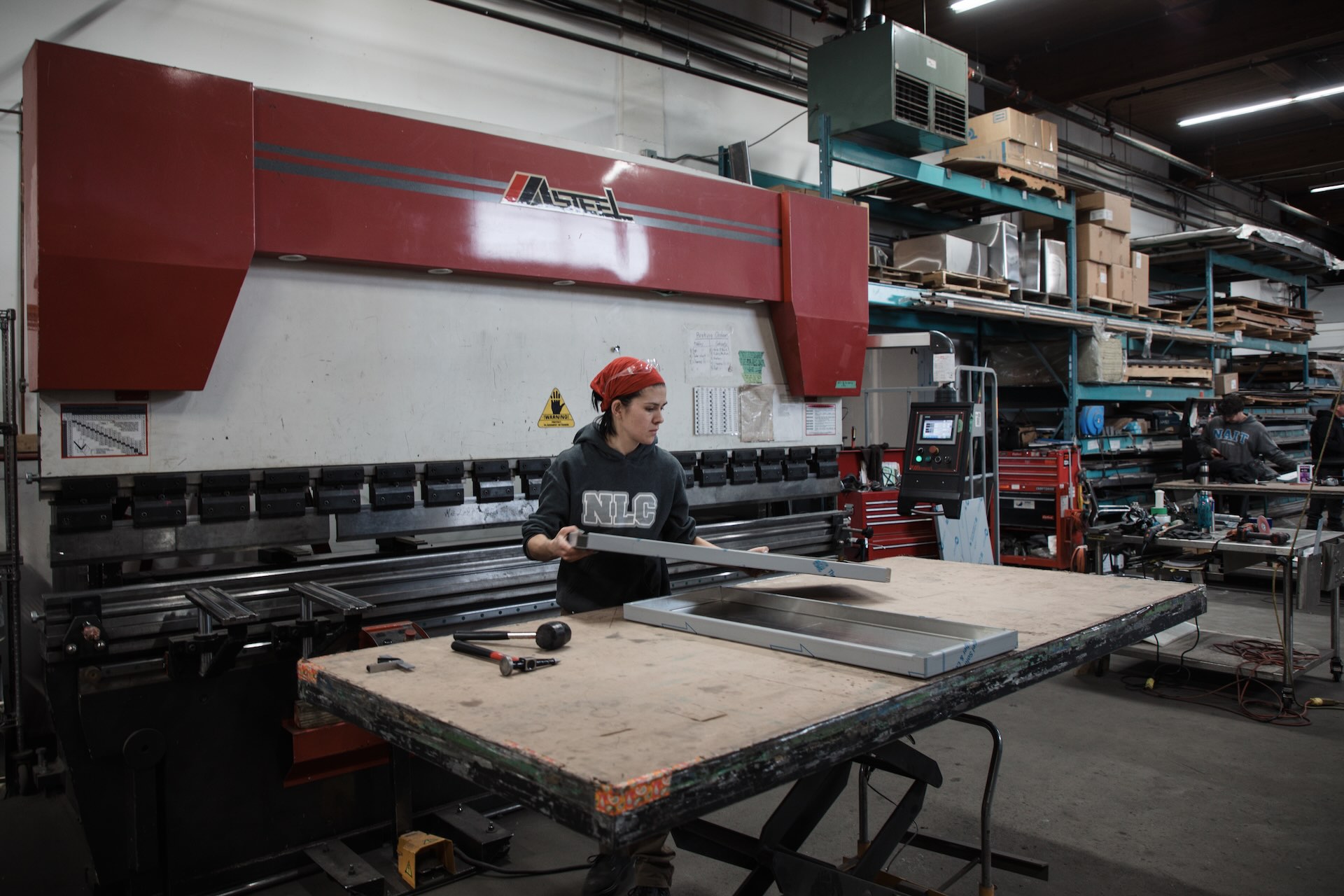 Investors are increasingly looking to trades-based companies as sources of reliable revenue. Photo: Amber Bracken for The Logic
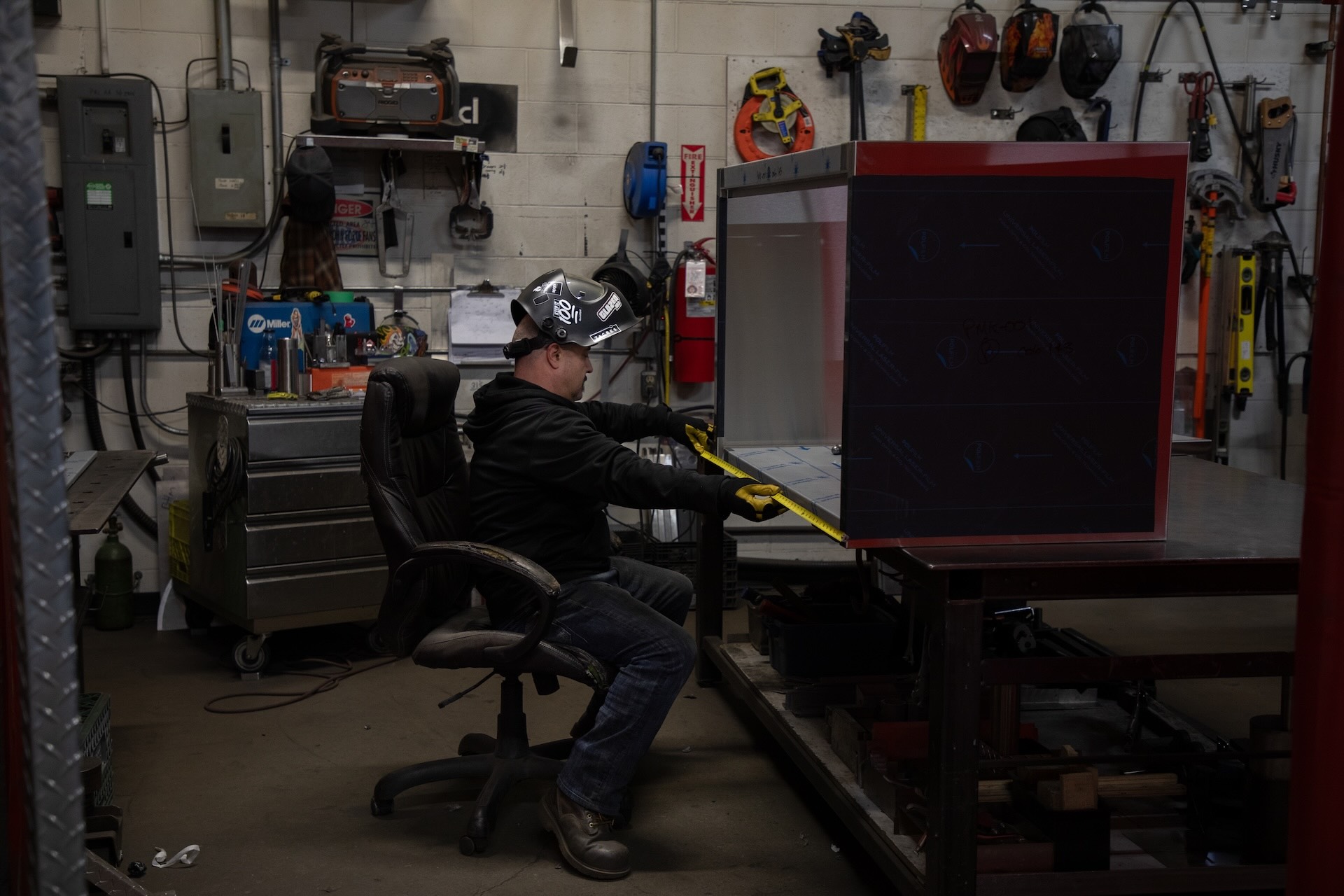 Workers machine and assemble stainless steel cabinets at Pulse Metalworks in Edmonton, Alta. on Nov. 4, 2024. Photo: Amber Bracken for The Logic

News
A succession tsunami is about to hit Canada hard
Over 70% of Canada’s 1.2 million small-business owners plan to retire in the next decade, but 91% don’t have a succession plan. That leaves $2 trillion of assets hanging in the balance.
Alex Strachan, owner of the Lodge at Pine Cove, photographed at his home in Alton, Ont. Strachan, who bought the French River property in 1999 and began turning it into a luxury wilderness resort, is gradually selling to longtime guests as he prepares to retire. Photo: Nick Iwanyshyn for The Logic
Alex Strachan’s partner Nicola likes to joke about his mistress. Her name, she says, is Pine Cove, a luxury cottage retreat tucked into the French River shoreline, south of Sudbury, Ont. After 25 blissful years together, Strachan admits it’s hard to let her go.
The affair started when Strachan, who is now 72, quit his career as a Toronto real estate executive. At 45 years old, he was offered the top job at Royal LePage, but turned it down to pursue a slower lifestyle. He found exactly that in a decrepit fishing camp on the Canadian Shield, which he rehabilitated over many years into what became the Lodge at Pine Cove. “It’s like living inside a novel or a feature film,” he says, “a good one.”
Talking Points
- The vast majority of Canada’s small and medium-sized business owners plan to retire in the next decade. Most of them don’t have a succession plan
- Some view the incoming retirement wave as a chance for new owners to invest in legacy businesses and boost their productivity
Strachan loves the work—fraternizing with guests and maintaining the 13.5-acre property with its 20 cottages and central lodge on 3,000 feet of shoreline. “I’ll probably drop doing this,” he says when we speak on the phone in late October, his old jeans and rubber boots on, ready to wade into the water and haul in docks for the winter.
Knowing he won’t be around forever, though, Strachan has put into motion a succession plan to make sure Pine Cove endures long after he’s gone.
The plan involves selling stakes in the business to loyal guests who share his love for the place. This approach lets him oversee the ownership change and ensure the lodge doesn’t stray too far from its roots. He can stay involved in the operations as much or little as he wants, and sell more shares when he needs the cash. “I’m pulling the rope up very, very slowly,” he says. “It’s about as natural a succession plan as you could create.”
Strachan stands out in a sea of aging entrepreneurs, most of whom have no plans for how to exit their businesses. According to a report from the Canadian Federation of Independent Businesses (CFIB), about 76 per cent of Canada’s small-business owners—of which there are about 1.2 million, according to Statistics Canada—hope to retire in the next decade, but 91 per cent of owners don’t have a formal succession plan and 46 per cent have no plans whatsoever. That leaves up to $2 trillion in business assets hanging in the balance, the organization found.
“There’s a lot at stake,” says Marvin Cruz, director of research at the CFIB. The looming “succession tsunami,” as his organization calls it, is the product of Canada’s aging population colliding with years of difficult business conditions. The pandemic and ensuing supply chain challenges, inflation and high interest rates triggered a spike in insolvencies, and dampened would-be entrepreneurs’ interest in taking over the glut of businesses coming to market, says Cruz.
Related Articles


“For a lot of these people, the reality is they’re going to close the door if the next generation is not able to take it on,” says Jim Friesen, founder of Portage M&A, which advises clients buying and selling SMEs. It’s not just a threat to business owners’ comfortable retirements. With Canada generating about half of its GDP from small and medium-sized enterprises, according to Statistics Canada, a mass shuttering could be catastrophic for the country’s economic productivity, already floundering around crisis-level lows.
Ken and Andrea Manning first took a shot at selling their stainless steel manufacturing and installation business in 2021. Pulse Metalworks, based in Edmonton, had lost a substantial amount of business during the pandemic, with restaurants—one of the main sectors it serves—mandated to close.
The married couple and business partners worked hard to recoup their losses. “It took a lot out of us. Me especially,” says Ken, 52, adding that his health suffered after contracting COVID-19 in November 2021. After nearly two decades in business, and an exceptionally hard year, the Mannings needed a break.
But buyers were skeptical. They didn’t like that revenue was down, even if it was pandemic-induced, or that the business was so reliant on its hands-on owners to operate. With no attractive offers, the Mannings stayed the course.
Three years later, the 12-person business is for sale again. Ken—who handles the company’s technical operations and production, while Andrea manages the people and books—has taken a step back, relinquishing responsibilities to other employees. Meanwhile, the company’s last fiscal year was its best yet, generating $1.6 million in revenue, they said. With the business on solid footing, they expect to close a sale this time around.
“Who wouldn’t be interested?” says Andrea. “It’s such a golden goose. It’s running, it’s making money. With a little bit of energy and forward thinking, someone could either keep it going or have it expand exponentially.”
Buying a metal manufacturing company may not be the romanticized entrepreneurial idyll many dream of, but such businesses can be a solid investment. Now, savvy investors are increasingly looking to trades-based companies as sources of reliable revenue, says Toronto-based investor and entrepreneur Amin Lalani.
Lalani’s fund, Maple Tree Capital, acquires and co-invests in SMEs whose owners are retiring or exiting their company for other reasons. After a sale, the acquirer installs a new CEO to run the legacy business. The investment strategy—known as a search fund or entrepreneurship through acquisition—has long been popular in the U.S., where it’s taught at Ivy League business schools as an alternative to starting a company from scratch. It’s now catching on in Canada, with more search funds cropping up, effectively serving as “a walking succession plan,” Lalani says.
“There’s a lot of hype on the zero to one—starting something, getting venture funding going, scaling really fast,” says Lalani. “But there’s a whole host of other folks like myself who can take advantage of the fact that someone has already done that zero to one journey.”
Lalani has invested in about a dozen businesses this way, including software companies, as well as businesses in more “real world” sectors like logistics and smart-building construction. He sees the vast pool of retiring business owners as a productivity opportunity rather than a threat.
Pierre Cléroux, chief economist at the Business Development Bank of Canada (BDC), agrees. Owners nearing retirement often stop investing in their businesses, Cléroux says. That can be a drag on productivity and erode a company’s value—BDC estimates that about 25 per cent of SMEs will shutter this way, says Cléroux. When new owners take over an SME, they’re more likely to spend money to improve and grow the business, he says. That could mean a new generation of business owners would trigger an economic boon in Canada’s small business sector.
Friesen of Portage M&A says more private equity firms, many of them from the U.S., are catching on to the opportunity in Canada. The strategy involves an investment firm buying a large business in a particular sector and picking up several smaller businesses to bolt onto the “mothership,” he says, building a chain of businesses under one brand.
The model “professionalizes” the smaller businesses, creating a better experience for customers, says Friesen. Dental offices and veterinary clinics are common targets of this roll-up strategy. But investors are increasingly pursuing trade sectors, like plumbing and roofing, says Friesen. Even lobster processing has caught the attention of private equity. “So long as the business looks sustainable and it’s a service people need, they’re willing to do it,” he says.
It’s not always easy, however, to connect the supply of available SMEs with the investor demand to buy them. Original owners tend to be attached to the business they built and may be reluctant to sell to a big buyer that might change its character. “As a business owner, I think your identity is tied up in the business,” says Friesen.
Strachan, the French River innkeeper, says he could have sold his business to a large investor that owned several other lodges, but, simply put, he didn’t want to. “They wanted to bring in fast boats and American fishermen, and it’s just so not this place.” Similarly, Andrea and Ken Manning want to sell their metal manufacturing business to a buyer who will keep the brand and their employees.
Even for owners at peace with fully relinquishing control, they may not know where to look for a buyer or how to prepare their business for an exit. Friesen says the majority of small businesses have messy accounting, which can make it expensive and time consuming to evaluate how much their company is worth. That, he says, can scare off buyers and sales brokers.
Many of them are simply too occupied with running the business to strategize about exits. Still, everyone who spoke to The Logic for this story stressed the importance of starting a succession plan early. The process can take years, says Cruz, and rushing it can jeopardize the sale price of the business—and the entrepreneur’s retirement. “It can be daunting to try to do these things in a very short time period,” Cruz says.
That advice hits home for the Mannings, as they near their aspirational retirement date of December 2024. In the eight months since they last put Pulse Metalworks on the market, there’s been some buyer interest, they say. But it doesn’t look like it’ll sell by the end of this year. “We should have succession planned sooner,” says Andrea. “With the right foresight and coaching, maybe it would be easier to sell.”
If they don’t have a buyer by the time their lease ends in 2029, they’ll sell the business for parts—a last-case scenario that the couple wants to avoid. For now, says Andrea, “we’ll just keep going, running it ourselves.”



Loading...
Thanks for sharing!
You have shared 5 articles this month and reached the maximum amount of shares available.
CloseThis account has reached its share limit.
If you would like to purchase a sharing license please contact The Logic support at [email protected].
CloseGift the full article!
You have gifted 0 article(s) this month and have 5 remaining.
Recipients will be able to read the full text of the article after submitting their email address. They will not have access to other articles or subscriber benefits.
Photo: Nick Iwanyshyn for The Logic
Strachan, like many small business owners preparing to retire, says he could have sold to a large investor but was concerned about what would happen.
Andrea and Ken, owners of Pulse Metalworks, at their factory in Edmonton, Alta. on Nov. 4, 2024.
Investors are increasingly looking to trades-based companies as sources of reliable revenue.
Workers machine and assemble stainless steel cabinets at Pulse Metalworks in Edmonton, Alta. on Nov. 4, 2024.
Most Popular This Week




In-depth, agenda-setting reporting
Great journalism delivered straight to your inbox.
Commentary
Carmichael: Being boxed in will help Canada focus on what matters
Briefing
Rio Tinto gets nearly $165M in additional federal funds for Quebec aluminum
U.S. to lift tariffs on some Canadian products crucial to Maine: Collins
Carney warns of tech dependence after Starlink disruptions in Ukraine
Best business newsletter in Canada
Get up to speed in minutes with insights and analysis on the most important stories of the day, every weekday.
Exclusive events
See the bigger picture with reporters and industry experts in subscriber-exclusive events.
Membership in The Logic Council
Membership provides access to our popular Slack channel, participation in subscriber surveys and invitations to exclusive events with our journalists and special guests.






