VANCOUVER — When Swish Goswami started Trufan about three years ago, he scored an introduction from one of his company’s investors to NBA player Kyle Kuzma. The then-Los Angeles Laker became a brand ambassador for the social media audience-analytics platform, and connected the company with more influencers. Goswami realized athletes could help drive business. But meeting Kuzma had been “very lucky”—and finding other athletes or celebrities to represent or invest in the company was challenging.
Skip to content
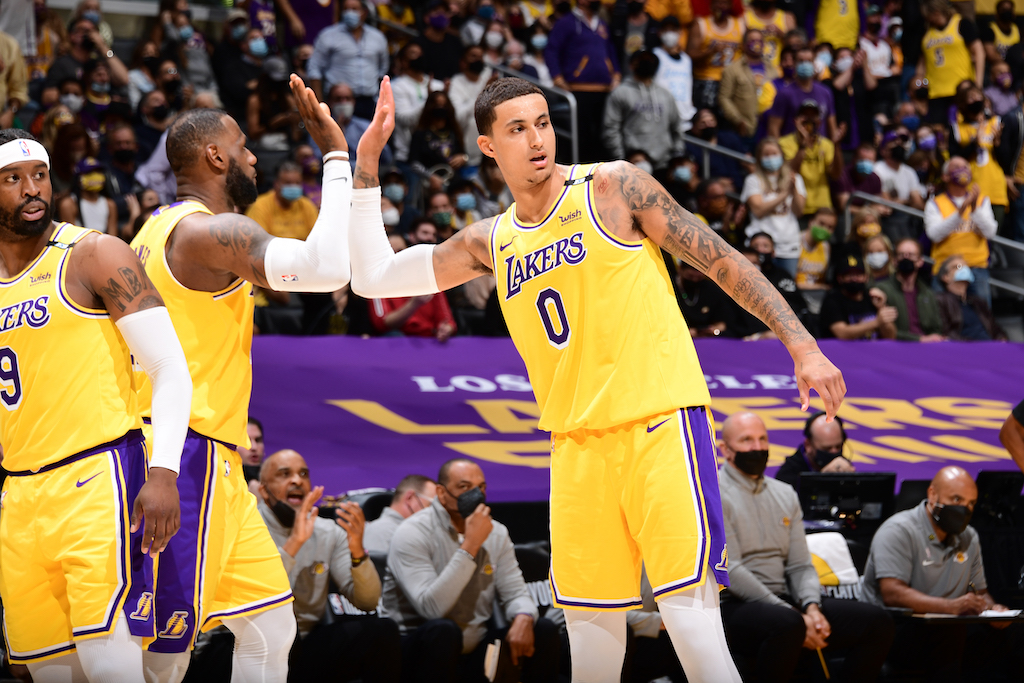
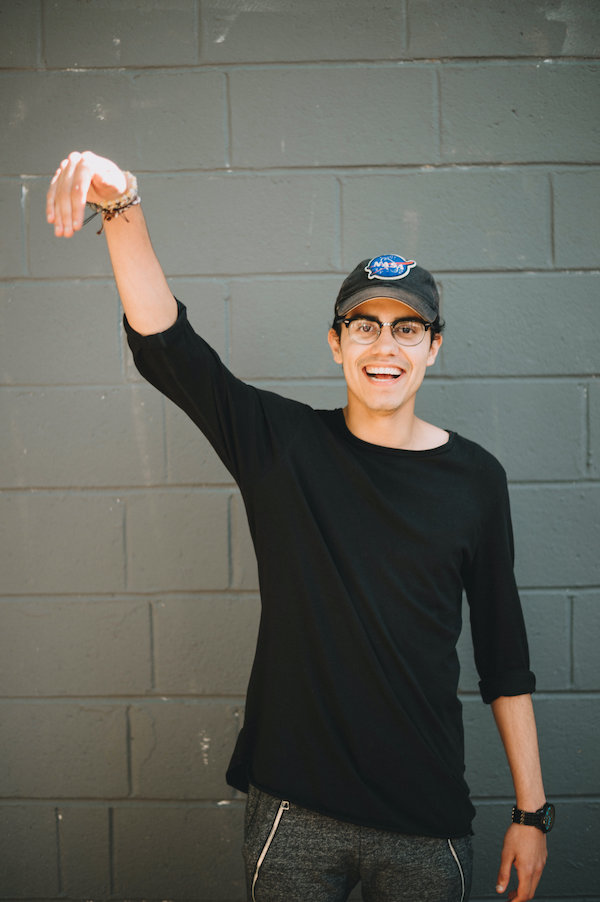 Photo: Swish Goswami | Handout
 Athlete Tech Group founder and CEO Randy Osei Photo: RandyRozaay | Instagram
 Thaddeus Young, then of the Chicago Bulls, in Detroit in May 2021. Photo: Copyright 2021 NBA (Photo by Chris Schwegler/NBA via Getty Images)

The Big Read
How the stars align: The brokers connecting athlete investors to Canadian startups
Kyle Kuzma, then of the Los Angeles Lakers, high-fives teammate LeBron James in May 2021 in Los Angeles. Photo: Copyright 2021 NBA (Photo by Adam Pantozzi/NBA via Getty Images)
VANCOUVER — When Swish Goswami started Trufan about three years ago, he scored an introduction from one of his company’s investors to NBA player Kyle Kuzma. The then-Los Angeles Laker became a brand ambassador for the social media audience-analytics platform, and connected the company with more influencers. Goswami realized athletes could help drive business. But meeting Kuzma had been “very lucky”—and finding other athletes or celebrities to represent or invest in the company was challenging.
In August 2019, Goswami spoke in Toronto at the Athlete Tech Summit. It was the brainchild of Randy Osei, who wanted to help connect athletes with Canadian entrepreneurs. “It was cool because I looked at my front row of the audience and Langston Galloway from the Detroit Pistons was sitting in the front row, taking notes with his financial advisor,” Goswami recalled.
Talking Point
Celebrities and athletes, with their deep pockets and social clout, and startups requiring funding and promotion can be a perfect match. Yet, the two worlds don’t always intersect, making introductions difficult. Some well-connected people sensed an opportunity and are building businesses that link up entrepreneurs with these potential investors.
Osei, founder and CEO of the Athlete Tech Group (ATG), seized an opportunity after noticing emerging interest by entrepreneurs and celebrities to work together. Stars like Ashton Kutcher and Shaquille O’Neal paved the way with early investments in Uber and Google, respectively. Through these unexpected partnerships, founders gained access to deep-pocketed investors with social clout, while celebrities and athletes found new ways to make money that didn’t rely on continuing their Hollywood or pro-sports careers. But their worlds didn’t necessarily collide, and Osei and other connectors like him have positioned themselves—and their influential rolodexes—as the missing link between the two groups.
Osei’s business venture started with an injury while playing basketball at Durham College. Sidelined, he found a way to stay close to the game by volunteering. He soon scored a big break when Anthony Bennett—the first Canadian selected first overall in the 2013 NBA Draft—asked Osei to be his brand and business manager.
That stint offered him the opportunity to hobnob with other professional athletes. “We go way back,” said Thaddeus Young, who was recently traded from the Chicago Bulls to the San Antonio Spurs, recalling how they’d chat at games. The pair continued their relationship as Osei shifted from management and into connecting athletes with the tech industry.
Two events collided into an aha moment for Osei. In 2018, Waterloo Region hired him for a digital marketing campaign. He travelled to the Ontario tech hub and wondered how many athletes knew about these Canada-based opportunities. Shortly afterward, Golden State Warriors superstar Steph Curry invested in Toronto-based SnapTravel’s US$21.2-million Series A. “I said, ‘I want to see more of this happen,’” Osei remembered.
For athletes, interest in investing in startups boils down to finding ways to make money beyond their athletic prowess. “I can’t play basketball for the rest of my life,” said Young, who noted how his peers have shown interest in startup investing, but lacked the understanding of how to go about it.
Young has taken it to another level, and made learning about business his second job. So much so that he attended an online Master of Business Administration program, finishing schoolwork on flights as his team travelled and earning his degree two years ago. He founded Reform Ventures, a private investment fund that counts Rent the Runway, Pinterest, Dapper Labs and SpaceX among its portfolio companies. He credits Osei with helping connect Reform Ventures to Canadian companies, which have seen a rise in celebrity interest recently. The Dapper Labs fundraising round Young participated in also included investments from several other basketball players, Will Smith and Kutcher.
Meanwhile, Wealthsimple announced a $750-million round in May that included funds from Drake, Ryan Reynolds and Canadian athletes such as Kelly Olynyk and Patrick Marleau, among other big names.
It helps that Young, like many other athletes and celebrities, earns millions of dollars a year. But for entrepreneurs, athletes’ financial capital is secondary to their social capital. These types of investors often become brand ambassadors. Having “somebody that can evangelize your technology” to millions of followers is part of the draw, said Quin Sandler, founder and CEO of Plantiga, a smart-shoe-insole company that added several athlete investors by working with Osei.
Plantiga’s athlete investors will join its beta program, in which the company pairs individuals with coaches and other experts to achieve their athletic goals. The company hopes to launch that for consumers next year. The beta-program athletes will likely share some of their experiences to fans on social media. “Think of what that does for our brand,” said Sandler.
Athletes’ real-life social connections may help, too. Plantiga sells its products to dozens of professional sports teams, Sandler said. “I bet we’ll sell them to more of them by going with this strategy,” he said, explaining that the athlete investors recommend that their teams buy the product, as well as other organizations they’re connected with.
Celebrities beyond just sports pros have a similar effect. “In the consumer space, startups really struggle to get visibility and credibility,” said Gil Eyal, partner at Starfund, a U.S.-based firm that provides startups with celebrity funding and consulting. “If you have a product that is really unique and amazing, then people don’t really believe that it’s going to work.” But the right influencer or celebrity can attract the right attention.
Starfund, founded about a year ago, finds companies that may not be able to secure a traditional fundraise, he said. It invests and leads syndicates to raise funds for these businesses, and tries to bring celebrity investors on board or a major influencer strategy “that can help them gain significant traction very quickly.” It has completed six deals this year, including one with Bubble, a skincare company whose website now features a smattering of young influencers.
The buy-in from both parties—the startups and celebrities—reflect this mutually beneficial relationship. Osei estimated that 22 athletes have participated in deals from meetings arranged by ATG so far, adding that one deal could have multiple athletes involved.
It took some time for him to finesse bringing the parties together. Osei’s first attempt came in August 2019. Sixteen athletes—mostly from the NBA, but also some Olympians—and 25 startups, including Goswami’s Trufan, attended his two-day conference in Toronto. Although no athletes entered into deals there, their interest was still palpable. “For some of the athletes, this was their introduction into technology,” Osei said. The team learned that athletes need more guidance on how venture capital works. That became the thesis for building out ATG.
ATG, founded in July 2020, focuses on education. “Athletes are very busy individuals” and require a curated experience, Osei said. Initially, he hosted dinners—inviting athletes and investors—but moved the meetings online during COVID-19. He helps prepare founders beforehand in the art of pitching to people outside the typical venture-capital realm. “It’s just understanding the athlete mindset,” he said. The message needs to be tailored with a much shorter pitch—about 10 to 15 minutes—and no jargon.
Sandler met Osei when Plantiga was in the midst of a fundraising effort. Before Sandler virtually pitched to athletes, Osei’s company helped coach him “to bring it down to terms in their world,” he said. Sandler explained how his company’s product helps with injuries. The data the soles can glean can help prevent injured athletes from training too hard, too soon, and protect their livelihood, he said. “I think a bunch of them were quite eager to want to actually join the program,” said Sandler. Six sports stars—Young, NFL wide receiver Will Fuller, NHL centre Tyler Ennis, and professional basketball players Matt Mooney, C.J. Watson and Jonathan Gibson—ended up participating in a US$1.2-million round, which closed earlier this year.
The group also prepared Goswami, who is now an advisor to ATG and in whose company Osei holds the same role. They helped the naturally fast talker slow down and remove jargon, like monthly active users, from his remarks and also refine presentation decks. After the session, they followed up with the athletes. Trufan gained three investors—Young, Oklahoma City Thunder centre Derrick Favors and Denver Nuggets forward Aaron Gordon, who holds an equity stake for advising services—from its work with ATG.
Both founders say they plan to continue working with Osei’s group, which is already planning the next summit, scheduled for Sept. 10 and 11. Osei’s also working on a way to turn ATG into a moneymaker. It is raising money for a platform meant to create more opportunities and education for athletes, said Osei, who declined to provide further details.
Young, who is a more seasoned investor than most athletes, credits ATG with introducing him and his team to investment opportunities in Canada. But he recommends the group to his peers especially because of its educational focus. “They’re not only putting deals in front of you and showing you the way, but they’re educating you along the way.”



Loading...
Thanks for sharing!
You have shared 5 articles this month and reached the maximum amount of shares available.
CloseThis account has reached its share limit.
If you would like to purchase a sharing license please contact The Logic support at [email protected].
CloseGift the full article!
You have gifted 0 article(s) this month and have 5 remaining.
Recipients will be able to read the full text of the article after submitting their email address. They will not have access to other articles or subscriber benefits.
Photo: Copyright 2021 NBA (Photo by Adam Pantozzi/NBA via Getty Images)
Athlete Tech Group founder and CEO Randy Osei
Thaddeus Young, then of the Chicago Bulls, in Detroit in May 2021.
Most Popular This Week



In-depth, agenda-setting reporting
Great journalism delivered straight to your inbox.
News
A tech firm born from post-Brexit trade chaos sets its sights on Canada
Briefing
Dozens of Canadian researchers join chorus of scientists calling for a global AI oversight
TC Energy strikes deal with Indigenous groups for ownership stake in Coastal GasLink pipeline
Canada’s Tailscale taps Google Moonshot alum to lead sovereign AI push
Best business newsletter in Canada
Get up to speed in minutes with insights and analysis on the most important stories of the day, every weekday.
Exclusive events
See the bigger picture with reporters and industry experts in subscriber-exclusive events.
Membership in The Logic Council
Membership provides access to our popular Slack channel, participation in subscriber surveys and invitations to exclusive events with our journalists and special guests.