Emma was raised in an “eat the rich” family on the east coast of the U.S. Her parents were artists and money was tight. From a young age Emma, in her mid-40s, was “attuned to thinking about questions of injustice and equity,” and has spent her career in the non-profit sector. Becoming a multi-millionaire wasn’t in the plan, until it happened.
Skip to content
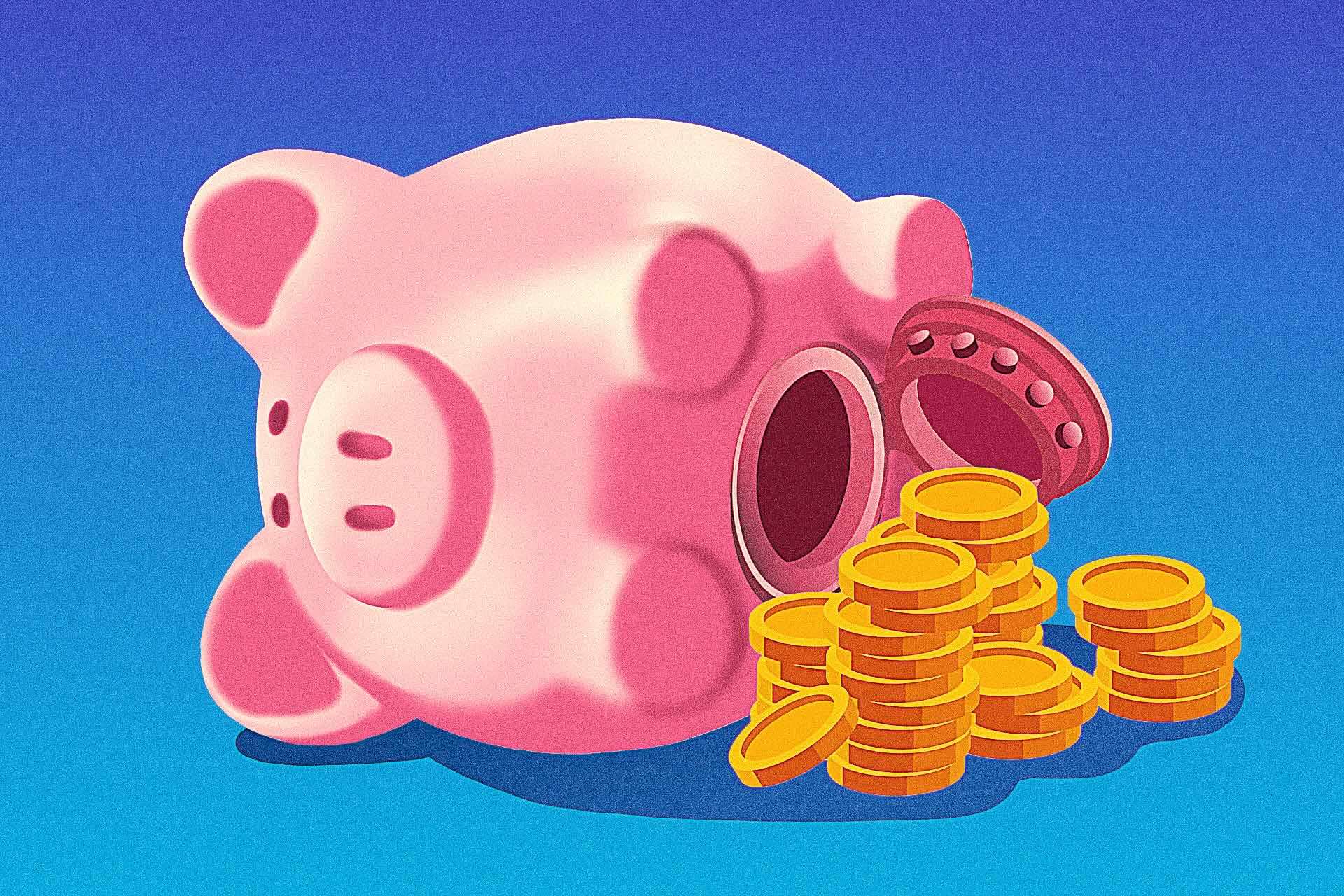
 High-profile philanthropists like Bill Gates have given away billions of dollars. Proponents of redistributive practices take a different approach by attacking the so-called “wealth defence industry” Photo: AP Photo/Andres Kudacki

The Big Read
These Canadian millionaires want to give away their fortunes
Imagine suddenly having more money than you know what to do with. Now imagine giving it all away. Welcome to the world of disinheritance.
Photo: Paul Kim for The Logic
Emma was raised in an “eat the rich” family on the east coast of the U.S. Her parents were artists and money was tight. From a young age Emma, in her mid-40s, was “attuned to thinking about questions of injustice and equity,” and has spent her career in the non-profit sector. Becoming a multi-millionaire wasn’t in the plan, until it happened.
Between 2020 and 2023, after growing business success, Emma’s partner liquidated around $100 million in stock options in the tech company he co-founded. The couple, who now live near Vancouver with their two children, suddenly found themselves trying to work out how to live with more money than they would ever need.
Talking Points
- Many Canadians will experience sudden, unexpected wealth in the coming years. It’s projected that Canadian baby boomers will pass on $1 trillion to their children between 2023 and 2026.
- Some people are taking a radical approach to managing their fortunes by effectively disinheriting themselves, and future generations, from vast generational wealth.
Instead of reducing their tax bill and growing their wealth, Emma and her husband plan to give 95% away to social and environmental causes by the end of their lives. They’re not in total agreement on the plan—Emma, for example, favours a faster, more comprehensive spend-down—but they are united against the traditional philanthropic model of establishing a fund, donating the interest to charities, securing the resulting tax breaks, and maintaining the bulk or ‘corpus’.
When Emma consulted financial advisers about redistributing most of her wealth, she encountered confusion. “The assumption is that your goal is to build unassailable generational wealth and protect it,” she says. “It’s such a strong message that it almost doesn’t occur to you that there might be other ways.”
For Emma, becoming a multimillionaire triggered an urge to get rid of the money, and “to isolate myself, keep secrets, not tell people about it.” She started feeling inauthentic in her relationships. She grew wary of a vicious cycle of independence taking root, through which it might become easier, but more isolating, to solve problems with money instead of relationships.
Emma acknowledges the absurdity of feeling afflicted by financial fortune, and doesn’t seek sympathy. Rather, she wants to highlight how “secrecy is actually part of how we uphold the structures” of inequality. Not discussing our roles in inequity, she says, is “destructive.”
Related Articles

Many more Canadians will experience sudden, unexpected wealth in the coming years. It’s projected that Canadian baby boomers will pass on $1 trillion to their children between 2023 and 2026—the largest wealth transfer in the country’s history. Meanwhile, according to Statistics Canada, the wealthiest 20 per cent of Canadian households account for 64.7 per cent of national wealth, whereas the 40 per cent least wealthy comprise just 3.3 per cent. This statistic also likely underestimates inequality by missing billionaire wealth.
This puts Canada at an inflection point. Will this unprecedented wealth transfer further entrench inequality? Or might it prove redistributive?
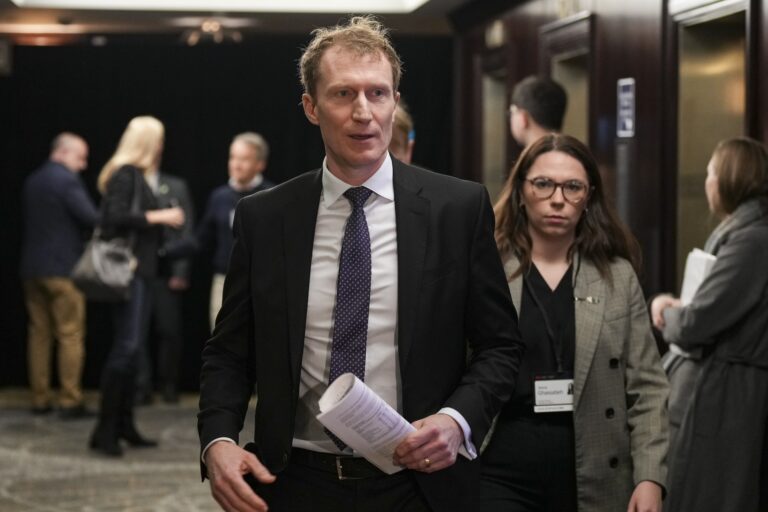
If Emma’s experience with wealth advisers suggests the former, so does current tax policy. Canada is the only G7 country without an inheritance tax. Neither does it have a wealth tax, despite 88 per cent of Canadians—including thumping cross-party majorities—supporting one, according to a 2021 Abacus poll. Liberal Party Leader Mark Carney recently reversed a proposed increase in the capital gains inclusion rate, which already excludes profit on primary residences.
All these factors combine to make Canada uniquely good, or bad, at sustaining generational wealth.
Lindsay Wiginton, who is now in her mid-30s, grew up in a small town in southeastern Ontario. She was always aware of having more money than her friends. The feeling persisted through school and university—a civil engineering undergraduate degree at Queen’s, and an urban planning master’s at McGill—where her parents paid for her tuition and accommodation.
Imagining a “small violin playing,” Wiginton, who now works in Toronto as a climate-focused managing consultant, describes a “building feeling of guilt and loneliness, like I had this dirty secret: that I had more money than other people. There was shame attached to that, and just not really wanting to look at it head on.”
After graduating, Wiginton wanted to support social movements free of shame and secrecy. So in 2019, while job switching from the charitable sector into urban planning for the City of Toronto, she unearthed a PDF a friend had emailed in 2015, about an organization called Resource Movement. It was, in some ways, what she was looking for—an invitation to look her wealth in the eye and explore a radical approach to effectively disinheriting herself, and future generations, from vast generational wealth.
Founded in 2015 in Toronto and Montreal, Resource Movement is an education and advocacy organization that helps wealthy people redistribute their money. Through meetups, workshops, policy campaigns and a course (called ‘Praxis’) teaching participants how to understand systemic inequality, it helps them create personal redistribution plans. Resource Movement currently has around 150 active members across chapters in Vancouver, Toronto and Montreal.
Resource Movement approaches redistribution through principles rather than a tight formula. It challenges wealthy people to determine how much they truly need, and to give away as much as possible beyond that; to give to social movements pursuing political and systemic change—not just charities; to build inter-class solidarity and pursue policy change as well as just giving money; and to cede spending control to those who know issues best—including through a partnership with Groundswell, a community trust which redistributes wealth to social movements alongside grassroots organizers.
None of this is new. High-profile philanthropists like Bill Gates, Melinda French Gates and Patagonia founder Yvon Chouinard have given away billions in recent years. Wiginton also cites the religious practice of tithing (typically giving 10 per cent of your income to the church), and the “lots of people who, through their culture or religion today, are moving that kind of money systematically.”
Resource Movement’s redistributive philosophy is a more contemporary response to economic inequality. It forms part of a loose, emergent network of organizations and practitioners advocating for redistributive practices that go beyond conventional philanthropy in attacking the so-called “wealth defence industry.” Resource Movement grew out of Resource Generation, a similar U.S.-based organisation. A kindred organisation, Resource Justice, launched in the U.K. in 2018. Elsewhere, impact investors focused on systems change, like San Francisco-based Adasina, are becoming more popular, as are redistributive wealth coaches. And funders are increasingly advocating for models, like restorative philanthropy in Canada, that redistribute power as well as wealth.
Disillusioned with mainstream financial advisers, Emma discovered Resource Movement in March 2023 through independent research. She joined digital parent and tax-justice subgroups, then completed Praxis. Wiginton started attending talks and meetups in Toronto in February 2019, before supporting the wealth-tax campaign and fundraising efforts and also completing Praxis.
Both say the process helped them change how they think about, speak about and redistribute their wealth—even if they were initially wary of wealthy people gathering to discuss the challenges of being wealthy. Connecting with peers in a safe space helped process feelings and develop a language of analysis. Emma found reframing her relationship with wealth by creating a personal “money story”—an account of how she has related to money at different stages throughout her life— particularly helpful.
The process also helped Emma see through the veneer of traditional philanthropy—she cites Winners Take All by Anand Giridharadas, which explores how philanthropy ultimately serves the wealthy, as an important resource. Wiginton learned more about how systemic inequalities shape her wealth, and create psychological and social dynamics that could make it hard for her to support social movements as effectively as possible. Ultimately, both were able to work through their shame, and turn more fully to the practicalities of redistribution.
“I had this dirty secret: that I had more money than other people. There was shame attached to that.”
Having started with a traditional donor-advised fund, Emma and her partner have since increased and diversified their giving. To date they’ve redistributed $10 million to renewable technology, universal basic income trials, bridging loans for housing, grassroots groups, friends and local community (where “we feel like we have insight into what would actually benefit folks,” says Emma), and systems-change initiatives on voters’ rights, tax justice and press freedom. A guiding question, Emma says, is whether a project is “going to move the needle on how this problem got created in the first place.” They are also exploring how to pay more tax.
Wiginton says that Resource Movement was helpful for providing the space and support “to ask myself how much money I really need,” and using this to build a structured giving plan. She started with an annual donation of three per cent of her $65,000 salary, which felt scary, but now gives around 12 per cent of her current salary, which is over $100,000. This giving made it easier to recently give away $25,000 of a $40,000 inheritance. Some of her redistribution goes to charities, but much of it to activists and social movements “that are actually trying to change the structures that we’re living under,” she says. Wiginton is also in the process of reconsidering her strategy in tandem with her partner, who has also engaged with this approach to redistribution, and is from a similar socioeconomic bracket.
This ethic of redistribution isn’t only for people with enormous wealth or high incomes.
Steph, 37, lives in Toronto. They work at a community health centre, earning just over $50,000, and live alone in a rent-controlled apartment—which, given Toronto’s housing crisis, precludes moving. They also live with post-concussion vision syndrome, chronic musculoskeletal issues, anxiety and autism, limiting their earning potential.
But Steph lives in a “strange socioeconomic duality.” A few years ago they received payouts totalling $130,000 through injury and redundancy settlements. Fortuitous investments at the start of the pandemic—aided by the fact that their parents taught them about investing early in life—have seen their total savings grow to around $400,000 ($450,000, before the trade wars commenced).
Growing discomfort over the source of their investment gains, and the expectation that they will one day inherit wealth from their parents, moved them to develop a redistributive practice. Disillusioned with the donor worship and political constraints they had witnessed while working in fundraising, they turned to Resource Movement.
Steph started giving ad hoc in 2022, and gave $1,000 in 2023 and $3,500 in 2024—mostly to charities, but increasingly to social movements. They intend to give more to Black and Indigenous-led groups, and organizations like Groundswell that have “a million times more experience about what is necessary.”
Steph’s income and health problems do make redistribution daunting. But the most important thing is modelling the right values. “I have to lay my head down on the pillow and be like, ‘How am I moving through this world? How am I embodying my values?’” In practice this means thinking about what they need, giving the surplus beyond that, supporting systems-change work, funding groups without charitable status, and talking about wealth without seeking credit.
Like Emma and Wiginton, Steph grapples with fiendish questions. What agency should a donor have over where their money goes? What does a person need? What do they deserve? Where should redistribution end? None of them pretend to have the answers, or even expect to find them. But all feel that redistributing in this way at least asks the questions in a way that doesn’t simply safeguard wealth.
As Canada enters a period in which more than $1 trillion will be passed from parents to children, their struggles with sudden, often vast levels of wealth might become more commonplace. Wiginton feels more hopeful and socially connected through her redistribution. “It’s really powerful to feel like I had a material impact in some of the movements and changes that are happening,” she says. “That’s something that’s accessible, I think, to a lot more people than are doing it right now.”



Loading...
Thanks for sharing!
You have shared 5 articles this month and reached the maximum amount of shares available.
CloseThis account has reached its share limit.
If you would like to purchase a sharing license please contact The Logic support at [email protected].
CloseGift the full article!
You have gifted 0 article(s) this month and have 5 remaining.
Recipients will be able to read the full text of the article after submitting their email address. They will not have access to other articles or subscriber benefits.
Photo: Paul Kim for The Logic
High-profile philanthropists like Bill Gates have given away billions of dollars. Proponents of redistributive practices take a different approach by attacking the so-called “wealth defence industry”
Most Popular This Week




In-depth, agenda-setting reporting
Great journalism delivered straight to your inbox.
News
A tech firm born from post-Brexit trade chaos sets its sights on Canada
Briefing
Dozens of Canadian researchers join chorus of scientists calling for a global AI oversight
TC Energy strikes deal with Indigenous groups for ownership stake in Coastal GasLink pipeline
Canada’s Tailscale taps Google Moonshot alum to lead sovereign AI push
Best business newsletter in Canada
Get up to speed in minutes with insights and analysis on the most important stories of the day, every weekday.
Exclusive events
See the bigger picture with reporters and industry experts in subscriber-exclusive events.
Membership in The Logic Council
Membership provides access to our popular Slack channel, participation in subscriber surveys and invitations to exclusive events with our journalists and special guests.





