Skip to content

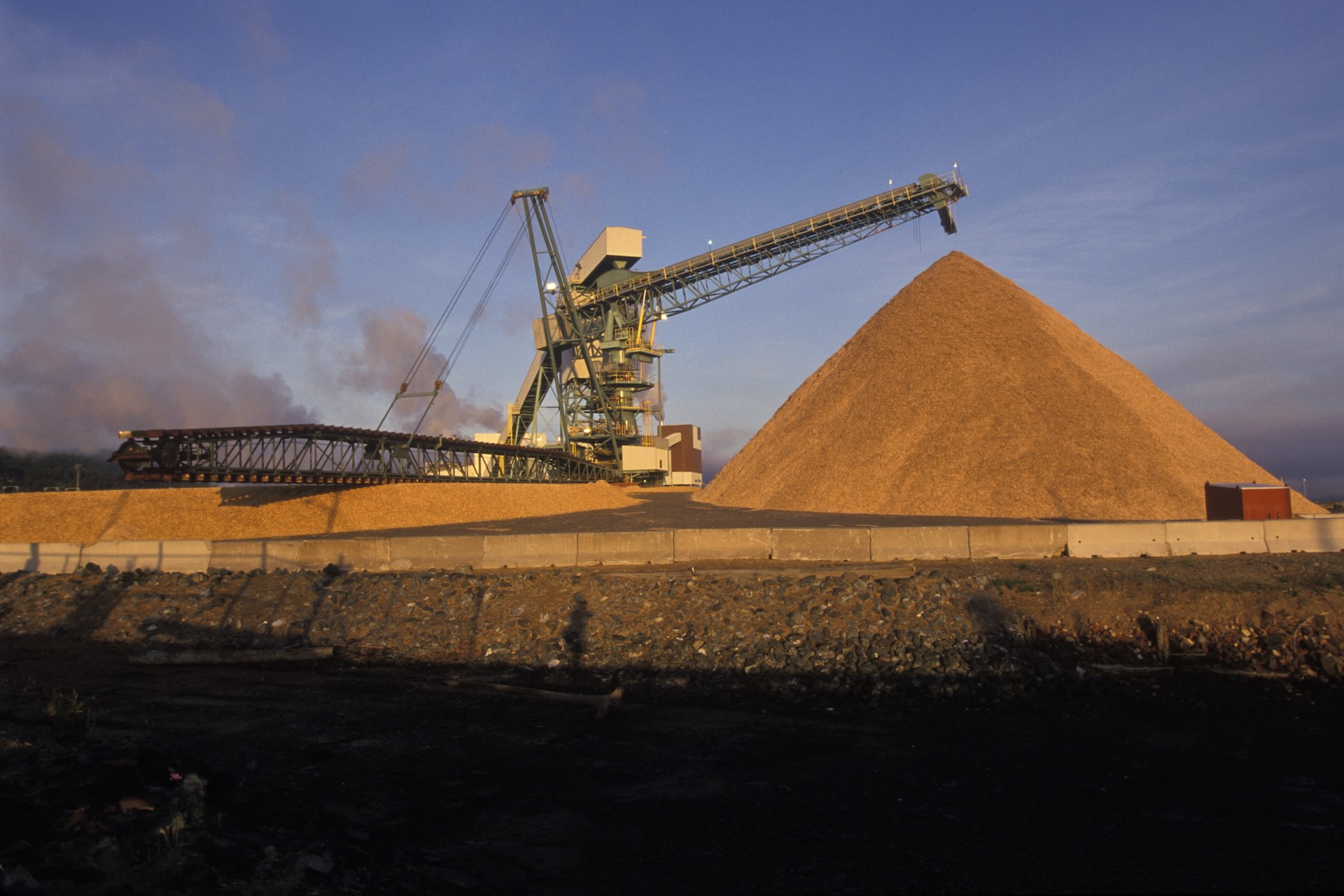 Dalhousie’s paper mill, photographed in August 1999. The mill opened in 1930 and created hundreds of jobs in the town. Photo: James Leynse/Corbis via Getty Images
 Anti-mine graffiti on a sign near the proposed site. Opposition to and support for the mine has played out both online and offline. Photo: Martin Patriquin for The Logic

The Big Read
The $300-million discovery that tore a small Canadian town apart
Dalhousie has been bruised by decades of booms and busts. A huge pozzolan mine, and the riches within, has sparked a wave of destruction and violence.
In Dalhousie, a town of about 3,200 people, differing views on a major new mining project have led to violence and destruction as keyboard warriors take the fight offline. Photo: Paul Kim for The Logic
Guy Rousseau was sitting in his home office in Rimouski, Que., when he made a $300-million discovery. It was December 2019 and Rousseau was in the third act of a career that had taken him from working in his father’s tombstone shop to spearheading the construction of one of the largest cement factories in North America a half-century later.
He spotted a four-hectare break in the trees in Dalhousie, a small town in neighbouring New Brunswick. With a gold-rush-like giddiness, he drove two and a half hours to take a rock sample and waited for the results. When they came back, Rousseau could scarcely believe his luck.
Talking Points
- The discovery of a massive deposit of pozzolan, a material that drastically reduces cement’s carbon footprint, has split the town of Dalhousie in two, with pro- and anti-pozzolan camps fighting over Facebook—and on the streets
- At issue is whether the $300-million mine will revitalize the former industrial town, or stifle a burgeoning economy based on ecotourism and small businesses
Dalhousie, it turned out, was sitting on 250 million tonnes of pozzolan, a silica-rich material that drastically cuts the carbon footprint of cement. Nearly every cement company in the world wants pozzolan, and Rousseau had just stumbled on a 70-year supply of the stuff by the side of a New Brunswick highway.
Rousseau received his first death threat in 2022, shortly after he announced a 30-year, $300-million project to mine, transform and ship pozzolan out of Dalhousie. Then someone made bogus loan requests in the U.S. under Rousseau’s company, EcoRock Dalhousie. His business partners also received threats. Rousseau took to staying in nearby Campbellton when visiting the town for fear of having his car vandalized. “It was well-organized,” Rousseau said of the campaign.
Then things got worse. Last fall, a weigh house and an excavator at EcoRock Dalhousie’s quarry were set on fire, and a communications tower was destroyed. Since then, tires have been slashed, vehicles vandalized and a mine opponent assaulted. Town council meetings have been cancelled. Online, pro- and anti-mine camps have flocked to dueling Facebook groups where once friendly neighbours wage keyboard warfare.
The looming spectre of the mine—a boon for some, an existential threat for others—has split Dalhousie in two, dividing families and ruining friendships. There are pro-mine social clubs and anti-mine doctors. There are three pro-mine and three anti-mine town councillors, with a tie-breaking pro-mine mayor. Local reverend Dave Cleveland calls pozzolan “the new black gold,” and has warned about “opportunists, speculators, exploiters, fraudsters and swindlers in the mineral sector” in his sermons. Even caffeine is political, with pro- and anti-mine types congregating at different coffee shops.
Related Articles

At issue is the history and future of Dalhousie, a once-prosperous industrial town of about 3,200 people that has long fallen onto hard times. With the pozzolan mine, many residents see a chance to return to the days when no one had to move to Alberta to chase a good job and a pension. Those against the project are convinced the mine will be an environmental disaster for Dalhousie, ruining its natural beauty and burgeoning ecotourism sector and replacing it with a giant, dust-spewing hole not 10 minutes from downtown.
Pozzolan is a modern-day wrinkle in the age-old conflict between jobs and the environment. When used in the cement curing process, pozzolan powder can reduce the amount of carbon produced by as much as 70 per cent. Demand for the stuff is projected to nearly triple over the next decade, putting it in league with cobalt, lithium and nickel as a key substance underpinning the world’s decarbonization drive. Rousseau may well have struck gold in New Brunswick, but getting it out of the ground is proving to be a messy process in every sense of the word.
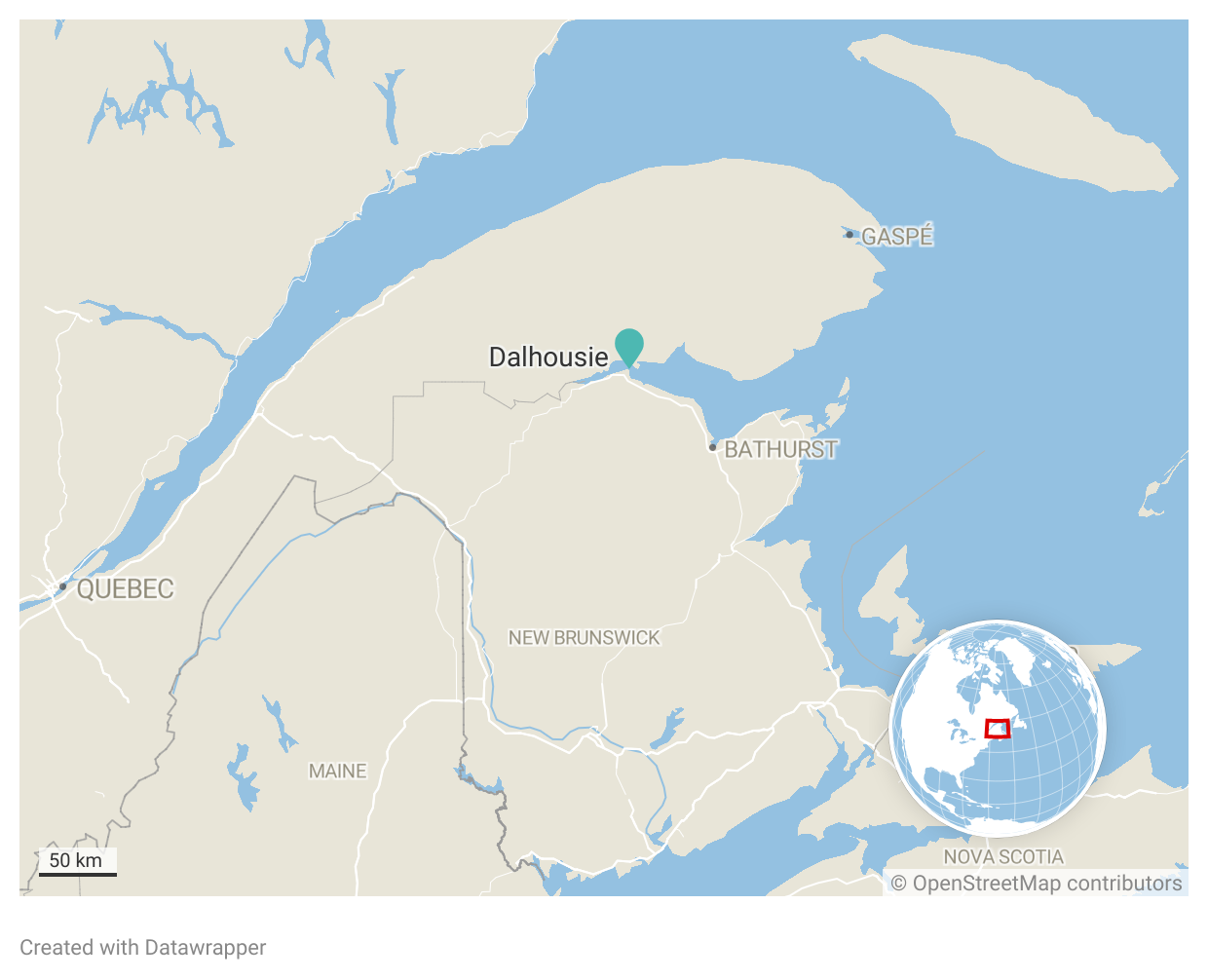
Dalhousie, now known as Heron Bay following a 2023 municipal amalgamation, sits on a spit of land jutting out into Chaleur Bay in the Gulf of St. Lawrence, across the river from Quebec. Located on the northernmost tip of New Brunswick, the town long thrived as a lumber and shipbuilding centre before the arrival of a pulp and paper mill in the late 1920s, providing hundreds of well-paying jobs. More jobs came with a chemical factory and thermal power plant in the 1960s. “The American Dream, right here in Canada,” quarry owner Jean-Philippe Levesque says of the days of plentiful employment and stability.
That dream is no longer. Dalhousie’s three principal employers shut down in short order beginning in 2008, culminating in over 500 lost jobs by 2012. The population has decreased nearly every year since. The downtown core is a collection of mostly empty storefronts where only the Tim Hortons seems to thrive. The local mall, which closed in 2022, now serves as a de facto storage-for-rent space for boats and RVs. Dalhousie’s riverfront, where the pulp and paper mill used to sit, is a 60-acre patch of weeds, as is the former thermal plant and chemical factory. Once the wellspring of Dalhousie’s prosperity, the properties now sit behind padlocked fences.
Pozzolan, Dalhousie’s would-be saviour, has been long in the making. The formation into which Rousseau wants to tap formed roughly 400 million years ago, when a mountain near what is today Campbellton erupted and lava flowed downhill to the east, where it cooled to become what is now Dalhousie Mountain. Pozzolan, which takes its name from the town of Pozzuoli in southern Italy, was first used to strengthen concrete in ancient Rome. It is one of the main reasons why the likes of the Pantheon and Colosseum remain upright nearly two millennia later.
Fast-forward two thousand years, and modern-day producers are belatedly waking up to the environmental benefits of pozzolan. Carbon emissions from concrete production are largely a byproduct of the roasting of limestone at temperatures of over 1,000 degrees Celsius to make clinker, the pebble-sized pellets that, when ground into a powder, becomes cement.
As much as half the clinker can be replaced by pozzolan, which by virtue of having been superheated hundreds of millions of years ago carries far less carbon baggage. According to Joseph Thomas, executive director of the Natural Pozzolan Association, partially replacing clinker with natural pozzolan would result in a yearly carbon reduction of at least 35 per cent, or about 38 million tonnes, in the U.S. alone. In this sense, Rousseau struck another bit of geographic good fortune in Dalhousie’s pozzolan, in that there are hardly any pozzolan manufacturers on the East Coast to service America’s voracious appetite for cement.
The proposed pozzolan mine would expand the existing four-hectare quarry to 80 hectares.
EcoRock Dalhousie plans on extracting and crushing two million tonnes of pozzolan and transporting the resulting powder to the port some three kilometres to the east via conveyor belt, where it would be loaded onto ships bound for ports along the eastern seaboard. The federal government has contributed a total of $3.1 million in loans to the project through the Atlantic Canada Opportunities Agency. Shawinigan-based financier Martin Roberge has invested $5 million into the project. EcoRock says the project will create 300 direct and indirect jobs. “Pozzolan is a win for everyone. It will bring hundreds of jobs to Dalhousie, and it means less carbon for the world as a whole,” says EcoRock general manager Francis Forlini.
Not everyone agrees. In March 2024, a Facebook group titled “No Thanks Pozzolan” was created as a clearing house for the town’s anti-mine contingent. People tend to be prolific on No Thanks, almost dedicated to the point of obsession. They worry about the quarry’s proximity to the area’s two high schools and the potential environmental consequences of mining pozzolan and dredging the Dalhousie port—doing so, opponents say, will churn up a century’s worth of poison from the town’s industrial past.
The end result is a voluminous, invective-laden dissection of the mine project. Heron Bay Mayor Normand Pelletier, who is in favour of the mine, is referred to as a “dictator” and “monster” bent on ramming through the pozzolan project for his own purposes. Pro-mine types are outsider mobs who “invade” the town. David Doucet, a frequent presence on No Thanks and brother of Danny, one of the group’s founders, writes short stories whose antagonist “King Normand” is a thin-skinned autocrat ruling over Dalhousie’s plebes. “Any stir is better than no stir, you know what I mean?” David said of No Thanks’s tone. “A little mass hysteria never hurt anybody.”
It is much the same on the “Yes For The Mine” Facebook group. There, the pozzolan mine is another hole in the ground from which prosperity will spring, and it is heralded with pictures of drilling rigs, Trump memes and Drill Baby Drill lingo. Danny and David Doucet are “lazy shit disturbers,” while the anti-mine contingent is an environmentalist mob from Quebec. “Rester chez vous tabernacle”—“stay the fuck home”—wrote Yes For The Mine member Paul Savoie last December.
Both sides insult the other’s intelligence. Both made near-identical Grinch jokes about the other over Christmas. And both take equal umbrage that they might be mobbish themselves. “It isn’t a mob mentality,” wrote Trayce Guitard last December, after the reverend Cleveland suggested as much on Yes For The Mine. “It’s entirely being tired of the idiocy, lies and antagonistic behaviour that we have been victims of since the start.”
Arguments about the promises and perils of the mine started offline, only to accelerate online before being spat back into the real world—with violent consequences. Pellietier says his truck was vandalized after a town council meeting. Danny Doucet says he was followed and threatened by pro-mine activists. In November 2024, a couple of months after the quarry was vandalized, Montreal-based freelance journalist Caitlin Walsh Miller had her tires slashed while covering a town council meeting.
That same month, anti-mine activist Gail Fearon heard a bang outside her house at 11 p.m. She checked her doorbell camera and saw three people in white masks on her porch, hollering and hammering on her door. They went away when Fearon’s daughter yelled at them through the doorbell camera, but the incident stayed with her. Fearon now checks her surroundings when she goes out and no longer walks alone in the evenings.
Fearon has also stopped giving the town’s pro-mine contingent the benefit of the doubt. Though she was quick to condemn the arson at the quarry site, Fearon has since changed her mind about what happened. “That’s the oldest trick in the book,” she says, before suggesting, without evidence, that LCL Excavation, which owns the quarry, burned its own property for insurance purposes.
On Dec. 16, 2024, Heron Bay, a town already divided, further tore itself apart at what would ordinarily have been a mundane town hall meeting. The event: a vote on a bylaw that would allow the town to designate resource areas within its limits, greenlighting the development of the pozzolan mine.
In anticipation of the vote, on Nov. 30, Danny Doucet took to the No Thanks Facebook group to rally the members to attend the meeting. “This is our town, our fight, and our future,” he wrote. A contingent of Quebecers worried about the mine’s effect on the Quebec towns across the bay planned to bus in for the occasion. On the Yes For The Mine group, organizers called for a big turnout as well, and members obliged, often alongside pictures of trucks.
Many of those trucks clogged Dalhousie’s streets on Dec. 16, along with tractor trailers and other heavy machinery. It was a spectacle worthy of a Rorschach test, with the yes side seeing it as a demonstration of participatory democracy, and the no side saying it was an Ottawa-style trucker convoy writ small, complete with intimidation and blaring horns.
Mine supporters, many with handmade pro-mine lanyards around their necks, crowded between two Christmas angels, exchanging insults with the handful of anti-mine people trying to get in. A woman in her sixties who opposes the mine was shoved to the ground during the ruckus, breaking her glasses.
Not far away, Louise Goupil, an administrator of the No Thanks group, was filming a pro-mine contingent that had gathered in a park near town hall. At one point, she trained her camera on Larry Roy, a 51-year-old horse trainer, snowmobile outfitter and heavy-machine operator from the nearby village of Bois-Joli. In the video, the pair go back and forth through Goupil’s car window in an absurd exchange about her weight and the size of his manhood—a keyboard war in the flesh over the future of the town.
Finally, Goupil goads Roy into exposing his penis on camera. Inexplicably, he obliges.
By the end of the night, the yes side had won. The bus from Quebec was cancelled out of fear of escalation, and the yes side managed to secure the bulk of the seats for the reading of the bylaw. More importantly, the Heron Bay town council voted in favour of the new bylaw, with Pelletier, the mayor, casting the tie-breaking vote in favour of the mine. The pozzolan mine’s fate now lies with the Restigouche Regional Service Commission and New Brunswick Premier Susan Holt.
About a month after he exposed himself to Louise Goupil, I met Larry Roy in his man-cave garage complete with a pool table, a pinball machine and a hunting video game. A diminutive man with muscles everywhere, Roy is the opposite of bashful, but seems genuinely embarrassed by the video of the exchange. Still, he blames the lack of decorum on the members of the No Thanks group. “It’s easy to insult everyone on Facebook,” Roy says. The same applies to the pro-mine side, I point out. “Sure, but the no side always starts it,” he says.
Normand Pelletier is a former New Brunswick sheriff with a booming voice and a sailor’s vocabulary. First elected in 2016, Pelletier pledged to revitalize the town and reverse its long-standing demographic decline. He seemed willing to try anything, even offering free land to prospective businesses. These days, he says the town’s future is pozzolan mined from what he affectionately calls EcoRock’s “big-ass quarry.”
“If this is going to change the course of action for every cement plant in Canada, don’t you think those big cement plants are going to make sure they get this product that’s going to help them bring down their fucking carbon footprint?” he said.
To this end, Pelletier has gone on a bit of a tear. In December, he canceled town council meetings for the month of January 2025 as a result of what he describes as the “bitching and complaining” from the anti-mine contingent. He is similarly dismissive of the three anti-mine members of his town council—“Don’t have a fucking clue what they’re doing,” he says of them—and of Gail Fearon, who ran for mayor against him in 2022. “She’s pissed off because I beat her at the election,” he says.
Pelletier keeps a photo of Quebec’s Mont-Saint-Bruno, about 30 kilometres east of Montreal, that he shows to anyone who questions the wisdom of opening a mine in a populated area. Half of the mountain is a popular ski resort, the other half is an active limestone quarry. It is located smack in the middle of a suburb, near houses and schools.
Besides, Pelletier says, buildings are expendable, owners can be bought out, and the town only needs one high school anyway. “Buy one out, close it down, fucking demolish it. Then you’re not going to have to worry about nobody close by,” Pelletier said.
In a modest spread on the town’s main drag about a two-minute drive from Pelletier’s office, an alternate vision of the town is playing out. Terri Winchester left a job at the University of Toronto to return to Dalhousie, where she grew up. In Heron Bay, she found cheap rent, jaw-dropping natural beauty and a distinct location of the kind that has helped rebirth other formerly struggling towns like St. Andrews in southern New Brunswick and Lunenburg in Nova Scotia. Winchester now runs her own marketing company out of her house. Her experience has informed how she sees the town’s future.
“Small business, tourism, manufacturing,” Winchester says, almost as a mantra. “Big industry has done us dirty in the past. And when we rely on it, we really hurt when it closes. But with a small industry, one pops up for everyone that closes.”
There is some evidence behind Winchester’s belief. In 2021, Dalhousie saw its population increase for the first time in 60 years, due in large part to the rise in people working from home. Though still higher than the provincial average, Dalhousie’s unemployment has ticked steadily downward since January 2022. There’s now a brew pub, poke bowls and yoga classes. Designer ice cream is a thing.
The town is on the environmental rebound as well. As a dumping ground for heavy industry, Chaleur Bay contained elevated levels of cadmium, lead, mercury and arsenic in the early 1980s. The local salmon fishery thrived as industry closed, and the fish count today remains 25 per cent higher than in the days of the paper mill, according to Joey Labillois, who until recently ran the fish habitat recovery program for Eel River Bar, the Indigenous reserve next to Heron Bay. What was once known as Dead Fish Beach, because of the effluent spilling out of the former chemical plant, is now an actual beach where people go paddleboarding.
Winchester worries pozzolan will reverse this progress. She worries, too, that the mine will be too successful; Cimbec owns the majority of the mineral rights well beyond just the mine, she points out. Once established, the mine could easily spread outwards, devouring more of the town. It’s a common belief amongst the no camp. Rousseau says this simply isn’t the case.
Guy Rousseau’s dream of a pozzolan mine in Dalhousie, and the riches that would flow from it, still faces significant hurdles. EcoRock recently struck a steering committee that “aims to promote harmonious coexistence in Heron Bay and its region.” Its members include No Thanks’s David Doucet and Yes For The Mine’s Trayce Guitard. Maybe they will find common ground, or maybe it will be an invitation for more fireworks.
The project also has to secure a mining lease and pass a provincial environmental review. “Non Merci Pozzolan,” the French-speaking arm of the English No Thanks group, is petitioning the federal government to conduct its own far more comprehensive review. And the risk of further real-life conflict remains so long as the no and yes camps are at their keyboards, and at each other’s throats.



Loading...
Thanks for sharing!
You have shared 5 articles this month and reached the maximum amount of shares available.
CloseThis account has reached its share limit.
If you would like to purchase a sharing license please contact The Logic support at [email protected].
CloseGift the full article!
You have gifted 0 article(s) this month and have 5 remaining.
Recipients will be able to read the full text of the article after submitting their email address. They will not have access to other articles or subscriber benefits.
Photo: Paul Kim for The Logic
Dalhousie’s paper mill, photographed in August 1999. The mill opened in 1930 and created hundreds of jobs in the town.
Anti-mine graffiti on a sign near the proposed site. Opposition to and support for the mine has played out both online and offline.
Most Popular This Week




In-depth, agenda-setting reporting
Great journalism delivered straight to your inbox.
News
A tech firm born from post-Brexit trade chaos sets its sights on Canada
Briefing
Dozens of Canadian researchers join chorus of scientists calling for a global AI oversight
TC Energy strikes deal with Indigenous groups for ownership stake in Coastal GasLink pipeline
Canada’s Tailscale taps Google Moonshot alum to lead sovereign AI push
Best business newsletter in Canada
Get up to speed in minutes with insights and analysis on the most important stories of the day, every weekday.
Exclusive events
See the bigger picture with reporters and industry experts in subscriber-exclusive events.
Membership in The Logic Council
Membership provides access to our popular Slack channel, participation in subscriber surveys and invitations to exclusive events with our journalists and special guests.





