Supply chains deliver everything from food and household goods to the raw materials for factories, but until COVID-19 few of us realized how fragile they are.
In this six-part series, The Logic examines the weaknesses in Canada’s supply chains, the solutions some companies are trying to apply, and how a shift from “just in time” to “just in case” thinking brings challenges of its own.
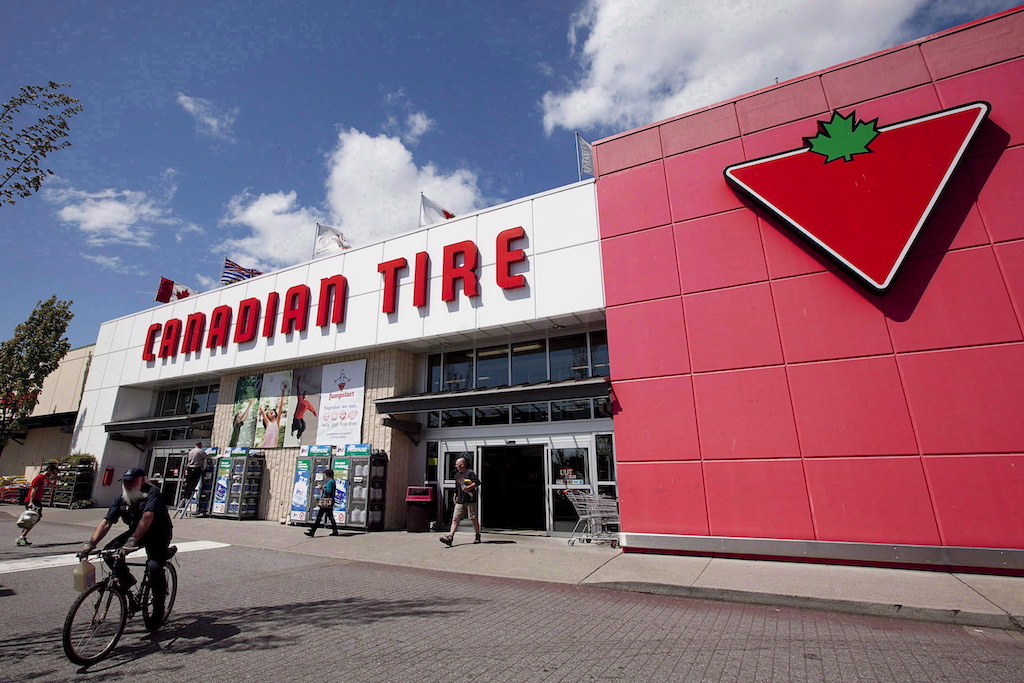
OTTAWA — Coping with supply-chain disruptions led Canada’s biggest retailer to take extreme measures to make sure its stores stayed stocked with consumer goods: it chartered its own freighters and even invested millions in an inland port in British Columbia.
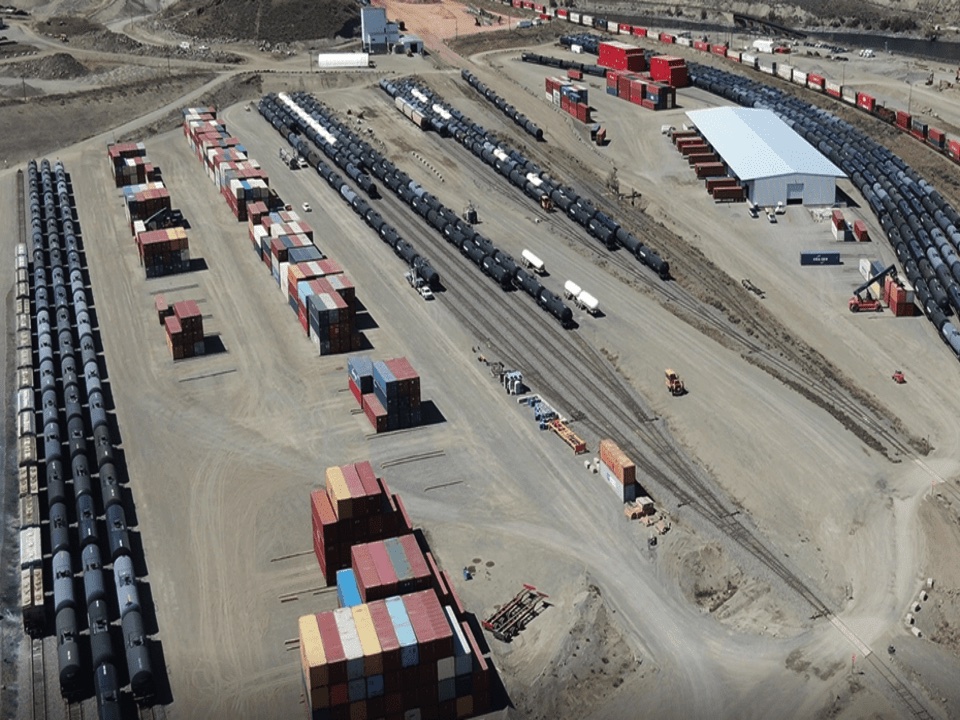
Nearly a year ago, Canadian Tire bought a 25 per cent share of Ashcroft Terminal, about four-and-a-half hours’ drive from Vancouver on the Trans-Canada Highway. The CN and CP rail lines both stop there on the way to the Vancouver seaport, in a place where land is much, much cheaper than on the coast.
Talking Point
Canadian Tire took control of its own shipping, smaller companies are “reshoring” to rely on more local suppliers and everybody wants more data. After realizing how fragile their supply chains are in the early phase of the COVID-19 pandemic, Canadian firms have sought reliability, even at the expense of efficiency. That’s created some new strains and new opportunities.
Despite the “inland port” label and its position near the Thompson River, freighters don’t dock there. But containers can come off ships in Vancouver and be transported by rail to Ashcroft’s terminal for transfer to other trains or to trucks, or to be stored; bulk commodities, from wood pulp to oil, can come into the terminal and be held until a full trainload is ready to go.
Ashcroft Terminal is a kind of wide spot in the goods pipeline, particularly useful for companies that want to stock up in case of trouble, of which there has been plenty. COVID-19 is still wreaking havoc among suppliers and at transportation nodes. Last year’s fires and floods in British Columbia cut critical rail lines twice.
Whether it’s consumer goods or commodities, companies that rely on any kind of inventory want more of a buffer than they used to, said Chris Shubert, Ashcroft Terminal’s chief commercial officer. They’re ordering earlier, ordering more, needing to store it longer.
Broken Links
Read the rest of the series:
Part 1: The epicentre
Part 2: Labour
Part 3: EVs and ‘glocalization’
Part 4: Scenes from a crisis
Part 5: Solutions
Part 6: The future
“It always used to be ‘Just in time, just in time, just in time.’ It’s now ‘Just in case,’” Shubert told The Logic. “You don’t hear ‘just in time’ any more, because it’s so unpredictable.”
Companies that depend on long supply chains have reacted to the disruptions by building up those buffers and seeking to gather extremely detailed information about where their stuff is.
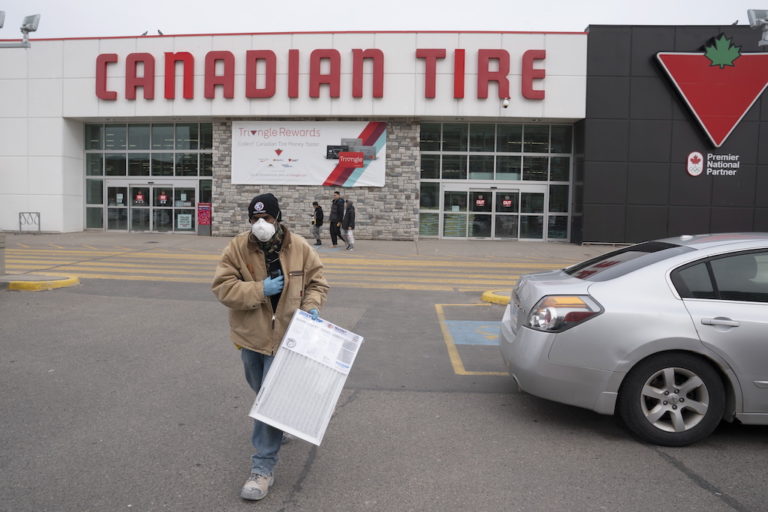
Canadian Tire—the 100-year-old owner of Mark’s, SportChek, Helly Hansen and Sports Experts, besides its main corporate brand—declined an interview but has laid out its moves in financial reports and analyst calls. Those moves have been drastic as it’s sought to take control.
Greg Hicks, CEO of Canadian Tire. Photo: Canadian Tire/Handout
“Our retail supply chain is a monster machine that needs to do its job before the customer order gets fulfilled,” president and CEO Greg Hicks said on a call last August. COVID-19 had hit Chinese ports and the B.C. fires had destroyed the town of Lytton; the fall’s “atmospheric river” was still to come. Also on that call, TJ Flood, the president of Canadian Tire Retail, told analysts the company had chartered container ships for three sailings, transporting 2,000 containers each, full of goods bound for Canadian Tire stores.
In November, Hicks mentioned that the company had “ordered more and earlier in key categories and lengthened lead times in anticipation of shortages of inputs such as the microchips used in our NOMA products”—Canadian Tire’s line of household electronics, including everything from humidifiers to Christmas lights.
And in a call in February, Hicks told analysts the company had contracted a ship for the whole year, intending it to make eight or nine runs.
“It gives us greater control over the supply chain and limits shipping peaks, which would otherwise expose us to spot market freight rates,” he said. Canadian Tire had also chartered more ships for three individual sailings in just the first quarter.
By May, though Hicks and other executives were still touting their supply-chain work, analysts barely asked about it, perhaps because the company seemed to have the situation under control. “Although we’re not immune to the global supply-chain challenges, our previous and continued investments in this critical capability have enabled us to weather the storm better than most,” Hicks said.
Buying a piece of a rail terminal was a big, lasting move. “This $40-million investment will enhance the flexibility of our supply chain and drive longer-term savings and lower carbon emissions by allowing us to stage more inventory in B.C., rather than shipping it back and forth across the country,” Hicks explained in the August 2021 call.
Ashcroft, B.C., is not far from Kamloops, which means the Lytton fire and the mudslides and washouts that cut rail lines in Yale and Hope were between the terminal and Vancouver. Goods kept there could still reach the rest of the country.
Ashcroft Terminal’s majority owner is Singapore-based PSA International, a global conglomerate with terminals at ports from Guangzhou to Gdansk, Halifax to Riyadh.
Shubert was in Ottawa in June, along with executives including PSA’s head of Americas, Enno Koll, on their first in-person lobbying swing since the pandemic began. In an interview with The Logic, they talked about the urgency of reworking supply chains for resilience rather than pure efficiency.
A container arriving in Vancouver full of coffee makers could touch off eight truck trips, Koll said, as it’s moved around warehouses, decanted, stored, sent elsewhere to be refilled and returned to the port, and the coffee makers it contained are moved around on their own journey.
“Eight steps means eight truck trips of an hour to two hours, of a CO2 footprint, of congestion in Vancouver,” Koll said.
A large retailer might bring in 40,000 containers in a year.
“The innovation is, we take it by train from the dock to Ashcroft, about 300 kilometres inland of Vancouver. We take the cargo out in the same location, we have the empty container available. And then we take product from B.C.—forest products, pulp, lumber, grains—and stuff them, in the same location, into the container. And then use a train to send the container back to the port,” Koll said.
It doesn’t sound like much, he conceded. But it slashes time, complexity and emissions, moves most of the operations out of the crowded Lower Mainland and minimizes time containers spend sitting empty in a storage yard.
Not only do customers want more stuff, they want to know exactly where it is, Koll said, so they can detect disruptions right away and plan around them.
Although Ashcroft is PSA’s only inland port in Canada, the company is using them in China and elsewhere—even securing its own train locomotives in some places to transport railcars between them and to seaports. Once goods land in PSA’s custody, the idea is that PSA can track them and meet customers’ demands for that information.
Nearly a year ago, Canadian Tire bought a 25 per cent share of Ashcroft Terminal, about four-and-a-half hours’ drive from Vancouver on the Trans-Canada Highway. Photo: Ashcroft Terminal/Handout
Digitizing supply-chain management was already underway before the pandemic, but it’s become more critical, even for smaller companies with relatively simple pipelines, he said, so they can adapt more readily to the unexpected.
“In a world of upheaval, you look for trust,” he said. “If you ask any shipper where they have trust in shipping lines, the answer will be—” he chuckled “—not much. People thrive on opaqueness in the supply chain. That’s one of the things you come across everywhere, is if you can keep your customer in the dark and make money off of it, people will do it. Not us.”
Gathering and using data on their supply chains is critical for companies dealing with volatility, said Osman Alp, a professor at the University of Calgary’s Haskayne School of Business who focuses on supply-chain management.
“Canadian Tire or Apple or Walmart, you [might] have a connection with one of your suppliers, you might have some information exchange there. You might know what’s going on there. But go one step further, you have no idea, right?” Alp said.
With Internet-of-Things technologies, secured and verified by blockchains, that’s changing. It’s possible to know where each coffee maker is from the moment it comes off the line—even, potentially, where the components are that will become coffee makers. “Now, companies are able to trace that information. And they can just go to the source,” Alp said.
Alp and a fellow professor, Marco Bijvank, co-founded the university’s Digitization for Innovative Supply Chains Consortium, or DISC. After a few months, DISC has just one corporate member, they said in a video interview—but it’s a big one: PepsiCo.
“This pandemic made it very clear that supply chains anywhere around the world, they’re not ready for the changing world,” Alp said. “Generally, it’s all about minimizing costs, maximizing efficiencies, but we have seen that that is not solving the problems—that is even creating more problems.”
Large companies can afford to take charge of more of their transportation networks the way Canadian Tire has, Alp said, but a smaller retailer can’t charter its own freighters or buy into a port. And in any case, outside of an emergency, the impulse for most firms to focus on what they’re good at and contract out the rest will still be there, so Alp doesn’t expect full vertical integration to become a norm.
Other moves to hedge against volatility certainly will be, he says.
Companies can diversify suppliers, Alp said. Just-in-time delivery, seeking maximal efficiency, typically means finding one supplier that can deliver on time at the lowest price. Adding resilience of your supply as a value changes the calculation.
Local suppliers might be more expensive, but it’s like buying an insurance policy: you pay a bit more to make sure that you have a backup in case of a crisis.
Governments have supported this in industries directly related to pandemic preparedness, but he said it’ll spread more widely. He pointed to companies seeking domestic manufacturers of critical computer components.
“Intel and other companies—now there are ongoing, huge investments in the U.S.,” Alp said. “Taiwan will always be there for supply. But now there will be alternative suppliers also in the U.S.”
That’s what Progress Luv2Pak has done, in a business very different from semiconductors.
The Toronto-based firm is in the packaging business. The company started more than a century ago with hatboxes, struck gold when it agreed to take a chance on making boxes for Trivial Pursuit games in the 1980s and now serves brands from Telus to DavidsTea to Canada Goose—sometimes with boxes and tins that hold goods themselves, sometimes with checkout bags.
Before the pandemic, the company imported about 80 per cent of its products from Asia, after closing its domestic factory in the 2000s. COVID-19 threw those supply lines into a mess and they haven’t recovered, says Ben Hertzman, Progress Luv2Pak’s president.
“Is it going to be stuck at the port when it leaves? Is it going to be stuck in the port of Vancouver when it arrives? The railcar gets stuck in a branching yard, shortages of truckers,” he lists. “The cost of importing something’s gone up. It went up as high as five times what it normally is. It’s come down to about three times the price. So, needless to say, importing from Asia is quite unstable.”
Customers don’t like slow turnaround times. Progress Luv2Pak’s solution has been to cut as many transportation links out as possible by finding new suppliers that are as close to customers as they can be.
“I believe that the world globalized, and as an importer I took for granted how easy it was to source from countries all over the world,” Hertzman says. Finding closer ones is best even if those suppliers are sometimes more expensive.
Progress Luv2Pak now plans to import more than half its products from outside Asia and is especially determined to move production out of China, he says, because there have been “too many issues to count” with factories and transportation there since the pandemic began. Even goods from other countries, such as Vietnam, get held up if they’re being transported on freighters that stop at Chinese ports along the way.
The global bag business is being reshaped by increasing demand for more environmentally friendly bags—paper instead of plastic, or heavier reusable ones. North America’s paper-bag factories, besides being pricier than overseas ones, are mostly at maximum capacity, and high-end reusable bags require sewing and gluing that isn’t done on this continent.
“I would say that the suppliers in Asia tend to be a lot more nimble when it comes to investing in the capital—required equipment, expanding capacity—to respond to their customers’ needs than in North America,” Hertzman says. “I don’t know if it’s longer lead times to purchase equipment to expand capacity, I don’t know if it’s a shortage of skilled labor. But it’s a lot more of a slow burn.”
Supply-chain management is often a reactive occupation, and in a stable world it can afford to be, Bijvank said. In a volatile one, it can’t.
“This transition from being reactive to proactive, that requires a whole new skill set,” he said. Gathering and managing the data, integrating computer systems with those of suppliers and customers, planning, contemplating alternative scenarios—none of this comes naturally.
There are technology companies that see opportunities to help, and to make money.
San Francisco-based Flexport, already a big name in logistics, became a bigger one when it poached a top Amazon executive in June. Dave Clark, now Flexport’s CEO, was the head of Amazon’s worldwide consumer business. Besides digitizing paperwork (a massive undertaking, especially for supply chains that include multiple carriers and international borders), Flexport promises detailed insights into the costs of transporting goods. All the costs—in money, time, carbon emissions.
Singapore-based Quincus, as The Logic has previously reported, wants to hire AI and data-crunching experts in Canada for a software platform whose purpose is to dig out the kind of data insights Bijvank and Alp talk about—how to optimize a logistics network’s performance for speed, reliability, cost, environmental considerations, or whatever else a customer wants. If one link in a customer’s supply chain breaks, Quincus’s goal is to offer instant advice on how best to replace it.
That kind of progress can’t happen fast enough, in Bijvank’s view. “A lot of companies are still thinking that they have time before change needs to happen. Whereas actually, we’re already at the phase that things have to change.”