VANCOUVER — In China, green hydrogen is big business. In 2023, the country invested US$42 billion into the sector as it installed one gigawatt of hydrogen electrolyzer capacity. By the end of this year, it’s expected to produce more hydrogen than the rest of the world combined.
Chinese universities are world leaders in green hydrogen research, and the country was also responsible for over half the world’s green hydrogen patents in 2018 and 2019. All of this has combined to create a green hydrogen boom—and one Canadian firm had big ambitions to join the party.
Talking Points
- Ballard Power Systems, a B.C.-based manufacturer of hydrogen fuel cell technology, bet big on China. In 2019, the Chinese market made up nearly half of its annual revenue.
- Geopolitics and stiff competition, coupled with sluggish growth in China’s hydrogen market, pushed Ballard to hastily retreat from China.
- Ballard has now scrapped a US$130-million manufacturing and R&D facility in Shanghai. Instead, it will build a US$94-million Texas gigafactory bankrolled in part by U.S. green subsidies.
Starting in 2015, Burnaby, B.C.-based Ballard Power Systems, a manufacturer of hydrogen fuel cell technology, signed a number of multimillion-dollar deals with Chinese hydrogen and automotive companies to help power clean-energy buses. In July 2016, Ballard landed a deal worth nearly US$170 million to produce hydrogen fuel cell stacks in the country. Ballard president and CEO Randy MacEwen said green energy trends in China “present a historic opportunity for zero-emission fuel cell solutions in the world’s largest mobility market.”
The deals kept coming. By 2018, China accounted for 32 per cent of Ballard’s annual revenue. By 2020, its stock was one of Canada’s top performers, surging nearly 200 per cent in a year. In September 2022, Ballard announced plans to build a US$130-million manufacturing and R&D facility in Shanghai alongside a new China headquarters.
Then, in June 2023, everything unravelled. Ballard announced a hasty retreat from China and scrapped its Shanghai plans. In an investor presentation that month, Ballard said shifting market conditions and geopolitical headwinds had flipped China from a boon to a burden that had “impacted growth.”
As its Chinese business shut down, its American business took off. This March, Ballard announced its intention to build a US$160-million fuel cell gigafactory in Rockwall, Texas, bankrolled by U.S. green subsidies. It’s hoped the facility will produce the equivalent of three gigawatts of fuel cells annually by 2027. Then, in September 2024, the company said it was reviewing all of its Chinese operations as part of a global restructuring plan that aims to cut 30 per cent of operating expenses annually.
Ballard declined The Logic’s request for an interview. In an emailed statement, Nicolas Pocard, spokesperson and vice-president of strategic marketing and partnerships, said that the company’s restructuring affected an undisclosed number of Ballard employees in China, and that its China review “should be completed in the coming several months.” MacMurray Whale, strategist at Toronto-headquartered Cormark Securities, an investment firm, said the restructuring made it more likely that Ballard would “considerably” reduce its Chinese operations in favour of the U.S.
Ballard’s shifting strategy shows the growing risks faced by Canadian companies operating in China. Its retreat from China and focus on markets closer to home also show how a Canadian manufacturer of critical decarbonization technology is not immune to external shocks.
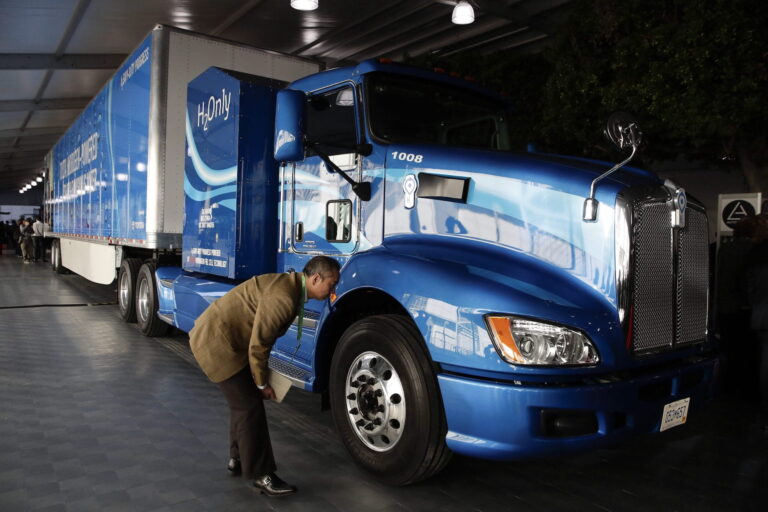
Ballard’s expansion plans in China seemed like a sure bet. The company, founded in 1979, is an expert in the art of making hydrogen fuel cells, which operate like batteries that are fed hydrogen to generate electricity. For China, Ballard had the technology it needed to power everything from buses, trains and trams, to commercial vehicles and electric grids via green hydrogen, which is produced using renewable energy like solar or wind power. For Ballard, China represented an opportunity to make bank through licensing its technological know-how while expanding its business in the world’s largest mobility and hydrogen market.
A 2018 joint venture with Chinese heavy industry manufacturer Weichai Power was particularly eye-catching. The deal included a US$163-million equity investment and US$90-million technology transfer arrangement, and MacEwen hailed it as a “historic milestone on our roadmap to commercialize fuel cell vehicles.” It was, he said, “a positive long-term catalyst for Ballard’s business and shareholder value.” The joint venture was a “big deal,” Whale says. Ballard’s China partnerships helped it spread out the high cost of developing its technologies because China had much greater investment and state support in the fuel cell space, he says.
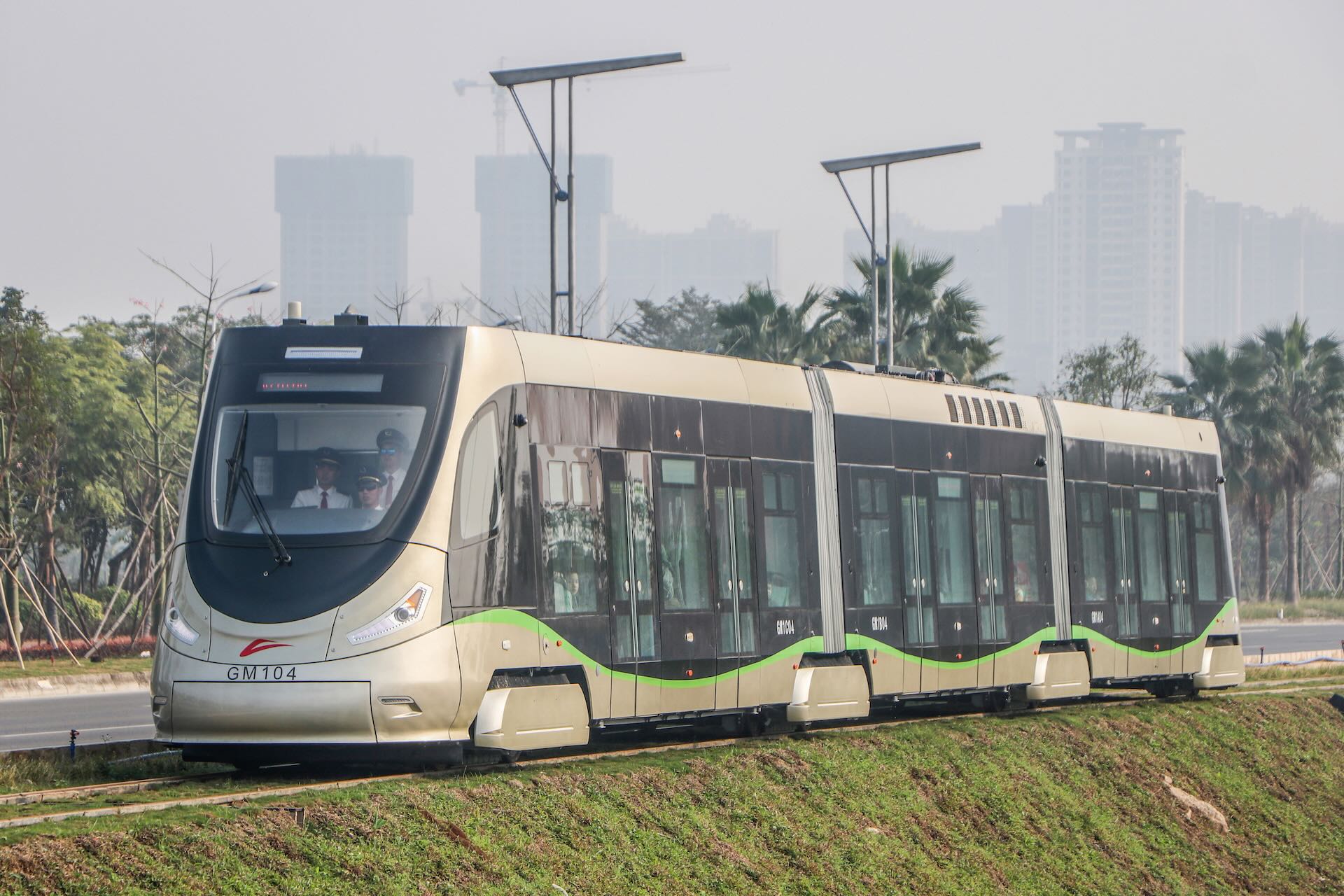
A hydrogen tramline powered by Ballard fuel cell engines in Foshan, China, in 2020. Photo: Wikimedia Commons/Nissangeniss
But local competition soon hindered Ballard’s ambitions. The Chinese state poured financial support into domestic manufacturing of crucial components in the hydrogen supply chain. From electrolyzers to fuel cells, China quickly developed the capability to make almost all key parts within its borders.
Chinese suppliers were able to undercut Ballard, crippling its competitiveness: “If you’re not one of the large companies in that market, it probably makes it very challenging to compete from a price perspective,” said Jordan Levy, vice-president of sustainability equity research at Truist Securities, an investment bank. China’s cutthroat fuel cell market and the fight to grab market share will likely increase and “lead to crimped profitability,” Ballard acknowledged in a 2023 report.
Hydrogen policy got everyone excited about China, but ultimately local competition, and a challenging market, resulted in a tough reality check for Ballard and others. Starting in 2021, China’s hydrogen market failed to grow as quickly as expected. The Chinese government tussled over how the country’s hydrogen policies and goals could be fairly implemented between its different regions, which vary in terms of government priorities, spending and debt, Whale says. Post-pandemic, state oversight increased and more hurdles went up.
“The conversations that they’re having are much more about the risks than the opportunities”
By 2023, it was clear to Ballard that the hydrogen incentives, volumes and growth out of China were floundering, according to Levy. “They took a pause and looked to see where their priorities were, even though they had pretty large plans for expanding in China,” he said. That year, Ballard’s China revenue dipped below 25 per cent of its overall revenue. In 2019, the Chinese market accounted for nearly 50 per cent. Meanwhile, Ballard’s Europe and North America revenue has grown consistently.
Ballard’s 2023 report said that “challenging subsidy schemes have throttled fuel cell demand in China.” The market, the report added, showed “no clear indicators of step change in cell demand” in the coming years due to China’s lagging hydrogen infrastructure development.
A May 2024 report by BloombergNEF, a research firm, estimates that the world’s clean hydrogen supply will surge 30-fold by 2030, but warns that China’s green hydrogen deployment is the “largest uncertainty” in its prediction. China has also built so many electrolyzer plants that analysts are warning of overproduction amid slacking demand, which could create investment risks for the sector.
Geopolitics and the U.S. and EU’s push to build and diversify clean energy supply chains delivered the final blows to Ballard’s China plans. China’s strict zero-COVID policy and Beijing’s imprisonment of Canadians Michael Spavor and Michael Kovrig left a “huge hangover” for Canadian firms in China, said Sarah Kutulakos, executive director of the Canada-China Business Council. The council’s 2023 survey of Canadian companies doing business in China found that 46 per cent of the respondents saw China as a lower priority for their business compared to two years ago. In 2021, only 27 per cent said the same.
Beijing’s tightened grip over foreign firms in the name of national security spurred a crackdown on foreign firms in recent years, from office raids to arrests of executives. China’s unpredictable and heavy-handed action against the private sector has curbed business confidence and created an insecure path ahead for Canadian firms, says Jeff Nankivell, the president and CEO of the Asia Pacific Foundation of Canada and the former consul general of Canada in Hong Kong.
In response to Beijing’s actions, the messaging from Canadian policymakers to companies in recent years has focused heavily on risks. “The conversations that they’re having are much more about the risks than the opportunities,” Nankivell added.
For MacEwen, the slowdown in China’s green hydrogen deployment coupled with the risks of supply chain disruptions and shifting geopolitical alliances forced the company to look closer to home. “We’re thinking very carefully about making sure we have appropriate capacity and supply outside of China,” he said at Ballard’s June 2023 Capital Markets Day. For “outside China,” read Europe and North America.
While the prospects in China dwindled, incentives in western markets enticed Ballard. This year alone, Ballard received US$94 million in U.S. grants and subsidies, with its Texas plant partly financed by funds from the U.S.’s Bipartisan Infrastructure Law and the Inflation Reduction Act (IRA), bills designed to modernize America’s energy infrastructure and bolster clean-energy manufacturing in the country. In April, it signed an order for 1,000 fuel cell engines to be deployed across Europe’s bus transit market, its biggest deal in the region to date and its largest ever order of fuel cell engines.
Ballard faced tough choices between competing markets. In the U.S., green subsidies offered cash-burning Ballard immediate advantages. In China, its costly plans would be a long-term gamble. A bevy of countries now have green energy subsidies, but sometimes, the Canada-China Business Council’s Kutulakos says, “it’s all about where the easier opportunity is.” The IRA, she adds, made investing in the U.S. more appealing and “changed the net present value of those projects.”
Ballard predicts that revenue from its business in North America and Europe will continue to grow in the near- to mid-term as government support and incentives spur development. The U.S., in part thanks to major, IRA-supported projects, is set to become the world’s biggest producer of clean hydrogen by 2030, according to BloombergNEF. Meanwhile the “infrastructure for green or near-green hydrogen has been growing more significantly in Europe than anywhere else,” says Andrew Keen, a managing director at investment analysis firm Edison Research. Ballard declined to provide specific revenue forecasts by region.
The Ballard Power headquarters in Burnaby, B.C., in 2012. Photo: The Canadian Press/Paul Wright
Analysts see Ballard’s pivot to markets closer to home as a smart move. The company is taking aim at the truck makers, railways and energy storage operators in the U.S. and Europe who are growing thanks to larger government subsidies for green hydrogen. “That’s what [Ballard] is after,” Whale says. “I believe Ballard when they say that customer interest outside of China is stronger than inside.”
Keen argues Ballard doesn’t need China to become profitable. “It’s not essential. Ballard will be very happy to be involved in large-scale freight, trucking and busing, at a commercial scale, without China.”
Still, four decades after its founding and three decades after debuting its first fuel cell engine, Ballard is still waiting for the green hydrogen market to grow up. Countries around the world have plans to boost clean hydrogen capacity, with US$320 billion worth of facilities announced through 2030, but the infrastructure still needs to be built.
A lot of the challenge comes down to cost. Using hydrogen might be clean, but it’s also expensive. Less than one-third of the 1,600 clean hydrogen projects announced worldwide have materialised, and only 12 per cent of low-carbon hydrogen plants have customers, according to BloombergNEF data. The U.S. presidential election in November could also reshape IRA benefits and the progress of green hydrogen projects in the country.
Non-U.S. companies receiving IRA funding, like chip giant TSMC, have faced challenges in the construction of their plants. Ballard’s next major challenge is ramping up its Texas facility to full capacity as it burns through cash. A critical turning point in the market will be widespread adoption of hydrogen beyond fuel cells, Keen says.
The biggest risk, Whale argues, is that much of Ballard’s business remains out of its control. Even if it could supply fuel cell engines at low costs, hydrogen remains scarce and operators are likely to encounter difficulties in sourcing clean and cheap fuel, he says. “It’s going to take years for that to play out.”