Despite three highly anticipated tech initial public offerings in the U.S. in the third quarter that were expected to spark a comeback in new issues, their underwhelming post-debut performances likely won’t inspire many copycats in the near future.
Skip to content




Special Report
Arm, Klaviyo and Instacart’s stock retreat dampen hopes for IPO revival
No innovation-economy firms held an initial public offering on the TSX in Q3, The Logic’s latest IPO Quarterly finds
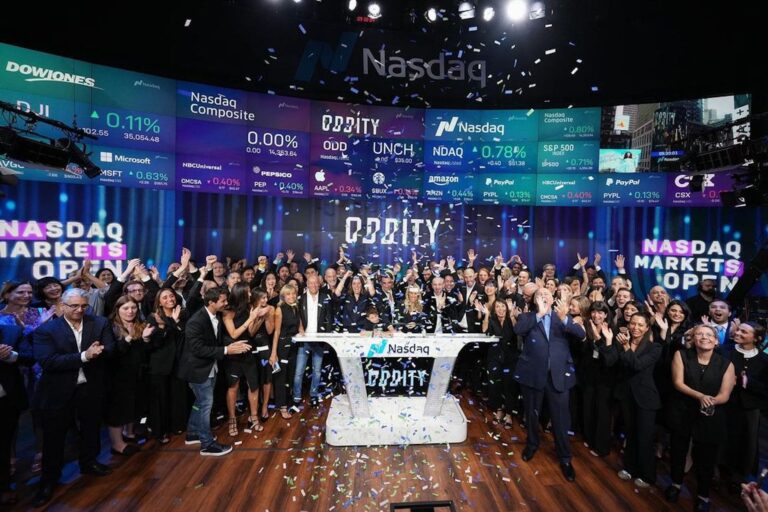
Arm CEO Rene Haas, centre, rings the Nasdaq opening bell during his company's IPO in September 2023. Photo: AP Photo/Richard Drew
Despite three highly anticipated tech initial public offerings in the U.S. in the third quarter that were expected to spark a comeback in new issues, their underwhelming post-debut performances likely won’t inspire many copycats in the near future.
Investors had been eyeing the IPOs of Arm, Instacart and Klaviyo, hoping these major listings would unlock a window of opportunity for firms that have been sitting on the sidelines since market conditions shifted. “That doesn’t seem to have happened,” said Kyle Stanford, PitchBook’s lead analyst for venture capital.
Talking Points
- No innovation-economy firms held an initial public offering on the Toronto Stock Exchange in the third quarter, according to data provided by the TMX, marking another silent quarter
- Three tech firms held widely anticipated IPOs in the U.S. but their performance since their respective debuts has dampened hopes of a near-term tech comeback on public markets
SoftBank-owned Arm’s shares surged on their first day of trading on the Nasdaq in mid-September. Seeing Arm’s early success, Instacart upsized its IPO, while Shopify-backed Klaviyo twice upsized its offering. Instacart’s shares jumped as high as 43 per cent in their debut while Klaviyo’s stock surged to an intraday high of 23 per cent.
Notably, Klaviyo and Instacart both raised at market capitalizations below their last known valuations, noted Stanford. Arm, meanwhile, targeted a market capitalization of US$54.4 billion, below its previously expected range of US$60 billion to US$70 billion.
Companies looking to hold IPOs will “need to sacrifice or compromise on the pricing,” said Stanford. At this point, not many will be able to achieve a bump to their last valuation if it was set during the heyday of 2020 and 2021. The trio’s market capitalizations likely “made people rethink their IPO strategy,” he said. “I don’t expect there to be a large brush of companies taking down valuations just to complete public offerings.”
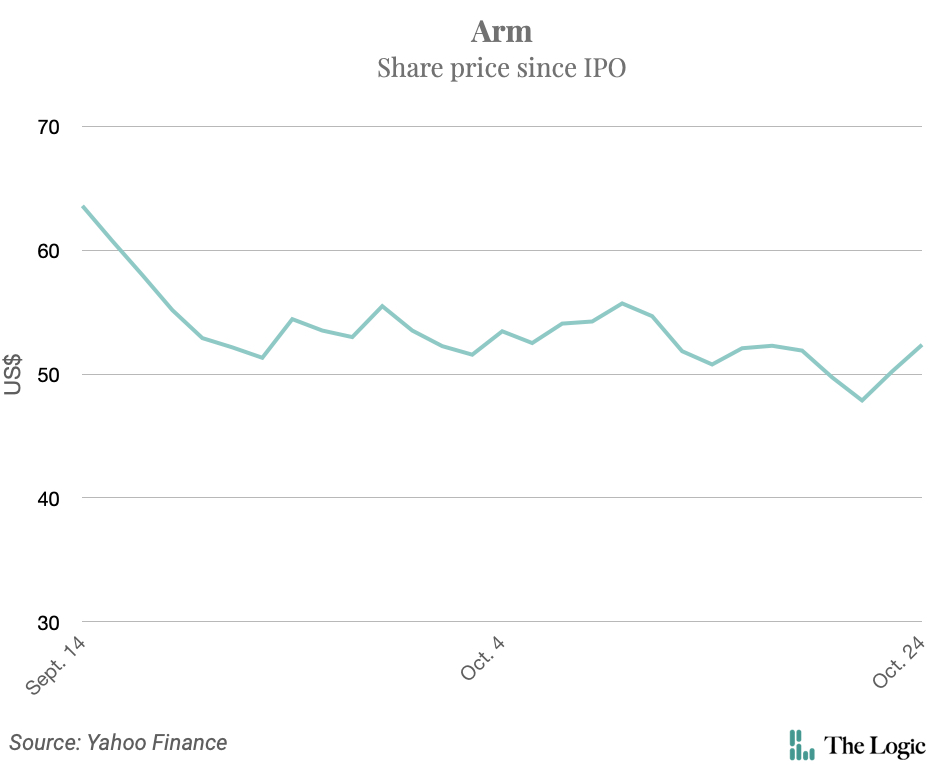
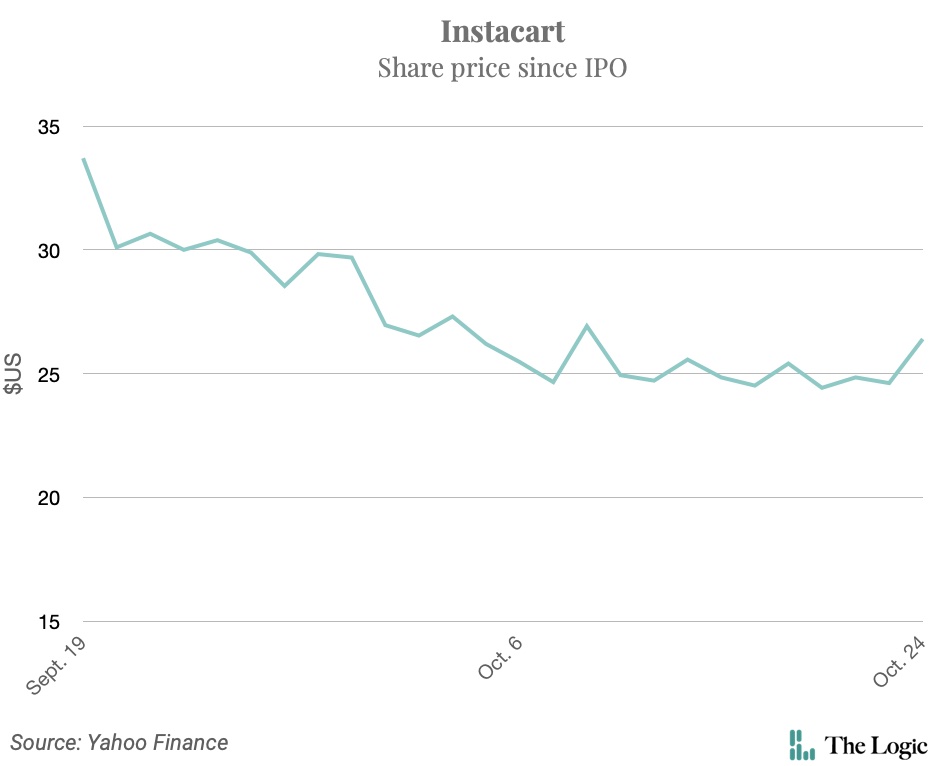
Compounding the problem, all three firms had strong openings, but have since fizzled. Arm’s shares have fallen, dipping below their offering price. Instacart’s have mostly traded below the US$30 mark, hitting a low of US$23.36 to date. Klaviyo’s stock price has recently dropped into the red.
“It’s tough because there hasn’t been any new information for people to trade off of,” said Stanford. Movement—in either direction—may pick up once the firms report their first quarterly earnings as public companies and more research firms initiate coverage, he said.
The share price drops further reflect ongoing market volatility, said Nabeel Pabani, EY Canada partner and IPO lead. Companies continue to face supply-chain issues, he said, and there’s uncertainty around future interest-rate hikes. Russia’s war in Ukraine is ongoing, and the growing conflict between Israel and Hamas is adding to the uncertainty.
Related Articles

Beyond Klaviyo, Arm and Instacart’s IPOs, public markets have remained relatively muted. During the third quarter, 371 firms held IPOs globally, raising US$52.3 billion, according to market research firm EY. The total number of IPOs is down six per cent year over year, while proceeds fell 27 per cent.
On the Toronto Stock Exchange, another quarter passed with no IPOs from innovation-economy firms, meaning those in the tech, cleantech or life-sciences sectors, according to data the TMX Group provided to The Logic.
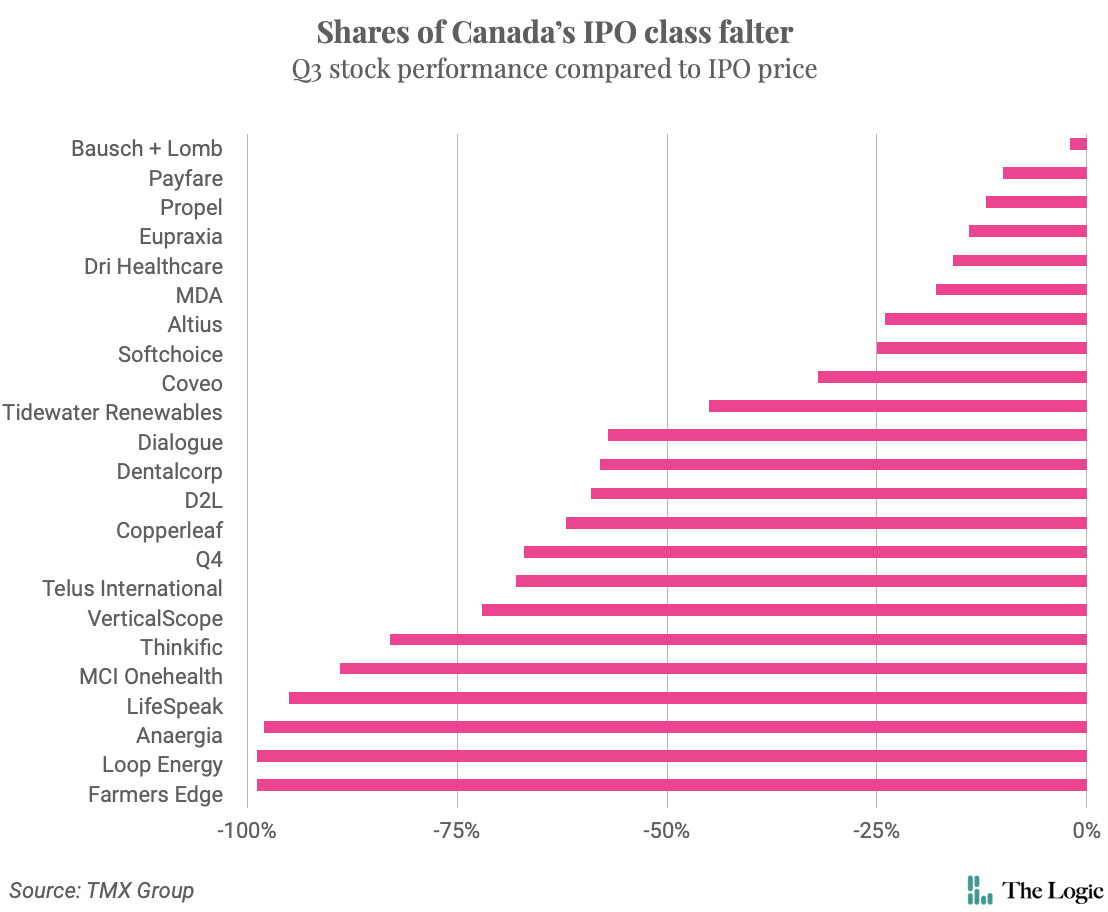
Meanwhile, of the 23 innovation-economy firms that went public on the TSX via IPO from 2021 onwards and remain public, none ended the third quarter with their shares above their offering price. Four firms—Farmers Edge, Loop Energy, Anaergia and LifeSpeak—shed 95 per cent or more of their worth. Bausch + Lomb traded the closest to its offering price, down two per cent, with Payfare following with a 10 per cent drop.
“They have to figure out their path to profitability,” said Pabani, noting investors’ shift in focus on whether companies will make money. Still, these 23 stocks don’t necessarily have to rebound for the IPO market to bounce back, he said.
There are at least two Canadian tech companies planning IPOs. BlackBerry, which did not respond to a request for comment, said it plans to list its profitable Internet-of-Things division QNX separately from its cybersecurity unit by June. Meanwhile, Saskatoon-based Vendasta, which shelved its 2021 IPO plans in favour of more venture capital funding, has said it still plans to hold an IPO should market conditions change.
Dani Lipkin, managing director of the global innovation sector for the TSX and TSX-V, said there was some encouraging financing activity in the past quarter. Dri Healthcare Trust, which trades on the TSX, closed two so-called bought deals—meaning additional financing that’s purchased by the underwriters—in the quarter. “That’s always a good sign in terms of seeing currently listed issuers being able to raise money in a tougher environment,” he said, adding it could lead to new issuers testing the market.
Still, many are likely waiting for better conditions to raise, especially if they don’t immediately require capital. Lipkin said the TMX is continuing to see interest from potential prospects and it’s a matter of when they’ll file rather than if they’ll do so.
Pabani said it’s unlikely a turnaround will happen in the fourth quarter—a sentiment Stanford agreed with. Once companies can show their full-year earnings, said Stanford, investors’ interest may return. “I think that’s going to go a long way for easing that pricing pressure to get companies back to starting to list.”



Loading...
Thanks for sharing!
You have shared 5 articles this month and reached the maximum amount of shares available.
CloseThis account has reached its share limit.
If you would like to purchase a sharing license please contact The Logic support at [email protected].
CloseGift the full article!
You have gifted 0 article(s) this month and have 5 remaining.
Recipients will be able to read the full text of the article after submitting their email address. They will not have access to other articles or subscriber benefits.
Photo: AP Photo/Richard Drew
Most Popular This Week




In-depth, agenda-setting reporting
Great journalism delivered straight to your inbox.
The Big Read
Alberta’s referendum is just the start of the turmoil
Briefing
EverWind plans $10B data centre and wind development in Nova Scotia
Canada ready to force Stelco to sell its Canadian operations, Joly says
Feds plan a 60 MW defence-oriented data centre for Ottawa
Best business newsletter in Canada
Get up to speed in minutes with insights and analysis on the most important stories of the day, every weekday.
Exclusive events
See the bigger picture with reporters and industry experts in subscriber-exclusive events.
Membership in The Logic Council
Membership provides access to our popular Slack channel, participation in subscriber surveys and invitations to exclusive events with our journalists and special guests.






