Israeli startups and the tech community are bracing for more conflict and scrambling to ensure employees’ safety after this weekend’s deadly attack by Hamas, an assault that has set off an intensifying exchange of airstrikes and rocket fire in Gaza between the militant group and Israel.
Skip to content


News
Tech sector braces for uncertainty following Hamas attack
Toronto’s Greensoil Investments in constant contact with Israeli portfolio firms
Rockets are fired toward Israel from the Gaza Strip, Tuesday, Oct. 10, 2023. Photo: AP Photo/Hatem Moussa
Israeli startups and the tech community are bracing for more conflict and scrambling to ensure employees’ safety after this weekend’s deadly attack by Hamas, an assault that has set off an intensifying exchange of airstrikes and rocket fire in Gaza between the militant group and Israel.
Gideon Soesman, head of Toronto-based Greensoil Investments, said five of the fund’s 22 portfolio companies are based in Israel. In an interview with The Logic, Soesman said he has been in constant contact with all five CEOs, who are working from home in Jerusalem and Tel Aviv for safety reasons. Two of the executives have children in the military, he said.
The grim circumstances these startups face are just a few examples of how businesses are bracing for prolonged disruptions amid broader warnings about the economic toll of the conflict.
Related Articles

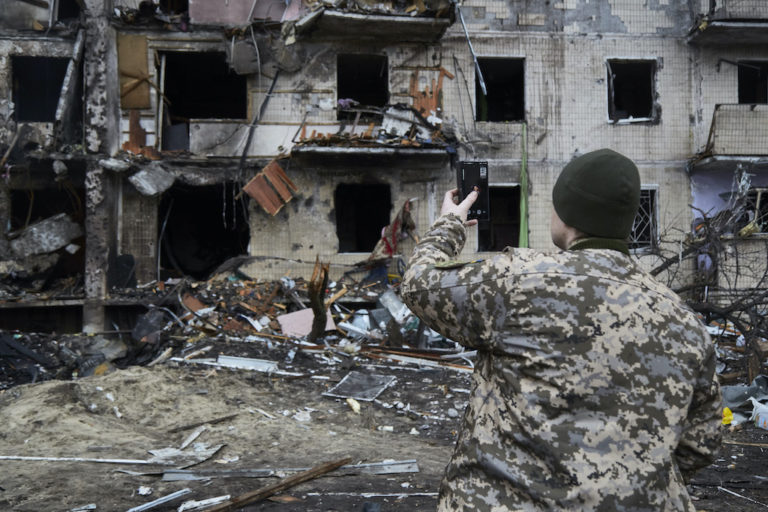
Resilience amid the carnage: Startups in the region will face added challenges in a space already rife with uncertainty.
Greensoil’s Soesman said founders in Israel are used to navigating extreme adversity and will rebuild when and if the conflict ceases. The agtech fund has invested in Israeli startups including BioHarvest, a company that has engineered red grape cells that aim to lower heart disease risk, and Phenome Networks, a cloud-based plant-breeding data platform.
“Israelis are resilient, Israelis are strong and Israelis know how to deal with uncertainty,” Soesman said. “And that’s really the basis of a successful startup. These companies will come together, they will deal with the current situation, and then they will continue to build beautiful companies out of the country.”
Other VC funds including Toronto’s Group Ventures have prioritized investments in Israel. The country has sought to establish a hub in cybersecurity technology in particular, an effort that has attracted companies including pharmaceutical giant Bayer.
Alphabet CEO Sundar Pichai tweeted that he was “deeply saddened by the terrorist attacks in Israel,” saying the company has two offices and more than 2,000 employees in the country. The tech giant has made contact with all of its local employees, and is working to share cyber activity that it’s seeing, Pichai said.
The economic impact: The outbreak of war in the region may pose another shock to a global economy that is already showing signs of slowing. According to the International Monetary Fund’s latest forecast, released Tuesday, global economic growth will slow to 2.9 per cent in 2024, down from 3.5 per cent in 2022.
“The global economy is limping along, not sprinting,” IMF chief economist Pierre-Olivier Gourinchas said in a press conference, adding that the organization is “monitoring the situation closely” though it’s “too early” to assess the days-old conflict’s impact on global growth.



Loading...
Thanks for sharing!
You have shared 5 articles this month and reached the maximum amount of shares available.
CloseThis account has reached its share limit.
If you would like to purchase a sharing license please contact The Logic support at [email protected].
CloseGift the full article!
You have gifted 0 article(s) this month and have 5 remaining.
Recipients will be able to read the full text of the article after submitting their email address. They will not have access to other articles or subscriber benefits.
Photo: AP Photo/Hatem Moussa
Most Popular This Week




In-depth, agenda-setting reporting
Great journalism delivered straight to your inbox.
News
Panel decries Canada’s chaotic way of funding world-class science
Briefing
AI is pushing insurers to become asset managers, Canadian CEOs say
Trump administration faces lawsuit over 50% tariffs on Canadian goods
Canada-U.S. trade war to reduce real GDP by 1.4% over 2024 levels after five years: PBO
Best business newsletter in Canada
Get up to speed in minutes with insights and analysis on the most important stories of the day, every weekday.
Exclusive events
See the bigger picture with reporters and industry experts in subscriber-exclusive events.
Membership in The Logic Council
Membership provides access to our popular Slack channel, participation in subscriber surveys and invitations to exclusive events with our journalists and special guests.





