You can almost hear the clock ticking.
Donald Trump’s announcement that he’ll put a 25 per cent tariff on all goods from Canada and Mexico, and an additional 10 per cent on China, could take effect as early as January.
While the new year seems just around the corner, Sean Stephenson, a trade lawyer at Dentons, says he’s advising people not to “let emotions or fear take over” when making business decisions.
We still don’t know whether Trump might whittle down his policy to the flashpoint issue, Chinese-made EVs, and in doing so spare the Canadian and U.S. auto industries a lot of collateral damage.
As negotiations heat up, here’s what Team Canada might consider when it comes to EVs:
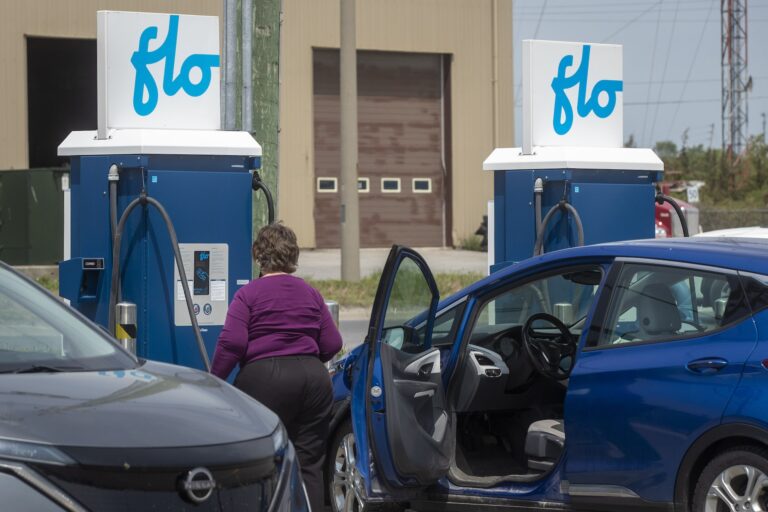
What happens to prices? Cars are already costly, and high sticker prices and expensive battery repairs already rank among the top reasons that a smaller share of Canadians were interested in buying EVs this year than in 2023.
Tariffs could exacerbate that. “[Parts] cross the border on average seven times before they land in a vehicle. So if we’re going to slap tariffs on each border crossing, that’s going to create a lot of cost when it comes to vehicles,” said Linamar chair Linda Hasenfratz in a Nov. 12 earnings call. “It’s going to have a huge negative impact on inflation and Americans can’t afford higher costs than they’re already seeing.”
An additional factor for EVs: some battery components are difficult to source outside of China; the cost of importing them is likely to go up, particularly as Canada faces pressure to put its own tariffs on Chinese-made batteries.
On the flip side, the tariffs could raise gas prices in the U.S., boosting EV demand enough to offset the effects of some of those increases.
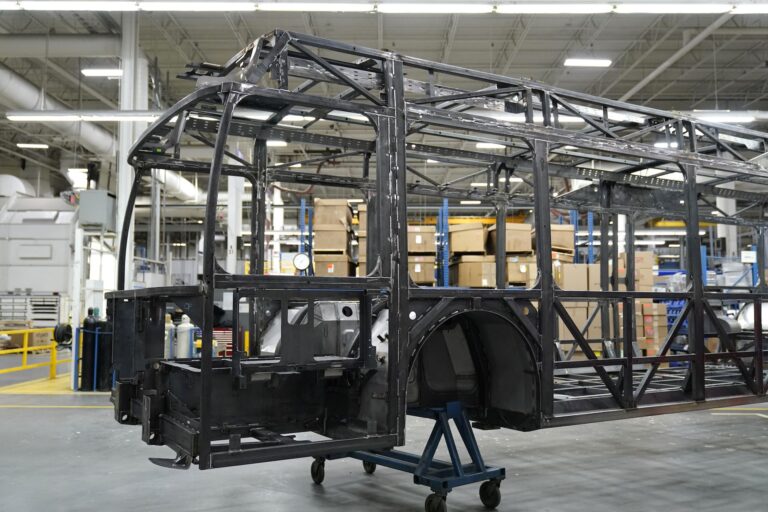
Will automakers stop making EVs here? Team Canada will have to reassure automakers that their Canadian branch plants remain a better deal than moving production to the U.S. Battery and EV plants are no exception.
There is at least one vehicle made in Canada whose 2025 model can also be made in the U.S.: the Honda CR-V. The website InsideEVs analyzed data from the U.S. National Highway Traffic Safety Administration, including for Canadian-made vehicles like the Chrysler Pacifica plug-in hybrid or the Daytona Charger EV, and found that Japanese and Korean EVs are better insulated from tariffs than those with content from Mexico and Canada.
The United Steelworkers union warned that the tariffs were a threat to jobs and would “dramatically harm workers in both our countries.”
Where will the U.S. buy nickel and cobalt, if not from China or Canada? The U.S. only has one nickel mine, and its ore gets smelted in Canada, noted Heather Exner-Pirot, a special adviser to the Business Council of Canada. For cobalt, the U.S. government has gone so far as funding Canadian companies like Electra Battery Materials to supplement its lack of mines or refineries. Both metals are critical to the electric-vehicle supply chain, and the need for them would make it hard for the U.S. to implement Trump’s threat.
“There are dozens, probably hundreds, of little stories like this, mostly in red states, that I think would just make a tariff so politically toxic for Trump and for the Republicans,” said Exner-Pirot.
Isn’t this against the USMCA? Yes, probably, says Stephenson, adding that there are mechanisms in the trade deal for dispute resolution, where a panel could conclude that Canada can implement a lawful retaliation. Still, he noted, “that’s not going to stop the potential tariffs in the near term.”
Read Shift—The Logic’s authoritative weekly newsletter on automotive technology industry news—for more; and if you know someone who should be reading it, they can sign up here.