MONTREAL — Nearly 14 years ago, Quebec launched a public inquiry into corruption in the province’s construction industry. Over 263 days of public hearings, Superior Court Judge France Charbonneau heard from 300 witnesses and pored through some 3,000 documents, the sum total of which showed how organized crime rigged construction contracts and purchased the favour of municipal and provincial government officials.
Skip to content

Commentary: Quebec Ink
François Legault is cooked
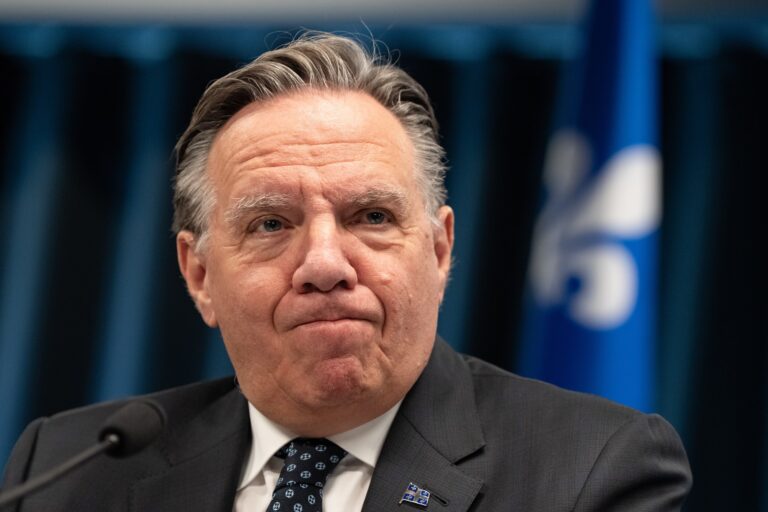
Legault told the Gallant commission that he would have liked to have known about SAAQclic’s $500-million overspend. That he didn’t speaks volumes.
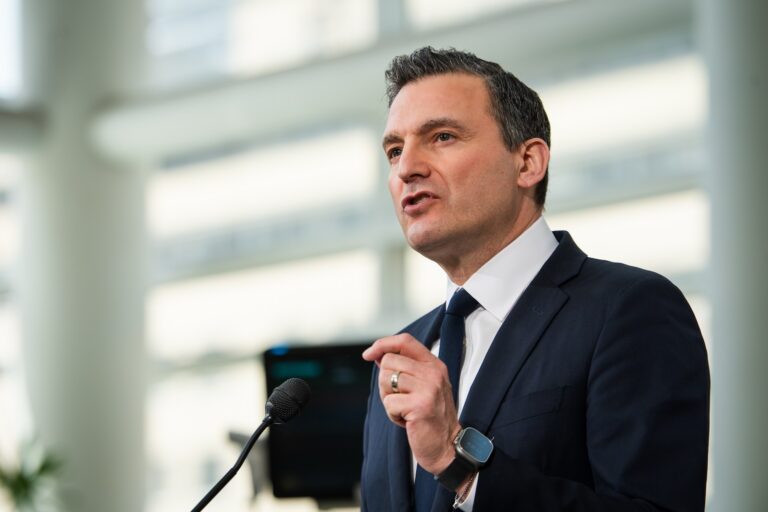
Legault told the commission he’s a “hands on” premier. Yet when it came to explaining how his government overshot a contract by $500 million, he came up short. Photo: The Canadian Press/Christopher Katsarov
MONTREAL — Nearly 14 years ago, Quebec launched a public inquiry into corruption in the province’s construction industry. Over 263 days of public hearings, Superior Court Judge France Charbonneau heard from 300 witnesses and pored through some 3,000 documents, the sum total of which showed how organized crime rigged construction contracts and purchased the favour of municipal and provincial government officials.
The Charbonneau commission, as it was known, also demonstrated how many of the province’s political parties, the Quebec Liberal Party in particular, filled their coffers with corporate donations from many of those very construction firms. This being a clear violation of Quebec electoral law, Liberal Premier Jean Charest was chased out of office by the ensuing stink.
Related Articles

The scandal roiling the current Quebec government seems quaint by comparison. A decade ago, the government launched SAAQclic, a digitization effort of the Société de l’assurance automobile du Québec (SAAQ), the agency charged with licensing automobiles and drivers. An auditor’s report released earlier this year showed SAAQclic was going to cost $1.1 billion by 2027. Sure, this was double initial estimates, but still. The Charest-era hearings involved mobsters, collusion and cash-stuffed envelopes. Today’s affair is over what amounts to bad tech and dodgy procurement.
Yet it’s impossible for an observer to ignore the parallels. The hearings are being held in the same room in the same dreary downtown Montreal building accessed by the very elevators shared with lawyers, politicians and reputed mobsters en route to testify. A similar cast of characters, too: Charbonneau-era prosecutor Denis Gallant is chairing the SAAQclic inquiry, while former deputy chief prosecutor Simon Tremblay is the prosecutor.
And as nerdy as the subject matter may be, these hearings managed to snag what Charbonneau couldn’t: a sitting Quebec premier in François Legault.
Legault, who spent just under three hours on the stand yesterday, had a very difficult job. He was, as he admitted, a “très hands on” premier who micromanaged purse strings-related crises and successes in his government. Yet when it came to explaining how his government overshot a half-billion dollar contract by half a billion dollars, Legault sounded suddenly laissez-faire.
“I don’t meet with the SAAQ, but I meet with important state-owned companies like the Caisse de dépôt, Hydro Québec and Investissement Québec,” Legault said. Among other issues that kept him ignorant of $500-million cost overruns at the SAAQ: an influx of temporary foreign workers, crumbling roads and hospitals, the rising cost of living, the decline of French. “Yes, the SAAQ is a crisis, but it’s not as big a crisis as Covid,” Legault said at one point, which is both true and a truly gobsmacking thing to say.
Tremblay introduced several government documents detailing SAAQclic’s ballooning costs over the last eight years, none of which Legault said he saw. It took a bit more prodding for Tremblay to get Legault to admit what is plainly true. “$500 million isn’t nothing, and it’s not normal that I only learned about this in February 2021,” Legault said. Later, he added: “We’re there to manage the government; someone should have seen the $500 million before the auditor general.” And later still: “Someone should have asked questions.” And finally: “I would like to have known about it.”
It was Legault who called for an inquiry into the SAAQclic debacle, as Legault himself reminded the inquiry yesterday. He did so “to get to the bottom of things,” as he put it, though the cynic would say such inquiries are exercises in damage control.
In any case, by appearing before Gallant, Legault is effectively admitting that SAAQclic has been politically damaging to his government, which has discovered new lows in support over the last two years. It’s worth remembering that it wasn’t mobsters and political donations that began Charest’s miseries a decade and a half ago, but a protest over university tuition increases. In politics, anything can catch fire, especially if you’re unpopular. Unfortunately for Legault, he is exactly that.
Martin Patriquin is The Logic’s Quebec correspondent. He joined in 2019 after 10 years as Quebec bureau chief for Maclean’s. A National Magazine Award and SABEW winner, he has written for The New York Times, The Guardian, The Walrus, Vice, BuzzFeed and The Globe and Mail, among others. He is also a panelist on CBC’s “Power & Politics.”



Loading...
Thanks for sharing!
You have shared 5 articles this month and reached the maximum amount of shares available.
CloseThis account has reached its share limit.
If you would like to purchase a sharing license please contact The Logic support at [email protected].
CloseGift the full article!
You have gifted 0 article(s) this month and have 5 remaining.
Recipients will be able to read the full text of the article after submitting their email address. They will not have access to other articles or subscriber benefits.
Photo: The Canadian Press/Christopher Katsarov
Most Popular This Week


In-depth, agenda-setting reporting
Great journalism delivered straight to your inbox.
Analysis
The ‘red line’ in U.S. trade talks that sets Canada apart from other countries
Briefing
Canadian inflation remains in the BoC’s comfort zone, barely
Cohere in talks to raise as much as US$3B: Report
Stellantis agrees to sell Ontario factory to armoured-vehicle maker Roshel
Best business newsletter in Canada
Get up to speed in minutes with insights and analysis on the most important stories of the day, every weekday.
Exclusive events
See the bigger picture with reporters and industry experts in subscriber-exclusive events.
Membership in The Logic Council
Membership provides access to our popular Slack channel, participation in subscriber surveys and invitations to exclusive events with our journalists and special guests.