MONTREAL — Here’s a fun thought. Imagine if Quebecers elected a government that wants to separate the province from Canada, prompting a cocktail of economic uncertainty, turmoil and bruising social unrest separate and distinct from U.S. President Donald Trump’s brand of the stuff.
Skip to content

Commentary: Quebec Ink
The prospect of independence looms over Quebec once more
The Parti Québécois has led the polls for nearly two years. The majority of young voters favour sovereignty. Will Quebec finally do the unthinkable?
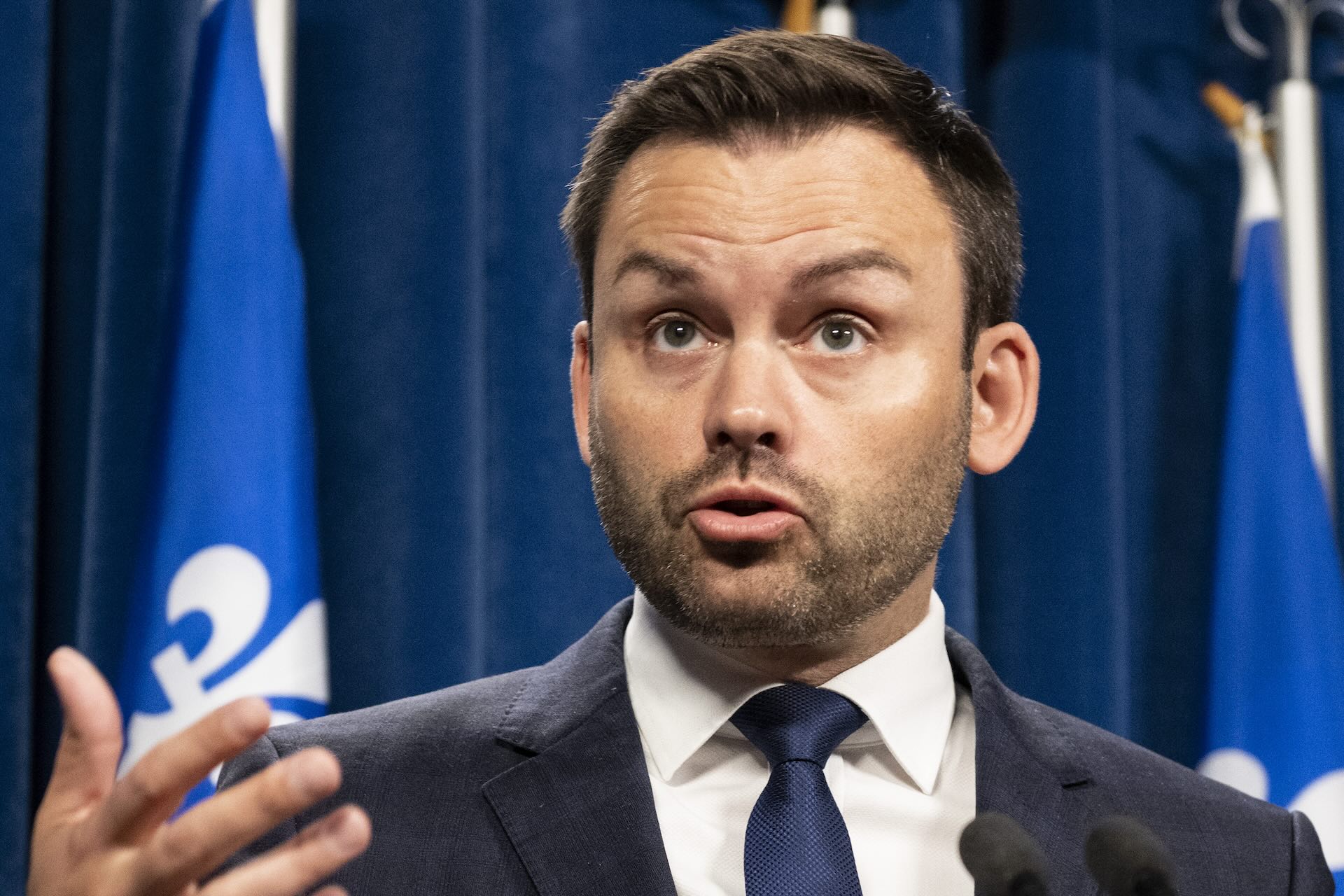
Parti Québécois leader Paul St-Pierre Plamondon has promised a referendum on independence in his first mandate if his party wins the next provincial election. Photo: The Canadian Press/Karoline Boucher
MONTREAL — Here’s a fun thought. Imagine if Quebecers elected a government that wants to separate the province from Canada, prompting a cocktail of economic uncertainty, turmoil and bruising social unrest separate and distinct from U.S. President Donald Trump’s brand of the stuff.
Don’t laugh, because it’s happened before. Funniest thought of all, there is a very good chance it’s going to happen again in just over a year—less than a month before the U.S. midterm elections, in fact.
Related Articles

For the last year or so, the governing Coalition Avenir Québec (CAQ) has been in full dégringolade, a terrific French term denoting the act of falling quickly and brutally. The reasons behind the tumble—lethargy, corruption, distaste for Premier François Legault—are typical of many long-in-the-tooth governments like the CAQ, which has been in power since 2018.
What’s unique to Quebec is that the main beneficiary of the government’s unpopularity happens to be a separatist party. The Parti Québécois (PQ) has led in the polls for nearly two years, thanks in large part to leader Paul St-Pierre Plamondon, who regularly ranks as the most popular provincial leader in Quebec.
It is a frankly stunning turnaround for a party that was declared dead barely three years ago, and the bull run has rallied the party’s base, with 85 per cent of péquistes believing the party will win the next election in October 2026, according to a June poll from Pallas Data. Fresh data from Montreal-based research firm CROP piled on the good news late last week, with a poll suggesting 56 per cent of Quebecers between 18 and 34 are in favour of sovereignty.
A crack at sovereignty they will get should the PQ get into power, with Plamondon promising a referendum in his first mandate. The prospect of a PQ win has spawned profiles of these Gen Z upstarts, along with “what if?” news pieces and countless angst-ridden column inches in the Montreal Gazette, the traditional stewing grounds of fretful Quebec federalists. “It’s a lot of déja vu,” as veteran political operative John Parisella told me recently.
Common sense, if not decency, would suggest Quebecers should be worried about nationalism in general, especially given Trump’s attempts to impose his form of nationalism on much of the planet. To be fair, many of them are worried about the man in the White House—and, as seemingly a result, they voted overwhelmingly for the Liberals and Mark Carney in the recent federal election.
Parisella, an author and former diplomat and advisor to three former Quebec Liberal premiers, said the support for Carney was a telling expression of how Quebecers ultimately feel. “Cultural security and economic security have long been two very important aspects of how Quebec sees things,” he told me. “But economic security has taken precedent.”
Plamondon seems keenly aware of this, and has responded in kind by framing Quebec independence as a matter of economic as well as cultural survival. In practice, this means blaming immigrants. High home prices? Blame immigrants. Low birth rates? Blame immigrants. Increased criminality? Blame immigrants. Problems with Trump? Blame Canada—and immigrants. Decades ago, PQ immigration minister Gérald Godin considered Quebec’s recent arrivals to be crucial to the future of Quebec’s sovereignist movement. Under Plamondon, they are but ready scapegoats. I generally dislike Trump comparisons, but this sounds awfully familiar.
The economic effects of this scapegoating are palpable. Plamondon’s pledge to cut the number of international student visas, impose a moratorium on economic immigrants and slash the number of temporary workers by half reads like a how-to manual on hobbling the Quebec economy.
The province’s business community is alarmed, rightfully so. Though it has ticked up recently, Quebec’s unemployment rate remains at historical lows. Institut de Québec, which studies employment trends in the province, said the labour shortage in many areas outside of Montreal is more or less permanent. One need only drive past a farmer’s field this summer—or see the inside of an abattoir, for the more adventurous—to witness the kinds of jobs pur laine Quebecers aren’t doing these days.
The Parti Québécois’s ascendance to power is hardly guaranteed. The Quebec Liberals elected former federal cabinet minister Pablo Rodriguez as leader in June, bringing new life and support to a long rudderless and leaderless party. It’s also hard to see how another 14 months of Trumpy excess won’t ultimately turn Quebecers away from the prospect of more upheaval. Though that’s the thing about déja vu. It’s familiar, but the end is never a given.
Martin Patriquin is The Logic’s Quebec correspondent. He joined in 2019 after 10 years as Quebec bureau chief for Maclean’s. A National Magazine Award and SABEW winner, he has written for The New York Times, The Guardian, The Walrus, Vice, BuzzFeed and The Globe and Mail, among others. He is also a panelist on CBC’s “Power & Politics.”



Loading...
Thanks for sharing!
You have shared 5 articles this month and reached the maximum amount of shares available.
CloseThis account has reached its share limit.
If you would like to purchase a sharing license please contact The Logic support at [email protected].
CloseGift the full article!
You have gifted 0 article(s) this month and have 5 remaining.
Recipients will be able to read the full text of the article after submitting their email address. They will not have access to other articles or subscriber benefits.
Photo: The Canadian Press/Karoline Boucher
Most Popular This Week



In-depth, agenda-setting reporting
Great journalism delivered straight to your inbox.
Commentary
Carmichael: Canadian ignorance about India is a strategic weakness
Briefing
Aritzia shares pop after earnings rise 204%
First Nation in Alberta goes to court over fast-tracked oil pipeline
Chinese EV maker Geely Auto Group to launch in Canadian market in 2027
Best business newsletter in Canada
Get up to speed in minutes with insights and analysis on the most important stories of the day, every weekday.
Exclusive events
See the bigger picture with reporters and industry experts in subscriber-exclusive events.
Membership in The Logic Council
Membership provides access to our popular Slack channel, participation in subscriber surveys and invitations to exclusive events with our journalists and special guests.