Listen Now
0:00
OpenAI is making immediate changes to its safety policies after ministers in Canada’s federal government called the company out for its failure to warn police about concerning messages related to this month’s mass shooting in Tumbler Ridge, B.C.
“Our conversation with you this week underscored that Canadians expect continued concrete action and we heard that message loud and clear,” Ann M. O’Leary, OpenAI’s vice-president of global policy, said in a letter to federal ministers Thursday.
Talking Points
- The maker of ChatGPT said that under its new safety protocols, it would have alerted police about disturbing messages the Tumbler Ridge shooter sent its chatbot last June
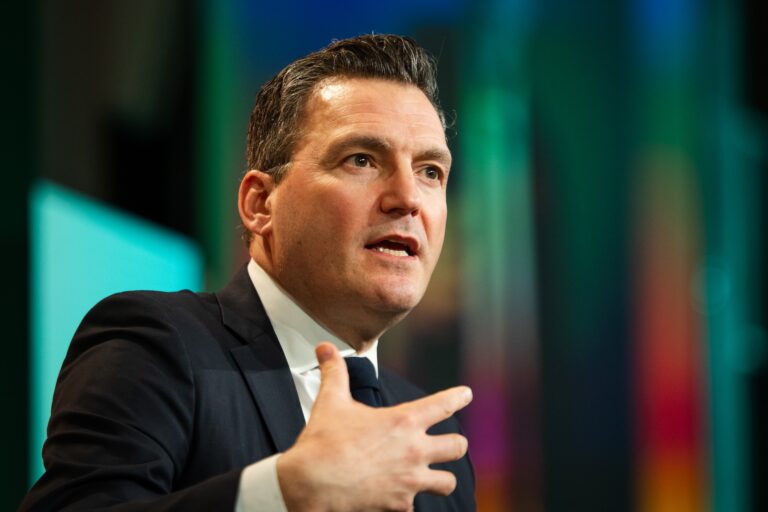
- In a letter to Canada’s AI minister, Evan Solomon, the company pledged to further strengthen its safety protocols after Solomon summoned executives to a meeting this week
Earlier this week, AI Minister Evan Solomon summoned OpenAI’s safety team to Ottawa to answer questions about the company’s safety protocols and found them lacking. The summons came after The Wall Street Journal reported that though the San Francisco-based company knew about the disturbing conversations 18-year-old Jesse Van Rootselaar had with ChatGPT in June, it chose not to tell police about them until after she shot and killed eight people on Feb. 10, as well as herself, in one of the worst mass shootings in Canadian history. Solomon and his colleagues threatened they would quickly change the laws governing the technology if OpenAI did not improve its protocols about escalating safety concerns to police.
On Thursday, the ChatGPT maker said lessons learned from the Tumbler Ridge shooting will inform its policy in Canada about how to assess an imminent and critical safety risk.
Related Articles

“With the benefit of our continued learnings, under our enhanced law enforcement referral protocol, we would refer the account banned in June 2025 to law enforcement if it were discovered today,” O’Leary said in the letter.
The company will establish points of contact with Canadian police to share information with authorities quickly in cases where there’s a risk of real-world violence, and connect users with local helplines, she said.
She revealed that although OpenAI banned Van Rootselaar’s account in response to her messages, the company had discovered she had made a second one. O’Leary said she commits to rooting out other attempts to evade the company’s safety protocols in the future.
“We seek continued dialogue and we would welcome working with the Canadian government to convene local stakeholders and industry to develop best practices for law enforcement referrals and AI model behaviour in cases involving potential violence, including unique considerations for youth,” she said in the letter.
Federal ministers are still reviewing the letter and will say more in the next few days, said Sofia Ouslis, Solomon’s press secretary.
B.C. Premier David Eby, who earlier this week called on the federal government to create rules to govern when AI companies must contact police about their users’ actions, said the changes outlined in Thursday’s letter were “cold comfort” to those affected by the Tumbler Ridge shooting.
“Clearly, they tragically missed the mark in bringing this information forward,” Eby told reporters Thursday. “The consequences of that will be borne by the people of Tumbler Ridge … for the rest of their lives. These are not small stakes, and it illustrates why these companies cannot be trusted to set their own reporting thresholds, and especially to set their own thresholds where there are no apparent consequences for not meeting them.”
Eby said OpenAI has agreed to arrange for him to meet CEO Sam Altman, and repeated his call for national standards.
Solomon and Culture Minister Marc Miller are drafting new legislation on privacy and online harms, but haven’t decided if the new laws will extend to chatbots. As The Logic first reported, the Heritage Department reconvened the government’s expert panel on online safety on Thursday.
Several members of that task force have advocated for the government to include AI platforms within the scope of the legislation. Using the threat of regulation to incentivize companies to self-regulate isn’t enough, said Taylor Owen, the founding director of McGill University’s Centre for Media, Technology and Democracy and a member of the expert advisory group.
“It’s the wrong approach,” Owen said in an interview. “In my view, regulation is needed to ensure compliance, not to incentivize it.”
Heidi Tworek, another member of the advisory group, said the tragedy in Tumbler Ridge was terrible, but predictable.
“I think obviously we’re very focused on this one individual case, but the last few months have shown us how [generative AI] is accelerating problems that we already saw in the social media space,” said Tworek, director of the Centre for the Study of Democratic Institutions at the University of British Columbia.
That makes the need for the government to institute a duty for platforms to act responsibly even more urgent, she said.
With files from Aleksandra Sagan in Vancouver
Editor’s note: This story was updated to add comments from B.C. Premier David Eby.