
Listen Now
0:00
OTTAWA — If OpenAI doesn’t come up with new ways to alert police to potentially dangerous conversations users have with its chatbots, the government will consider changing laws governing the technology, ministers said after meeting with the company’s representatives.
“The message that we delivered, in no uncertain terms, was that we have an expectation that there are going to be changes implemented, and if they’re not forthcoming very quickly, the government’s going to be making changes,” Justice Minister Sean Fraser said.
Talking Points
- Federal ministers have called on OpenAI to change its safety protocols after learning the company didn’t immediately report disturbing conversations between the Tumbler Ridge shooter and ChatGPT in the months before the killings
- If that doesn’t happen, ministers said they’ll legislate the changes themselves as part of two new bills related to privacy and online harms
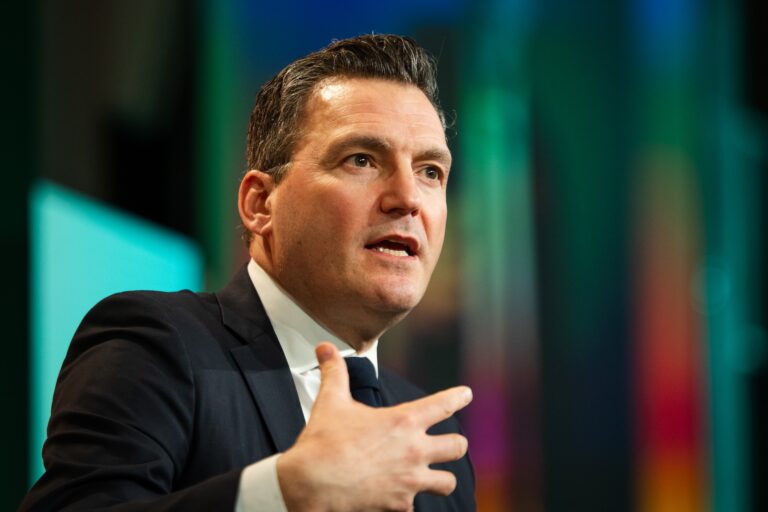
AI Minister Evan Solomon summoned OpenAI’s safety team to Ottawa on Tuesday to walk ministers through their safety protocols after he learned the company was aware of disturbing conversations that the shooter in the Tumbler Ridge, B.C., killings had on ChatGPT, but didn’t immediately raise an alarm.
The 18-year-old shooter, Jesse Van Rootselaar, killed eight people, including six children, before she killed herself in the small community on Feb. 10.
“Of course, a failure occurred here,” Solomon said Wednesday morning, though he wouldn’t comment on the details of the case or the company’s culpability while the RCMP is still investigating. However, immediately following the meeting with OpenAI on Tuesday night, Solomon released a statement saying he was disappointed the company did not present ministers with substantial new safety measures.
Related Articles

He said the government wants the company to come up with a new policy to decide when it reports potential threats to police.
The Wall Street Journal reported Van Rootselaar’s messages, which included references to gun violence, were flagged by an automated review system, and that OpenAI employees discussed whether they should alert Canadian police. The company has said it decided the messages didn’t meet its threshold for such action and decided to ban the account instead.
OpenAI said it will only involve law enforcement in cases where there is a credible and imminent risk of serious physical harm to others.
“This was a devastating tragedy, and we are doing all we can to support the ongoing investigation,” OpenAI spokesperson Jamie Radice said in a statement.
Fraser, who also attended the meeting on Tuesday, said there were “systemic issues” with the company’s protocols.
“There are issues around the assessment on credibility of a threat and the imminence of a threat that, in my view, if properly administered, could prevent tragedies on a go-forward basis,” he said.
OpenAI didn’t immediately respond to an updated request for comment.
Prime Minister Mark Carney said he hasn’t been briefed on the meeting, but his government will be following up. “I sat with the families of Tumbler Ridge, met with the first responders, saw the horror of what happened and the pain that’s been caused,” he said Wednesday. “Obviously, anything that anyone could have done to prevent that tragedy or future tragedies must be done.”
Carney’s ministers grappled with how to respond to the potential dangers of AI earlier this year, as other countries took action against the rash of sexually abusive deepfake images generated by Grok, which is integrated into Elon Musk’s X. Unlike the U.K. and EU, Canada doesn’t yet have the regulatory tools to hold the company accountable.
The government is drafting new legislation to update Canada’s privacy laws and create a regulatory regime for online harms, but hasn’t decided whether either will extend to chatbots. After the reports of OpenAI’s part in the Tumbler Ridge case, Solomon said: “All options are on the table.”
He also plans to unveil the government’s updated AI strategy early this year. One member of Ottawa’s AI task force recommended the government include AI platforms within the scope of those two new bills.
“By leveraging these frameworks, the Canadian government could ground its approach to AI governance in best international practices, move swiftly to ensure that Canadians are protected from immediate harms that AI systems pose and facilitate safe AI innovation and adoption,” Taylor Owen, the founding director of McGill University’s Center for Media, Technology and Democracy, said in his submission to the taskforce.
Conservative MP Michelle Rempel Garner urged the government to be less reactive and get a policy framework in place quickly. She said the Tories are open to working with the government on a potential bill, but not at the expense of free speech online.
“Where our approach differs from the Liberals is that we don’t believe, as Conservatives, that Canadians should have to sacrifice their civil liberties, particularly on speech, in order to be safe anywhere, including online,” she said.
Public Safety Minister Gary Anandasangaree said OpenAI is co-operating in the investigation into the Tumbler Ridge shooting, and has been transparent about its practices. Still, he said, “there’s a lot of unanswered questions, and there’s certainly a sense of frustration, and, frankly, a sense that tech companies overall are not doing enough to address the issues around information that they hold.”
Update: This story was updated to add opposition comment on the government’s handling of the file.















