OTTAWA — Nuclear power is at the core of the Ontario government’s planning for its energy needs and the provincial government needs to move fast if it’s going to build enough reactors quickly enough, Energy and Electrification Minister Stephen Lecce says.
Skip to content


News
Nuclear expansion will form backbone of Ontario’s green grid, new energy minister says
Stephen Lecce says province has to move fast, expresses openness to renewables
Stephen Lecce, now Ontario's Energy Minister, delivers remarks at a high school in Toronto in August 2023. Photo: The Canadian Press/Spencer Colby
OTTAWA — Nuclear power is at the core of the Ontario government’s planning for its energy needs and the provincial government needs to move fast if it’s going to build enough reactors quickly enough, Energy and Electrification Minister Stephen Lecce says.
Renewables and hydroelectricity are also important, he said in an interview with The Logic, but they’ll be supporting nuclear plants as Ontario’s grid faces increasing demands from electrified industry and transportation.
Talking Points
- Named in June to his new portfolio, Energy and Electrification Minister Stephen Lecce acknowledges that Ontario faces a shortfall of tens of thousands of megawatts if it wants a green energy grid by 2050
- Nuclear power will likely make up most of it, he told The Logic, but long planning and construction times mean the government and the energy sector must get moving
“It’s an all-of-the-above approach, but when it comes to really scaling up, nuclear energy will play a critical role,” Lecce said.
Other jurisdictions are reaching the same conclusion, he said, “including nations who turned away from nuclear, who are now coming back to it because they see it as the only viable option” to get that volume of emission-free generation.
Premier Doug Ford named Lecce to his new post at the beginning of June, after Lecce spent nearly five years as education minister. He has a big task: although Ontario has an ambitious (and expensive) plan to build all kinds of electricity generation, that plan will still leave the province tens of thousands of megawatts short of its projected needs by 2050.
Lecce said Ford has instructed him to find those megawatts and then some, so Ontario can be an electricity exporter.
“Government, working with our energy sector, is going to have to work quickly to build out a plan to beat that gap,” he said.
Ontario intends to add reactors to two of its three current major nuclear plants. Lecce would not say whether he thinks the province will need additional stations: “These will all be discussions, I think, for the future.”
Related Articles
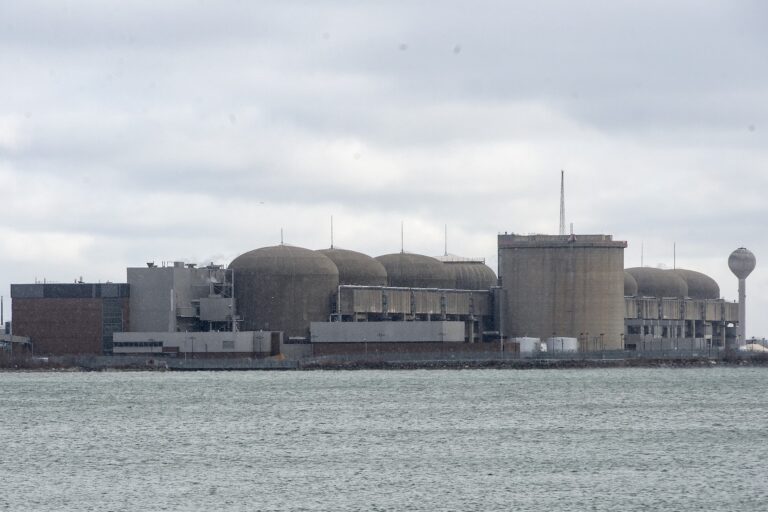
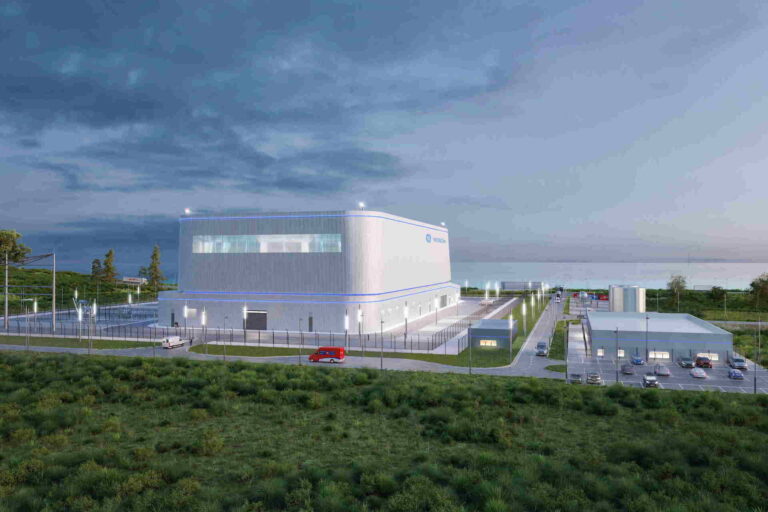
Though there’s a lot to do, Ontario is laying good groundwork for a major nuclear power buildup, said George Christidis, the Canadian Nuclear Association’s vice-president of government relations and international affairs.
“The work is started and it’s happening. The province has taken a pretty strong leadership role in identifying what is needed,” Christidis said
The Ontario government has started work to add 4,800 megawatts of generating capacity to the existing Bruce Nuclear Generating Station, and multiple potential contractors are eager for the business. It’s in advanced preparations for a 300-megawatt small modular reactor at the Darlington station east of Toronto and is planning for three more there. And it’s in the middle of multibillion-dollar refurbishments of venerable Candu reactors that produce a steady 10,000 or so megawatts of baseload power around the clock these days.
Christidis spoke on the phone from an international nuclear conference in Greece. He told The Logic he’s hearing a lot of interest there in what Ontario is up to.
“You can tell, being here in the Balkans, energy security is very much top of mind,” he said.
Nevertheless, the province will need 17,800 additional megawatts of nuclear power by 2050, according to the arm’s-length authority for its energy grid. The Bruce expansion and the small reactors at Darlington would deliver 6,000 between them.
Building the rest will take extensive cooperation between the Ontario and federal government. The Canadian Nuclear Safety Commission licenses reactors, and the projects will need federal supports and tax credits.
“I suspect Mr. Lecce is going to be fully engaged on that,” Christidis said.
Although Lecce expects new nuclear reactors will be the workhorses of a beefier, greener power grid in Ontario, “we will let the market dictate whatever is most affordable and reliable.”
That could include wind power, even though the Progressive Conservatives campaigned against numerous renewables projects in 2018 and even dismantled a wind farm that was approaching completion.
Lecce said two things are different now.
“We now have—soon coming online—storage capability to harness the energy, which we didn’t have five and seven years ago,” which means wind and solar power can be captured when they’re available and fed to the grid when they’re needed, he said.
Furthermore, he said, the Tories’ 2018 position wasn’t against renewables, but against the previous Liberal government’s Green Energy Act, which bulldozed local opposition to large installations of windmills and solar panels.
“We will always empower local communities to have a say, and they will dictate, fundamentally, if they want to have that type of energy infrastructure or not,” Lecce said.



Loading...
Thanks for sharing!
You have shared 5 articles this month and reached the maximum amount of shares available.
CloseThis account has reached its share limit.
If you would like to purchase a sharing license please contact The Logic support at [email protected].
CloseGift the full article!
You have gifted 0 article(s) this month and have 5 remaining.
Recipients will be able to read the full text of the article after submitting their email address. They will not have access to other articles or subscriber benefits.
Photo: The Canadian Press/Spencer Colby
Most Popular This Week




In-depth, agenda-setting reporting
Great journalism delivered straight to your inbox.
News
RBC’s AI chief sounds the alarm over AI agents
Briefing
Canada and Ontario commit over $5B to support tariff-hit steel sector
Hackers will see cars as major targets in next 3 years, 83% of car-tech workers say
EA shutting down Edmonton studio BioWare
Best business newsletter in Canada
Get up to speed in minutes with insights and analysis on the most important stories of the day, every weekday.
Exclusive events
See the bigger picture with reporters and industry experts in subscriber-exclusive events.
Membership in The Logic Council
Membership provides access to our popular Slack channel, participation in subscriber surveys and invitations to exclusive events with our journalists and special guests.







