Listen Now
0:00
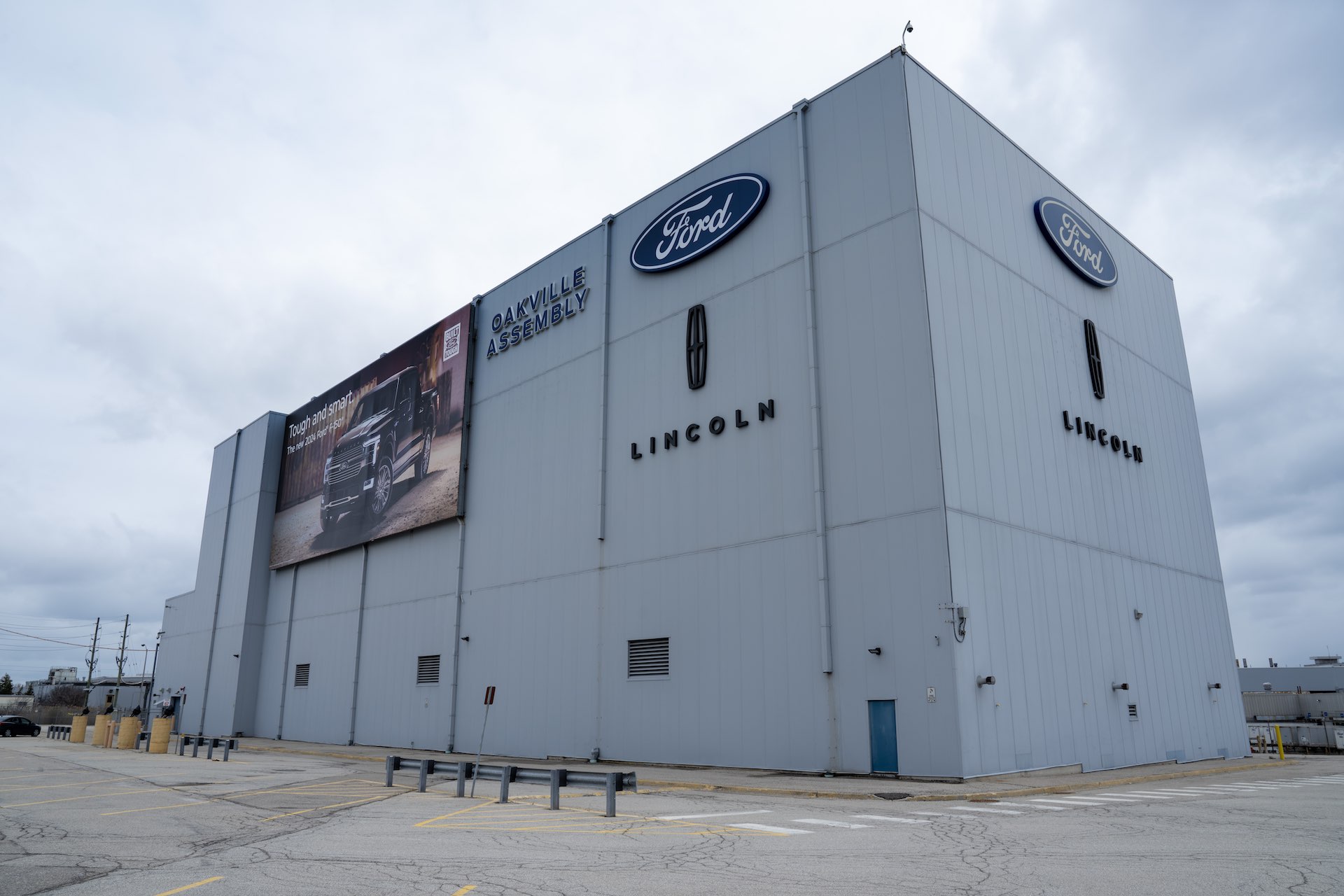
OTTAWA — Ontario is alongside the federal government in supporting Ford’s turn to building Super Duty trucks at its Oakville, Ont., plant, Economic Development Minister Vic Fedeli says, but he won’t say how much provincial money is involved until the revamped plant opens.
“You’ll hear from us at the ribbon-cutting,” Fedeli told The Logic after an unrelated announcement in Ottawa. He said he expects that will be sometime in the fall.
Talking Points
- The federal and Ontario governments pledged $590 million between them to convert Ford’s Oakville, Ont., factory to make EVs, and the feds recently ponied up another $464.5 million for a new plan to make heavier-duty gas and diesel trucks instead
- That Ford’s pivot didn’t mean leaving Ontario is a sign of the province’s commitment to the auto industry, Fedeli said, but what that means in dollars will have to wait until the plant reopens
As The Logic reported earlier in May, the federal government is giving Ford $464.5 million in financing to overhaul the Oakville facility so it can produce 100,000 gasoline and diesel F-Series pickup trucks. The Ontario government has typically matched federal funding or provided its own financing for automakers overhauling or opening plants in the province.
Ford’s move is a shift away from the company’s previous plan to make Ontario a hub for producing its battery-powered vehicles. In 2020, the federal and Ontario governments had together pledged $590 million to help Ford transform the Oakville factory to produce EVs, starting this year.
Ford changed its mind about that in 2024 and announced it would make F-Series Super Duty trucks there instead. (The “Super Duty” designation includes F-Series models more powerful than the F-150.) The federal government said at the time that the Oakville-made vehicles would be “electric-infused,” though the Super Duty trucks are currently all gas or diesel.
Related Articles

That Ford has revised its plans but is keeping the plant alive is a testament to the Progressive Conservative government’s support for the auto industry, Fedeli said.
“They started an EV plant. The sales are not where they needed them to be. They said, ‘We’re going to stop and come back to you and talk to you about what we want to do,’” Fedeli said. As a result, he said, the Oakville plant will soon produce one of the most popular vehicles on the planet.
“Now they’re adding 125 people in Windsor for the engines [and] they’re adding 400 more people than they had in Oakville to build a stamping plant,” he said.
Electric vehicles are still a growth industry, Fedeli said—it’s just not a straight line to mass adoption. “EV sales were up between 20 and 25 per cent this year. Around the globe, they’re up considerably. We’ll get there, and there’s going to be bumps along the way,” he said.